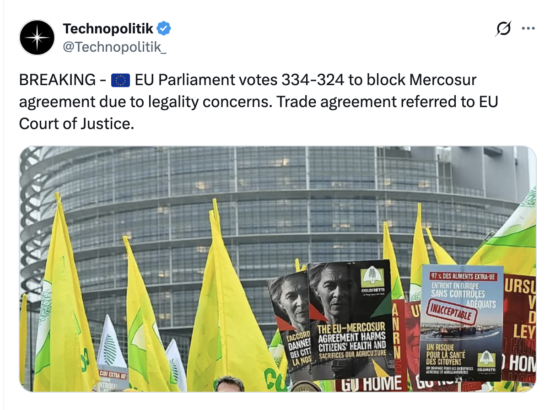
The European Parliament has taken a cautious step in the long-running debate over the EU–Mercosur trade agreement, voting by a razor-thin margin to seek legal clarification before moving ahead with ratification.
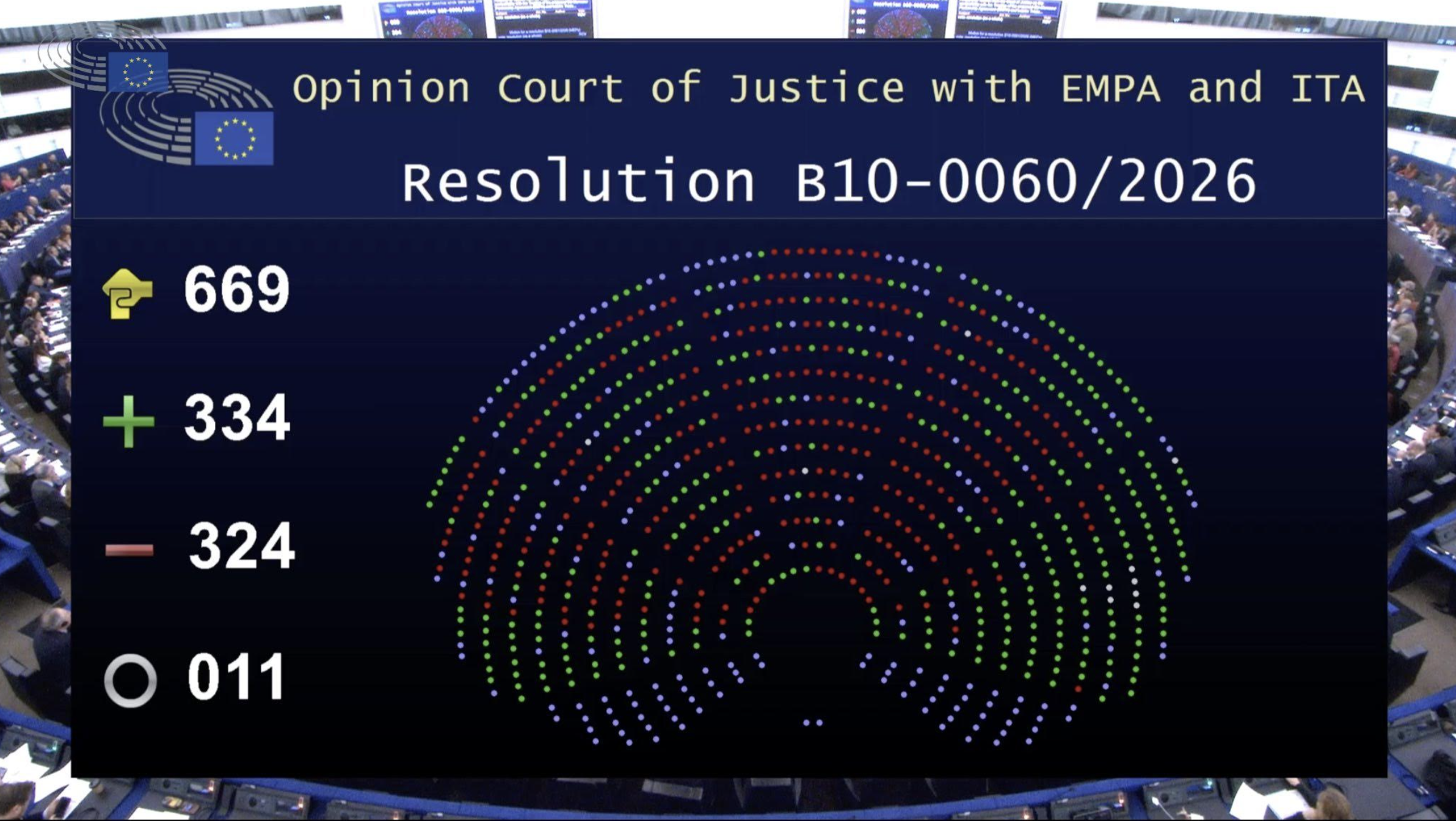
By referring the deal to the Court of Justice of the European Union, MEPs have effectively pressed the pause button on one of the European Union’s most ambitious trade projects. The court is expected to examine whether the agreement aligns with EU treaties, a process that could delay parliamentary approval for months.
Supporters of the referral argue that the scale of the agreement covering trade flows between the EU and four South American economies warrants close legal scrutiny. Critics, however, see the move as a political manoeuvre designed to slow momentum rather than address substantive legal concerns.
 The agreement, signed over the weekend in Asunción, promises expanded access for European manufacturers to Mercosur markets while granting preferential tariffs to South American agricultural exports. According to the European Commission, the deal would create the world’s largest free trade area, accounting for nearly a fifth of global GDP.
Commission President Ursula von der Leyen has framed the agreement as an economic opportunity for all EU Member States, highlighting tariff reductions, new business prospects and protections for hundreds of European geographical indications. She has also sought to reassure farmers that safeguards are built into the text.
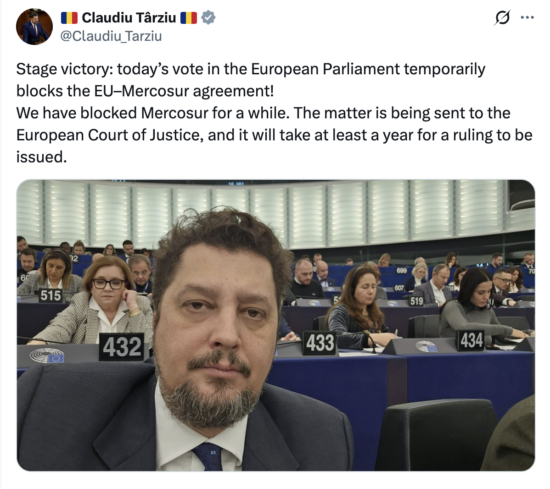
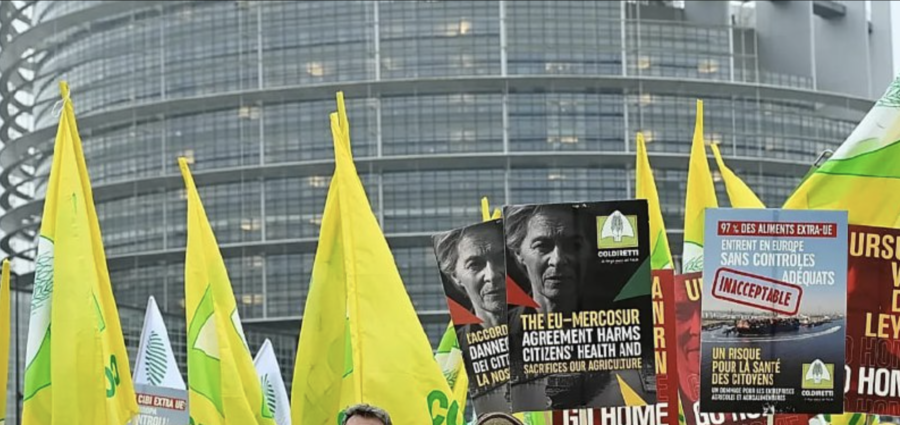
Those assurances have done little to quell opposition on the ground. In Strasbourg, thousands of farmers staged protests outside the Parliament, warning that cheaper imports could undercut European producers and erode food and environmental standards.
The critics say the proposed deal with Mercosur countries will allow low-quality food products into the European marker and only a few, big countries of the EU will benefit from the agreement by accessing the South American markets.
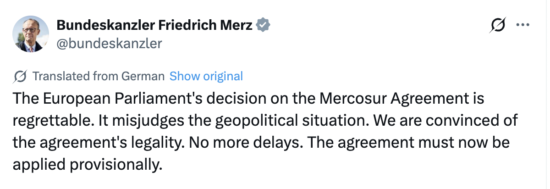
The EP’s decision was criticised by German Chancellor Friedrich Merz, whose country is believed to benefit from the agreement by opening the Mercosur markets to the German automotive industry, recently weakened by Covid repercussions and rapid advance of sales by Chinese car producers into Europe.
With legal uncertainty now looming and political divisions sharpening, the future of the EU–Mercosur agreement remains far from settled.
Photo: X/@Technoplitik_
Tomasz Modrzejewski