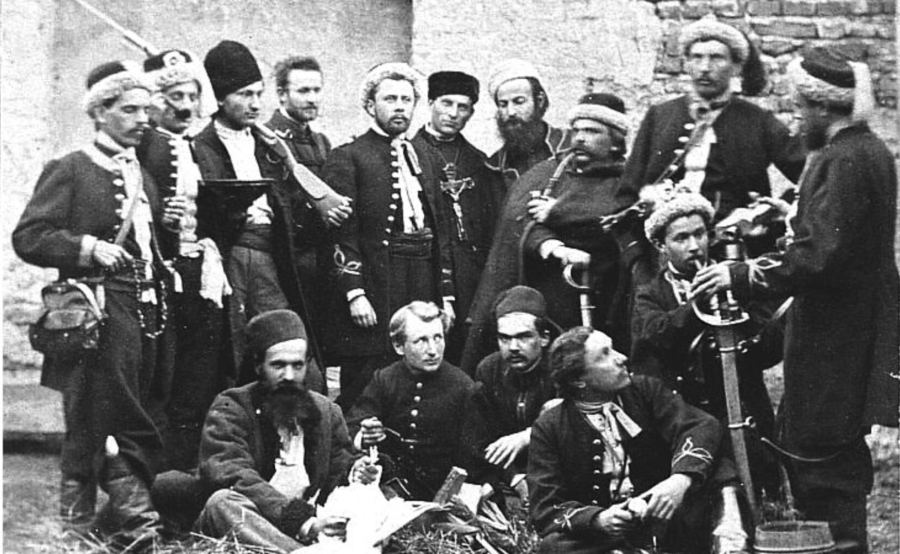
The Zouaves of Death were one of the most distinctive and symbolically charged formations of the Polish January Uprising of 1863. Created in early February of that year near Ojców, the unit was formed under the leadership of François de Rochebrune, a French officer whose military experience with North African zouave regiments shaped both the appearance and the ethos of the formation. From the outset, Rochebrune envisioned an elite detachment built on strict discipline, absolute obedience, and readiness for the ultimate sacrifice. As he declared to his volunteers, “Be as terrible as your name,” a phrase that quickly became synonymous with the unit’s reputation.
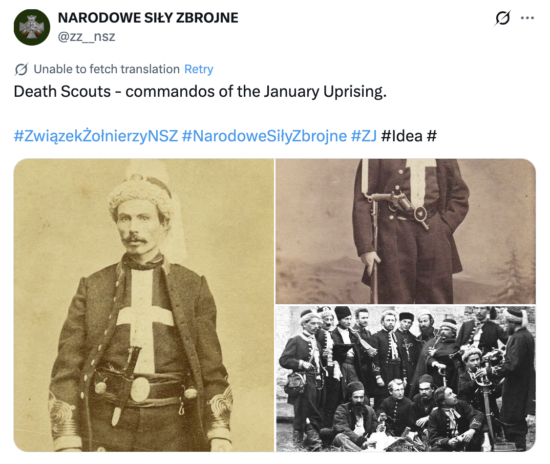
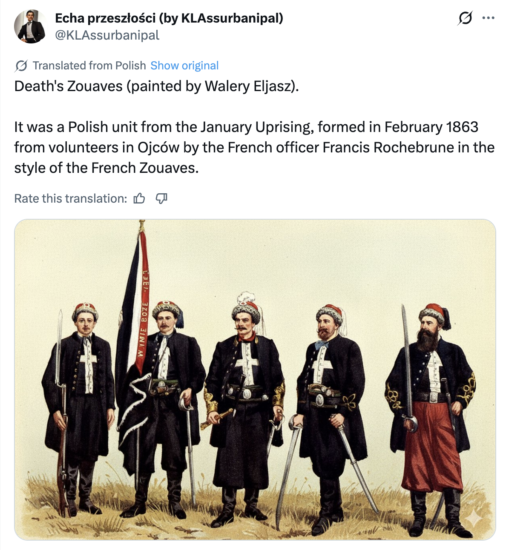
The Zouaves of Death were intended not merely as another insurgent detachment but as a moral example for the entire insurgent army. Their black uniforms, adorned with a white cross, symbolised a conscious acceptance of death in the struggle for independence.
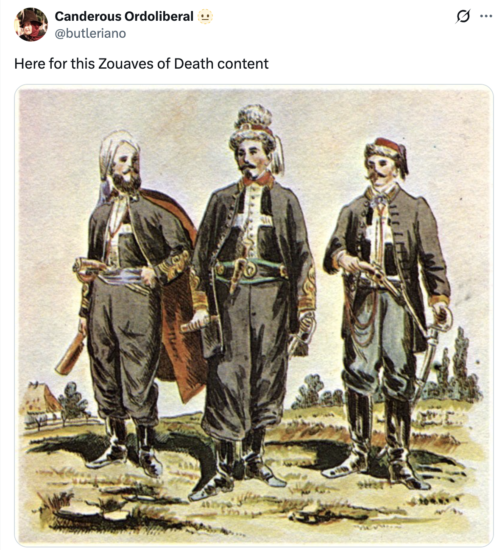
Contemporary sources emphasise that this symbolism was not theatrical but deeply internalised by the soldiers themselves. One participant recalled that joining the unit meant agreeing that “there is no retreat, only victory or death,” a principle that governed both training and combat behaviour.
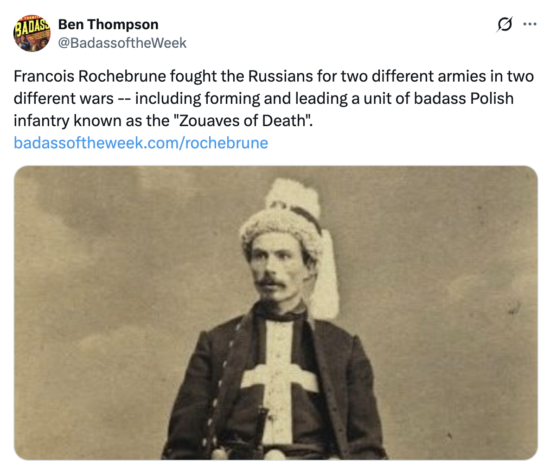
Under Rochebrune’s command, the unit quickly gained recognition for its cohesion and aggressiveness in battle. During the fighting at Miechów in February 1863, the Zouaves of Death were deployed in direct assaults against Russian forces, advancing with bayonets in close formation.
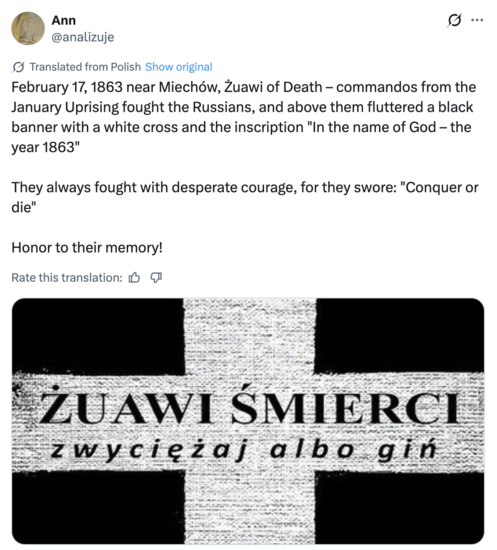
Although the engagement ended in defeat for the insurgents, eyewitness accounts stress the determination of the Zouaves, noting that they “advanced calmly under fire, as if on parade,” even when suffering heavy losses. This performance cemented their image as shock troops willing to absorb the most dangerous tasks.
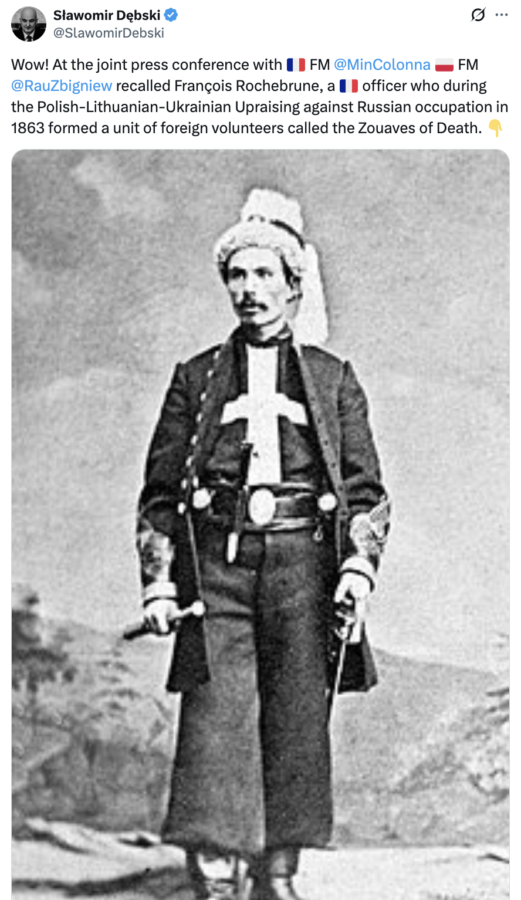
The leadership of the formation extended beyond Rochebrune himself and included a small but clearly defined command structure. Among the officers named in contemporary documents were Major Franciszek Kuttek, Second Lieutenant Emanuel Moszyński, Second Lieutenant Jan Tomkowicz, and Cesar Manara. These men were responsible for maintaining the severe internal discipline of the unit and for implementing Rochebrune’s tactical concepts in the field.
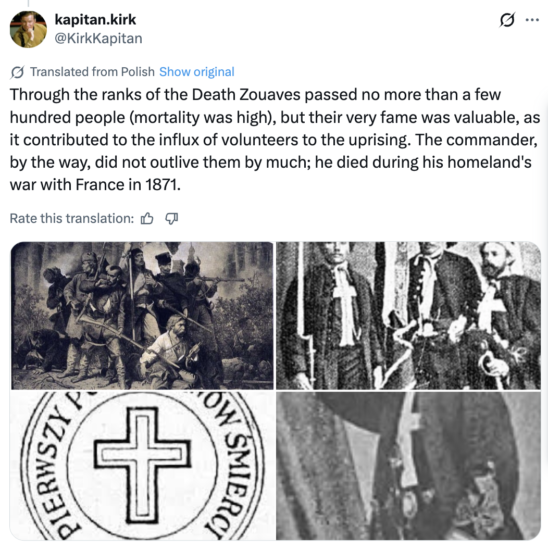
Further engagements, including actions near Chroberz and Grochowiska, reinforced the legend of the Zouaves of Death. Accounts from fellow insurgents repeatedly underline the psychological impact of their presence on the battlefield.
One source noted that Rochebrune “always marched at the front, drawing the men after him into the fiercest fire,” suggesting that personal example was as important as formal command. The unit’s losses continued to mount, however, and by the spring of 1863, its numbers had been significantly reduced.
Rochebrune himself captured this spirit when he addressed his soldiers once more, stating, “For the second time I stand at your head. You will find in me the same commander,” reaffirming continuity of purpose despite adversity. In this way, the Zouaves of Death became not only a fighting unit but a powerful expression of the moral and emotional intensity that defined the January Uprising.
When François de Rochebrune finally returned to France towards the end of 1863, command of the Zouaves of Death passed to an officer known by the nom de guerre Grzymała, but the formation itself soon dissolved. Its disappearance was swift, reflecting both the exhaustion of the uprising and the heavy losses the unit had already endured.
Although the Zouaves of Death did not secure decisive military victories in the history of Polish arms, they entered collective memory as an elite body of soldiers prepared for absolute self-sacrifice. Their enduring legend rests less on battlefield success than on their striking uniforms and the powerful personal authority of their commanders, which together created a lasting symbol of resolve and devotion to the cause.
Cover photo: The “Death Zouaves” in 1863. From left: Franciszek Rochebrune, Borgio, Piekrzewski, Gieżyński, Postalski, Fr. Kacper Grzywaczewski, Łasienicki, Raszewski, standard-bearer Ludomir Cywiński, Emil Ferdynand Czaderski; seated: Dr Kulczycki, others unidentified. Photo: Wikimedia (public domain).
Tomasz Modrzejewski