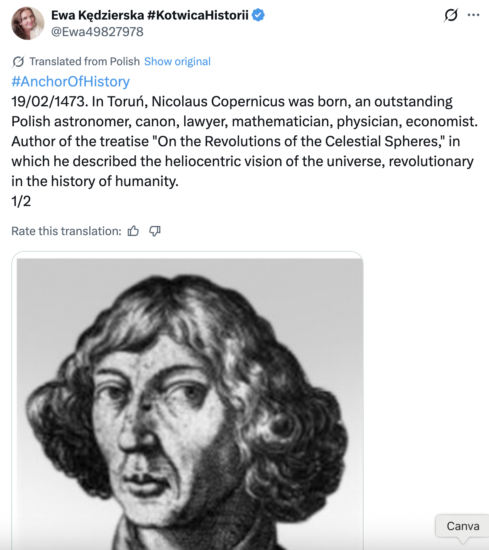
Mikołaj Kopernik, known to the world in Latin as Nicolaus Copernicus, was one of the most transformative figures in the history of science. Born on 19 February 1473 in Toruń, part of the Kingdom of Poland, his work did more than challenge old astronomical ideas; it reshaped humanity’s view of the cosmos.
Kopernik was born into a well-to-do merchant family from Silesia. His father, also named Mikołaj Kopernik, was a successful trader, and his mother, Barbara, belonged to the Watzenrode family.
He was the youngest of four children, with at least two sisters (Barbara and Katarzyna) and a brother, Andrzej. Tragedy struck early: his father died when Mikołaj was about ten years old. Afterwards, his maternal uncle, Łukasz Watzenrode, who later became Bishop of Warmia, took responsibility for him and supported his education.
Under his uncle’s protection, Kopernik received a solid humanistic and religious education, eventually preparing for both an ecclesiastical career and scholarly pursuits.
Kopernik began his higher education at the Kraków Academy (now Jagiellonian University), where he studied mathematics, astronomy, and the liberal arts. Later, he continued his studies in Italy, attending the University of Bologna (canon and Roman law) and then the University of Padua (medicine and astronomy). By 1503, he completed a doctorate in canon law at the University of Ferrara, a degree that would serve his ecclesiastical career.
Throughout his education, he cultivated a wide range of interests: law, medicine, economics, and above all, astronomy. This breadth of learning reflected the spirit of Renaissance humanism, in which scholars sought to integrate diverse fields of knowledge.
While Church duties occupied much of his professional life, Kopernik’s real passion was astronomy. At a time when most Europeans accepted the ancient geocentric model with Earth at the centre of the universe, he developed a radically new cosmological idea: the Sun, not the Earth, is at the centre of the universe.
Kopernik’s heliocentric model proposed that the Earth and other planets orbit the Sun, and that the Earth rotates on its axis once every day. This model explained the motions of celestial bodies more simply and cleanly than the traditional Ptolemaic system.
He first circulated a brief outline of his ideas in a manuscript known as the Commentariolus (Little Commentary) before 1514.
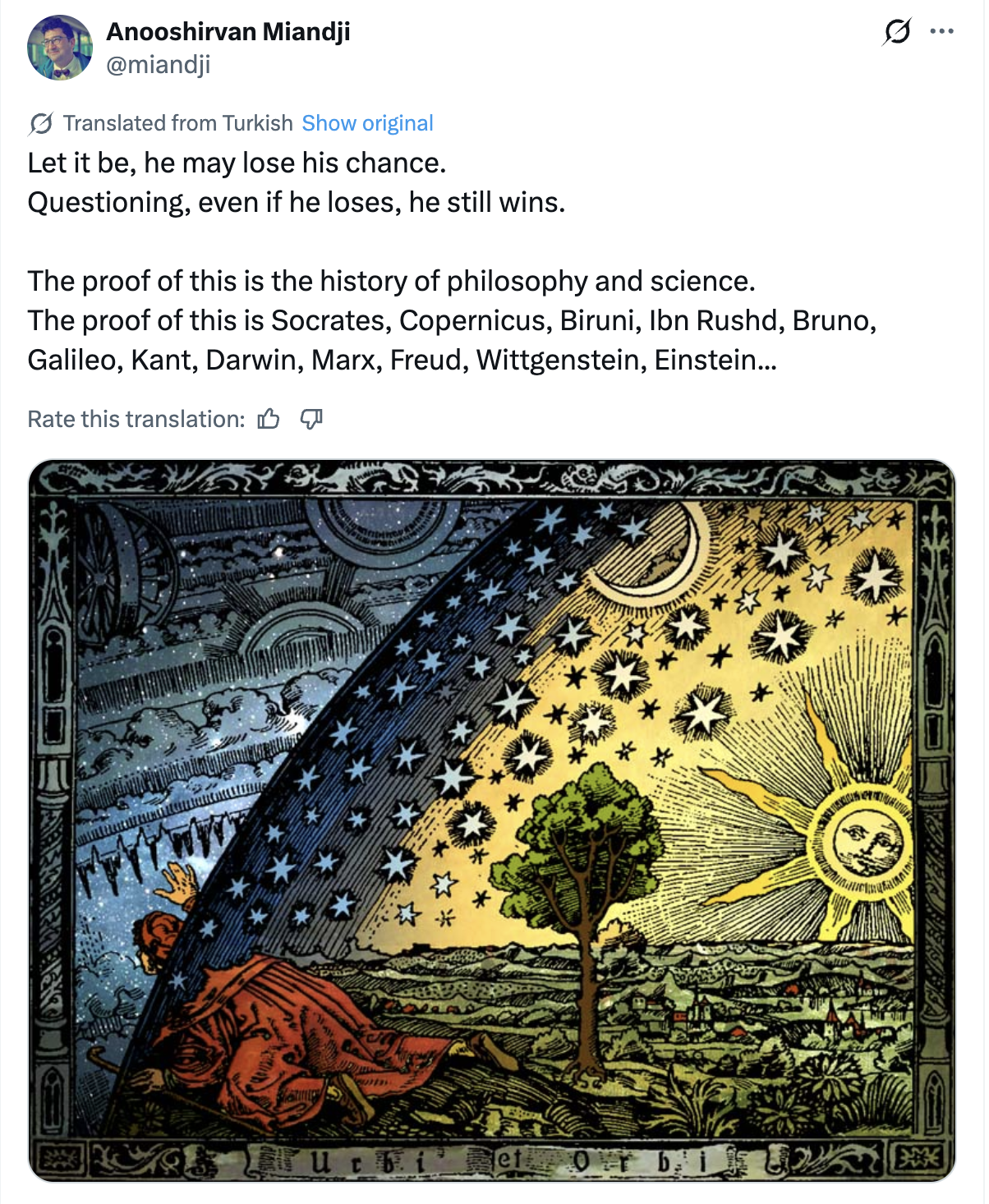
The culmination of his lifelong work appeared in his magnum opus, De revolutionibus orbium coelestium (“On the Revolutions of the Celestial Spheres”), published in 1543, the year of his death. This book systematically laid out the heliocentric system and provided mathematical models for the planetary motions.
Although initially controversial, this work ignited what later became known as the Copernican Revolution, a foundational turning point in the Scientific Revolution. It influenced future giants of science, such as Galileo Galilei, Johannes Kepler, and Isaac Newton.
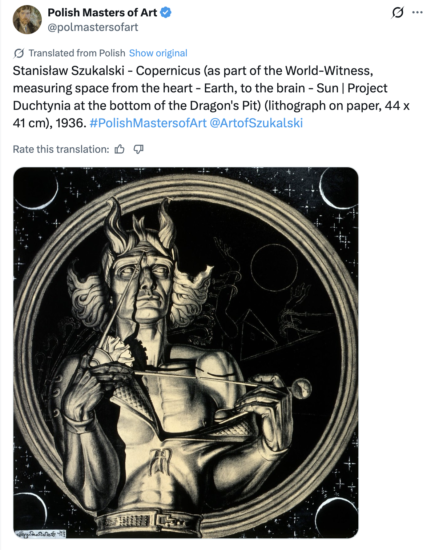
Beyond astronomy, Kopernik was also a physician, economist, mathematician, and canon. His wide intellectual pursuits and his bold reconception of the cosmos mark him as a true Renaissance polymath.
His achievements not only advanced science but also reshaped humankind’s understanding of its place in the universe, a legacy that endures in both scientific thought and cultural memory.
Since 2020, on the special decision of the Polish President, the birthday of Mikołaj Kopernik has been celebrated as the National Polish Science Day.
In 2021, Astronomer Copernicus, or Conversations with God, the monumental 1873 painting by Poland’s most celebrated 19th-century artist Jan Matejko, brought Kopernik’s legacy into the heart of London’s art world when it was exhibited at the National Gallery for the first time a work by a Polish painter had ever been shown there.
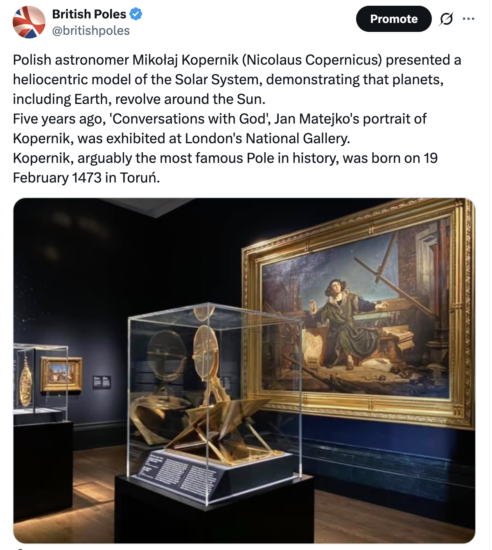
The dramatic canvas, featuring Copernicus gazing up at the heavens surrounded by astronomical instruments, was created to honour the 400th anniversary of the astronomer’s birth and visually celebrates his revolutionary insight into the heliocentric system. The London exhibition not only introduced international audiences to Matejko’s vivid portrayal of Kopernik’s inspiration but also highlighted how deeply Copernicus’s discoveries continue to resonate across culture and history.
Photo: Wikipedia, public domain
Tomasz Modrzejewski