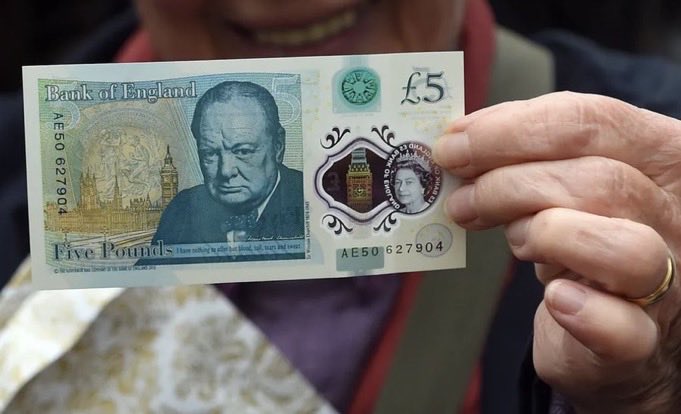
The Bank of England has confirmed plans to remove prominent historical figures, including Sir Winston Churchill, from future British banknotes and replace them with images of native wildlife. The decision marks a significant shift in the visual identity of the nation’s currency and has sparked debate about how Britain chooses to represent its history and culture in public symbols.
Under the proposed redesign, the reverse side of Bank of England notes currently featuring notable historical figures will instead showcase animals and other elements of Britain’s natural environment.
Winston Churchill, whose portrait currently appears on the £5 note, will be removed along with figures such as novelist Jane Austen, painter J. M. W. Turner and mathematician Alan Turing.
The monarch will remain on the front of the notes, meaning the portrait of King Charles III will continue to appear on future currency.
The change will not happen immediately. According to the Bank of England, the next generation of notes will be introduced only after a design and consultation process that may take several years.
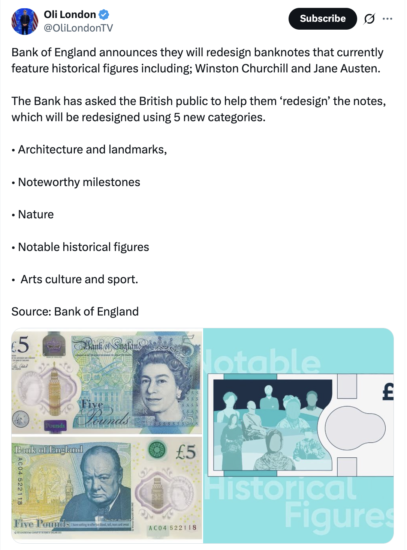
The shift towards wildlife imagery follows a 2025 public consultation on themes for the next series of banknotes. Around 60 per cent of more than 44,000 respondents supported the idea of featuring nature, making it the most popular option among several themes that also included architecture, innovation and historical figures.
The Bank plans a further consultation in which the public will be invited to suggest which native species should appear on the notes. Household pets will not be included, and experts from wildlife and environmental organisations will help compile a shortlist.
Officials say the redesign is not only symbolic but also practical. The introduction of a new series of banknotes offers an opportunity to incorporate advanced anti-counterfeiting technology and update the design theme.
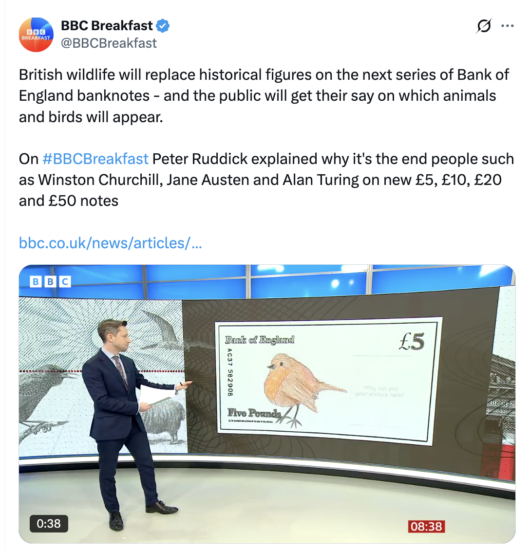
Bank of England chief cashier Victoria Cleland explained that the redesign allows the institution to highlight “different aspects of the UK” while improving the resilience of notes against forgery.
The announcement has provoked mixed reactions in Britain. Some critics argue that banknotes should continue to celebrate figures who shaped the nation’s history, and they view the removal of Churchill and other prominent individuals as a symbolic break with the past.
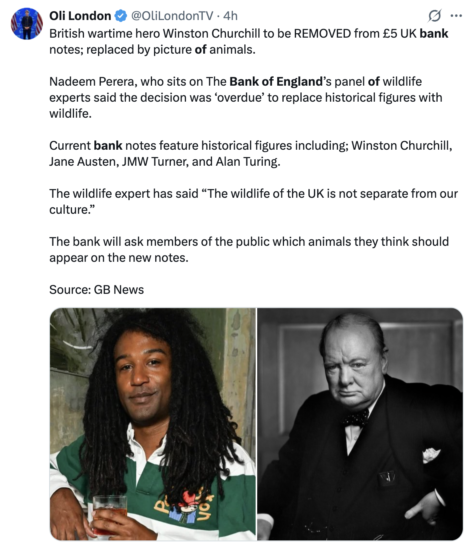
Supporters of the change, however, say wildlife imagery reflects a broader national identity and allows the currency to showcase Britain’s natural heritage. Advocates have also pointed out that wildlife motifs already appear on some Scottish banknotes issued by commercial banks.
Historical figures have appeared on Bank of England banknotes since the 1970s, when William Shakespeare became the first non-monarch depicted on British currency.
If the new designs proceed as planned, the next generation of banknotes will represent a departure from that tradition, replacing portraits of some historical personalities with images of animals, birds and other elements of Britain’s natural landscape.
The decision highlights an ongoing debate about how nations express identity and heritage through everyday symbols, an issue that, for many observers, extends far beyond the design of money itself.
Photo: X/@unionjackspirit
Tomasz Modrzejewski