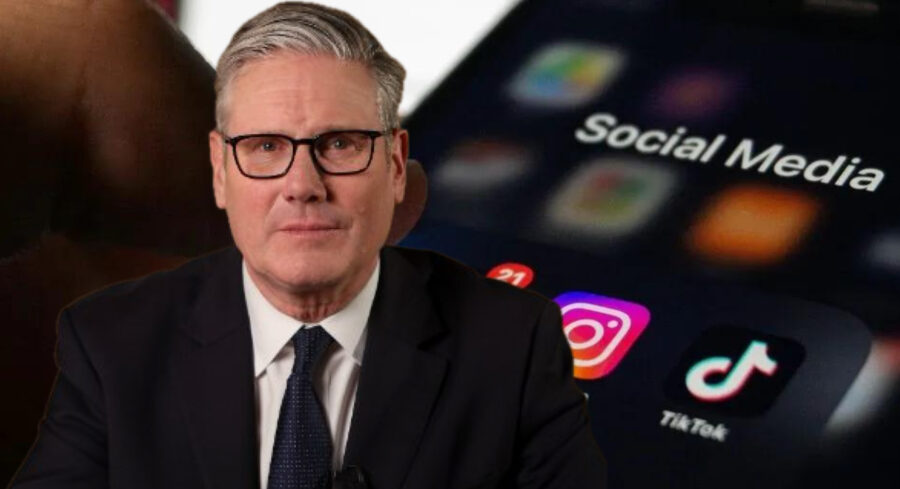
The UK Government has announced plans to prohibit children under the age of 16 from accessing major social media platforms from next year, in what ministers describe as a significant step towards improving online safety for young people.
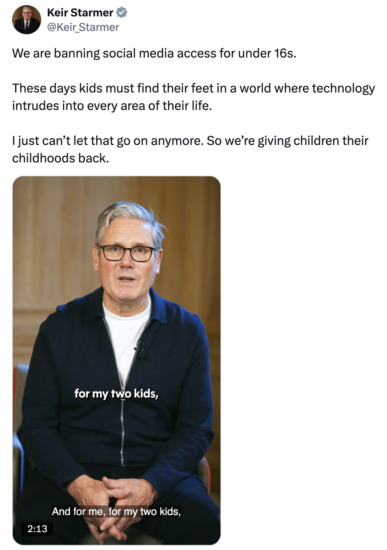
Prime Minister Keir Starmer said the decision was driven by growing concerns about the impact of social media on children’s wellbeing. Speaking about the new measures, he argued that many parents have witnessed first-hand the negative effects that online platforms can have on young users.
According to the Prime Minister, social media sites can create environments where bullying and harassment are easier to carry out, exposing children to harmful behaviour and inappropriate content. He also warned that many platforms are deliberately designed to maximise engagement, potentially leading to addictive patterns of use and adverse effects on mental health.
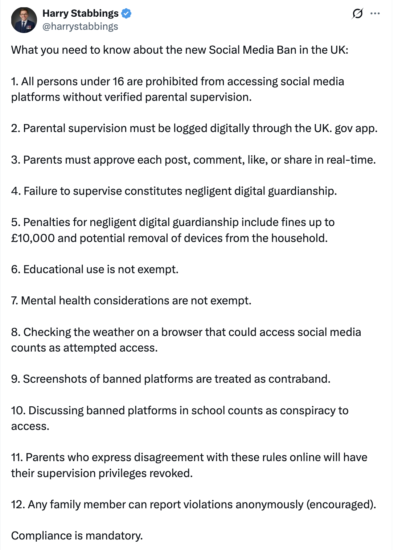
The restrictions are expected to apply to several of the most popular social networking services, including TikTok, Instagram, Facebook, X, YouTube and Snapchat. However, messaging applications such as WhatsApp and Signal will not be covered by the ban. The Government has not yet released a complete list of affected platforms.
Officials say the new rules are likely to come into force in the spring of next year. Under the proposed framework, children who attempt to bypass the restrictions will not face penalties. Instead, responsibility for enforcing the age limit will fall on the companies operating the platforms.
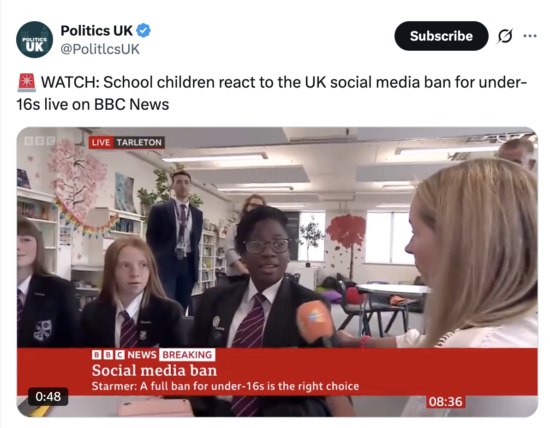
The UK’s communications regulator, Ofcom, has been tasked with examining the most effective methods of verifying users’ ages while balancing privacy and practicality. The findings will help shape the final implementation of the policy.
The Government is also considering introducing additional measures for older teenagers. Among the proposals being explored are time-based restrictions that would limit social media use during late-night hours for 16- and 17-year-olds.
The announcement follows a large public consultation involving more than 115,000 participants. According to government figures, 85 per cent of parents surveyed believed that the disadvantages of social media use for children outweigh the benefits, reflecting widespread concern about the role of digital platforms in young people’s lives.
Presenting the policy, ministers described it as part of a broader effort to “give children back their childhood”, arguing that stronger safeguards are needed as young people spend increasing amounts of time online.
Photo: X/@MarioNawfal
Tomasz Modrzejewski