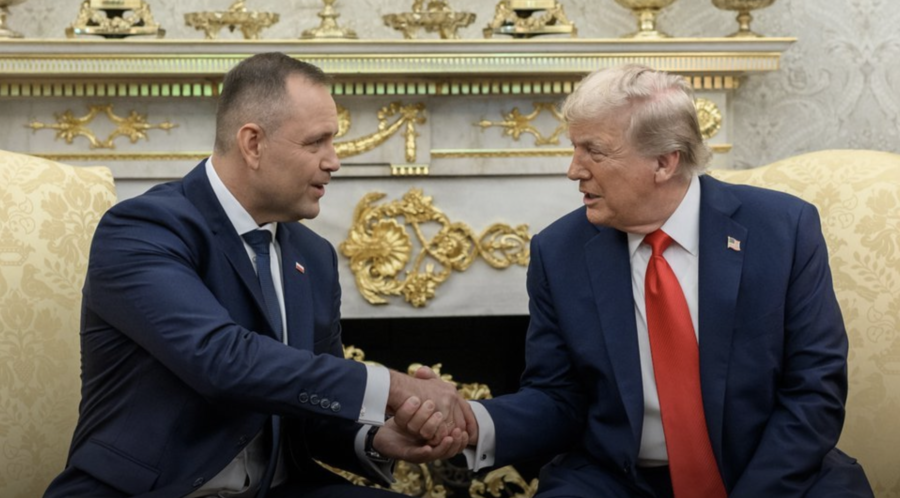
According to John Coale, the United States’ special envoy for Belarus, Poczobut’s case remained a top priority largely due to direct pressure from Donald Trump. This pressure followed a request made by Poland’s president, Karol Nawrocki, during a conversation in September of the previous year.
Coale revealed that Trump personally urged him to ensure Poczobut’s release. While negotiations proved lengthy and difficult, persistence eventually paid off. Notably, unlike previous cases involving political prisoners in Belarus, no additional sanctions relief was offered in exchange highlighting a firmer stance by Western actors.
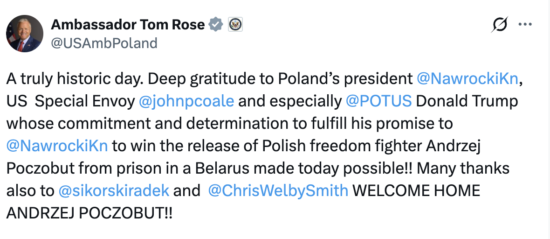
Poczobut was freed as part of a “five-for-five” prisoner exchange at the Polish–Belarusian border. Belarusian authorities released five individuals, including three Polish citizens and two Moldovan nationals. In return, Poland handed over detainees considered significant by Belarus and its allies, including Russia and Kazakhstan.
Polish Prime Minister Donald Tusk emphasised that the operation would not have been possible without earlier arrests of foreign nationals by Polish services. These detainees ultimately became crucial bargaining chips.
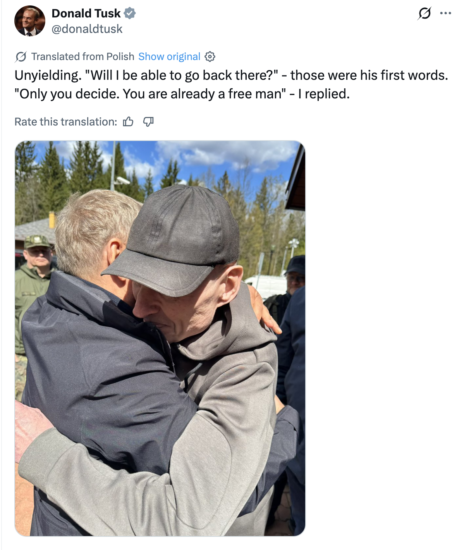
Tusk also acknowledged the involvement of Romania and Moldova, whose cooperation was essential in assembling the exchange group. Diplomatic efforts extended across multiple capitals, requiring careful coordination and persuasion.
The success of the operation owed much to Poland’s intelligence community, including the Foreign Intelligence Agency and Internal Security Agency, as well as the sustained efforts of officials such as Tomasz Siemoniak. Polish diplomacy, led in part by Foreign Minister Radosław Sikorski, also played a critical role.
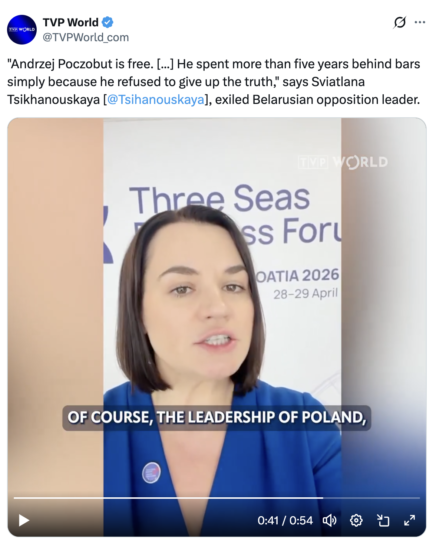
The United States emerged as a decisive partner. Active engagement from Washington, combined with intelligence cooperation, helped bring the negotiations to a conclusion after several earlier attempts had collapsed at the last moment.
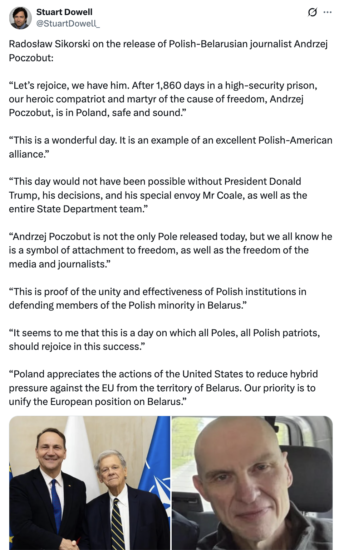
When Poczobut finally crossed into Poland, the moment was deeply emotional. Prime Minister Tusk later recounted their first exchange: rather than expressing relief, the journalist asked whether he would be able to return to Belarus in the future if he chose. The question reflected both his enduring commitment to his cause and the personal sacrifices he had made.
Though physically weakened by years of imprisonment, Poczobut was described as mentally resilient and determined to continue his work.
President Nawrocki has since invited Poczobut to receive Poland’s highest state decoration, the Order of the White Eagle, which had previously been awarded to him.
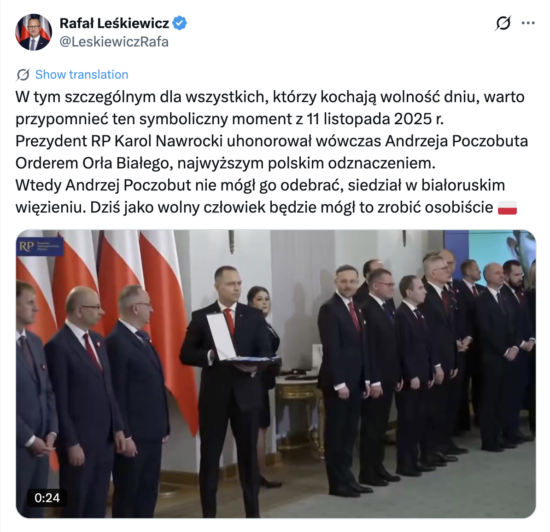
Speaking publicly, Nawrocki praised Poczobut as a symbol of steadfast dedication to Polish values and identity, noting the heavy price he had paid under the regime of Alexander Lukashenka.
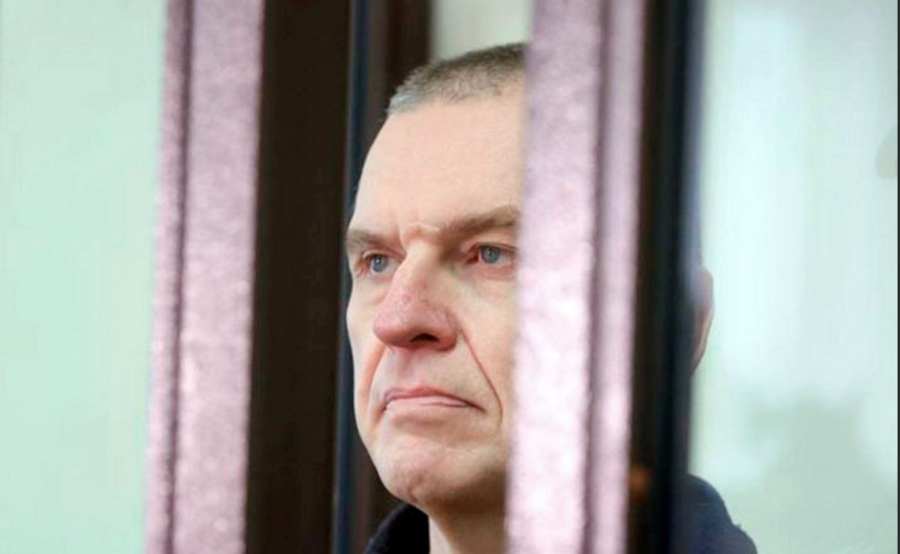
Poczobut had been detained since March 2021 after openly criticising Belarusian authorities. In 2023, he was sentenced to eight years in a high-security penal colony on charges widely regarded by international observers as politically motivated. His case drew condemnation from human rights organisations, which recognised him as a political prisoner.
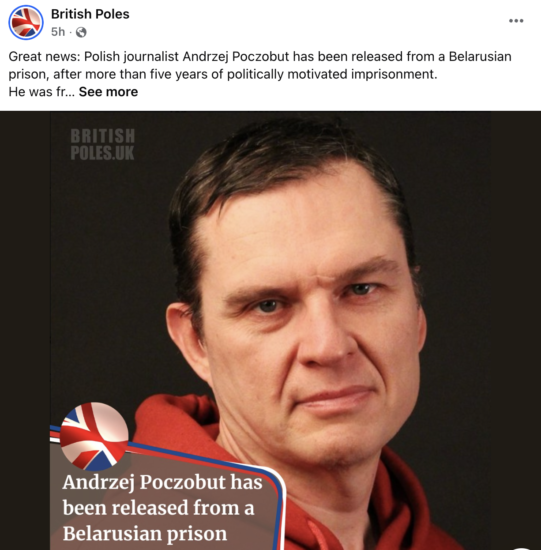
Poczobut’s release is more than an individual success story. It underscores the enduring importance of international cooperation, the leverage of strategic diplomacy, and the role of sustained political pressure in securing the freedom of those imprisoned for their beliefs.
At the same time, it serves as a reminder that many others remain behind bars awaiting similar efforts, persistence, and perhaps, the right alignment of political will.
Photo: X/@PiotrMuller
Tomasz Modrzejewski