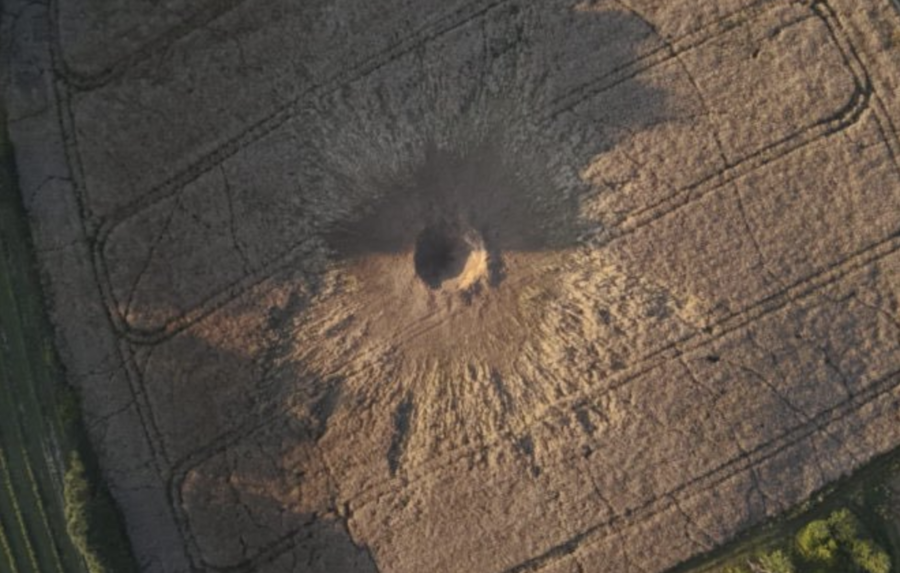
An armed cruise missile believed to have been launched by Russia violated Polish airspace early on Thursday before crashing in a field near Tarnawa-Kolonia in the eastern Lublin region. Although no one was injured, the incident has raised serious questions about the direct risks posed to Poland and NATO by Russia’s continuing missile attacks against Ukraine.
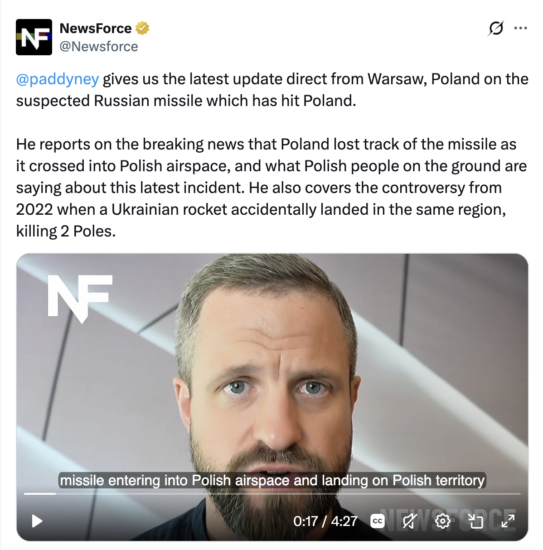
The unidentified object was detected inside Polish airspace at approximately 3.40 am. A Polish F-16 fighter was dispatched to identify and, if necessary, intercept it, but the object disappeared from radar six minutes later. Its probable impact site was subsequently located near Tarnawa-Kolonia, roughly 50 kilometres from Lublin and more than 100 kilometres from the Ukrainian border.
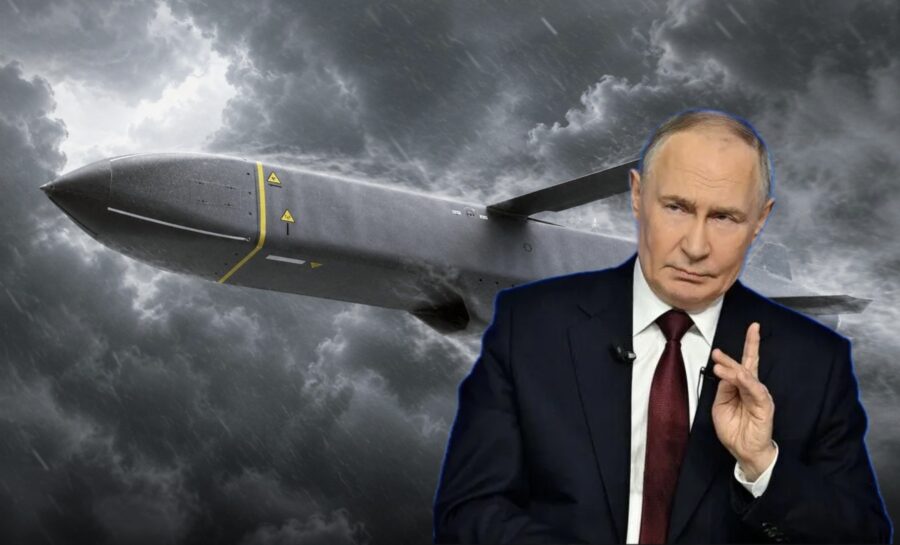
Initial examinations of the debris strongly suggest that the weapon was a Russian Kh-101 air-launched cruise missile, a long-range system widely used by Moscow in attacks against Ukrainian cities and infrastructure. Polish prosecutors said the missile had been armed and contained a substantial quantity of explosive material.
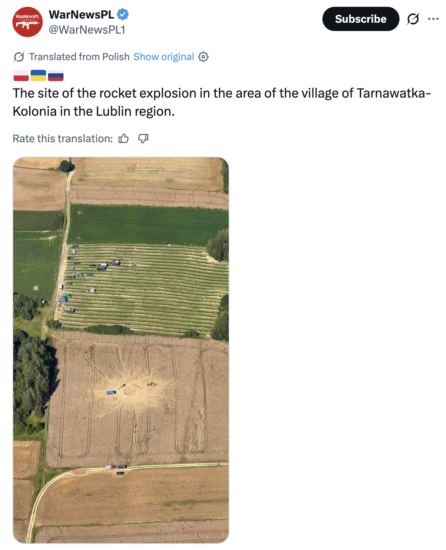
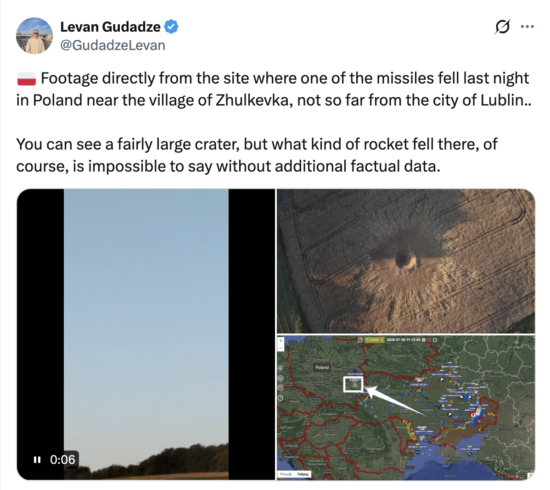
The impact created a crater approximately ten metres wide and five metres deep. It occurred in an uninhabited agricultural area, around two kilometres from the nearest homes, preventing casualties or significant property damage. The relatively fortunate location of the explosion, however, did little to diminish the gravity of an armed foreign missile penetrating deep into the territory of a NATO member.
Polish territorial defence soldiers searched an area covering approximately three square kilometres, recovering numerous fragments, including components believed to form part of the missile’s propulsion system. Prosecutors completed their work at the crash site on Thursday evening, after which the crater was filled, and the land returned to its owner.
The recovered wreckage is to undergo a detailed examination at Military Gendarmerie facilities. A Ukrainian expert will participate in the investigation to assist Polish authorities in establishing the missile’s precise type, origin and likely flight path.
The Military Affairs Division of the Lublin Regional Prosecutor’s Office is investigating the case as a violation of Polish airspace and as an incident that could have caused an aviation disaster. Investigators have collected fragments, soil samples and other physical evidence from the explosion site.
Prime Minister Donald Tusk said the available evidence indicated with a high degree of probability that the missile was Russian. He stressed that it had been armed and that its arrival on Polish territory constituted an unmistakable violation of the country’s airspace.
“There is no reason to believe that Poland was the intended target,” Tusk said during a visit to the site. Nevertheless, the absence of evidence of a deliberate attack does not lessen the potential consequences of the incursion. A missile deviating from its route, suffering a technical failure or escaping interception can still kill civilians and cause extensive destruction inside NATO territory.
The incident occurred during one of Russia’s largest recent aerial assaults against Ukraine. Polish officials said national and allied air-defence systems had been placed on alert as Russian missiles and drones approached the Polish border. According to the government, the armed forces were prepared to destroy the missile if its trajectory indicated an immediate threat to an inhabited area.
Defence Minister Władysław Kosiniak-Kamysz said the growing body of evidence collected by the Military Gendarmerie supported the conclusion that a Russian Kh-101 had struck Polish soil. He thanked the military personnel, emergency services and investigators working to establish the circumstances of the incident.
NATO leaders also responded to the breach. The alliance’s Supreme Allied Commander Europe, General Alexus Grynkewich, declared that NATO would continue taking all necessary measures to defend allied territory. NATO Secretary General Mark Rutte described the incident as another reckless consequence of Russia’s war against Ukraine.
Tusk said he had been in contact with European leaders and thanked Poland’s EU and NATO partners for their solidarity and readiness to assist. The United States and Ukraine also expressed an interest in contributing to the investigation. The prime minister said he was coordinating the state response with President Karol Nawrocki and emphasised that Poland’s civilian and military institutions were cooperating closely.
The government has promised to examine not only the missile’s origin and route but also the effectiveness of Poland’s response. That review is expected to include radar detection, information-sharing with Ukraine, the readiness of fighter aircraft and the criteria governing a possible interception over Polish territory.
The explosion near Tarnawa-Kolonia demonstrates how Russia’s war can cross national borders even when neighbouring countries are not formally targeted. Every large-scale Russian strike against western Ukraine carries a risk that missiles, drones or fragments will enter Polish territory.
For Poland, the violation is therefore more than an isolated navigational error. It is another warning that the eastern frontier of NATO is exposed to the immediate consequences of Russian military operations.
Photo: X/@miroslawmilosz
Tomasz Modrzejewski