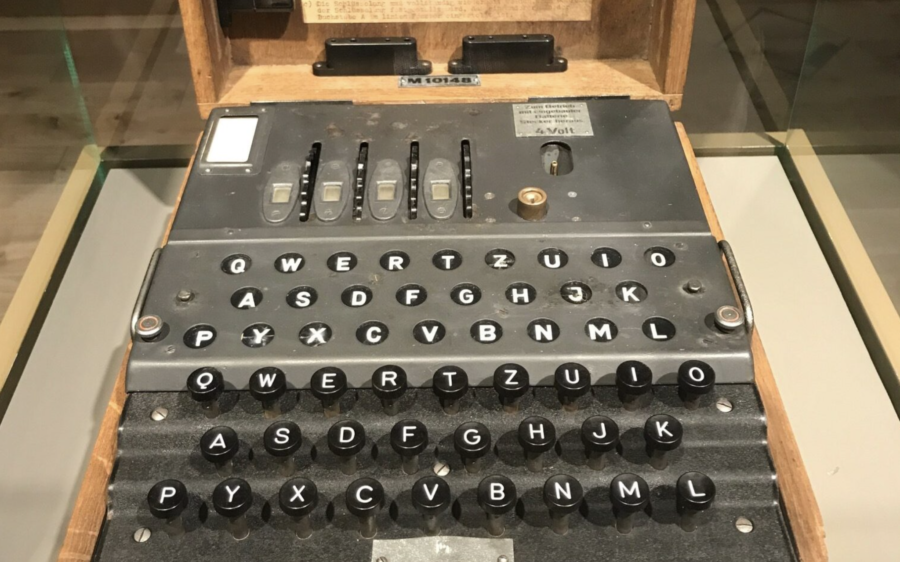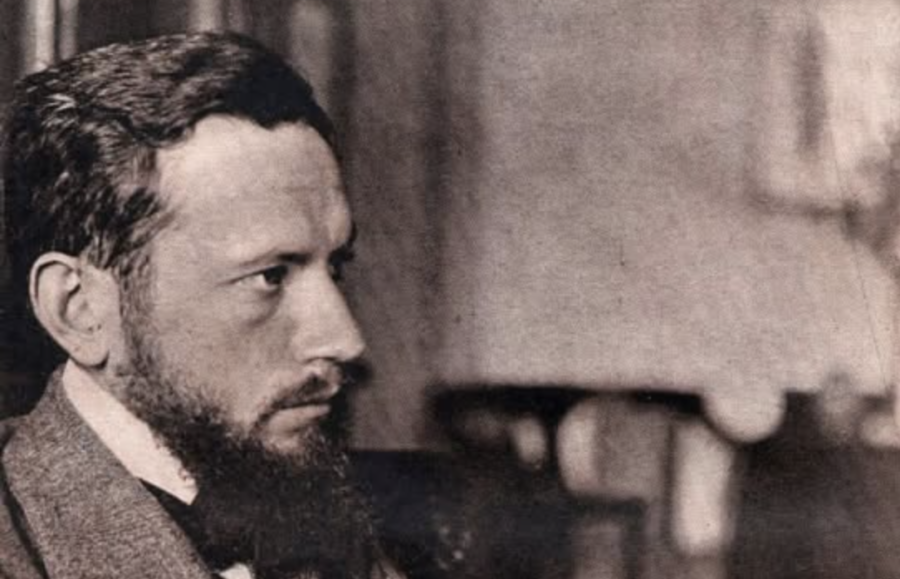
Four authors, Henrik Ibsen, Reiner Werner Fassbinder, Claude Chabrol and Thomas Vinterberg enter a bar. Here, just behind the counter, they see Magnus von Horn, who pours them their favourite drinks. Then, he listens to their film tales, takes notes, offers another round of booze, takes even more notes and, out of all acquired knowledge, he creates a blend of various aesthetics, each taken from the aforementioned gentlemen. The final effect is, of course, The Girl with the Needle.
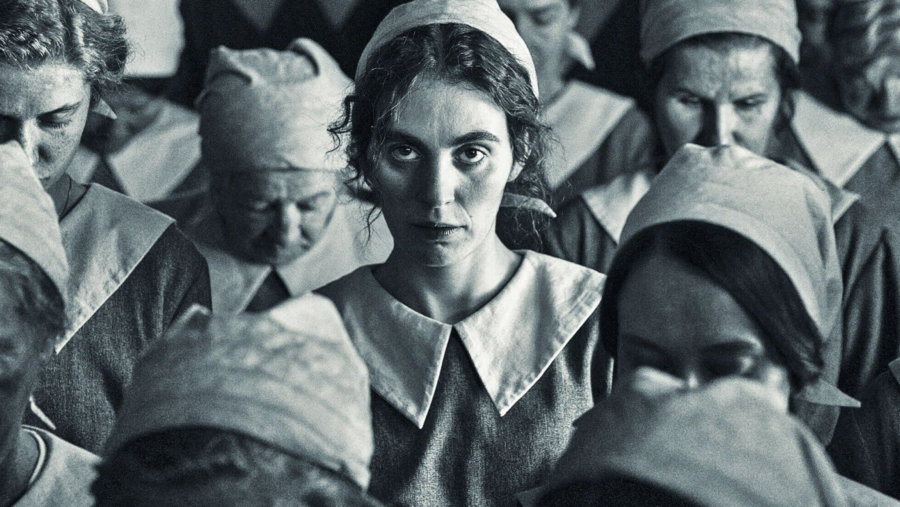
The action takes place after World War I and follows Karoline (the hypnotising Vic Carmen Sonne), a young woman, who just lost her fiancée in war and is suddenly left on her own in this gloomy city of no blinding lights. She learns she’s not alone anymore when Karoline realises she’s pregnant. And, Copenhagen is no place for a lone soul like her, who is left with no savings and a child to feed.
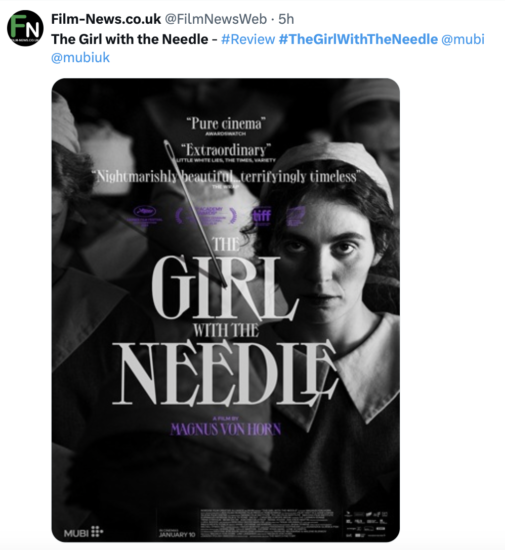
This is why she commences working as a nurse for an older woman, Dagmar (the legendary actress, Trine Dyrholm). Her boss operates a clandestine adoption agency under the cover of a remarkably adorable candy shop, visually reminding us of one from the cartoon The Marvelous Misadventures of Flapjack. The real purpose of this place? Finding foster homes for unwanted newborns. While Karoline’s life is starting to fall into place, she will soon discover that in Copenhagen every place is a hell on Earth, where even a woman is a wolf to another woman.
No wonder Magnus von Horn’s drama was chosen as the Danish entry for Best International Feature Film at the 97th Academy Awards and received a nomination for the Golden Globes. This fact is worth mentioning on the margin, as The Girl with the Needle was actually funded by the Polish distributors and completed with the support of a Polish crew (exceptional cinematography from Michał Dymek and some great editing by Agnieszka Glińska).
Fingers crossed, as Horn’s story is a special film that strikes with nightmarish pangs of pain, distress and misery. It’s a dark fairy tale, with an ambiguous ending, a nihilistic take on post-war society and a clever critique of a toxic patriarchy that enslaved women and made them pawns instead of the main players in the theatre of life. A cinema that suddenly bores into our souls.
Photo: still from the film
4/5 stars
Author: Jan Tracz