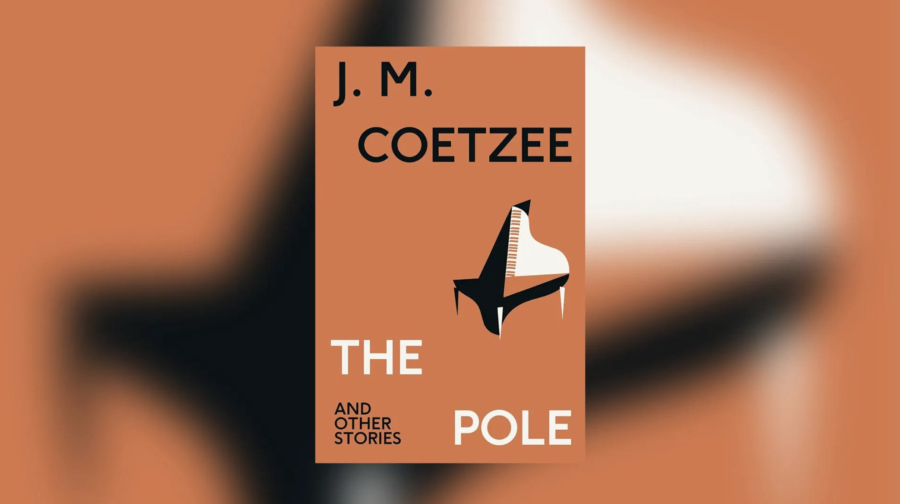
A couple of months ago, J. M. Coetzee arrived with another novel. In the literary world, the new Coetzee is almost like a holiday, always worth celebrating with a glass of white wine. This time, it’s a collection of short stories, called The Pole and Other Stories (the rest of the novellas refer to his iconic Elizabeth Costello). But, only one talks about the eponymous Pole, a pianist, Witold Walczykiewicz, who unexpectedly falls in love with a younger woman.
When Walczykiewicz comes to Spain to play his (in)famous interpretations of Chopin, everyone is excited. Except one person – Beatriz, a Spanish woman, who is forced to become his host in Barcelona. Walczykiewicz dispirits her: our heroine claims he’s a pseudo-intellectual; a poser, to say it in modern language. Yet, even after his departure, we can see he made a lasting impression on her. Our Spanish companion suddenly realizes she thinks about Walczykiewicz in the most random moments and places, as if the man has once entered her soul and never left. When the pianist sends her his first letter, she becomes his muse, Beatrice belonging to Polish Dante. Neither of them knows how this correspondence will soon change their previously mundane lives.
Coetzee’s The Pole feels simpler than his other novels; like it was written for a new generation of readers, unused to some fancy adjectives and non-linear narratives. This might also be the case, but, as we learn at the end of the book, The Pole was originally written to be published in Spanish (and it was). Then, they translated it into English, so we can assume that something was lost during the process. Or, on the other hand, we’re also talking about a writer, who was born in 1940. This means that today, he’s far more experienced regarding his writing style. Even so, at times, he surely didn’t truly finish his homework. In one of the conversations, Walczykiewicz mentions “a famous Polish novel”, called The Friend of the Family. Yes, such a book actually exists, but it was written by Fyodor Dostoevsky. Curtain!
If Krzysztof Zanussi had adapted this book, we would see it as a sequel to his Barwy Ochronne. The Pole is an embodiment of a real guilty pleasure, as its story feels quite off (and nothing really makes it stand out), but still, we’re invested. We want to know how we can interpret this feeling, what can we make out of it and why, or why both of them are playing their certain mind games. Ultimately, there are no deeper meanings, or maybe there are, as it depends in which place (romantically) we all are. This makes the story work – it still touches the reader despite the odds.
Photo: all the rights reserved to Big Issue and Penguin Random House
4/5 stars
Author: Jan Tracz