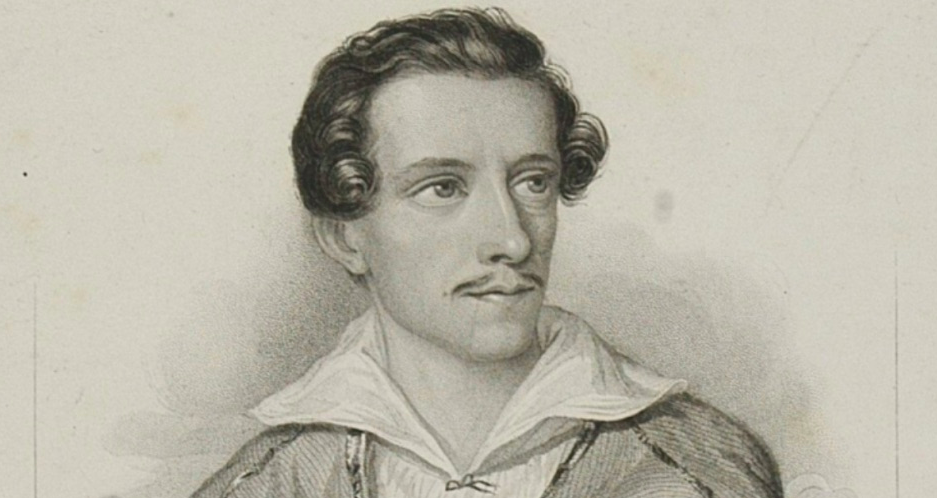
Juliusz Słowacki is often referred to as one of the „Three Bards” of Polish literature, along with Adam Mickiewicz and Zygmunt Krasiński. In addition to being a significant figure in the Polish Romantic period, Słowacki is also remembered as the father of modern Polish drama.
One of the reasons why he became such an important figure in Polish history is his patriotic activism. In the early 19th century, Poland had just been erased from the map, and most of its territory was under Russian rule.
During the November Uprising of 1830, Słowacki worked as a courier for the Polish revolutionary government. Following the crushing of the rebellion by the authorities of the Tsar, he moved to Paris just like many of his freedom fighters and compatriots in these times. He later also lived in Switzerland, Italy, Greece, and even in the Middle East.
Słowacki’s works feature elements of Polish history, mysticism, orientalism, and also Slavic pagan traditions, broadly speaking. Besides his main genre – drama – he became famous for his lyric poetry. His most popular works include the dramas Kordian and Balladyna, Fantazy, and Anhelli.
In the late 1840s, the legendary Polish poet moved back to Poland to help his fellow Poles amid the Spring of Nations. He died on the 3 April 1849 at the young age of 39.
Marshal Józef Piłsudski greatly appreciated the works of Juliusz Słowacki, which is why he helped to bring the bard’s ashes to Poland and to deposit them at Wawel in 1927. The Polish leader spoke these famous words during the ceremony:
„On behalf of the government of the Republic of Poland, I recommend that gentlemen take Juliusz Słowacki’s coffin to the royal crypt because he was equal to kings.„
Image: CBN Polona
Author: Sébastien Meuwissen