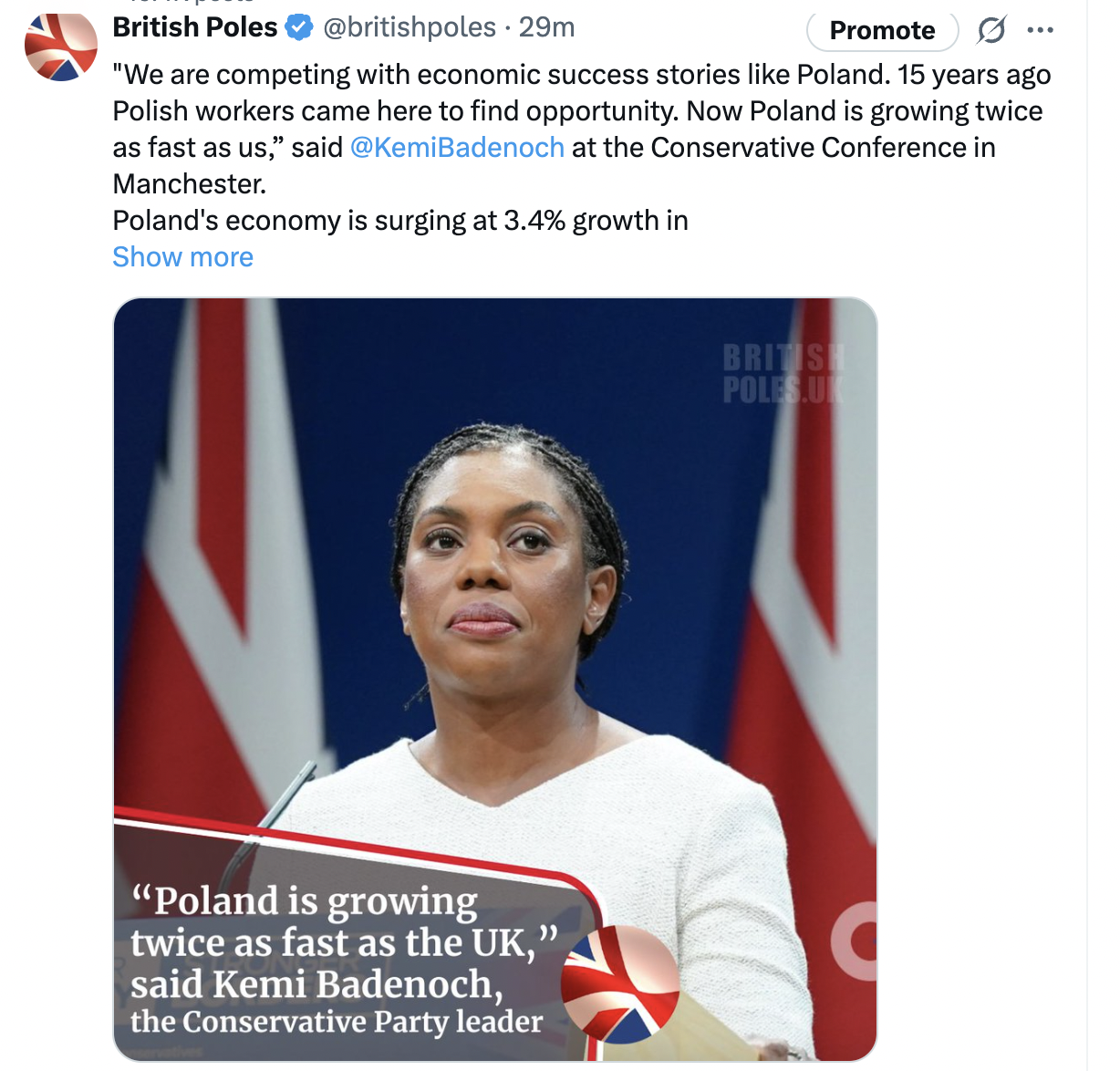
„15 years ago, Polish workers came here to find opportunity. Now Poland is growing twice as fast as we are,” the leader of the Conservative Party, Kemi Badenoch, said during her keynote speech at the annual Conservative Conference in Manchester.
You can listen to the full speech here: https://x.com/KemiBadenoch/status/1975867358486097969
Both public figures and ordinary X users commented on the remark by explaining what differences that could be named comparing Poland and the UK in various public policies.

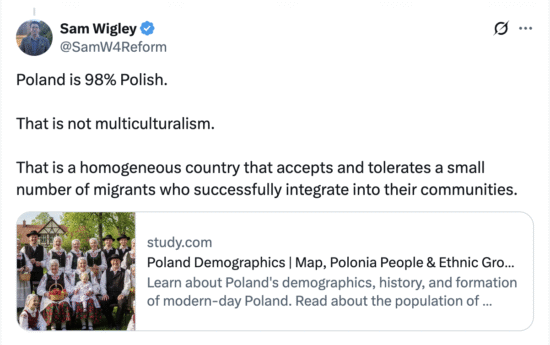
Most named tough migration norms and measures to preserve the national culture as key to Poland’s success.
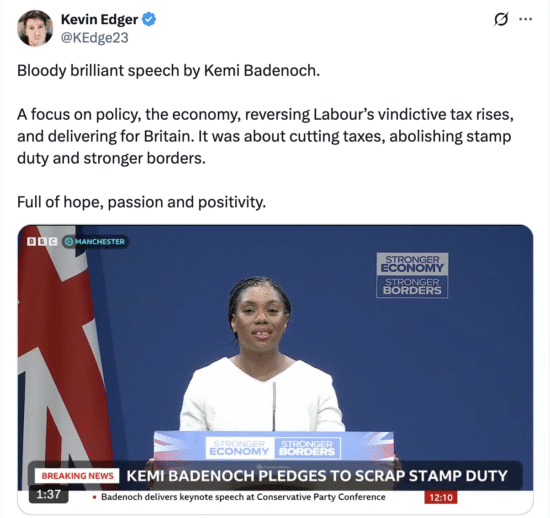
The Conservative Party leader also presented a plan for reforms whenever they come back to power, which concerns major changes in public spending, security and sovereignty.
The reform programme is centred on what it calls its “golden rule”: for every pound saved, half will go towards reducing the national deficit.
At the heart of the economic plan is a commitment to scrap Stamp Duty on primary residences, abolish business rates for retail, hospitality, and leisure firms, and cut electricity bills by £165 through scrapping the Carbon Tax and outdated renewable subsidies.
Entrepreneurs would be given easier access to banking services and HMRC, while schools would expand business coaching. A review of IR35 is promised to reduce red tape, alongside a “First Job Bonus” – a £5,000 tax cut for young people entering the workforce.
The party vows to double apprenticeships while tackling what it describes as “the university debt trap” by scaling back taxpayer funding for certain degrees deemed wasteful. In London, the London Plan would be rewritten to accelerate housebuilding.
On fiscal reform, the reform package promises deep cuts across the government. The civil service would be reduced to 2016 staffing levels, saving £8 billion, while welfare reform is expected to deliver £23 billion in savings by tightening eligibility – including restricting access to British citizens and lowering payments for “low-level” mental health conditions.
A further £4 billion would be saved by limiting social housing to citizens, £7 billion by cutting overseas aid, £3.5 billion by ending asylum hotels, and £1.6 billion from scaling back net zero schemes such as Great British Energy.
Law and order are another cornerstone of the plan. The party pledges 10,000 additional police officers, the introduction of “hot spot policing,” and a threefold increase in stop-and-search powers.
It promises zero tolerance of bad behaviour in schools and measures to curb judicial activism by reforming the appointment of judges and abolishing the Sentencing Council. The Home Office would be handed direct control over police operational priorities, and protections for veterans against prosecution would be strengthened.
Immigration policy is perhaps the most uncompromising area of the programme. The party pledges to leave the European Convention on Human Rights, the Council of Europe Convention Against Trafficking, and the Human Rights Act, while introducing sweeping powers to deport 150,000 people annually.
New illegal arrivals would be removed within a week, all foreign criminals deported, and asylum claims from illegal entrants banned altogether. The Immigration Tribunal and judicial reviews for immigration cases would be scrapped, alongside legal aid. Returns agreements with foreign governments would be backed by visa sanctions, while a dedicated removals force would enforce deportations.
In rural affairs, the party has declared a “Food and Farming Emergency” and pledged to review quangos such as Natural England, which it accuses of hindering growth.
The programme also includes a pledge to repeal the Climate Change Act, aiming to cut energy prices and free up billions from net zero commitments.
Advocates of the plan say the measures are bold, necessary, and economically prudent. Critics warn they represent a sharp break with established policy on welfare, climate, and immigration.
The Conservatives insist, however, that the proposals reflect the priorities of the public: security, sovereignty, and savings.
Source: K. Badenoch speech at the Conservative Party Conference
Photo: @DarrenMillarMS
Tomasz Modrzejewski