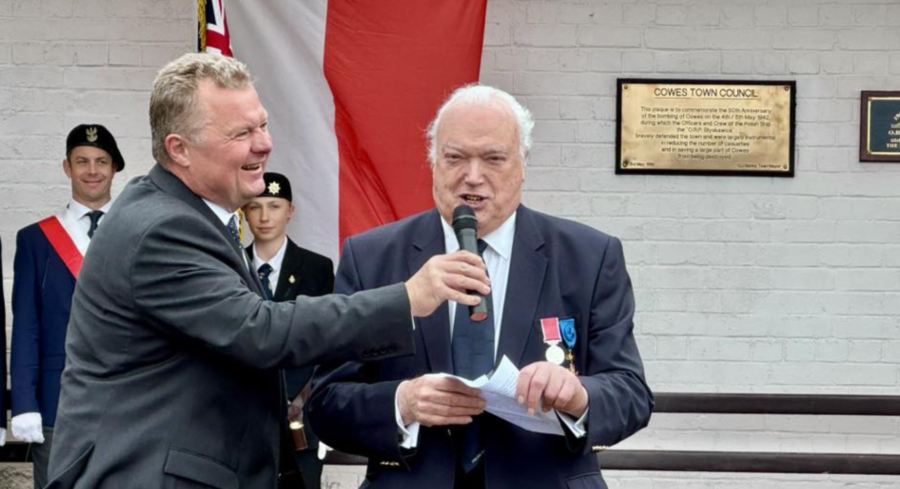
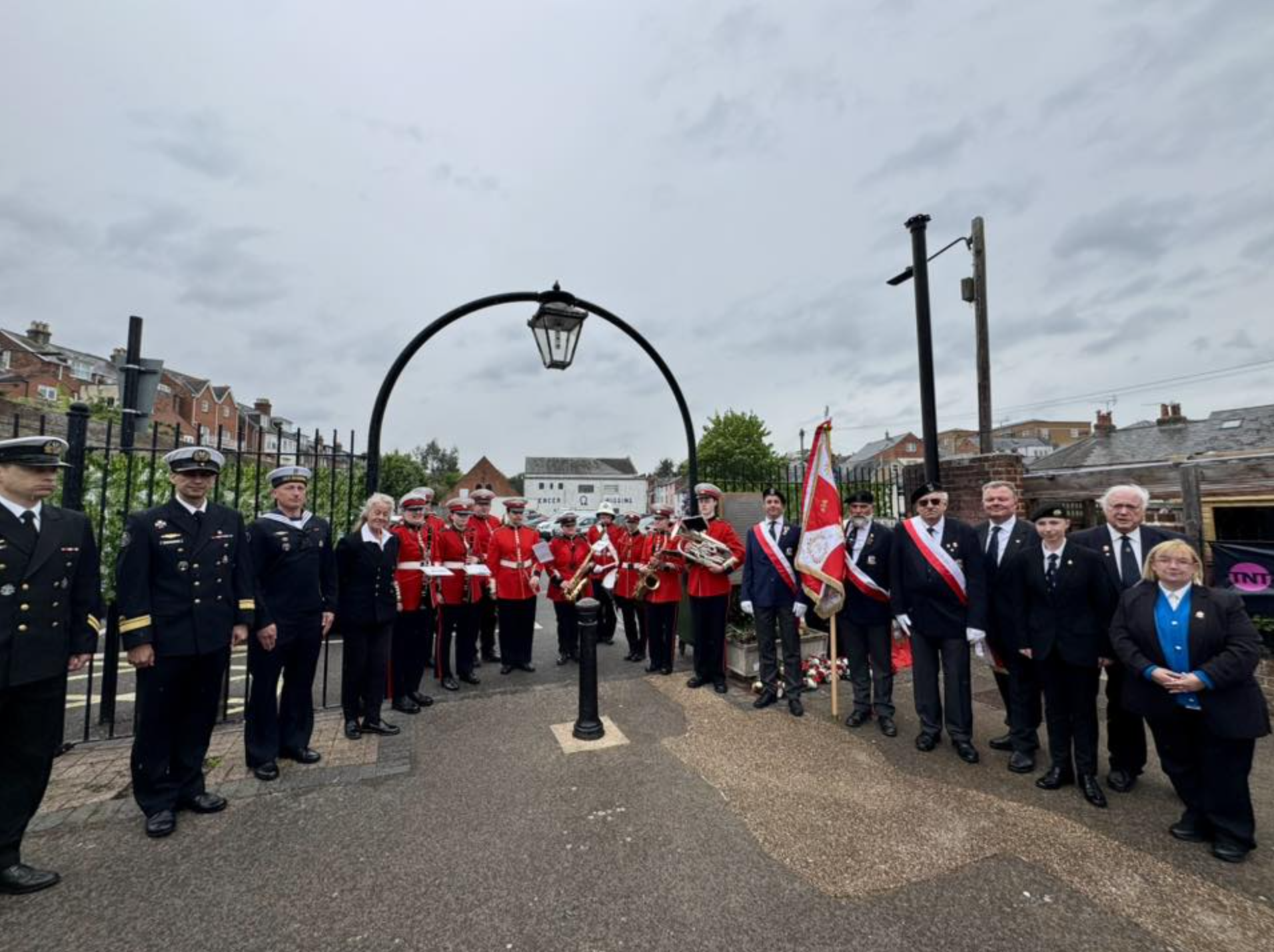
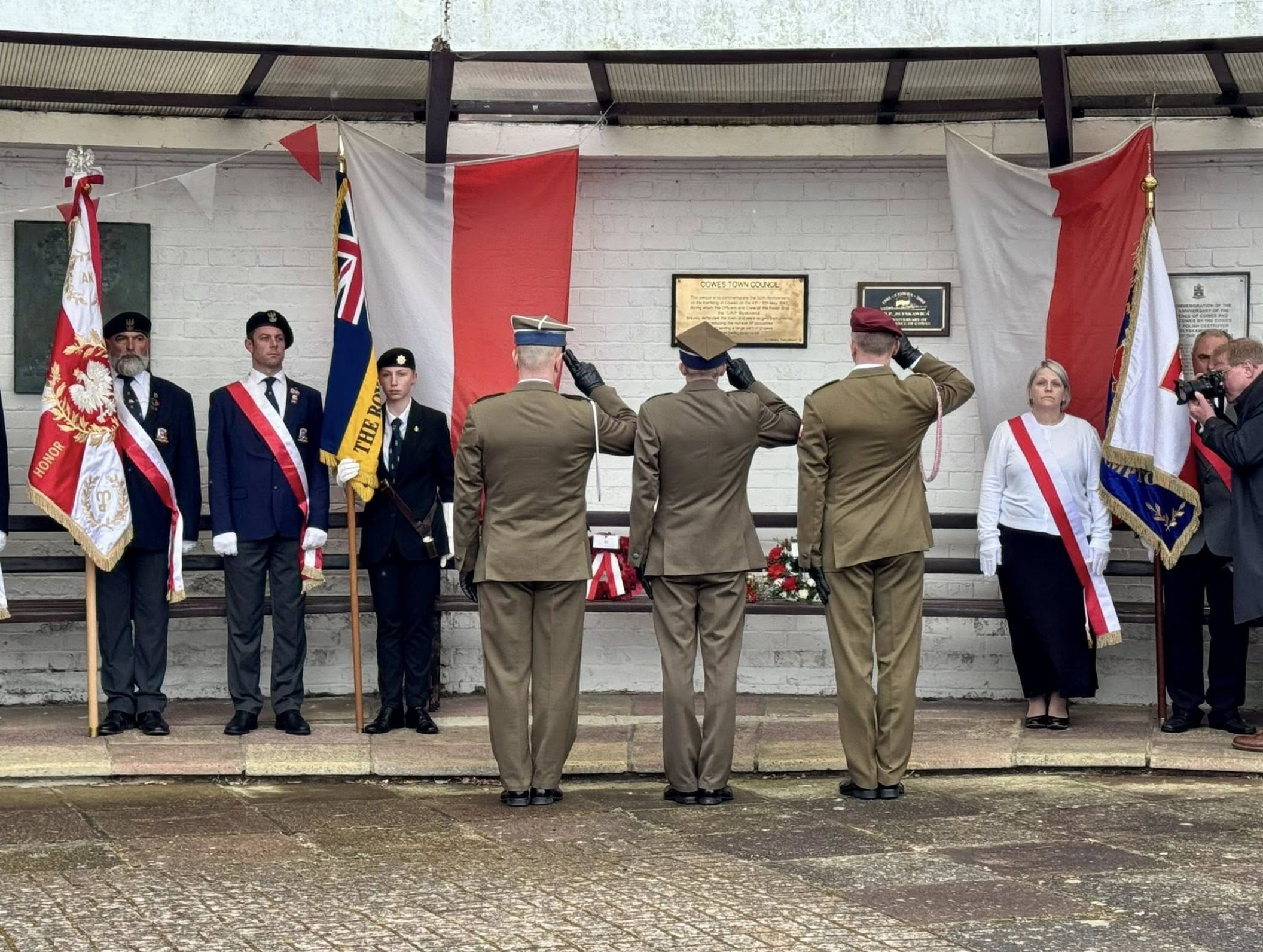
Every year, commemorative ceremonies are held on the Isle of Wight to honour the Polish sailors of ORP Błyskawica and their heroic defence of Cowes during the Second World War. To this day, the people of Cowes remember the dramatic night of 4–5 May 1942, when, under the command of Captain Wojciech Francki, the Polish destroyer defended the town against a heavy German air raid.
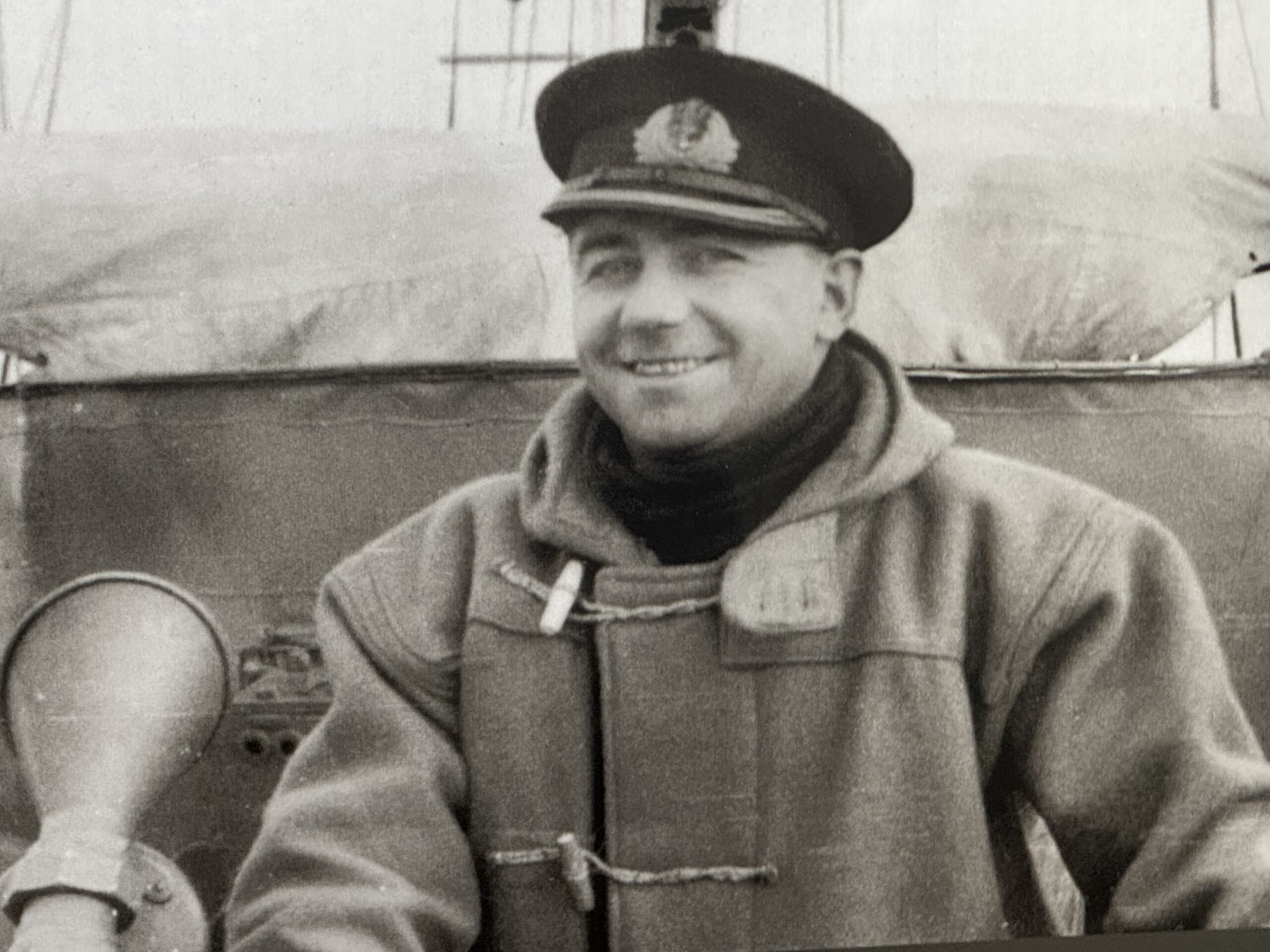
During this year’s commemorations, Geoff Banks, former Mayor of Cowes on the Isle of Wight (he was elected Mayor of Cowes a record 12 times!) and Honorary President of the Friends of the ORP Błyskawica Society, delivered a speech reflecting on the defence of Cowes and the lasting legacy of the Polish sailors. In 1997 Banks co-founded the society together with Polish veteran Colonel Otton Hulacki. Thanks to his efforts, the annual commemorations of the Polish destroyer’s defence of Cowes in May 1942 have become a major annual event, strengthening Polish-British friendship on the island.
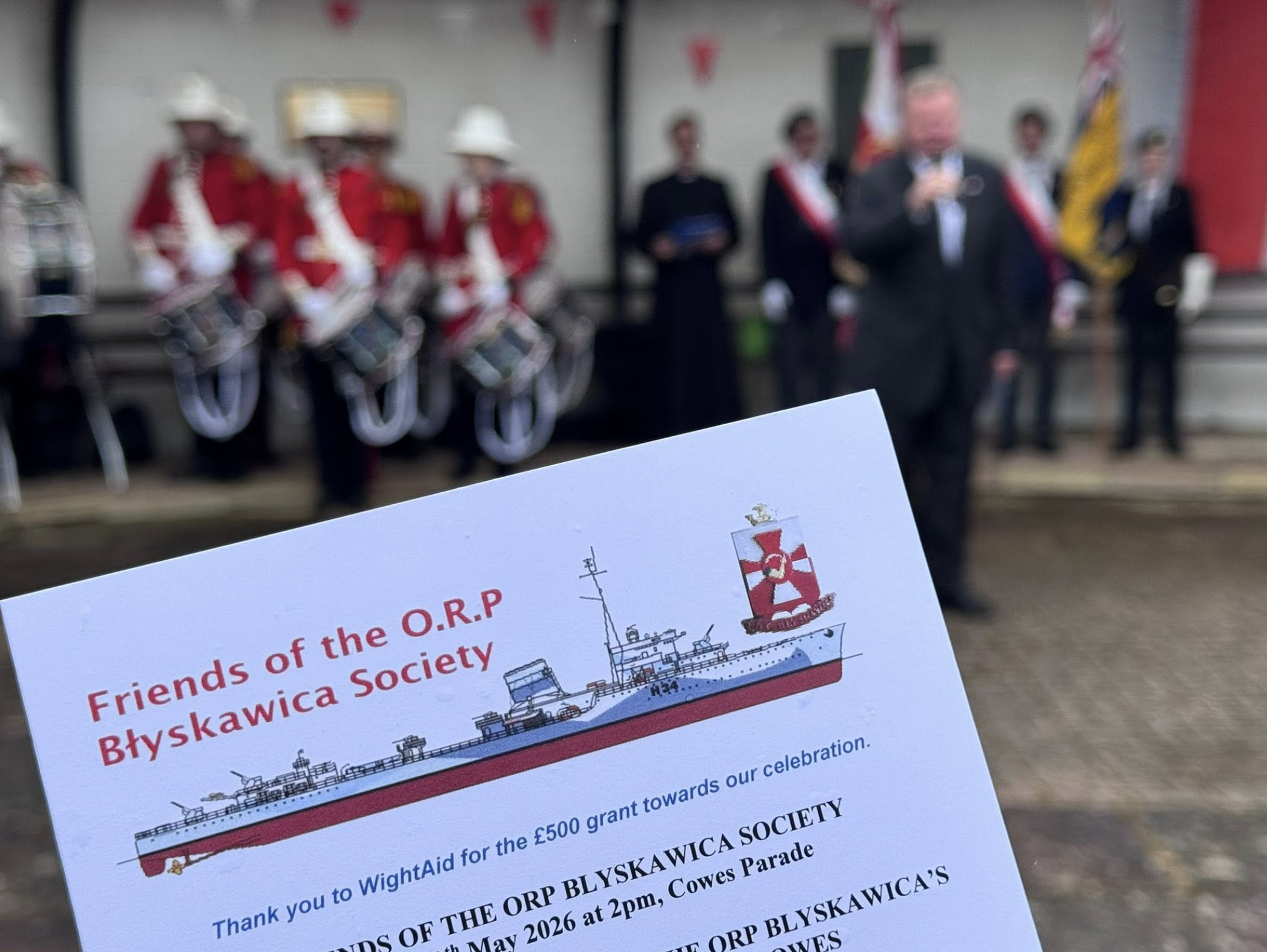
Below we publish the full text of his speech.
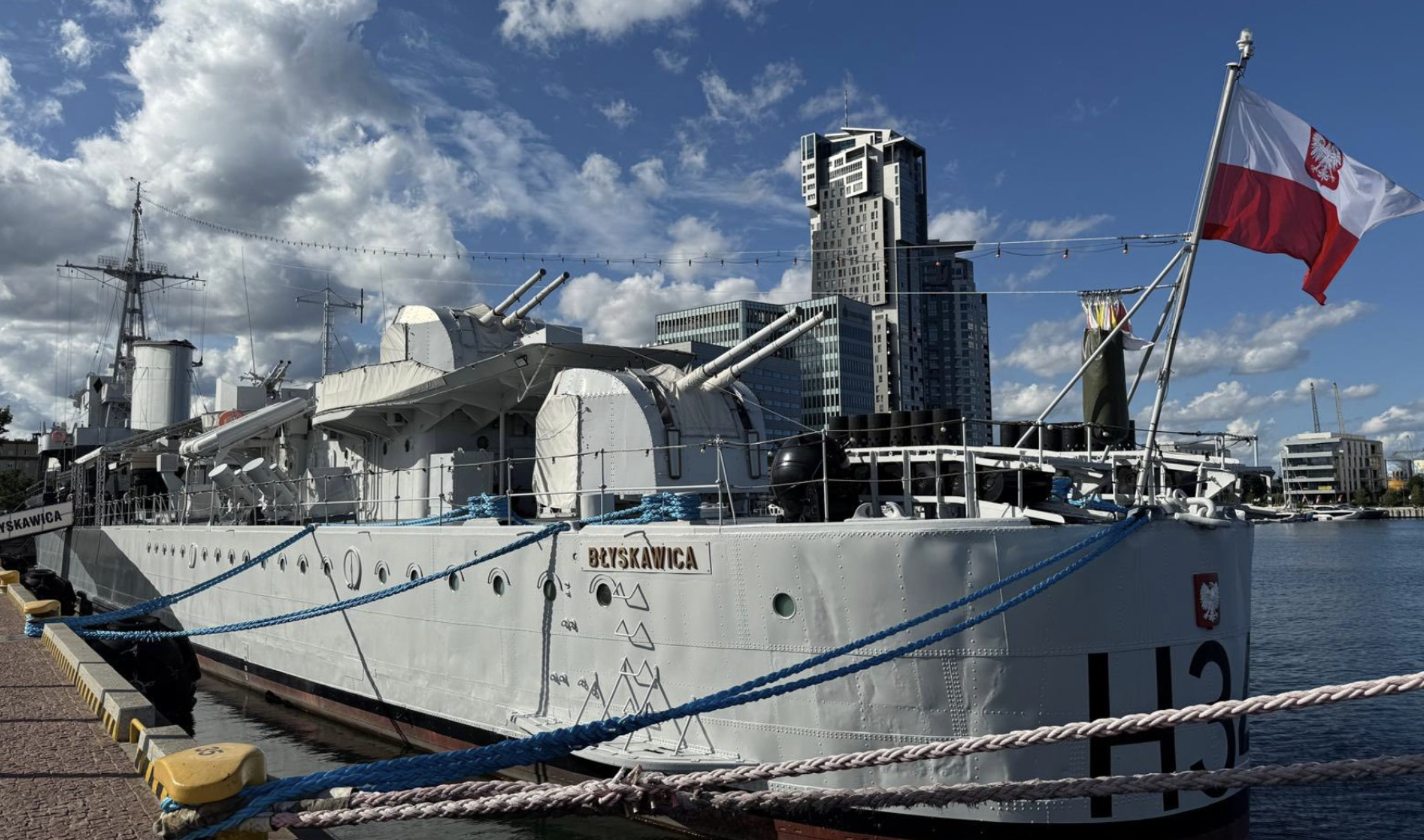
„In 1935/36 two destroyers were constructed in the shipyards of J S White in Cowes and East Cowes for the Polish Navy. They were the ORP Grom (Thunder) and ORP Błyskawica (Lightning). In sea trials Błyskawica attained a speed of 41½ knots, (47 mph) the fastest warship afloat at that time.
At the outbreak of WW2, Grom and Błyskawica escaped the port of Gdynia in Poland along with ORP Burza to become part of the Allied fleet under Royal Navy command yet retaining a full complement of Polish officers and crew. ORP Grom and ORP Błyskawica’s home port was now Cowes.
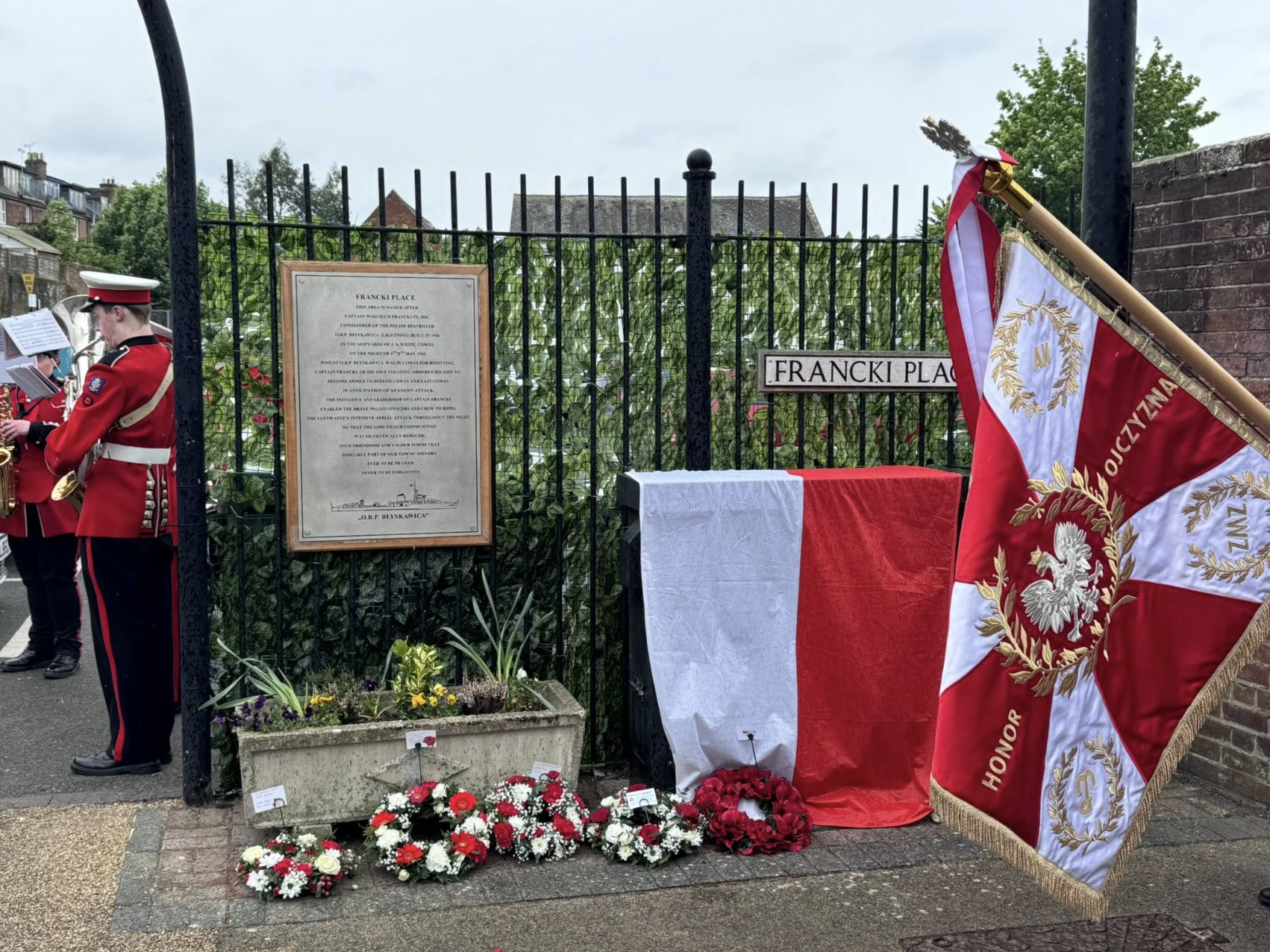
Sadly, after escorting convoys and taking part in many operations, ORP Grom was lost on 4th May 1940 in Rombaken Fjord off Narvik, Norway.
It was whilst Błyskawica was undergoing rearmament in Cowes in 1942, that on the 28th April six German reconnaissance aircraft strafed her and the local area resulting in the death of 6 civilians during a daylight raid.
The commanding officer of ORP Błyskawica, Captain Wojciech Francki, was therefore aware of a pending aerial attack on his ship and the industrial towns of Cowes and East Cowes which, at that time, were constructing warships for the Royal Navy and was the base of the Free French Chasseur flotilla.
According to Admiralty regulations, all warships when in port during wartime, had disarmed due to their proximity to residential areas.
Captain Francki requested that the Admiralty provide his ship with armament to defend Błyskawica and the towns, but such was refused. However, the captain secreted munitions onto the destroyer over several days and set up a 24-hour watch. He was only too aware of an impending attack.
Just before 11pm on 4th May the first wave of German fighter bombers began their attacks. The bombers used a variety of weapons: parachute flares lighting up their target, high explosive bombs and incendiary devices.
The destroyer set up a heavy barrage of anti-aircraft fire requiring that bucketed water had to be drawn from the river to douse and cool her guns.
Simultaneously Captain Francki sent out a small boat which set off smoke canisters to provide an impenetrable screen over the enemy’s target. The bombs and incendiaries became less effective as the bombers had to gain height with their target greatly obscured resulting in many bombs being dropped far away from their objective.
Further south along the river the Free French Naval units, stationed at Marvin’s Yard, opened fire with smaller calibre weapons: one French seaman was killed in this brave defensive action.
A second attack took place just before 2am on the following morning of the 5th May when emergency services from all over the Island were already there to give aid.
Polish sailors from ORP Błyskawica joined them, acting as firemen and diggers in support of the local teams. The captain also sent ashore the ship’s doctor and medical personnel to save lives and help the wounded.
Over 70 people had lost their lives and many more were injured that night. Even so, it was widely acknowledged that, but for the actions of the Polish destroyer’s Captain and crew on that fateful night the devastation would have been far greater. She was later hailed by townsfolk as “The Saviour of Cowes”.
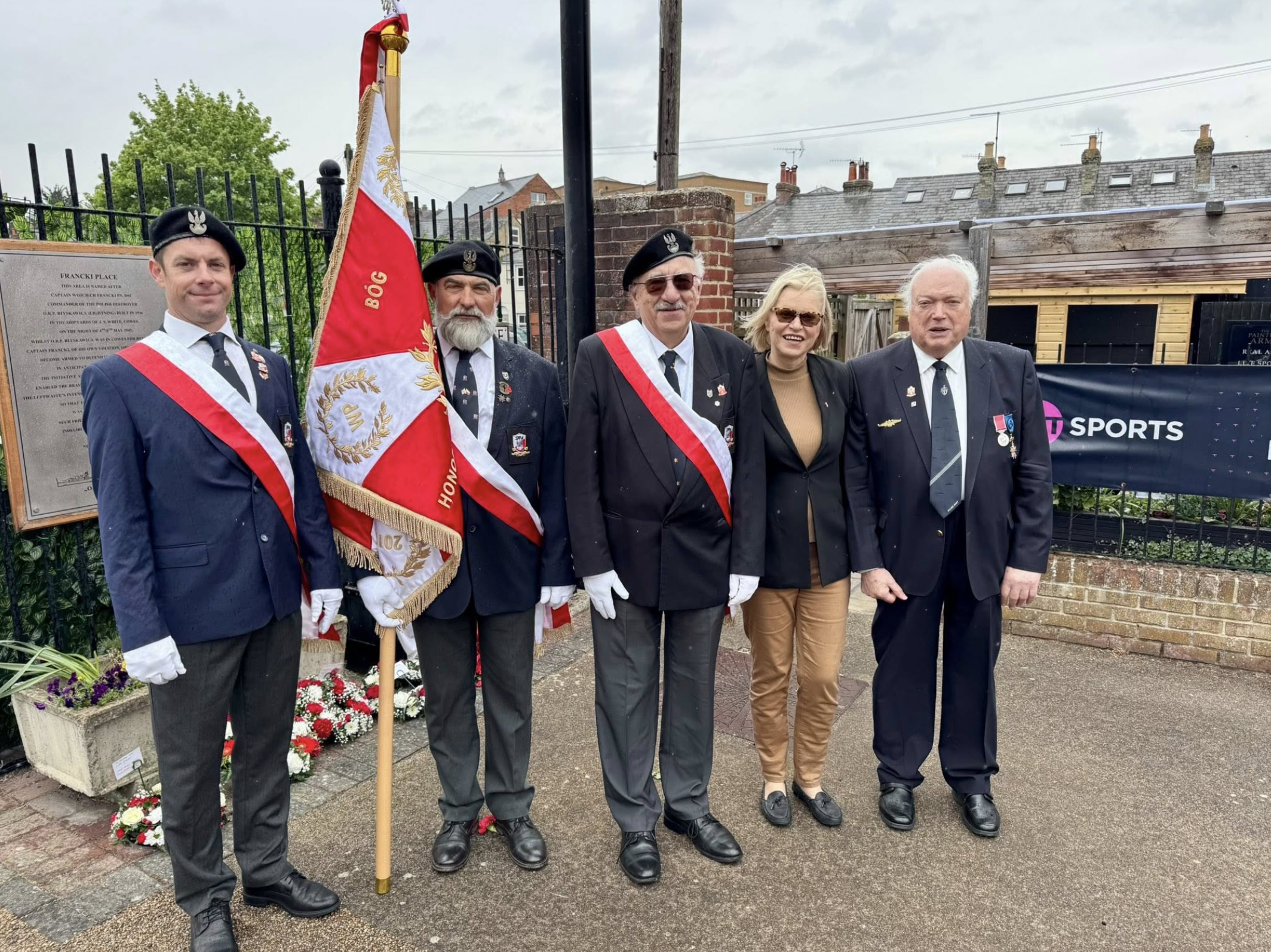
The leadership of the commander of the Polish warship, the bravery of the Polish sailors and the untiring action of the gun crews have entered into our local history and earned these courageous men the everlasting gratitude of the people of Cowes and East Cowes.
In 1997 The Friends of the ORP Blyskawica Society was formed and, since that time, our society has annually rightly and respectfully commemorated the events of the Cowes blitz of 1942.
ORP Błyskawica survived the war and is now an impeccably preserved floating museum ship in Gdynia Poland and rightfully the pride of the Polish Navy and the people of Poland.”
Maria Byczynski
Photos: British Poles