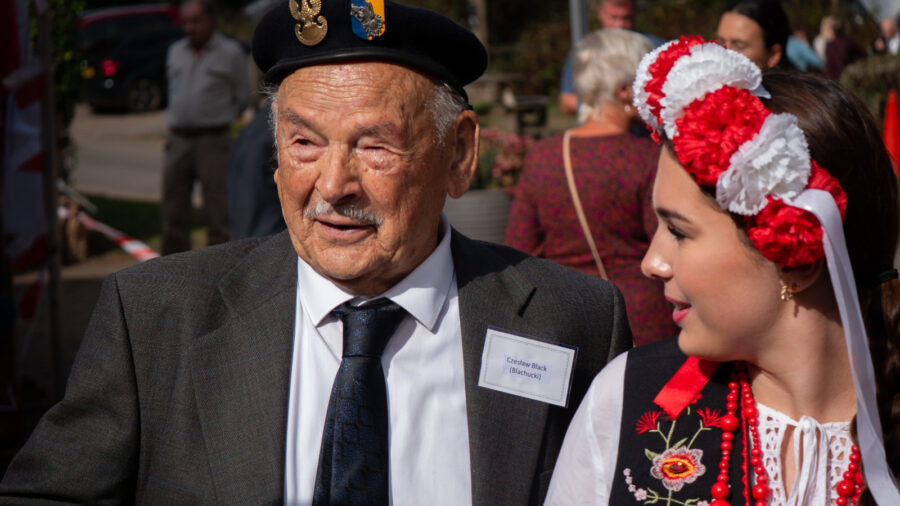
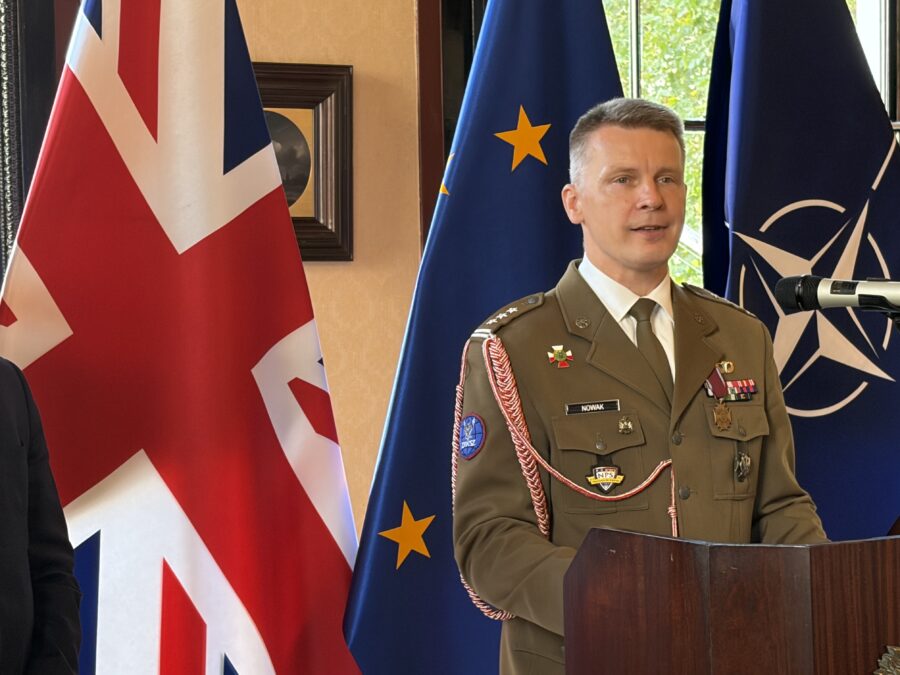
The Day of the Polish Diaspora and Poles Abroad is intended to highlight the centuries-long contributions of Poles living outside the country—their role in regaining Poland’s independence, their loyalty to Polish identity, and their support for the homeland in times of hardship.
On 2 May 2002, Poland marked the first official observance of the Day of the Polish Diaspora and Poles Abroad. The same date also honours the Flag Day of the Republic of Poland, introduced by an act of Parliament passed on 20 February 2004.

The celebration affirms the enduring bond with the motherland and the unity of Poles both at home and abroad. Meanwhile, the Flag Day of the Republic of Poland (celebrated on the same day) serves as a tribute to Polish statehood and history, symbolised by respect for the national flag.

The Polish diaspora in the United Kingdom has a long and significant history, marked by resilience, cultural preservation, and civic engagement. The first major wave arrived during and after World War II, when thousands of Polish soldiers and civilians, unable or unwilling to return to a Soviet-controlled homeland, settled in Britain. Many of them had served under British command during the war, including in the Battle of Britain and the Italian campaign at Monte Cassino.

The history of the famed 303 Polish RAF Squadron remains an important part of British Poles’ identity, as it is also considered by historians a key asset in the defence of the British Isles during the turning point of the 2 World War.

This generation laid the foundations of a vibrant Polish community, establishing churches, schools, veterans’ organisations, and cultural centres—most notably the Polish Social and Cultural Association (POSK) in London.
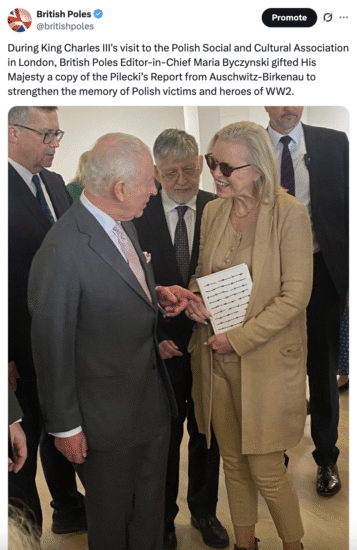
In more recent decades, particularly after Poland joined the European Union in 2004, the UK saw another large influx of Poles seeking work and education. Today, the Polish community is one of the largest ethnic minority groups in the UK. Polish organisations continue to play an active role in preserving language and heritage through Saturday schools, folk dance groups, and community events. At the same time, the diaspora is increasingly engaged in British public life, contributing to the economy, health services, education, and local governance, while maintaining strong ties with Poland.
It is estimated that around 21 million people of Polish origin or identity live outside Poland. The largest Polish diaspora communities can be found in the United States (approximately 10.6 million), Germany (around 2.1 million), Brazil (about 1.9 million), as well as in France and Canada (each home to roughly 1 million Poles).
Beyond those in Western Europe, the Americas, the Middle East, southern Africa and Australia, there are also Polish communities in Lithuania, Belarus, Ukraine, Kazakhstan, Turkmenistan and Russia.
Many of these Eastern communities did not choose their location voluntarily but faced deportations and other repressions during the time of shifting borders after World War II. The Poles living in the eastern territories of the Second Polish Republic suddenly found themselves outside the country. For decades, Soviet authorities forcibly deported Poles eastward, with countless individuals exiled to labour camps scattered across remote regions of the USSR.

The turbulent course of Polish history has been a key factor behind the large-scale migration of Poles across the globe. While many left due to war, occupation, or political persecution, others emigrated in search of better economic opportunities. Over the centuries, Poles fought tirelessly for independence—even in times when the nation lost its sovereignty and territory, hope for a free and reborn Poland never faded.
When oppression silenced voices at home, it was the Polish diaspora that spoke out. Time and again, Polish communities abroad stepped in to form military units in defence of their homeland’s freedom—most notably the American Polonia, which contributed volunteers to General Haller’s Blue Army.
The reconstruction of the Royal Castle in Warsaw, destroyed during World War II, became a powerful symbol of national revival, and the Polish diaspora played a crucial role in making it possible. In the 1970s and 1980s, Polish communities abroad, particularly in the United States and Western Europe, organised extensive fundraising campaigns.

Through foundations, cultural associations, and private donations, they contributed significant financial support, alongside valuable artworks and historical artefacts. This collective effort not only helped rebuild the iconic monument but also reaffirmed the enduring bond between Poles living abroad and their homeland.

One of the most remarkable examples of the activity of the Polish diaspora in action was the Union of Poles in Germany, existing between the 1920s and the 1930s, as well as members of various communities contributing to the Paris-based Kultura journal operating from the famous Maison Lafitte, and shifting the future international policy for independent Poland.
Source: PAP, Przystanek Historia
Photo: British Poles
Tomasz Modrzejewski