In 2008, Ukraine was promised eventual NATO membership. However, the conditions and timing of the accession were never specified. While Ukraine remains an aspiring member and an Enhanced Opportunities Partner, it cannot benefit from one of the most important perks of NATO membership, namely the collective defence commitment. In response to Russia’s annexation of Crimea in 2014, NATO has increased its presence in the Black Sea region.
https://twitter.com/NATOpress/status/1475556665953034241?s=20
Since October 2021, global policymakers have become increasingly concerned about the accumulation of Russian military equipment and soldiers on the border with Ukraine. Rumoured risk of a military incursion by Russia has prompted British politicians to re-evaluate their commitments and discuss the possibility of a Ukrainian accession to NATO. In early December, MP Daniel Kawczynski, a British Conservative Party politician of Polish origin, initiated a Westminster Hall Debates on Ukrainian NATO Membership.
MP Kawczynski explains the lessons from Polish history
The Westminster Hall Debate on December 8 concerning the Ukrainian NATO Membership gained much attention in the British Parliament and beyond. Only a day earlier, the Members of the House of Commons expressed diverging views on the prospects of Ukrainian accession to NATO during a December 7 Debate on Ukraine.
https://twitter.com/EdwardLeighMP/status/1468210193603440644?s=20
A particularly memorable opening speech of the December 8 debate was given by a Polish-born MP, Daniel Kawczynski, who is probably the sole member of the Conservative Party born in a communist country.
https://twitter.com/DKShrewsbury/status/1468638606109691907?s=20
In his speech, Mr Kawczynski reflected on the memories of communist Poland and suggested similarities with the current threats concerning Ukraine.
“I used to go back to communist Poland two or three times a year to see my beloved grandfather when he was still alive. I understand what the Russians are capable of. I saw it in the country of my birth, Poland, where they had instigated and forced on the country an economically illiterate and politically Orwellian system, which—thank goodness—finally collapsed in 1989. We know what the Russians did to our partners behind the iron curtain between the end of the second world war and 1989, trapping all those European partners behind the iron curtain. The Russians are now trying to trap our Ukrainian partners behind a new iron curtain that they want to impose in what they perceive to be their sphere of influence.” (MP Daniel Kawczynski, December 8)
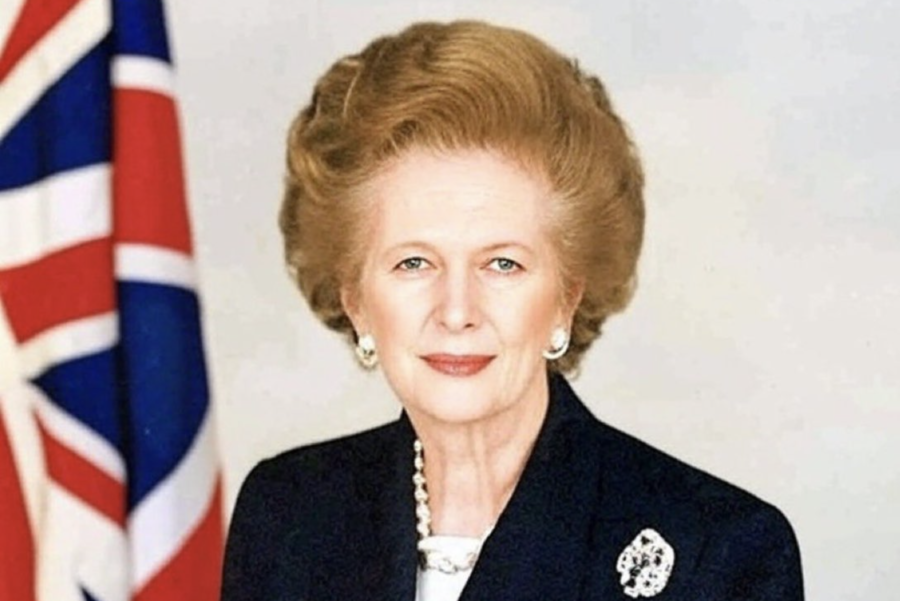
MP Kawczynski suggested that constructive dialogue needs to be established with Russia to effectively assess the situation in conflict areas of Donetsk and Luhansk, which are in the Donbas region of Eastern Ukraine. In his opinion, Margaret Thatcher and Ronald Regan are excellent examples of how to negotiate with Russia “from a position of strength”. He also talked about the time he met Margaret Thatcher, who contributed to the success of the Polish Solidarity movement and democratization of post-communist countries.
“I had the opportunity, when I was first elected in 2005, to meet Margaret Thatcher and thank her for the unique role that she played during the cold war, in giving material and moral support to the Solidarity movement in Poland, which was essential in helping the democratic movements in those countries to persevere in their fight against Soviet and communist oppression.” (MP Daniel Kawczynski, December 8)
At the end of his speech, MP Kawczynski mentioned Poland’s accession to NATO. He reflected on the “lessons learned” from the sceptical stance of Western democracies towards NATO membership of Central-European states in 1999.
“Finally, I come to British leadership on our continent. Do Members remember what they used to say to us in 1999 when Poland, the country of my birth, joined NATO? Do they remember what they said to us when Poland and the Czech Republic joined NATO, when those central European countries were given part-defence partnership with us? They said that it was a step too far, that it would cause world war three and that it would trigger some sort of conflagration that would destroy Europe. That is what they told us: “Don’t give the Poles NATO membership, it is too dangerous. Let’s just leave them there, in the Russian sphere of influence.” That is absolutely disgusting and disgraceful. That is not the British way. However, we showed that leadership to ensure that our friends in Poland, the Czech Republic, and other central and eastern European countries were given that right to join NATO.” (MP Daniel Kawczynski, December 8)
British politicians comment on the path forward
In November, Defence Secretary Ben Wallace announced that an Intergovernmental Framework Agreement was signed with Ukraine. As a result, the UK will help strengthen the militarily capabilities of Ukraine’s Naval Forces. The agreement is an extension of a Memorandum of Implementation signed earlier in June, which offered Ukraine “two Royal Navy Sandown-class minehunters, assistance in building new naval bases in the Black Sea and Azov Sea, and the development and joint production of eight new missile vessels”.
On 23 December, Foreign Secretary, Liz Truss, issued a statement on the crisis:
“Russia’s military build-ups on the border of Ukraine and in illegally-annexed Crimea are unacceptable. Any Russian incursion would be a massive strategic mistake and would be met with strength, including coordinated sanctions with our allies to impose a severe cost on Russia’s interests and economy. The UK’s support for Ukraine is unwavering.” (Foreign Secretary, Liz Truss, December 23)
The situation remains unpredictable in 2022, as, over the Christmas break, Russia removed a small fraction of the estimated 70’000 to 100’000 troops stationed at the border with Ukraine.
Author: Marta Kąkol
Marta has recently graduated from Utrecht University, obtaining a Bachelor of Science in Philosophy, Politics and Economics. Thanks to her interdisciplinary education, she can apply multiple perspectives to complex political issues. She vocalizes her interest in public affairs in a multitude of ways, from journalistic writing to organising speaker events. She hopes to gain funding for her Master’s in European and International Public Policy at LSE starting in 2022.
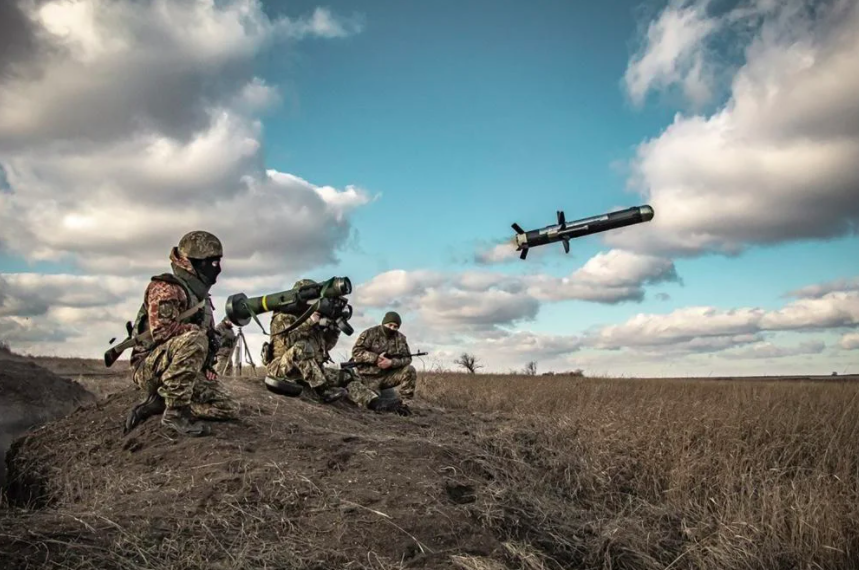
Main picture: Ukrainian Defense Ministry Press Service via AP