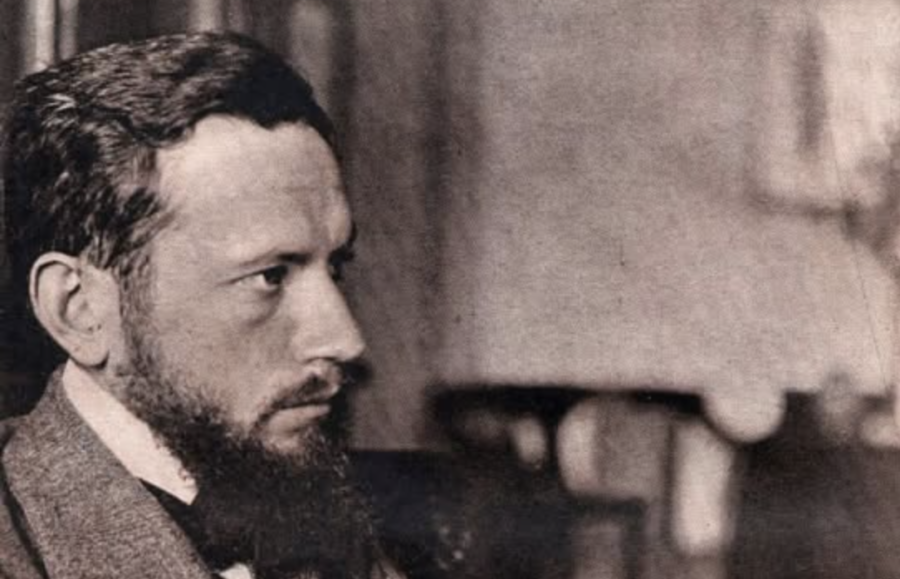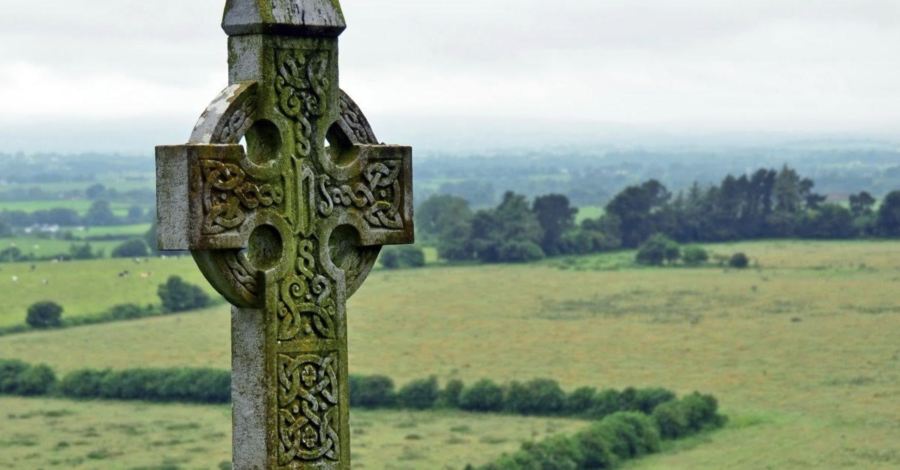
Saint Patrick was born in Roman Britain at the end of the fourth century, probably in 387 AD. Although the exact date of his birth remains unknown, his life and actions have left a deep mark on the green island’s history. Today all Irish celebrate St. Patrick’s as their national holiday worldwide.
At the age of 16, he was kidnapped by Irish pirates and spent six years in captivity. He managed to escape and return to Britain but later returned to Ireland as a missionary to convert its people to Christianity. He died on 17 March 461.
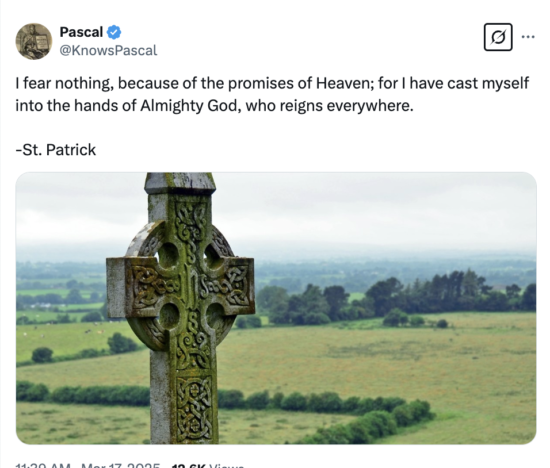
One of the most famous legends about St Patrick is that he drove all the snakes out of Ireland. This is probably a metaphor referring to his missionary work and conversion of pagans.
The patron saint of Ireland is also associated with the clover, whose three leaves were thought to symbolise the Holy Trinity.
St Patrick’s Day has been celebrated in Ireland for centuries, at first as a religious holiday. In 1903 it became an official national holiday. The traditional services in churches were followed by cultural and social events such as festivals, meetings and feasts with Irish food and drink.
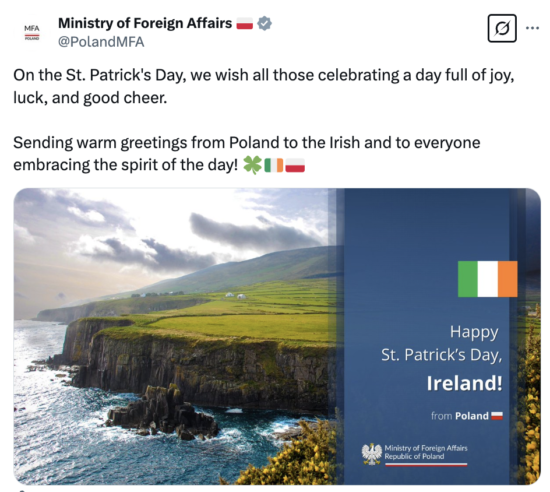
Green has become an intrinsic colour associated with St Patrick’s Day, symbolising Ireland, known as the emerald isle. On this day, many of the world’s famous buildings, such as the Sydney Opera House, the Eiffel Tower and the Empire State Building in New York, are illuminated in green.
Since 1962, the Chicago River has also taken on this colour thanks to the use of eco-friendly dyes.
In the UK, St Patrick’s Day is not only celebrated by people of Irish descent. In London, there is a popular parade and festival in Trafalgar Square, also Glasgow hosts one of the country’s biggest events.
Source: PAP
Photo: @KnowsPascal
Tomasz Modrzejewski