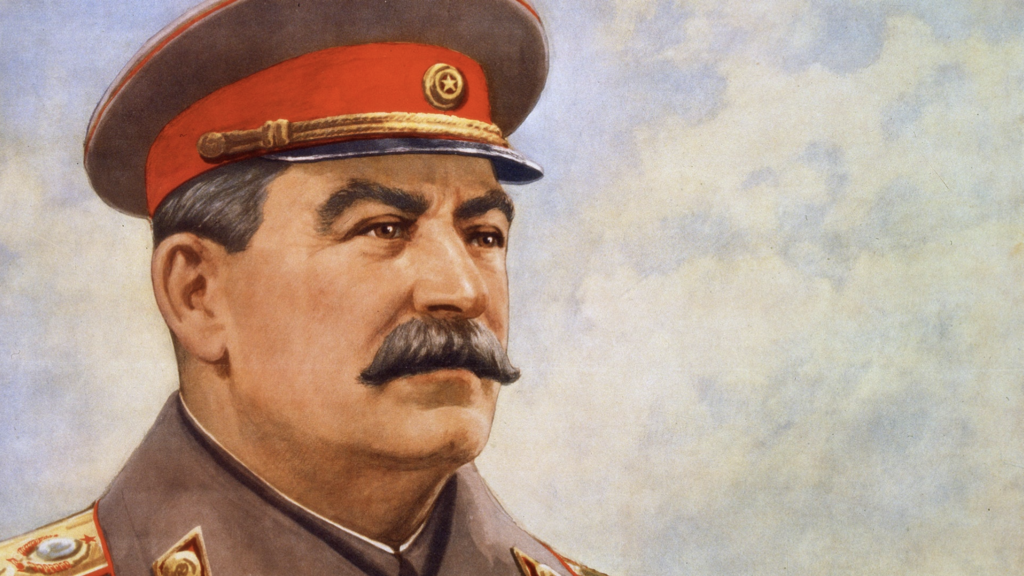
Ioseb Besarionis dze Jughashvili, best known as Joseph Stalin, ruled the Soviet Union with an iron fist from the late 1920s until he died in 1953. He remains one of the most reviled figures in human history – and rightly so.
His reign of terror, marked by widespread repression, forced labour camps, and mass executions, earned him a place among the ranks of history’s most ruthless dictators. Stalin’s policies and actions resulted in the suffering and deaths of millions of innocent people in Europe and Asia.
Stalin’s ascent to power came after the Russian Revolution of 1917. Initially serving in lower-level positions within the Bolshevik Party, Stalin succeeded Vladimir Lenin as the leader of the Soviet Union. Once in power, “Koba” implemented a series of draconian policies aimed at consolidating his authority and transforming the Soviet Union into a totalitarian state.
https://twitter.com/VoCommunism/status/1765014410027020764
One of Stalin’s most infamous policies was his campaign of forced collectivisation, which sought to collectivise agriculture and eliminate private farming. Peasants who resisted were brutally suppressed, with millions being deported, imprisoned, or executed. The resulting famine, known as the Holodomor, claimed the lives of an estimated 3 to 7 million people (mainly Ukrainians), making it one of the deadliest famines in history.
https://twitter.com/ipngovpl_eng/status/1764910969493602553
Stalin’s purges, carried out under the pretext of rooting out so-called „counter-revolutionaries” and „enemies of the state,” targeted not only political opponents but also intellectuals, artists, and anyone perceived as a threat to his regime. The purges reached their peak during the Great Terror of the late 1930s, when thousands of party officials, military officers, and ordinary citizens were arbitrarily arrested, tortured, and executed. The exact number of victims remains unknown, but estimates probably exceed a million.
One of the symbols of Stalin’s rules is undoubtedly the gulag system, a network of forced labour camps, in which millions of people, including political prisoners and dissidents were subjected to systematic abuse.
It is worth keeping in mind that Stalin’s ruthlessness extended far beyond the borders of the Soviet Union. His regime sponsored espionage, assassinations, and subversion in foreign countries, aiming to spread communist ideology and expand Soviet influence. The Molotov-Ribbentrop Pact of 1939, a non-aggression treaty between the Soviet Union and Nazi Germany, paved the way for the Soviet invasion of Eastern Europe, with Poland as the key target.
Unfortunately, a significant portion of Russian perceive Stalin positively. Between 1999 and 2023, a total of 95 monuments dedicated to Stalin were erected in Russia, bringing the overall count to 110, with 22 of them being full-scale statues. According to an April 2019 poll conducted by the Levada Center, 70% of Russians approved of Stalin’s role in Russian history, marking the highest level of approval ever recorded. Additionally, over one in two respondents (51%) viewed Stalin in a positive light.
Image: Shutterstock
Author: Sébastien Meuwissen