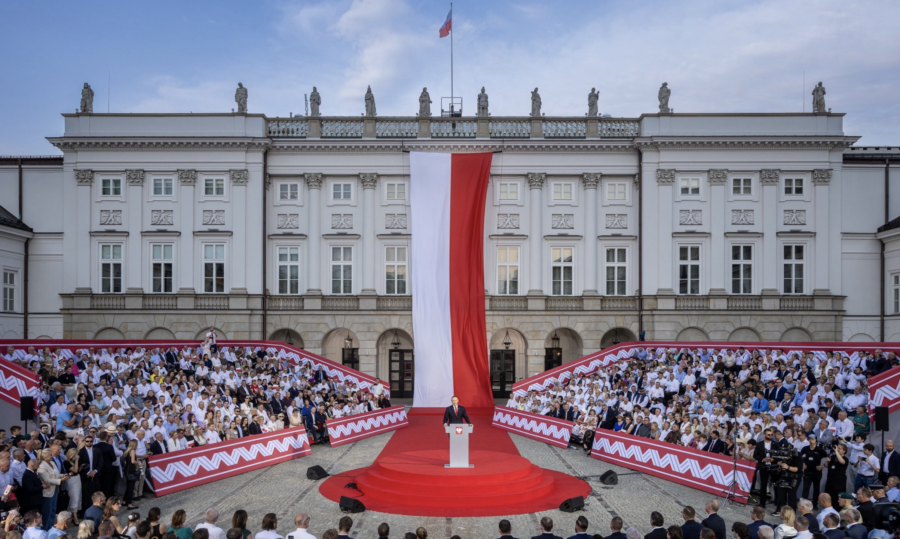
In a day-after Polish presidential election article, Telegraph’s Mark Almond writes that “the result of the Polish election is good for the West, but not for the EU project”.
According to the author, the result that has unsettled both Brussels and Moscow, Karol Nawrocki has emerged victorious in Poland’s presidential election, dashing the hopes of Western liberals and frustrating Eastern strategists alike. The election marks a significant shift in the European political landscape, affirming Poland’s ongoing independence of thought and action in foreign and domestic affairs.
The European Commission had openly backed the liberal, pro-European candidate Rafał Trzaskowski, the Mayor of Warsaw, whose progressive positions on abortion, LGBT rights, and migration aligned closely with EU orthodoxy. Trzaskowski was seen as a key ally of Poland’s pro-Brussels Prime Minister and former European Council President, Donald Tusk. However, these values found limited traction with Polish voters, who turned instead to the conservative Nawrocki.
Nawrocki’s election is a double-edged sword for Ukraine. While he stands firmly against Russian aggression and has long advocated for the removal of Soviet-era monuments in Poland—a move that has drawn ire from the Kremlin—his stance on Ukrainian-Polish relations is more complex. Unlike the Kremlin-friendly governments in Hungary and Slovakia, Nawrocki is no apologist for Moscow. Yet, he and outgoing President Andrzej Duda have not overlooked the historical frictions between Poland and Ukraine, which recent geopolitical alignments had temporarily masked.
Economic tensions are also at play. Polish farmers, who formed a key part of Nawrocki’s support base, have opposed EU measures to lift trade restrictions on Ukrainian agricultural products, a policy that threatened domestic interests. Although the EU has recently reinstated some tariffs, the broader context of Ukraine’s EU accession talks has raised fresh concerns over future free trade in foodstuffs.
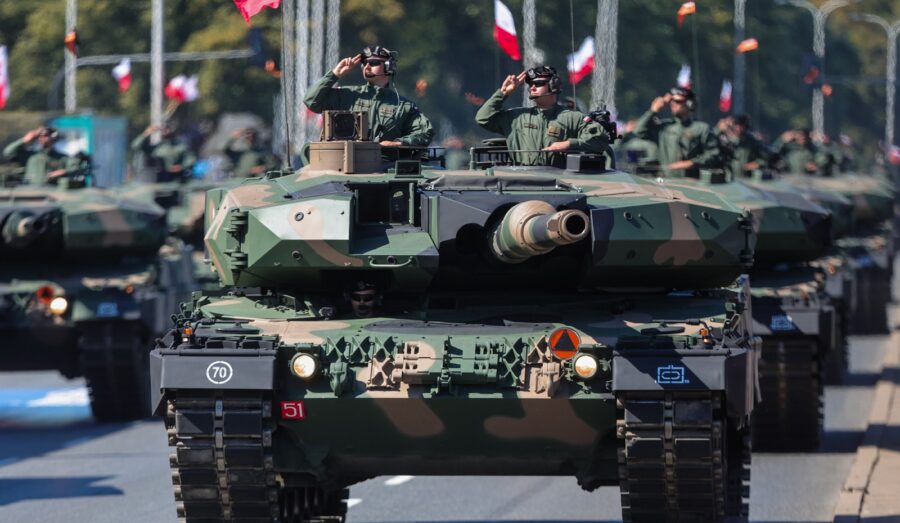
Poland’s rapid economic growth—outpacing the stagnating economies of Germany, France and Italy—has fortified its defence sector and given Warsaw an increasingly assertive voice in European security. Nawrocki’s victory ensures that Poland will continue to prioritise US military leadership over the European strategic autonomy championed by French President Emmanuel Macron.
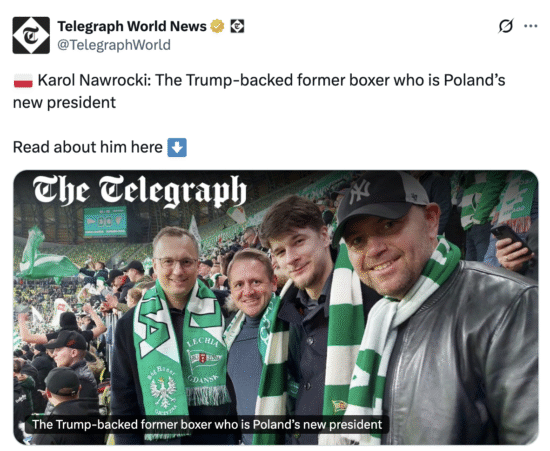
Crucially, the presidency grants Nawrocki significant influence over Poland’s foreign and defence policy. His win is seen as a boon for former US President Donald Trump, signalling a return to stronger Polish-American ties and weakening the position of Donald Tusk, viewed by many as Brussels’ representative in Warsaw. Nawrocki benefited from vocal support by prominent US Republicans in the run-up to the election, marking this as a rare populist triumph after recent setbacks for similar movements in Germany and Romania.
For Trump-aligned conservatives, Nawrocki’s win is more than a domestic victory—it is a template. It underscores the possibility of building robust, US-led defence structures in Europe without falling in line with the EU’s liberal consensus. While Nawrocki’s election may represent a win for the broader West, it comes as a clear rebuke to the vision of a more centralised, progressive “Europe.”
In the shifting balance of European power, Poland under Nawrocki appears set to continue challenging established norms and expectations.
Source: Telegraph
Photo: @NawrockiKn
Tomasz Modrzejewski