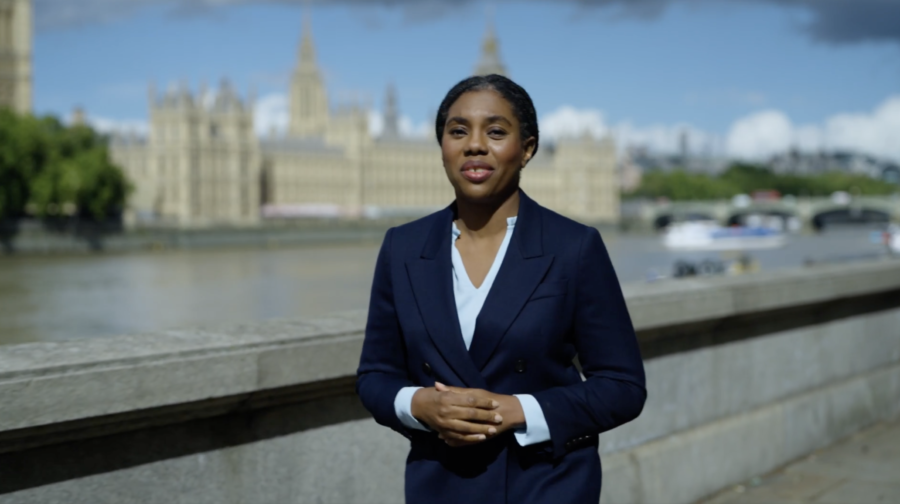
Kemi Badenoch’s Conservatives declared openness to cooperate with Nigel Farage’s party to protect the Brexit referendum outcome. Katie Lam, the Shadow Communities Secretary, suggested that parties opposed to reversing Brexit would ultimately have to decide where they stood if a new campaign for EU membership gathered momentum.
Ms Lam, who backed Leave in the 2016 referendum, argued that rejoining the bloc would saddle Britain with heavier regulation, reduced flexibility and greater spending commitments at a time when the country should be pursuing faster growth.
She said a return to the EU would take Britain “in exactly the wrong direction” and described the idea as politically and economically misguided.
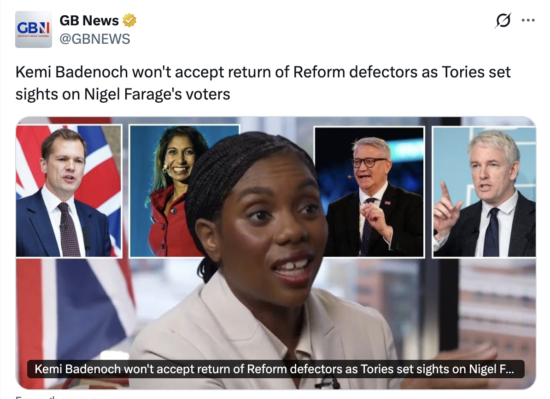
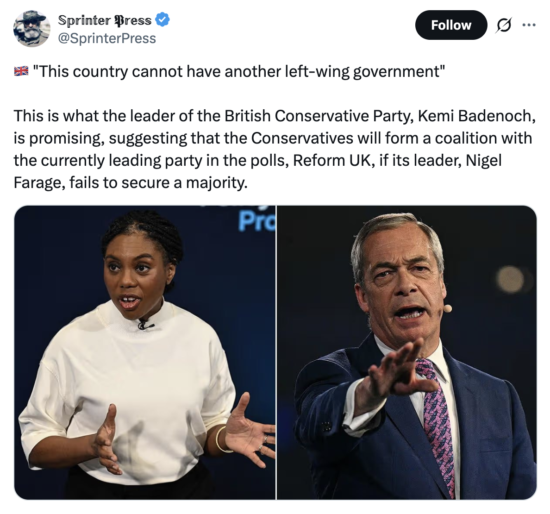
Her comments are likely to attract attention because Conservative leader Kemi Badenoch has repeatedly rejected the prospect of a formal electoral pact with Reform UK.
However, Ms Lam’s remarks indicate that the Conservatives and Reform could nevertheless end up campaigning towards the same objective if a future government sought to reopen the question of Britain’s EU membership.
Speaking to The i Paper, Ms Lam said returning to the bloc would be “completely mad” because of the consequences for regulation, economic agility and public spending. She also argued that overturning the referendum result would be profoundly undemocratic.
The Tory frontbencher insisted that the Conservative Party was united in opposing any attempt to reverse Brexit, despite the fact that a significant number of senior Conservatives supported Remain during the 2016 campaign.
She said there was “no world” in which rejoining the EU would be a sensible course of action and criticised Andy Burnham for suggesting that Britain should once again consider membership of the bloc.
Ms Lam argued that the referendum had taken place only a decade ago and that its result could not simply be disregarded because political leaders were unhappy with the outcome.
Her intervention follows comments from Mr Burnham indicating that he is prepared to consider a wide range of options for Britain’s long-term relationship with Brussels.
Mr Burnham, who had previously reassured voters in the Brexit-supporting constituency of Makerfield that he would not seek to take Britain back into the EU, said the country could not be excluded from a wider debate about Europe’s future.
He said Britain needed to consider where it wanted to be in ten years and suggested that the existing relationship with the EU should not automatically be regarded as permanent.
Mr Burnham argued that public opinion had changed since the 2016 referendum and said political leaders had a responsibility to examine alternative models for Britain’s relationship with Europe.
He pointed to proposals raised by former Chancellor George Osborne, as well as discussions surrounding Canada’s relationship with the European Union, as examples of the different arrangements that could be considered.
Mr Burnham said the Government should have an “honest and grown-up conversation” with the public about the available options before eventually setting out the advantages and disadvantages of each approach.
Such remarks would represent a significant political shift if adopted as official Labour policy.
Labour’s 2024 general election manifesto explicitly ruled out rejoining the European Union, returning to the single market or customs union, or restoring freedom of movement.
The prospect of reopening the Brexit debate has also prompted warnings from figures within Labour itself.
Graham Stringer, a long-standing Eurosceptic Labour MP, dismissed suggestions of rejoining the bloc as little more than an attempt to appeal to pro-EU voters.
He warned that gradually transferring powers back to European institutions would be a serious political mistake.
Business Secretary Jonathan Reynolds has likewise cautioned against reigniting the arguments of the 2016 referendum, warning that another prolonged debate over EU membership could create fresh uncertainty for businesses and the wider economy.
The row leaves Brexit once again emerging as a potential dividing line in British politics, with Conservatives and Reform likely to oppose any move towards renewed EU membership even if they stop short of forming a formal alliance.
For Mrs Badenoch, that could create an awkward distinction between rejecting an electoral pact with Mr Farage and acknowledging that the two parties may find themselves fighting on the same side of one of the most consequential constitutional questions facing the country.
Adam Domaniewski
Photo: X @KemiBadenoch