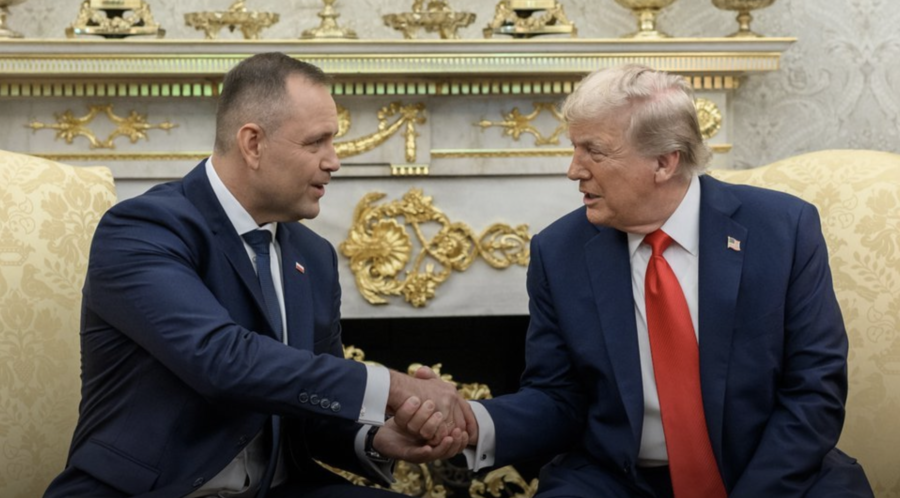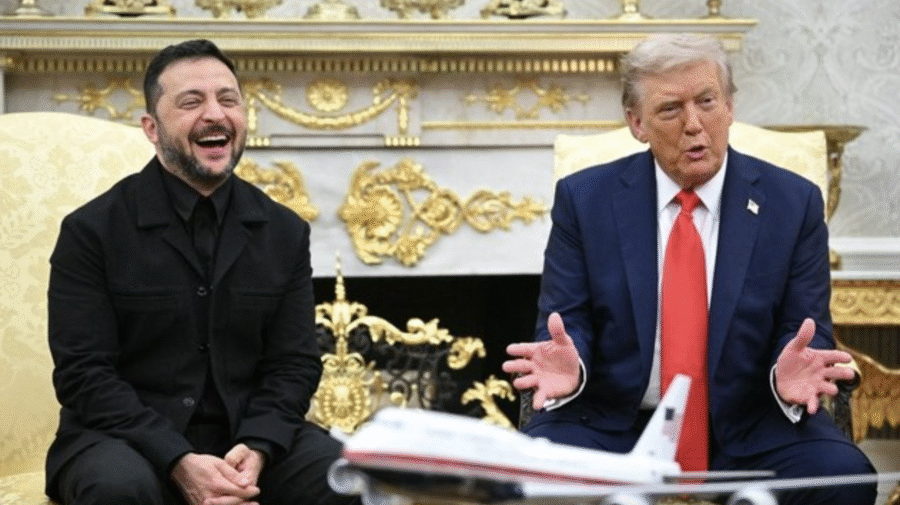
US President Donald Trump has indicated that Washington is ready to assist Europe in establishing long-term peace and security in Ukraine. Speaking on Monday during a meeting with Ukrainian President Volodymyr Zelensky in the Oval Office, Trump said that discussions would focus on security guarantees reminiscent of NATO’s Article 5. He also suggested that Europe might consider forming its peace-supporting mission in Ukraine, with American backing.
According to Trump, the issue of security commitments would be at the heart of talks later in the day with a broader group of European leaders.
When asked if he envisaged sending US troops to Ukraine once active fighting ceases, the president gave a deliberately vague response: “We may tell you later today. We’re meeting with seven great people from great countries, and that will be one of the subjects. They’ll all be involved, but they’ll have a lot of support on security from us.”
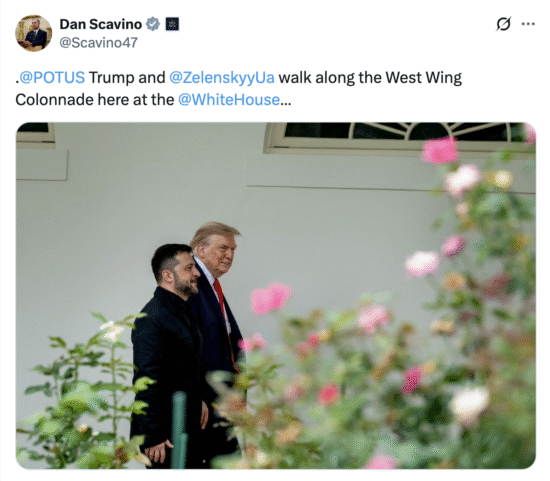
Trump stressed that Europeans form the “first line of defence” but pledged that the United States would stand behind them. Asked whether Ukraine could expect NATO-style protection, he replied that he was not sure he would put it in those terms, but underlined that Europe intends to provide guarantees and America will help to reinforce them.
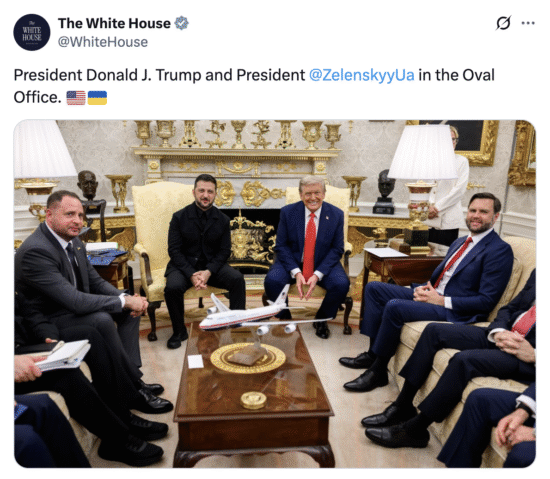
He promised that Ukraine would enjoy “strong protection”.
“We’ll work with Ukraine, we’ll work with everyone, and we’ll make sure that if peace comes, it lasts. We’re not talking about two years of calm only to fall back into the same chaos,” Trump added.
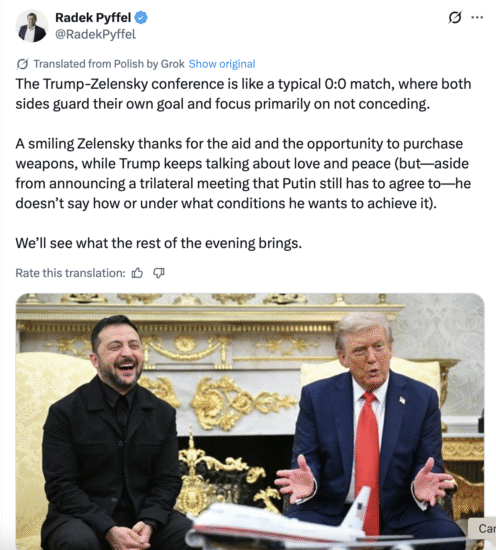
The president also revealed that he planned to hold a phone call with Vladimir Putin later that evening, after having been in “indirect contact” with the Russian leader before the Zelensky meeting. Trump suggested that a trilateral summit could be the key to halting the conflict: “If there’s no three-way meeting, the fighting will go on. If there is one, there’s a real chance for peace.” Zelensky confirmed he would be willing to attend such talks.
Trump downplayed the need for a ceasefire, saying he believed the war could be resolved through a final settlement instead. While admitting that a truce might be beneficial, he argued that “we can work on a peace deal even while the fighting continues. I’d prefer them to stop, of course, but strategically it could disadvantage one side or the other.”
The US president avoided giving a direct answer when pressed on whether Ukraine should withdraw from parts of the Donbas currently under its control in exchange for peace, merely reiterating his aim of ending the war.
The meeting contrasted with the leaders’ first encounter at the White House on 28 February, which ended in a public clash.
This time, the mood was notably warmer. Zelensky, dressed again in a military-style suit and black shirt, found himself once more face-to-face with right-wing commentator Brian Glenn.
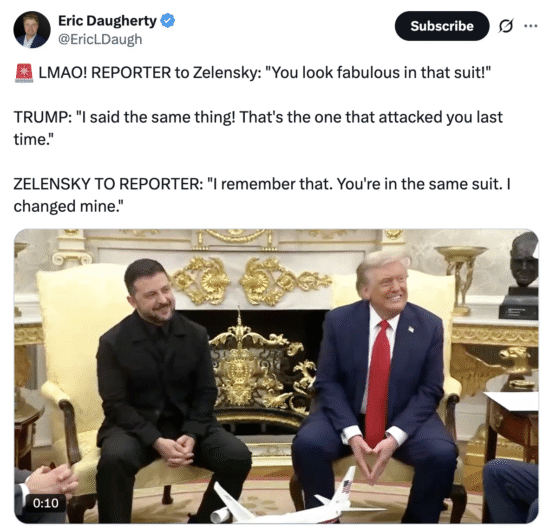
In February, Glenn had criticised the Ukrainian leader for not wearing a conventional suit; on this occasion, he praised Zelensky’s attire, a compliment endorsed by Trump. Zelensky responded with humour, noting that he had changed his outfit, whereas Glenn had turned up in the same suit as before.
Asked about the possibility of elections in wartime, Zelensky replied that he was open to the idea, but only if voting could be carried out under safe conditions.
When questioned on what security guarantees Ukraine most urgently required, he was blunt: “Everything. First of all, a strong Ukrainian army – weapons, personnel, training missions, and intelligence. And that, of course, depends on big countries like the United States.”
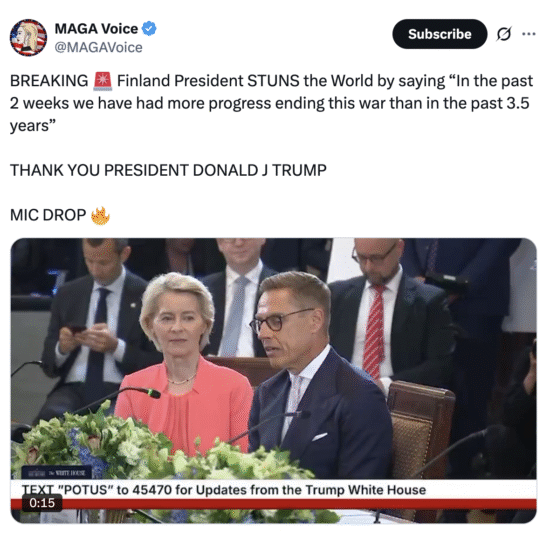
During a meeting with European leaders that included heads of state from France, Italy, Finland and Germany, as well as the head of NATO, Trump informed them about Vladimir Putin’s response.
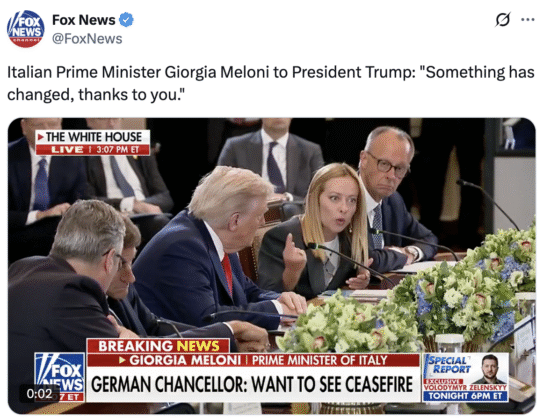
US President Donald Trump has claimed that Vladimir Putin has accepted the principle of security guarantees for Ukraine, describing it as a “very important step” towards peace.
Speaking at the White House at the start of talks with European leaders and Ukrainian President Volodymyr Zelensky, Trump said the recent summit in Alaska convinced him that a settlement is within reach, despite difficult issues still on the table.
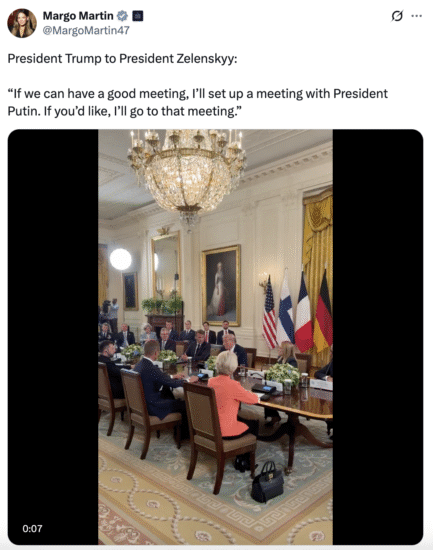
Trump revealed that negotiations would also touch on potential territorial exchanges with Russia, based on the current line of contact. He expressed confidence that Putin genuinely seeks peace and announced plans to speak with the Russian leader after the meeting, with the possibility of arranging a trilateral summit. The US president suggested that within a fortnight, it should become clear whether such efforts can bring the fighting to an end.
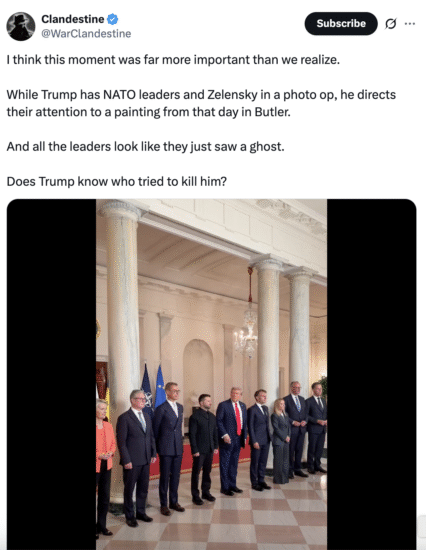
Responding to German Chancellor Friedrich Merz, who insisted that no further talks could be envisaged without a ceasefire, Trump retorted that he had already managed to conclude six wars without first securing a truce.
Source: PAP
Photo: @nicksortor
Tomasz Modrzejewski