The Altar of the Dormition of the Blessed Virgin Mary, situated in Cracow’s St. Mary’s Basilica, is one of Europe’s most outstanding works of Gothic sculpture. The construction of the altarpiece by Wit Stwosz (Veit Stoss) lasted from 1477 to 1489. The fame of the Altarpiece made the Kingdom of Poland an important centre of Gothic sculpture in Central Europe.
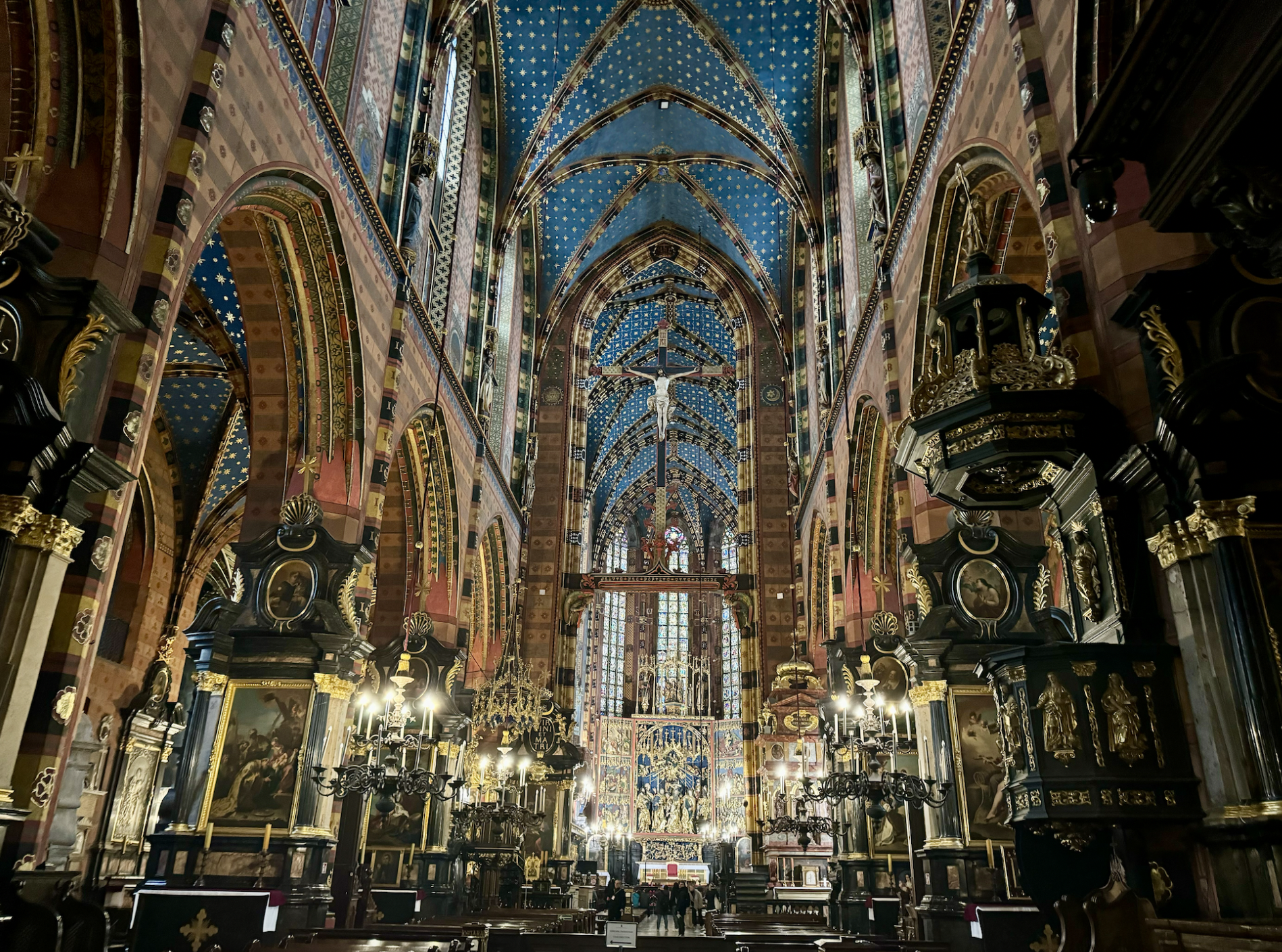
The structure of the altar is made of oak and larch. The sculptures were carved in soft and flexible lime wood. The setting of the so-called “Marian altarpiece” (because of the altar’s location in St. Mary’s Basilica) is a pentaptych which means that the scenes are presented in the main sections and two moving wings.
The Altar’s lower part, the predella, depicts the “Tree of Jesse”, an artistic representation of the genealogy of Christ. The main section of the altar consists of a monumental group of sculptures depicting the Dormition of the Virgin Mary surrounded by the apostles, with the Assumption scene. At the wings, the open altarpiece illustrates the six Joys of Mary. When the altar remains closed, the wings depict twelve scenes from the life of Mary and Jesus.

At the beginning of the history study of the altar, it was not clear why Wit Stwosz was chosen to create the artwork. Most probably he was one of few artists at that time eager to relocate due to his unstable professional position in Nuremberg. Interestingly, the author of the altarpiece was not identified until 1824.
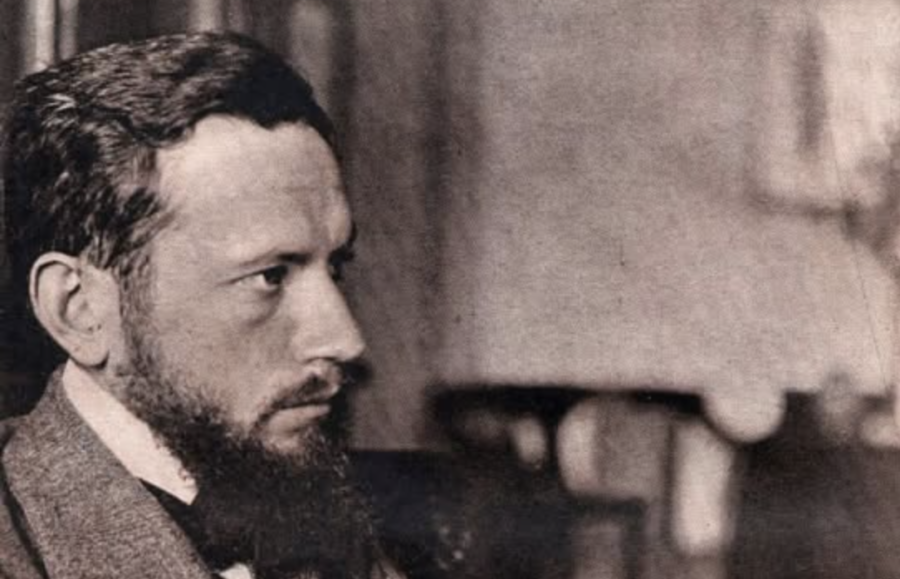
Wit Stwosz or Veit Stoss was himself an interesting figure. His early artistic education is unknown but due to the style analysis, we can assume he learned his craft in Strasbourg and had contact with the works of the famous Dutch sculptor Nikolaus Gerhaert van Leyden.
Stwosz arrived in Cracow in 1477 and stayed in the city for twenty years, twelve of which he spent working on the altarpiece. It is not known what was the overall cost of the artwork, the only documented number was 2808 florens, which could also constitute only half of the altar’s price. Such an amount of money was close to the one-year budget of the entire city at that time.

After he finished his work in Cracow he came back to Nuremberg, only to fall into debt because of a poor choice of investment. While trying to improve his financial situation by document fraud he was arrested and punished by burning a mark on his both cheeks with a hot iron and an official order not to leave the city of Nuremberg for the rest of his life.

One of the most famous episodes of the history of the altarpiece was its fate since the beginning of the 2nd World War. After the German aggression on Poland in September 1939, Professor Karol Estreicher dismantled the Altar’s statues and ordered float them with boats, down the Vistula River to the city of Sandomierz. He was sure that because of the author’s German descent, the occupant would want to steal the altar. Its parts were stored in the local cathedral and the seminary. The location of the altar sculptures was revealed by Cardinal Stefan Sapieha under threats from the Germans. The statues were first transported back to Cracow and then to Berlin. The altar was dismantled and placed in Nuremberg. Its sculptures were deposited in the basement of the castle in Nuremberg and the supporting structure was moved to the Wiesenthau Castle.
With American aid, Prof. Estreicher found and identified the stolen altar and helped transport it back to Poland. It returned to Cracow in May 1946. It went through conservation at the Wawel Castle between 1946 and 1950 and finally returned to St Mary’s Church in 1957.
Today, the altar is one of the greatest tourist attractions of Cracow bringing hundreds of visitors to St. Mary’s Basilica in the city’s Main Square.
Tomasz Modrzejewski
Photo: Caroline Byczynski