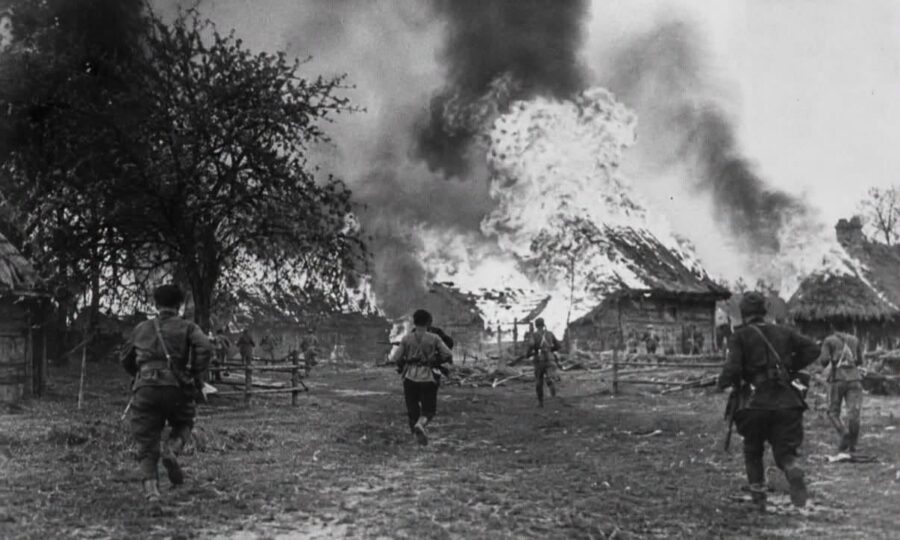
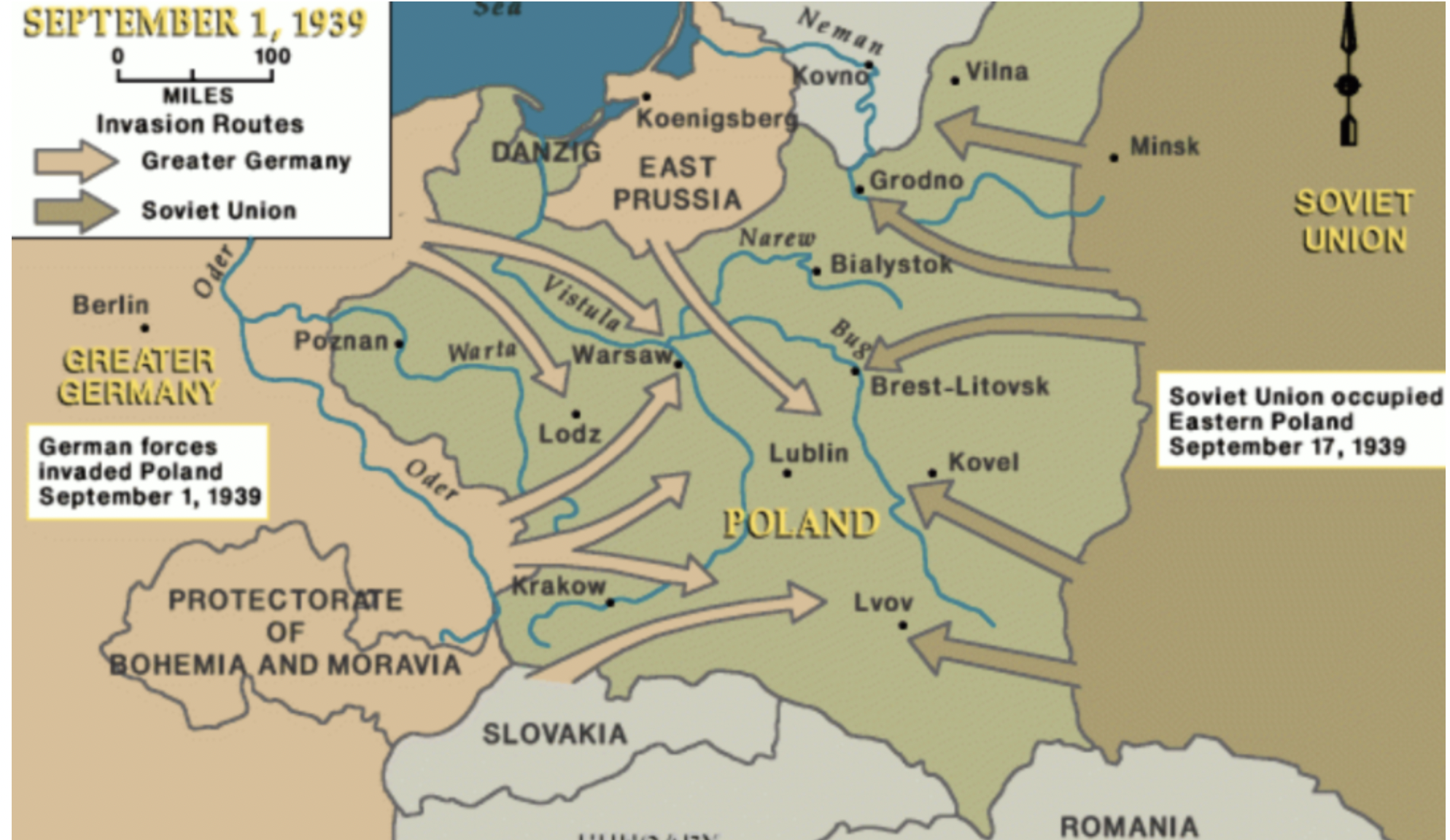
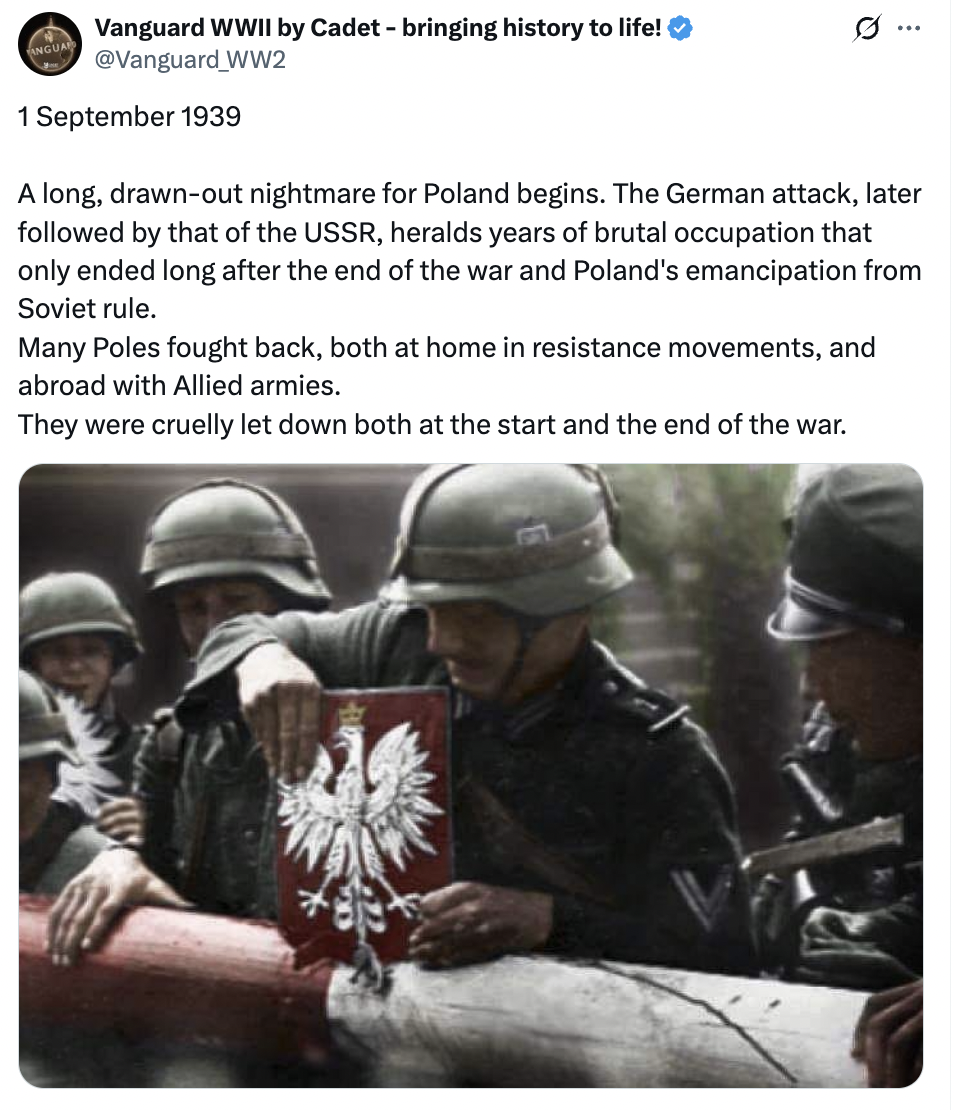
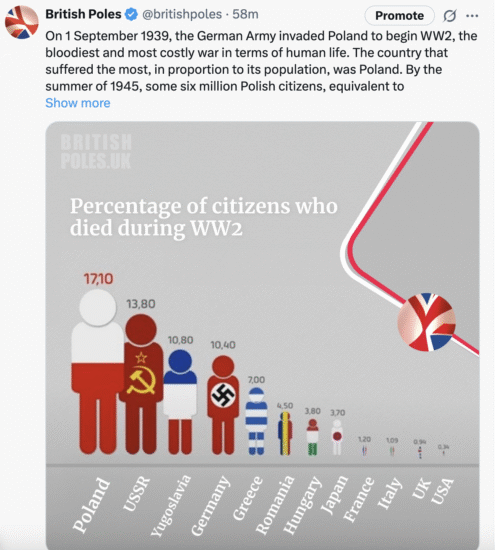
At dawn on 1 September 1939, without issuing a formal declaration of war, German forces crossed the borders of the Republic of Poland, igniting the Second World War, which was the most devastating conflict in human history.
At 4:48 a.m. that morning, the battleship Schleswig-Holstein opened fire on the Polish Military Transit Depot at Westerplatte. Major Henryk Sucharski’s garrison held out for seven days, repelling relentless assaults from land, sea and air, and soon became a symbol of Poland’s defiance. That same day, German troops attacked Polish outposts in the Free City of Danzig, including the building of the Polish Post Office, which was bravely defended by its employees.
The opening phase of the 1939 campaign, later called the “Border War”, consisted of fierce fighting along Poland’s western frontiers. One of the first engagements occurred near Krojanty in Pomerania, where the 18th Regiment of Pomeranian Uhlans ambushed and shattered a German infantry battalion, delaying the advance of an enemy corps by several hours. Further south, near Częstochowa, the Volhynian Cavalry Brigade, part of Operational Group “Piotrków”, successfully repulsed frontal attacks by a German armoured division, inflicting the loss of around one hundred tanks and armoured vehicles.
Another major battle was fought at Mława, lasting until 4 September, and proved crucial for the defence of Warsaw.
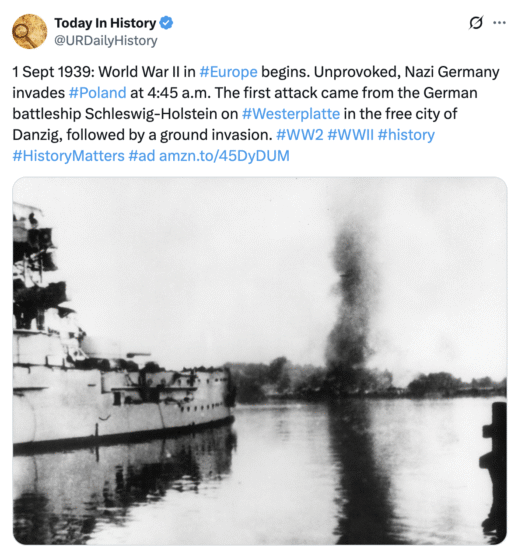
Despite determined resistance, German forces soon broke through Poland’s defensive lines, occupying Kujawy, parts of Greater Poland and Silesia within the first days of September. Their advance was marked by extreme violence and cruelty, often directed against civilians.
The invading troops acted in accordance with Adolf Hitler’s command: “Be ruthless, be brutal, our superiority entitles us to everything.”
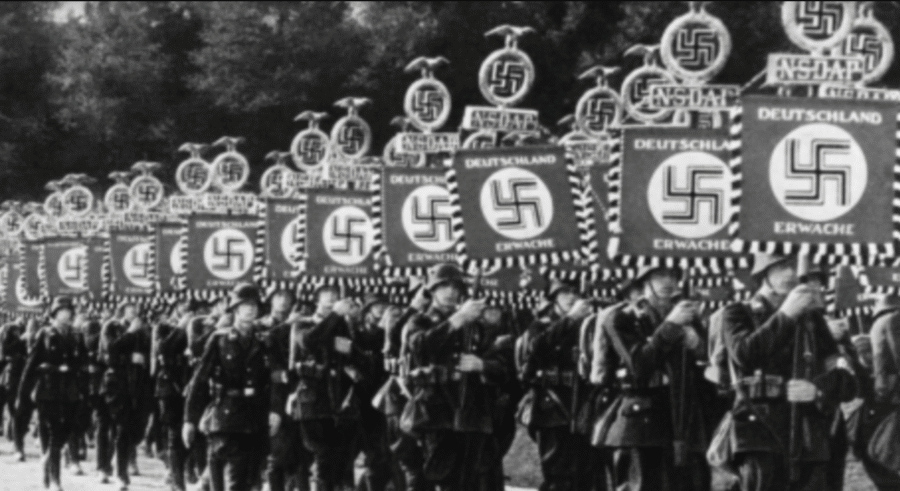
Germany launched its invasion with overwhelming force. The Wehrmacht fielded forty-eight divisions, around one and a half million men supported by 10,000 artillery pieces and mortars, more than 2,700 tanks, and the relatively new but formidable Luftwaffe, boasting some 1,800 modern aircraft. Also, the German Navy represented a significant threat, capable of sealing off the Polish coast.
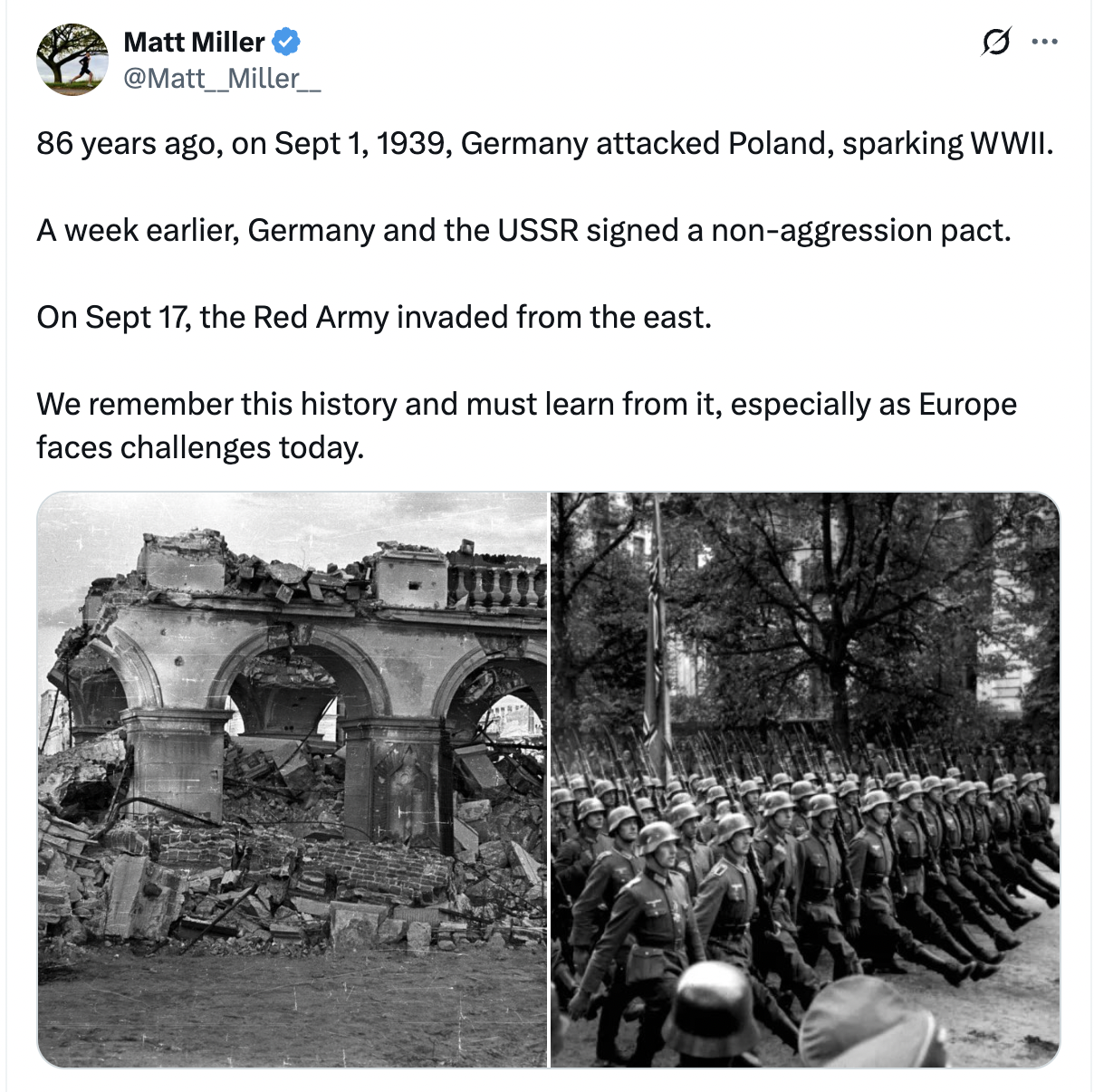
German military superiority lay not only in numbers but also in doctrine: from the late 1920s, the Germans had refined armoured warfare tactics, creating powerful concentrations of tanks. Six armoured and four motorised infantry divisions spearheaded deep thrusts designed to paralyse enemy forces, while close air support, especially bombing raids, amplified their effectiveness.
The dive bomber Junkers Ju 87 Stuka became the Luftwaffe’s fearsome symbol, striking troop columns and strategic targets with terrifying precision.
Poland, by contrast, mobilised about 900,000 soldiers. Its arsenal included roughly 4,300 canons and mortars, 800 tanks and armoured vehicles, and around 400 combat aircraft.
Much of this equipment was already outdated. The most pressing weakness was in fighter aviation, several years behind the Luftwaffe technologically, and the army as a whole was far less mobile than its opponent. Anti-tank and anti-aircraft defences were limited. Yet not all Polish weapons were obsolete.
The 7TP light tanks could outmatch the German Panzer I and II, although they were less effective against the newer Panzer III and IV, which were just entering service. The wz. 35 anti-tank rifle was a remarkably advanced design, and in the months leading up to the war, Polish engineers had developed semi-automatic rifles, the “Mors” submachine gun, and the “Vis” pistol – all modern and promising weapons. The PZL.37 Łoś bomber entered Polish aviation lore, though its impact on the September campaign was minimal. Ultimately, the small number of advanced systems could not offset Germany’s crushing advantage.
Geography added to Poland’s difficulties. Its long, exposed frontier stretched far beyond what could realistically be defended. Apart from a handful of fortified areas in Silesia, the Hel Peninsula, the Narew River, and around Mława and Rzęgnów, the border relied mainly on field fortifications.
These nonetheless proved effective in delaying the enemy, as shown at Wizna, Węgierska Górka, and later at Sarny after 17 September, when the Soviets joined the invasion. Meanwhile, the Luftwaffe steadily paralysed Polish defences, bombing railways, bridges, troop concentrations, and headquarters, while also terrorising civilians.
Although the Polish Air Force had wisely redeployed to makeshift airfields before the war began, avoiding destruction on the ground, it was too small to stem the tide. Even so, in the first days of fighting, Polish pilots scored numerous kills, their courage compensating for inferior numbers.
On 3 September, following Berlin’s refusal to withdraw from Poland, Britain and France declared war on Germany, and the Polish campaign merged into what became the Second World War. Three days later, French forces launched a limited offensive along the Siegfried Line, advancing a few kilometres into lightly defended German territory.
Within days, however, they halted operations. This decision amounted to a breach of the Allies’ obligations to Poland and left the country to face the full weight of the German and, soon, Soviet onslaught.
Source: Przystanek Historia, Dzieje
Photo: historyconflicts.com
Tomasz Modrzejewski