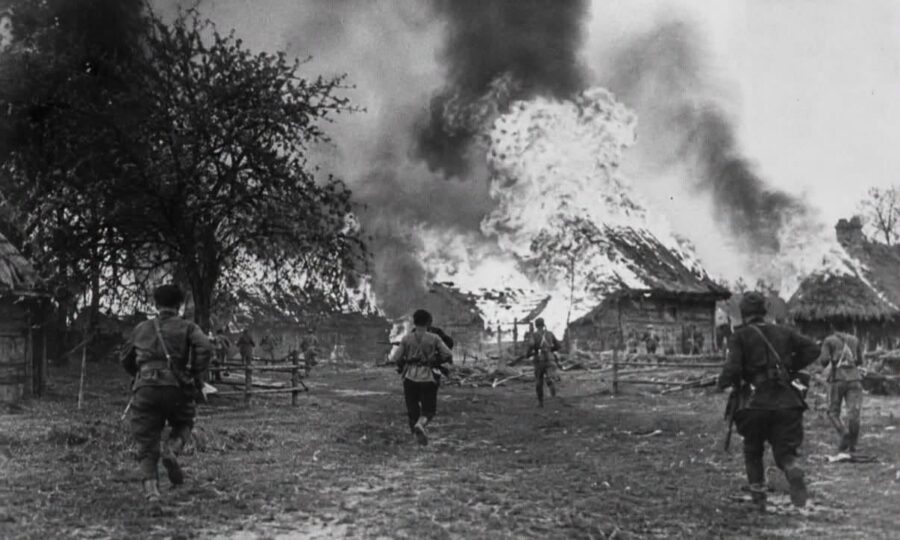
On 11 July 1943, remembered by Poles as Bloody Sunday, one of the most horrific massacres of civilians during the Second World War reached its terrible climax.
On that day, units of the Ukrainian Insurgent Army (UPA), often assisted by local collaborators, launched coordinated attacks on dozens of Polish villages across Volhynia. Many assaults began as families gathered for Sunday Mass, turning places of worship into scenes of unimaginable horror.
The attacks were part of a broader campaign of ethnic cleansing that sought to remove the Polish population from Volhynia and neighbouring Eastern Galicia. Historians estimate that over 100,000 Polish civilians were killed during the massacres of 1943–1944. Men, women, children, and the elderly were murdered simply because they were Polish. Entire villages disappeared from the map, churches were burned, and generations of families were wiped out.
The brutality of the attacks left lasting scars on the survivors. One survivor, Janina Kalinowska, recalled: “Everywhere there were flames. People were running, screaming, and falling. Those who could not escape were killed.”
Another survivor remembered the devastating silence that followed: “There was no village anymore. Only smoke, ashes, and the bodies of our neighbours.”
These testimonies reflect the human suffering behind the statistics. Bloody Sunday was not merely a military operation but a deliberate assault on civilian communities.
The violence did not end on July 11. The campaign continued throughout 1943 and 1944. While some Polish underground units later carried out retaliatory attacks against Ukrainian civilians – acts that also deserve acknowledgment and condemnation, the initial campaign by the UPA was organized with the objective of driving the Polish population from the region.
For decades, communist censorship prevented open discussion of these crimes. Many survivors remained silent, and countless victims were buried in unmarked graves. Even today, many Polish families continue to seek the exhumation and proper burial of their loved ones, believing that every victim deserves dignity and remembrance.
When we consider Bloody Sunday, it is not about fostering hatred toward modern Ukrainians. Today’s generations are not responsible for the crimes of the past, but genuine reconciliation must rest on historical truth, not denial or the glorification of those who committed atrocities against civilians.
Bloody Sunday stands as a solemn reminder of the consequences of ethnic hatred and extremist ideology. The victims deserve more than a place in history books, they deserve to have their names remembered, their stories told, and their suffering acknowledged. Only by confronting the truth honestly can we honour those who were lost and strengthen our commitment that such horrors are never repeated.
Edward Reid, an American historian who specialises in WWI
Photo: IPN