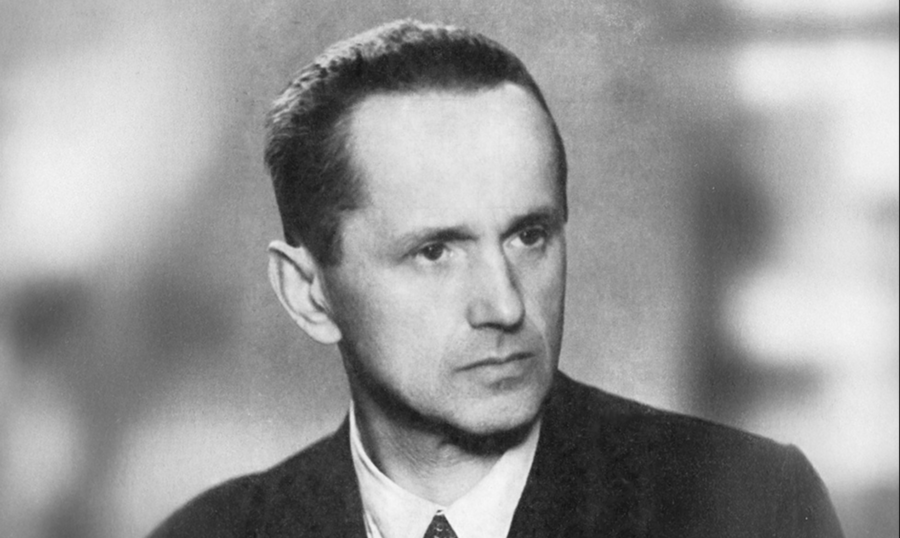
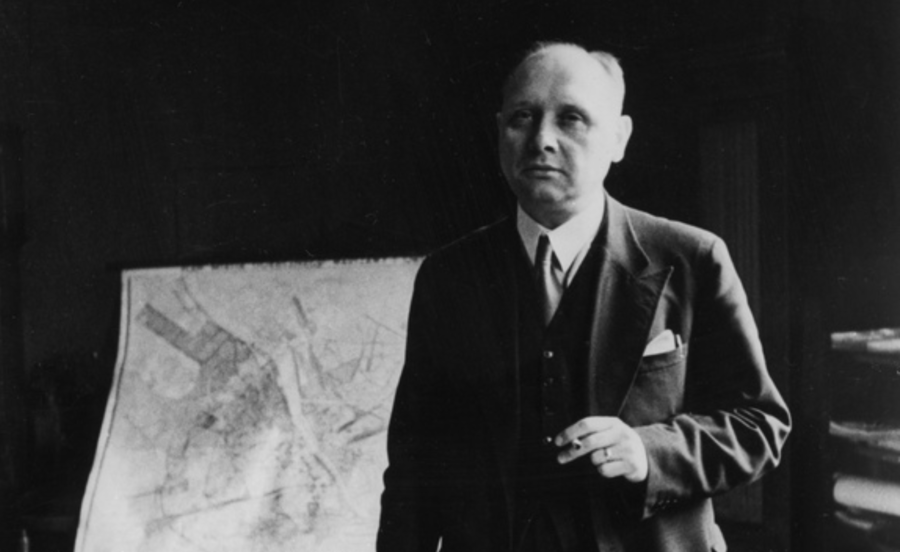
Roman Dmowski was born on the 9th of August 1864 in Warsaw. Throughout his youth, he got involved in numerous patriotic initiatives in the context of the Russian occupation. In 1886 he obtained his high school diploma and entered the Faculty of Mathematics and Physics at the University of Warsaw.
During the 1890’s he was arrested several times by the Russian authorities for his involvement in different patriotic meetings and events. In 1893, he became the head of the National League, a political organisation centred on the interest of Poles under foreign occupation. He wrote for several independent newspapers which cost him and his collaborators many troubles.
From the early XXth century, Roman Dmowski’s life will be tightly intertwined with that of Józef Piłsudski, the charismatic military leader who actively fought the rule of the Tsar across Eastern Europe. The rivalry between both men continued up until the late 1930’s and involved political, ideological and even private life conflicts.
Dmowski saw the Germanisation of Polish territories controlled by the German Empire as the major threat to Polish culture and therefore advocated a degree of accommodation with the Russian Empire. This point of view contrasted with that of Piłsudski who saw the main danger for the Polish State in the Kremlin and wanted to counter it militarily. Dmowski, on the other hand, favoured the re-establishment of Polish independence by nonviolent means.
During World War I, he travelled a lot across Europe as a prominent spokesman to the Allies for Polish aspirations. His excellent knowledge of foreign languages allowed him to not make use of interpreters which he did not trust.
At the beginning of November 1915, he left Russia and went to London, where he held talks with many politicians, as well as scientists and journalists, to persuade them to support the reconstruction of an independent Polish state.
In August 1917, he became the chairman of the Polish National Committee which advocated for Polish affairs. In September 1917 the organisation was recognised by the French government as the official representation of Poland. In the following months, the American, the British and the Italian made the same decision.
On the 29th of January 1919, he gave a brilliant five-hour speech at a scientific conference in Paris in which he explained the Polish point of view of the Polish delegation regarding the redrawing of Polish borders as in the midst of Poland’s reappearance on the map.
He once again had the opportunity to show his diplomatic skills at the Paris peace conference of June 1919 where he represented Poland along with Ignacy Paderewski. He was among the signatories of the Treaty of Versailles.
The post World War I period during which the fathers of Polish independence such as Roman Dmowski, Józef Piłsudski, Ignacy Paderewski, Ignacy Daszyński, Wincenty Witos and Wojciech Korfanty among others were able to go beyond their political divisions and rivalries for the common good of the Polish state.
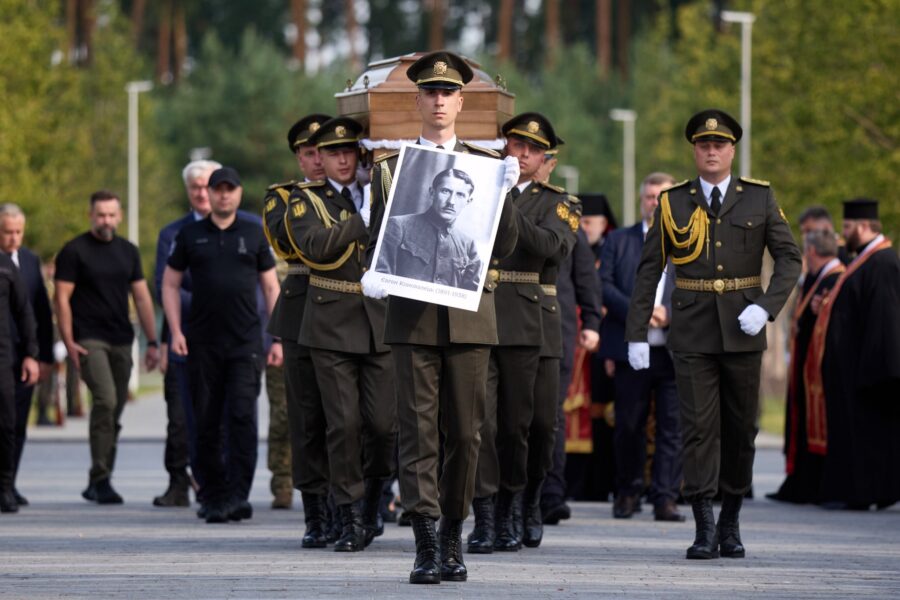
During the following 20 years, the Polish diplomat remained active in the shaping of the Polish political scene, mostly as leader of one of the country’s main political parties, the National Democracy. Even though he never exercised significant political power, except for a brief period in 1923 as Minister of Foreign Affairs, he was one of the most influential Polish ideologues and politicians of his time. Roman Dmowski died after a long illness shortly before the outbreak of World War II on the 2nd of January 1939. It is believed that around 200.000 people participated in his funeral.
Besides his unquestionable input in the rebuilding of a Polish state, he also left numerous books and publications behind him which made him be considered by many as the father of Polish nationalism. One of his most famous sentences is “I am a Pole therefore I do have Polish responsibilities”.
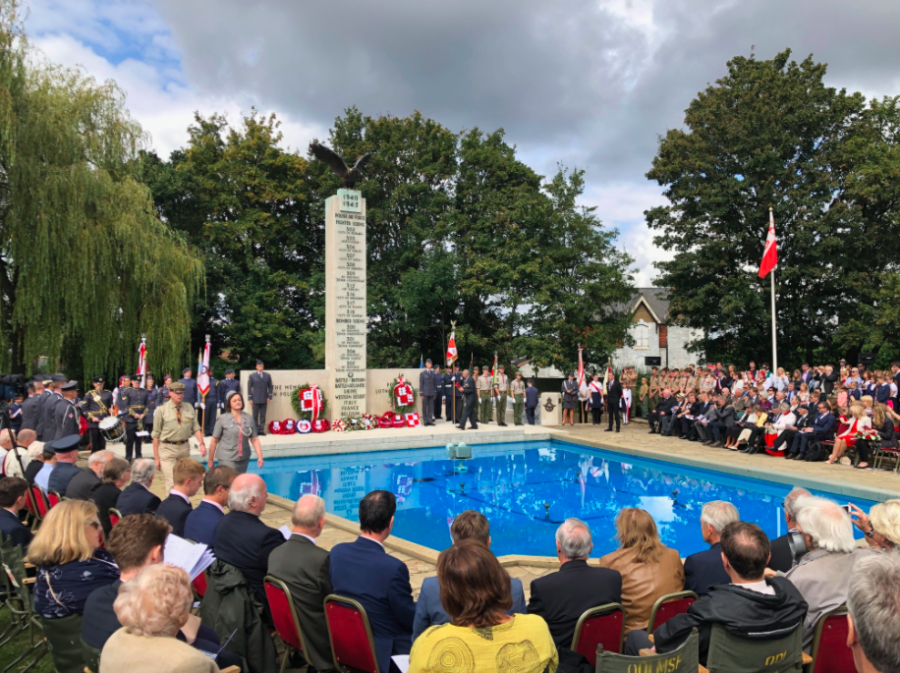
Every year since 1961, a Holy Mass is celebrated for the soul of this great Pole on the 2nd of January in the Church of St. Andrzej Bobola in London.
Author: Sébastien Meuwissen
Photo: Twitter @ipngovpl_eng