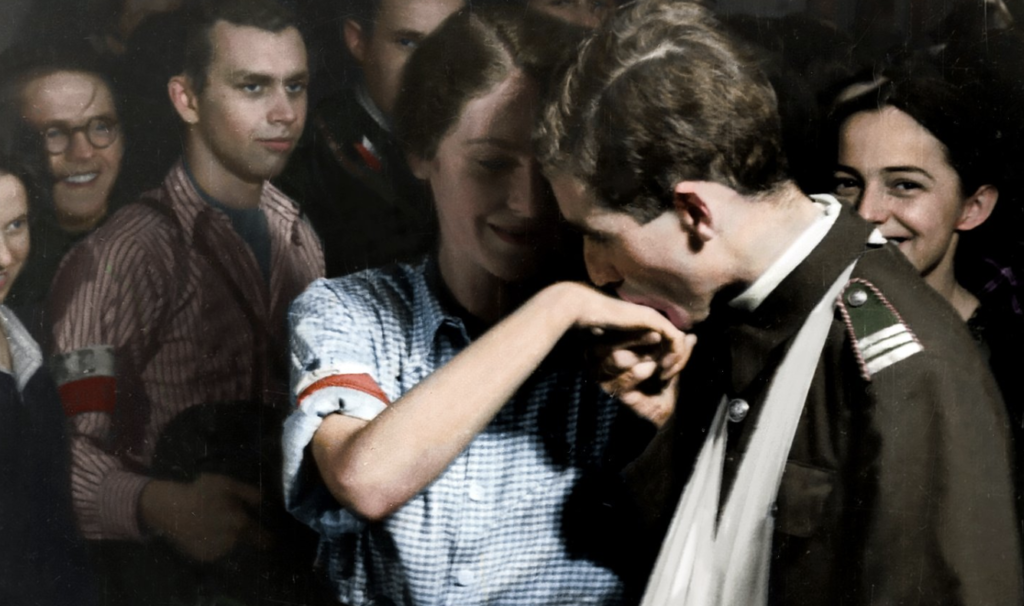
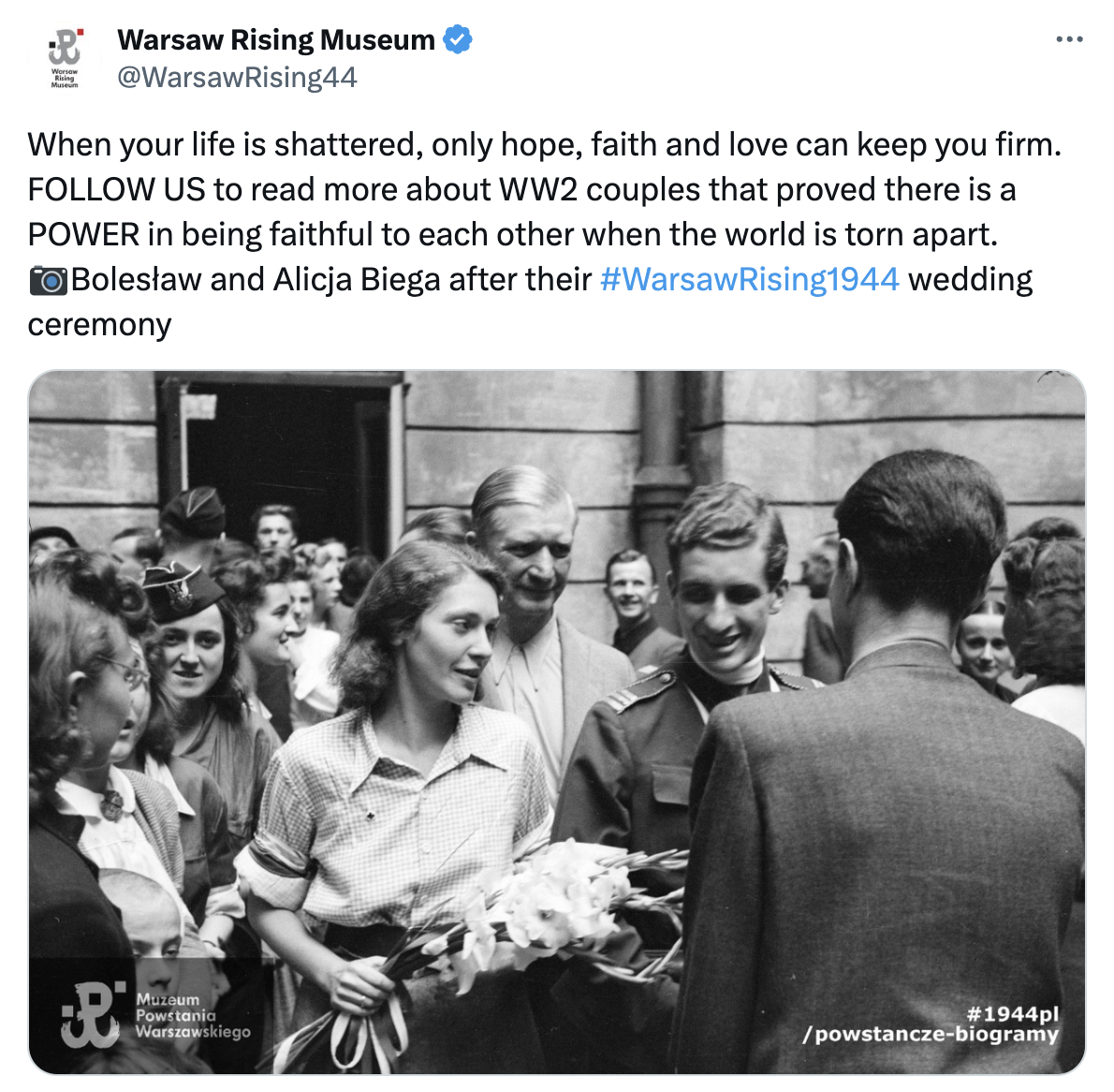
Bolesław Biega (“Pałąk”), and Agnieszka Treutler (“Jarmuż”) married during the Warsaw Uprising. The ceremony in battle conditions was famously captured on film, making the couple one of the most iconic participants of the Warsaw Uprising.
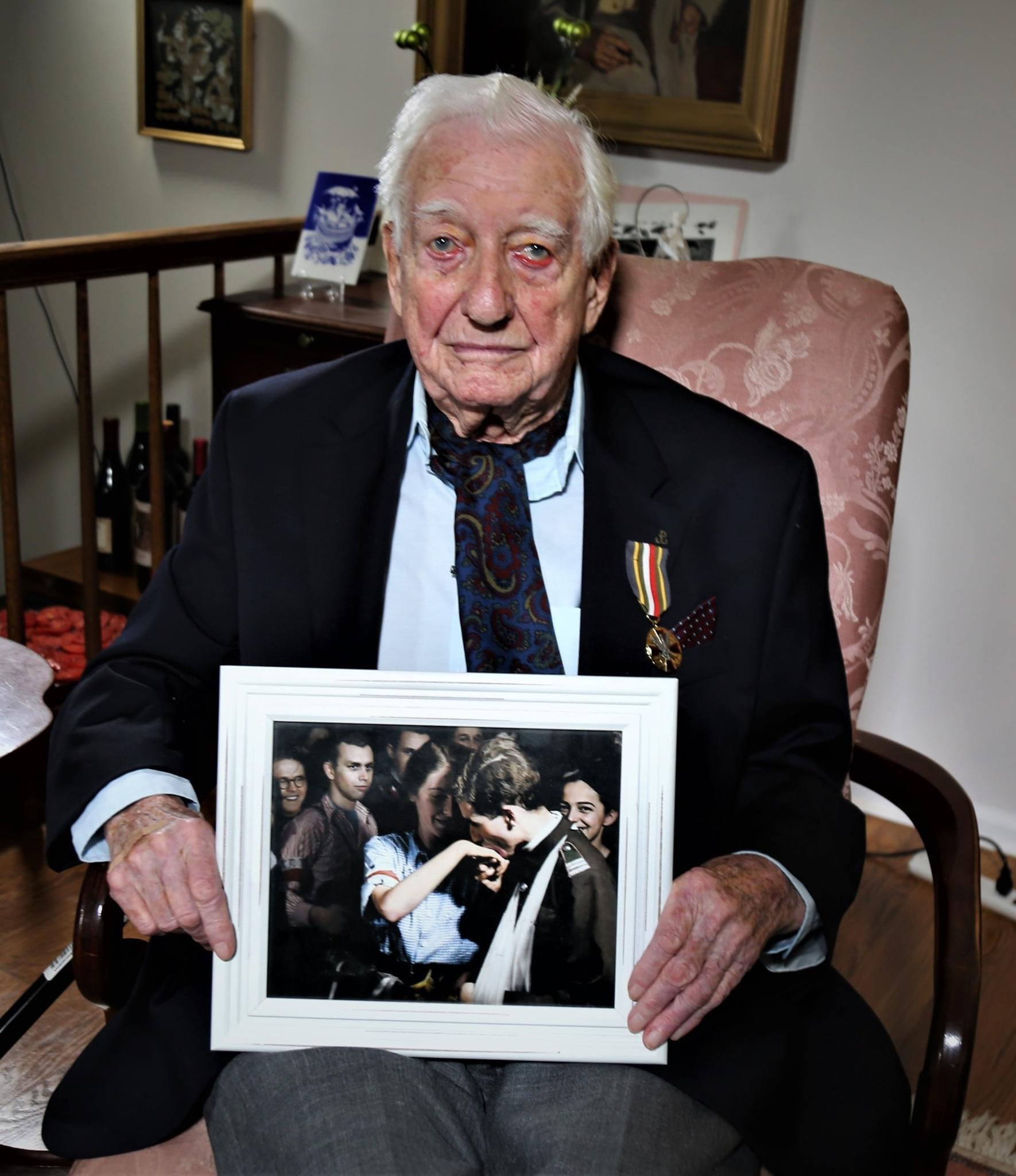
Bolesław was born in Warsaw, in 1922, to the Polish diplomat Bolesław Biega and his British wife, Marjorie Thomas. They had met in Paris several years earlier while Marjorie was serving in the British delegation to the Versailles Peace Conference. He was raised in England, living between London and Sutton-on-Sea.
He returned to Warsaw with his father in 1934 and attended the private Sułkowski school in Rydzyna when the Germans invaded on September 1, 1939. Having received basic military training as a member of the school’s Cadet Training Corps, Bolesław volunteered for the Polish Army.
Days after the capitulation of Warsaw, he fought in the last battle of the September campaign, the Battle of Kock, which ended on October 5 with the defeat of General Kleeberg’s army. After the battle, Bolesław returned to Warsaw, where he reunited with his father. In the late summer of 1941, Bolesław joined the Szare Szeregi and began participating in the Polish underground resistance.
During the Warsaw Uprising, he fought in the ranks of the „Kiliński” battalion, initially as a platoon commander, and from 10 September as commander of the 2nd „Grey Regiments” company. On 1 August, he was wounded in an attack on the Main Post Office.
On 13 August, in the conditions of urban warfare, he married a nurse, Alicja Treutler, nickname „Jarmuż”, whom he had met in 1939 and who also fought in the Uprising. The Warsaw Uprising Chronicle team and photographer Eugeniusz Lokajski immortalised the event. The wedding was performed by the chaplain of the 4th District, Rev Wiktor Potrzebski „Corda”. Several dozen people took part in the ceremony.
The picture of Franciszek and Agnieszka is one of the most important pieces of material heritage of the Warsaw Uprising, known by most Polish people.

After the end of the Uprising, he was sent to Stalag IV B / H Zeithain. Liberated, he joined the Polish Armed Forces in the West. He was an officer with the US Army, working with Polish refugee affairs in Northern Württemberg. He then left for England, where he was demobilised in 1946. In 1951, he and his wife emigrated to the United States, where he was active in several Polish aid organisations.
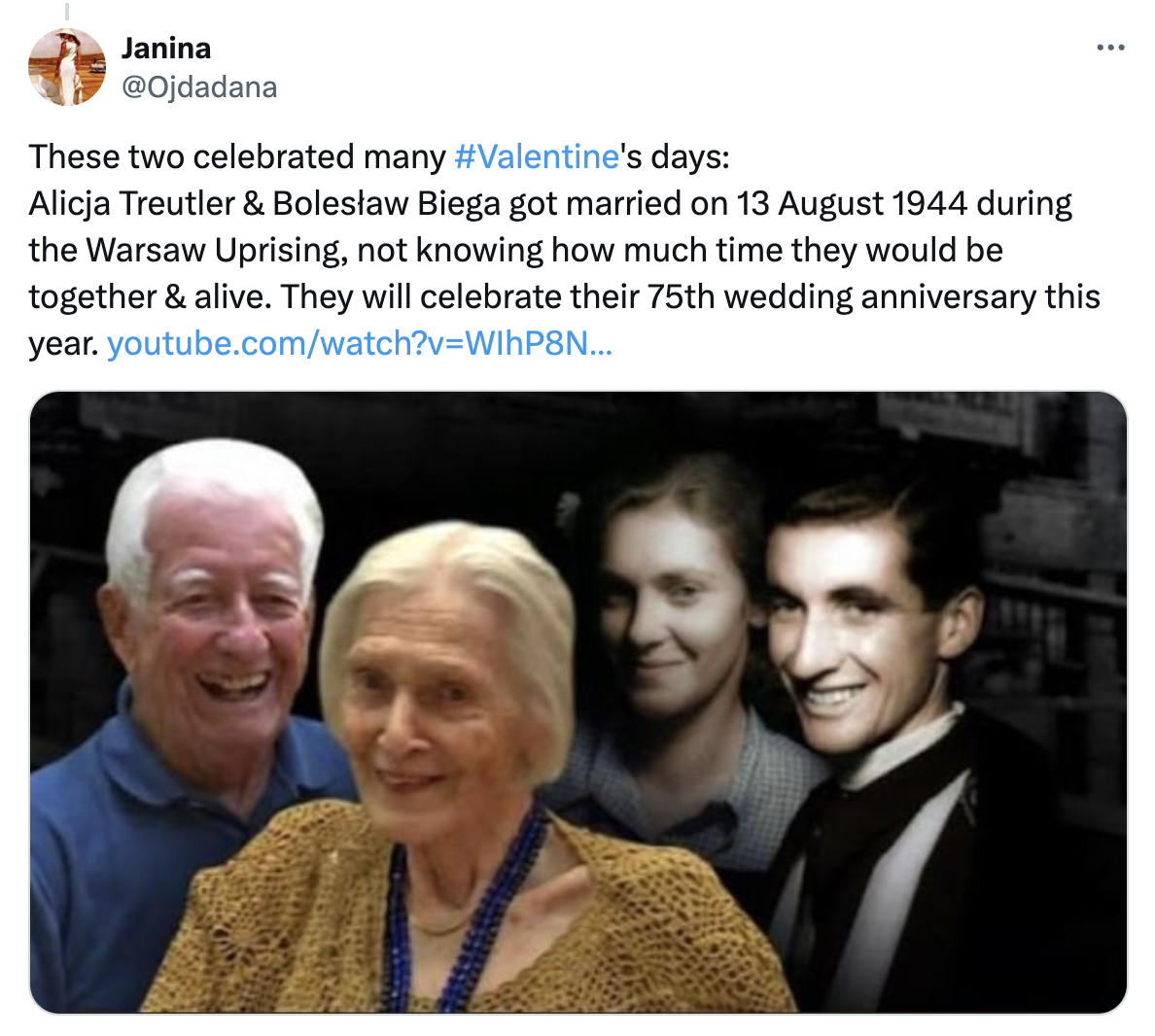
The marriage of Bolesław and Alicja Biega lasted 75 years. The couple lived to see five children: three sons and two daughters, as well as twelve grandchildren and five great-grandchildren.
Alicja Treutler-Biega, passed away in September 2019. Boleslaw Biega died at his home in Freehold Township, New Jersey on May 18, 2023, at the age of 100.
Photo: Eugeniusz Lokajski „Brok”
Colourisation: Mikołaj Kaczmarek Kolor Historii
Tomasz Modrzejewski