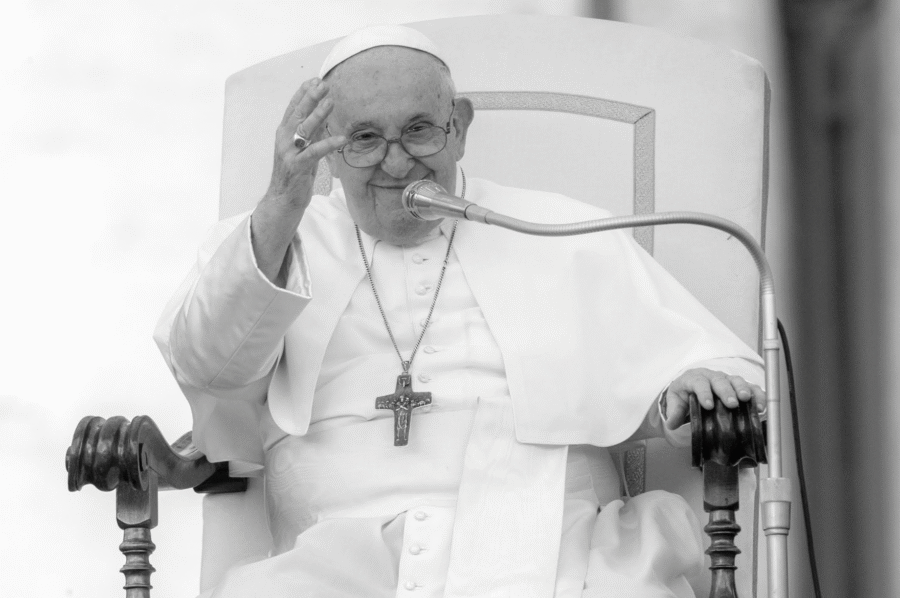
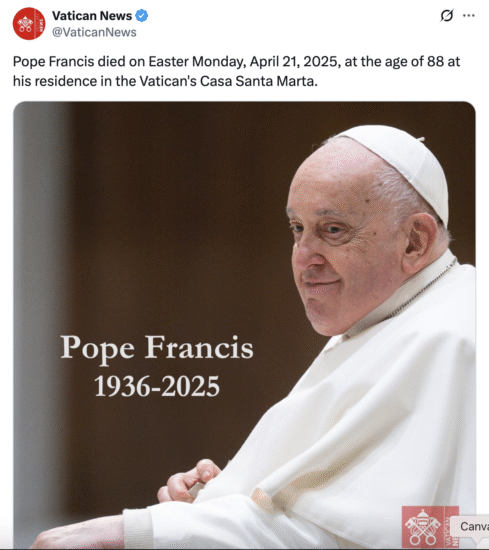
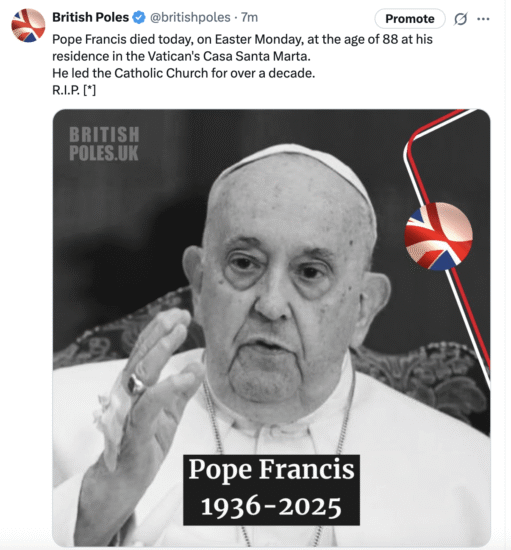
According to a brief statement from the Vatican News, “Pope Francis died [at 7.35 am] on Easter Monday, April 21, 2025, at the age of 88 at his residence in the Vatican’s Casa Santa Marta.”
Since his election on 13 March 2013, Pope Francis has promoted a pontificate filled with a blend of humility, reformist zeal and global outreach. The first Jesuit and the first Latin American pope, Francis, has consistently emphasised mercy, inclusivity and care for the marginalised.
Over his pontificate, he has made more than 40 international trips, visiting over 60 countries, and issued three major encyclicals, including Laudato si’ (2015), a powerful appeal for environmental responsibility. He has appointed over 130 new cardinals, significantly shifting the balance towards the Global South, and convened several synods, most notably the Synod on the Amazon and the ongoing Synod on Synodality.
Now in his late 80s, Francis has also introduced significant financial and administrative reforms in the Vatican.
Recently, the Pope has faced significant health challenges. In February, he was hospitalised with a severe respiratory infection that progressed to double pneumonia. His condition was further complicated by early-stage kidney failure and episodes of acute respiratory insufficiency, necessitating high-flow oxygen therapy and non-invasive mechanical ventilation.
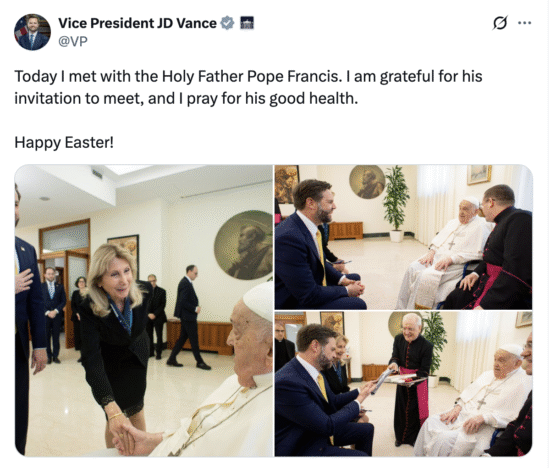
Yesterday, the Pope met with the US Vice President J.D. Vance, who himself is Catholic.
Marked by gestures such as washing prisoners’ feet, visiting refugee camps and calling for peace in war-torn regions, Francis’ papacy continues to challenge the Church to become, in his words, “a field hospital after battle.”
Knowing that the Pope died today (21 April), the conclave would begin between 6 and 11 May, and we would most likely have a new Pope by no later than 13 May.
Source: Vatican News
Photo: @colmflynnire
Tomasz Modrzejewski