On 30 April 1945, Soviet troops liberated the Ravensbrück concentration camp in Brandenburg — the largest German concentration camp for women. Among the tens of thousands imprisoned, there were nearly 40,000 Polish women, many of whom had been deported to eastern Germany following the collapse of the Warsaw Uprising. Only around 8,000 Polish women survived the horrors of the camp.
Established in 1939, the Ravensbrück concentration camp in Brandenburg was the Nazi German regime’s main detention centre for women. A separate camp for young women and girls was added to the camp in June 1942. Over time, the complex expanded to include more than 40 satellite camps, where inmates were subjected to forced labour under brutal conditions.
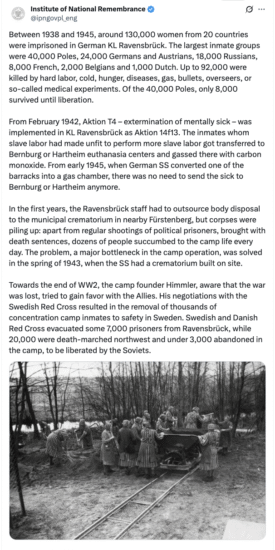
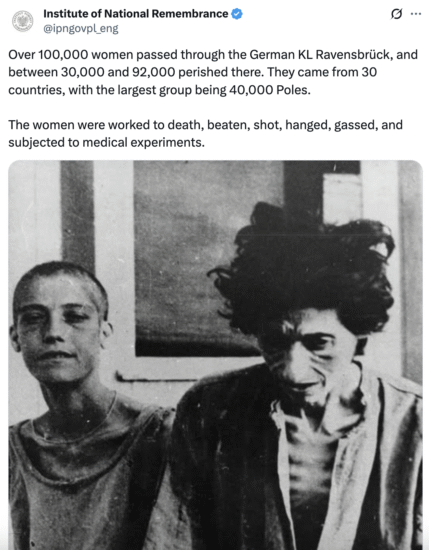
It is estimated that around 130,000 women and children, along with approximately 20,000 men, passed through Ravensbrück. Tens of thousands perished as victims of starvation, disease, and horrific pseudo-medical experiments conducted by German SS doctors.
Mass executions were carried out regularly, targeting primarily Polish female resistance fighters and Jewish prisoners, making Ravensbrück a symbol of terror against women.
One of the famous prisoners of the camp was a Polish doctor and a personal friend to Pope John Paul 2, Wanda Półtawska.
“The first executions, in 1941 and 1942, were carried out in a narrow passage between the camp’s perimeter wall and the side of the bunker building. We called that place Totengang — the ‘Passage of the Dead’,” Professor Wanda Półtawska, a former prisoner of Ravensbrück, recalled.
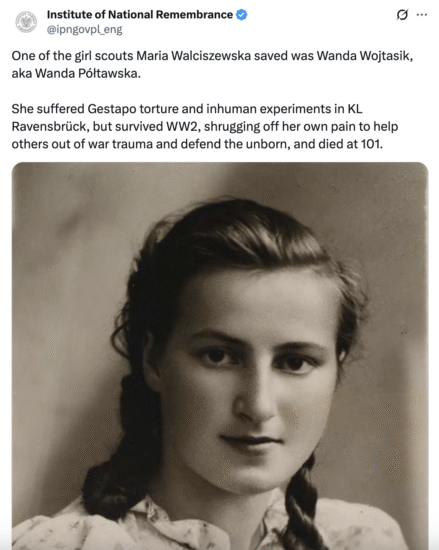
On 18 April 1942, 13 Polish women — most of them young girl scouts — were executed by firing squad at the site.
The camp was liberated by Soviet troops on 30 April 1945, but this did not end the tragedy of its prisoners. Some of the prisoners experienced rape from the Soviet soldiers.
News of the approaching Red Army must have stirred a mix of hope and dread among the prisoners. Zofia Posmysz, who had survived a death march from Auschwitz to Neustadt-Glewe, recalled that the joy of liberation lasted just two days — the brief period during which American forces were present. When the Soviets arrived, fear quickly replaced relief.
Russian soldiers began raping the women, showing no concern for whether they were Jewish, Polish, or French — nor for their emaciated, broken state. “The liberators,” Posmysz remembered bitterly, “demanded a reward for our freedom.”
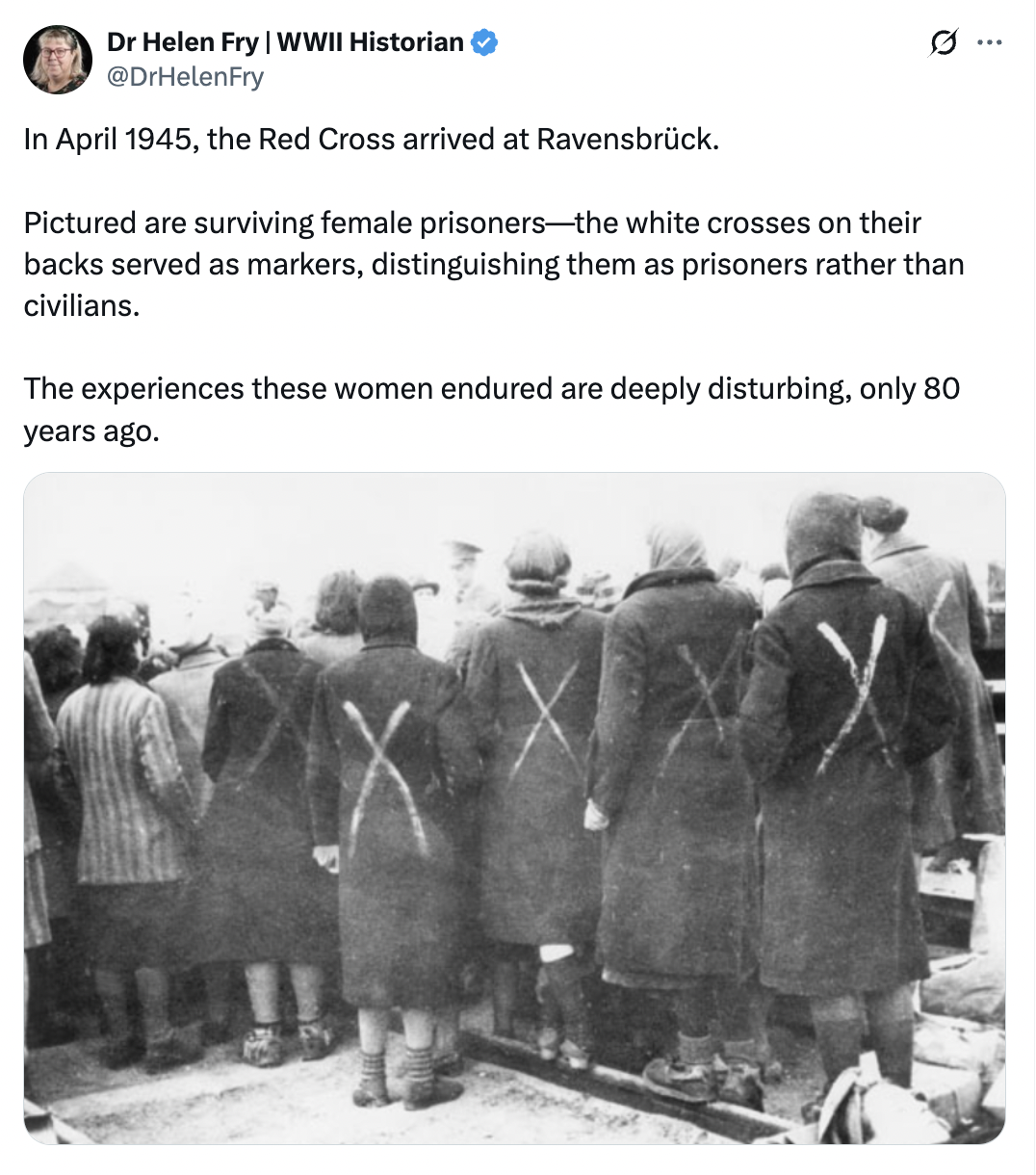
Survivors’ accounts paint a more complex picture of the camp’s liberation. Alongside the violence, some Red Army soldiers shared food with the former prisoners.
Certain Soviet commanders imposed strict discipline on their troops — in some cases even sentencing rapists to death for crimes committed against the women they were meant to liberate.
After the war, the Soviet authorities repurposed the Ravensbrück concentration camp into military barracks, erasing much of its grim legacy. It wasn’t until 1948 that former prisoners managed to reclaim the site of the crematoria and establish the first memorial to honour the victims.
The last Russian troops did not fully withdraw from Ravensbrück until as late as 1994, nearly half a century after the camp’s liberation.
Source: PAP, Dzieje.pl, Przystanek Historia
Photo: IPN
Tomasz Modrzejewski