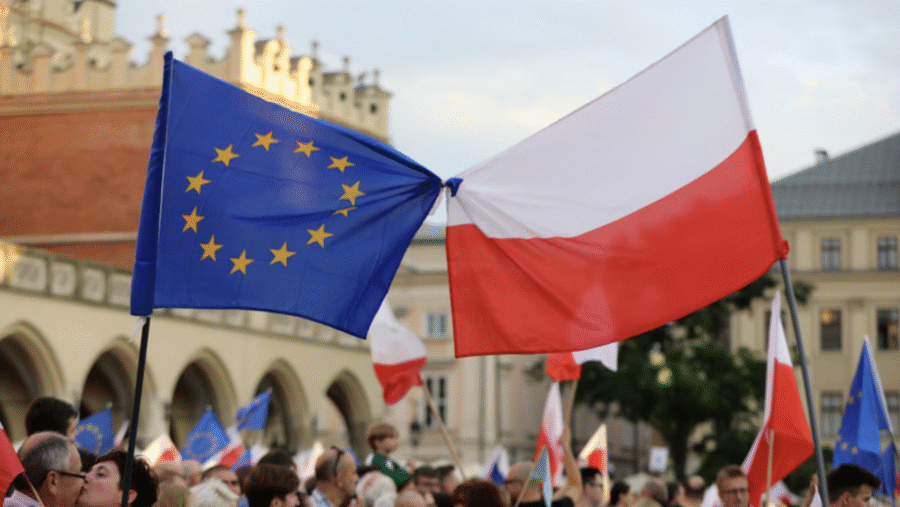
It has been 22 years since Poland since the Accession Treaty was signed by Polish Prime Minister Leszek Miller in Athens on 16 April 2003. After the signing, the Poles decided to join the organisation in a referendum with 77,45% of voters in favour of the accession.
After the referendum, the process of joining the EU concluded with Poland officially becoming a member on 1 May 2004.
The Chancellery of the President of Poland marked 1 May 2004 as the date when Poland, alongside nine other countries — Cyprus, the Czech Republic, Estonia, Hungary, Latvia, Lithuania, Malta, Slovakia and Slovenia — became a full member of the European Union.
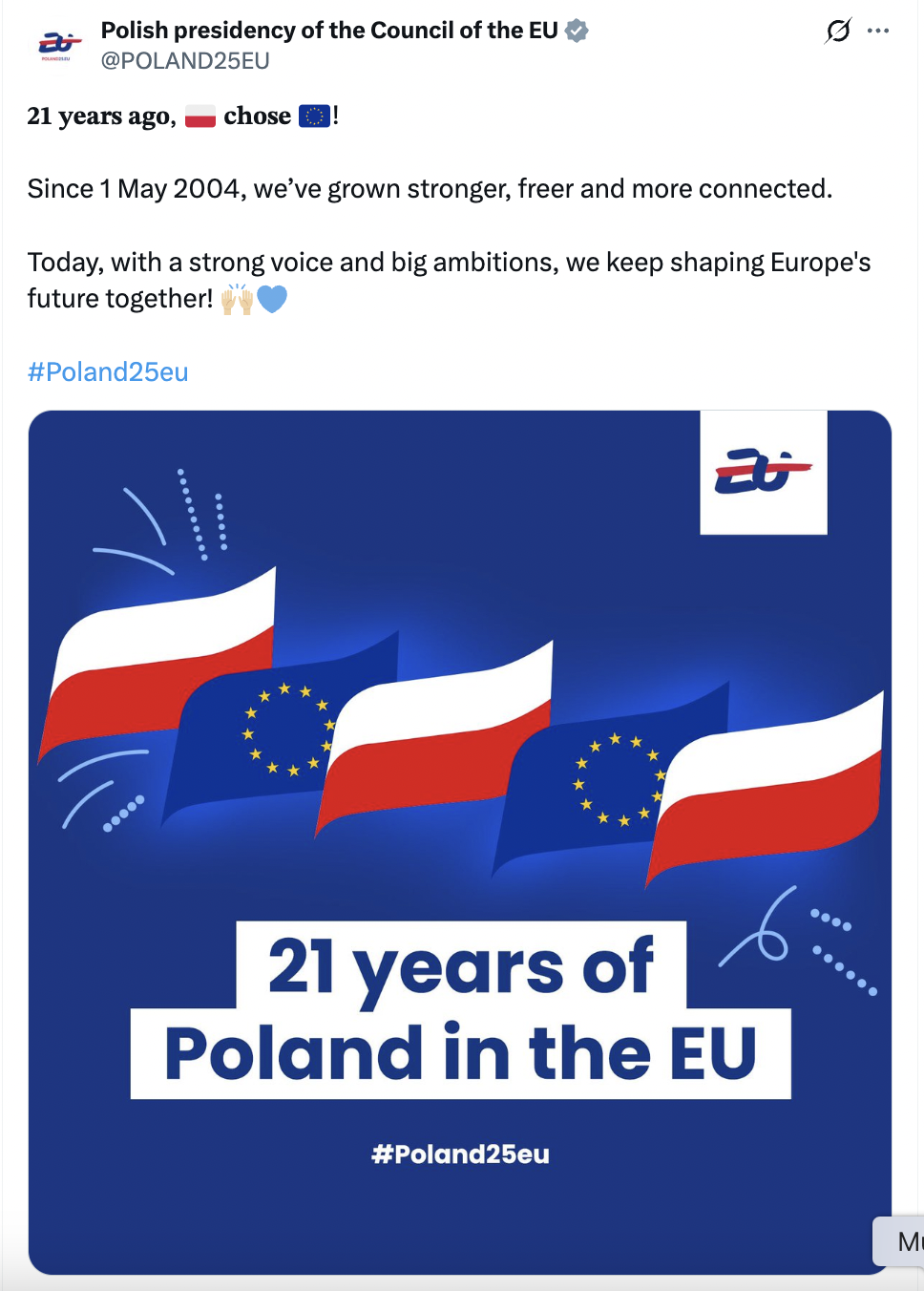
Poland’s accession to the European Union was the culmination of over a decade of determined efforts and negotiations conducted by successive governments. The final decision rested with the Polish people, who overwhelmingly backed EU membership in a nationwide referendum.
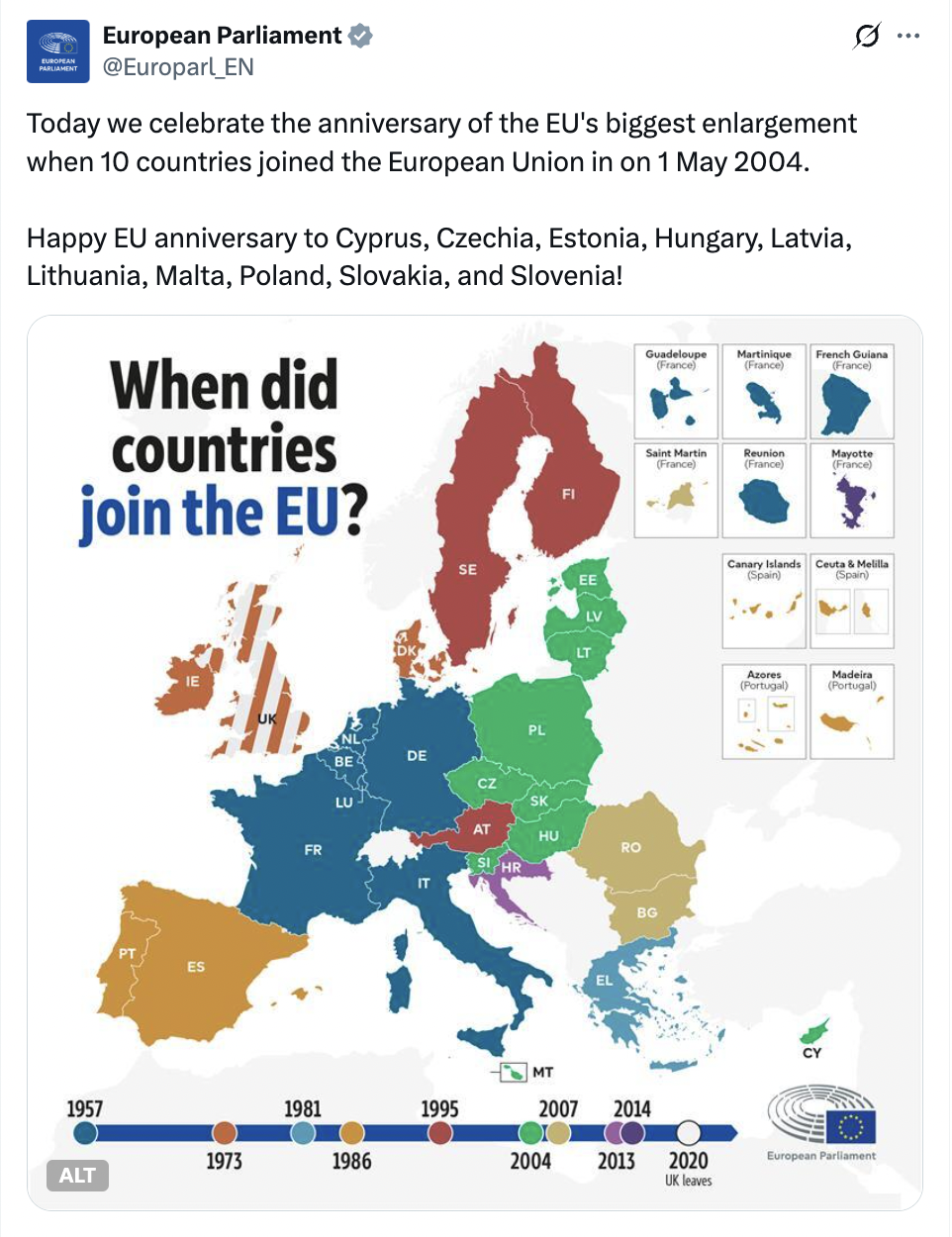
On 1 May 2004, Poland joined the European Union alongside Cyprus, the Czech Republic, Estonia, Hungary, Latvia, Lithuania, Malta, Slovakia and Slovenia — in what remains the largest single enlargement in the EU’s history.
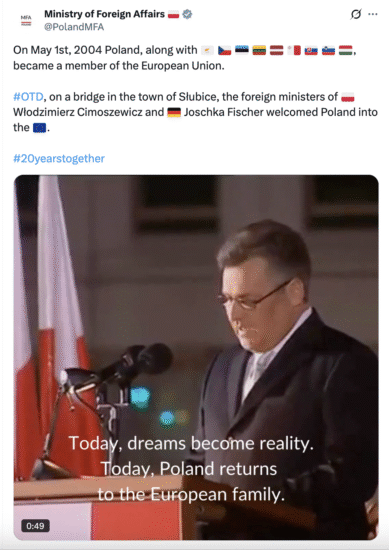
For the governments of Central and Eastern Europe, joining the European project symbolised a decisive break with the post-war division of the continent, which from 1945 to 1989 had been split between rival ideological and political blocs.
For years, the balance of Polish presence in the community was met with different opinions.
While a majority of Poles continue to support EU membership, views on the Union remain a source of division within Polish society. For many, particularly younger generations and urban populations, the EU represents economic opportunity, freedom of movement, and a guarantee of democratic standards.
Others, especially in more conservative circles, express scepticism towards perceived overreach from Brussels, citing concerns over national sovereignty, cultural identity, or clashes between EU policies and traditional values. These differing perspectives reflect broader tensions in Polish political and social life, where questions of identity, independence, and integration remain deeply contested.
Such scepticism was recently strengthened with Brussels’ executive organs’ direct interference in the Polish 2023 parliamentary elections. Before the campaign started, some of Poland’s post-COVID National Reconstruction Plan funds were frozen due to “rule of law concerns” raised by both Brussels and the opposition.
As the Civic Coalition’s Donald Tusk government started in December of 2023, the funds were immediately released by the European Commission even without any legal changes regarding the judiciary, and despite other questionable moves of the cabinet regarding changes in public media and the organisation of the central Prosecutor’s Office.
Recent opinion polls indicate that while a majority of Poles continue to support European Union (EU) membership, enthusiasm has notably declined compared to previous years.
As of April 2024, 77% of Poles expressed support for EU membership, a decrease from 85% in April 2023 and 92% in June 2022. This marks the lowest level of support since 2013.
Source: PAP
Photo: X @wjarek
Tomasz Modrzejewski