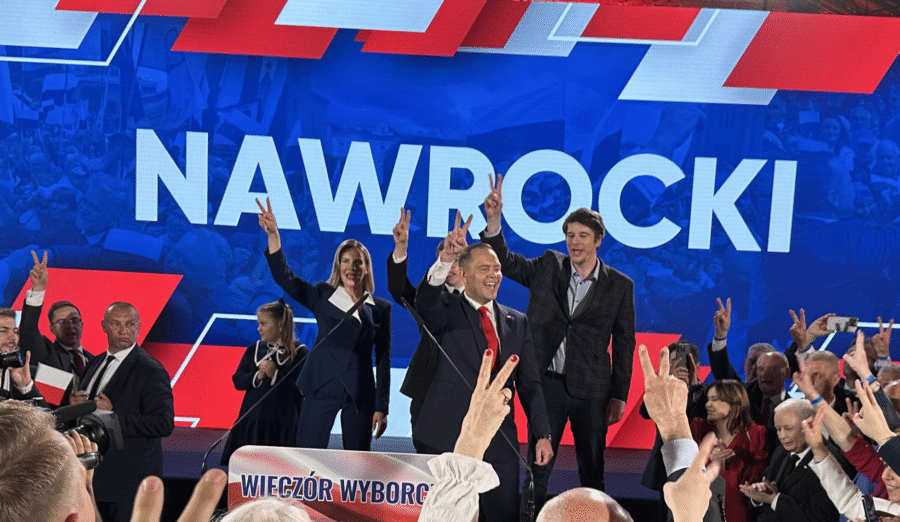
Karol Nawrocki, backed by the Law and Justice party (PiS), has emerged as Poland’s next president after a razor-thin win in the second round of voting. He edged out Civic Coalition (KO) candidate Rafał Trzaskowski by just 369,591 votes — a margin of 1.78 percentage points — marking the closest presidential run-off in the history of the Third Republic.
According to official figures released by the National Electoral Commission, Nawrocki secured 10,606,877 votes, 50.89%. Warsaw mayor Rafał Trzaskowski’s opponent received 10,237,286 votes (49.11%).
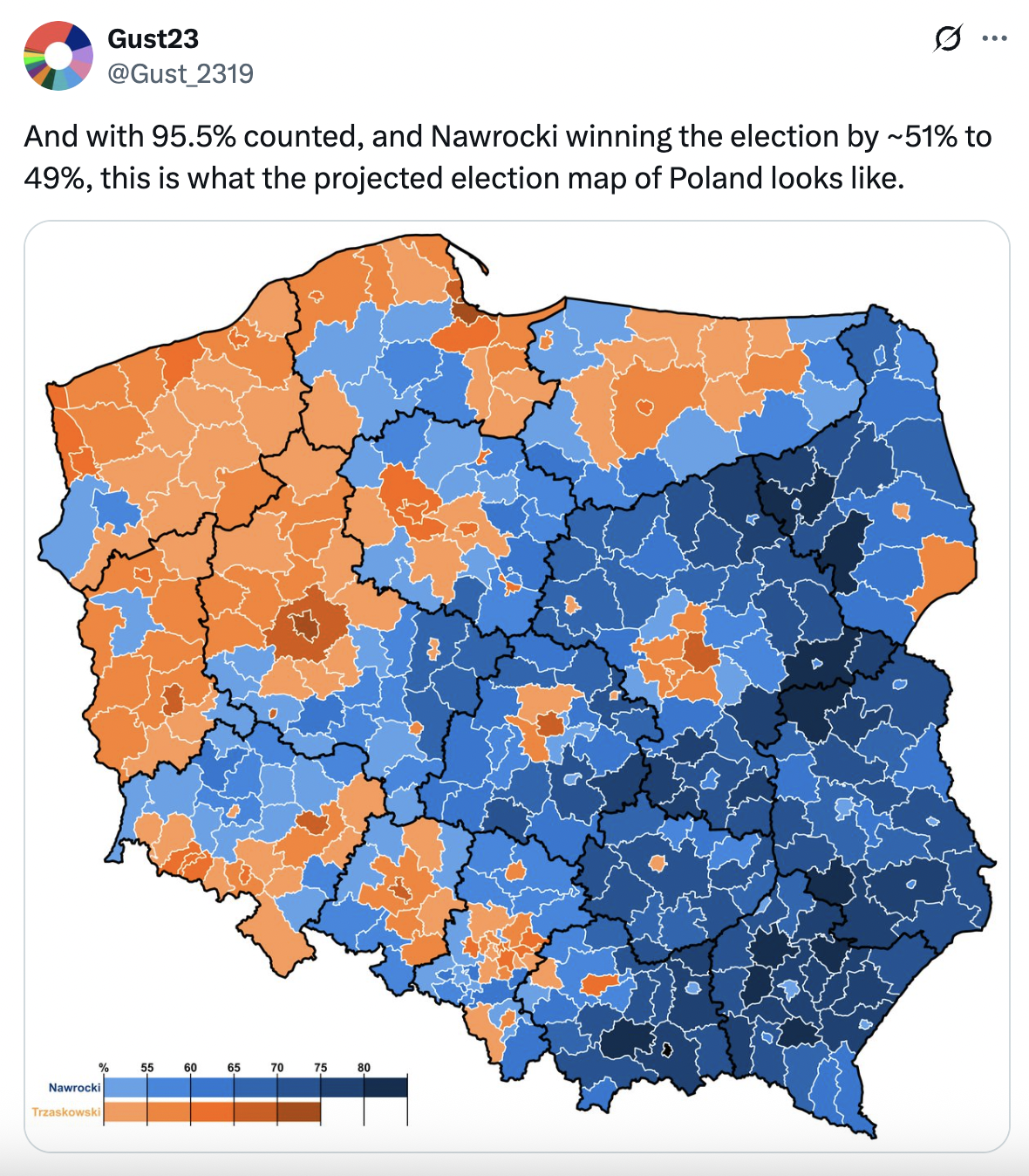
This result surpasses the previous record for the narrowest run-off, set during the 2020 election, when incumbent president Andrzej Duda defeated Trzaskowski by 2.06 percentage points (a difference of 422,385 votes). At the time, Duda won 51.03% of the vote to Trzaskowski’s 48.97%.
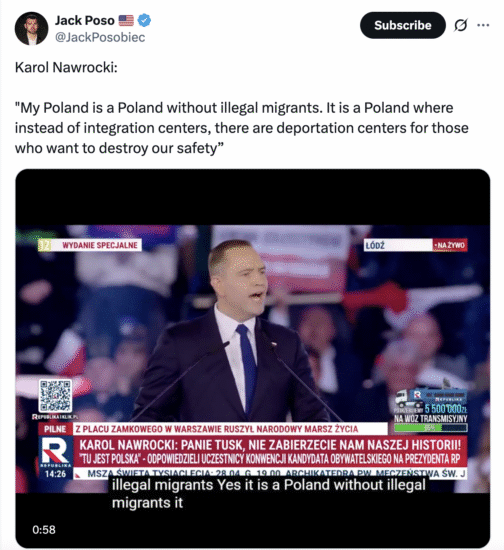
As the exit poll results were announced on election night, Karol Nawrocki struck a solemn yet triumphant note, quoting scripture to rally his supporters.
“If my people, who are called by my name, humble themselves and pray and seek my face and turn from their wicked ways, I will forgive them and heal their land,” he declared, invoking a verse from the Bible moments after the initial figures were revealed.
At 9 p.m., the exit poll had shown a slight edge for his opponent, Rafał Trzaskowski, putting him at 50.3% against Nawrocki’s 49.7%. But Nawrocki remained confident, proclaiming: “Yes, we will prevail. Tonight, we will win. We will win — and we will save Poland.”
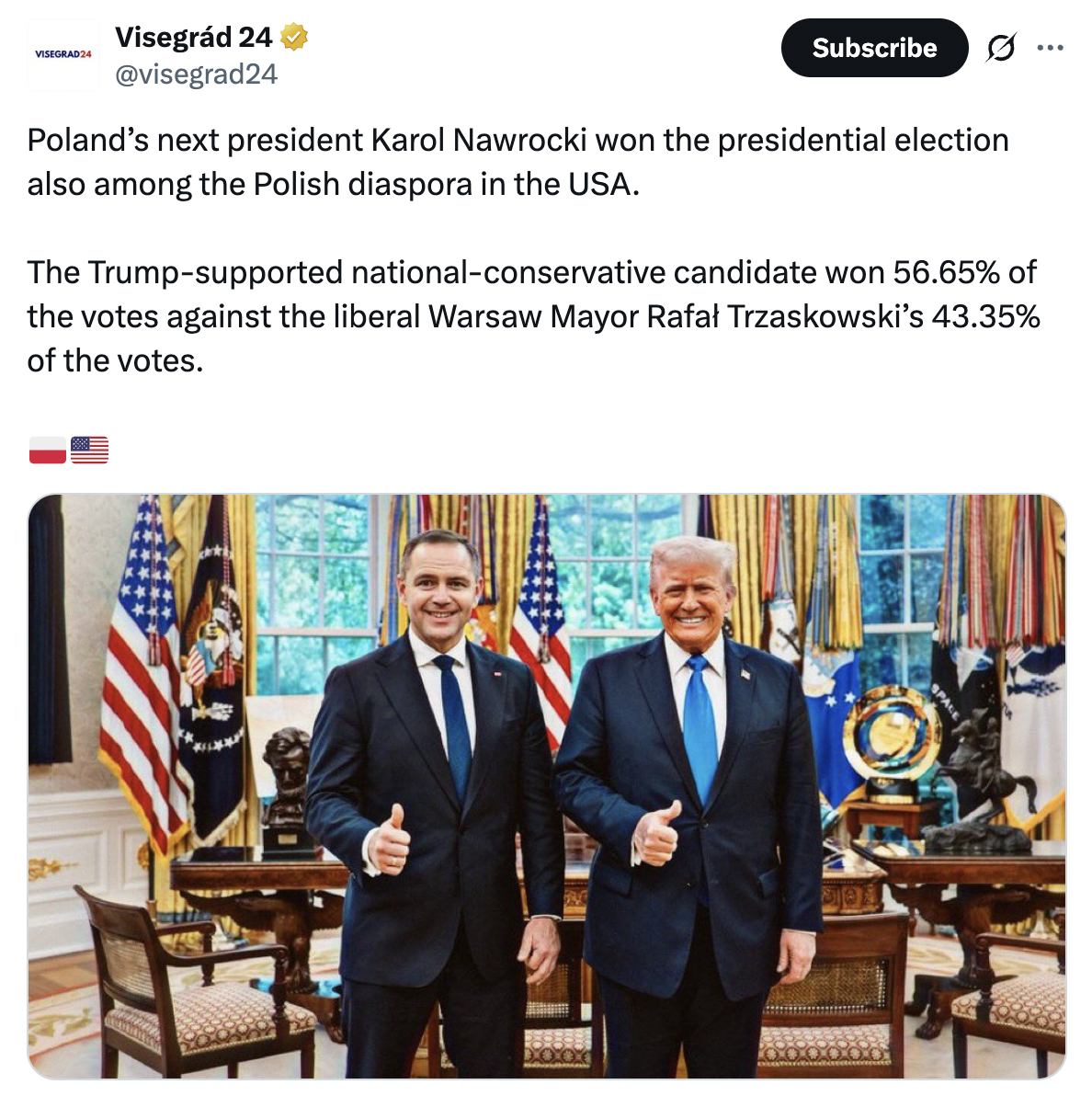
In a speech laced with political resolve, Nawrocki also launched a pointed attack on Donald Tusk and the Civic Coalition leadership.
“We will not allow Donald Tusk’s grip on power to be completed,” he said. “We will not stand by while a harmful monopoly — one that disregards public finances, robs us of great dreams and suppresses our aspirations — is cemented.”
His comments underscored the high stakes of the vote and hinted at a combative presidency ahead.
Other closely fought elections include the 2015 contest, where Duda ousted then-president Bronisław Komorowski with a 3.10-point lead (518,316 votes), and the 1995 race, in which Aleksander Kwaśniewski unseated Lech Wałęsa by 3.44 points (646,263 votes).
In addition to the historic margin, this year’s vote also set a new record for voter turnout, underlining the intense public engagement in what proved to be one of the most competitive presidential races since the fall of communism.
Nawrocki received congratulations from the presidents of Germany and the European Commission.
Karol Nawrocki’s path to the presidency began with a pivotal decision by the Civic Committee, which named him as its candidate in late November last year. The announcement came during a party convention in Kraków, attended by Law and Justice (PiS) leader Jarosław Kaczyński.
Standing before delegates, Nawrocki declared: “I believe in this victory, I believe in Poland, and I believe in you. I have travelled a long road to stand here today — ready to represent all Poles with full responsibility and commitment.”
Throughout the campaign, Nawrocki crisscrossed the country, visiting around 300 counties. His full manifesto was unveiled on 2 March during a convention in Szeligi, near Warsaw. The 21-point programme rests on three main pillars: national prosperity, a secure and orderly state, and sustainable development.
Among his key pledges were lowering VAT from 23% to 22%, introducing a 0% income tax (PIT) for families with two or more children, implementing a “fair indexation” of pensions, and raising the second income tax threshold to 140,000 złoty.
The campaign framed Nawrocki as a candidate of conviction and continuity, blending patriotic values with a policy agenda aimed at bolstering household finances and reinforcing state stability.
Personal life and career
Karol Nawrocki, Poland’s newly elected president, is a historian and a public figure with a background in civic activism and local government. Born on 3 March 1983 in Gdańsk, he graduated from the University of Gdańsk with a degree in history and earned a PhD in the humanities in 2013. His academic and professional trajectory has long revolved around historical policy and national remembrance.
In 2017, Nawrocki was appointed director of the Museum of the Second World War in Gdańsk, a post he held until 2021.
On 28 May 2021, Nawrocki was appointed President of the Institute of National Remembrance (IPN) by the Sejm, further cementing his role as a key figure in shaping Poland’s historical narrative.
In February 2024, he drew international attention after being placed on a wanted list by the Russian Federation. Moscow cited criminal charges related to the dismantling of monuments commemorating the Red Army’s presence in Poland from 1944 to 1989 — a campaign Nawrocki had supported. In his case, the accusation involved his attendance at the removal of a Soviet-era memorial in the town of Głubczyce.
Outside of public life, Nawrocki is married to Marta Nawrocka, an official at the National Revenue Administration. The couple have two children together — Antoni and Katarzyna — and also raised Marta’s son Daniel from her previous relationship.
Nawrocki has authored or edited seven books and written dozens of scholarly and opinion articles on Poland’s modern history. He has also led or collaborated on numerous educational, commemorative and exhibition initiatives, including founding the World Battlefield Museums Forum. In 2019, he served as the Ministry of Culture’s commissioner for the 80th anniversary commemorations of the outbreak of the Second World War.
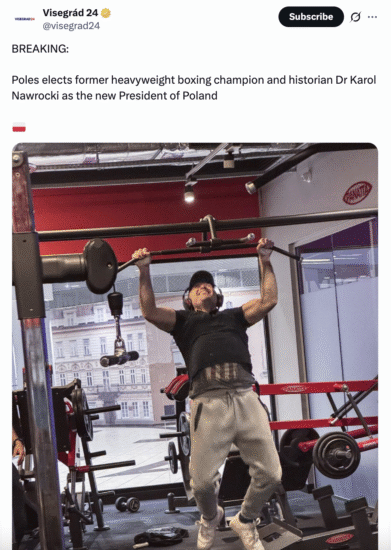
Beyond academia and politics, Nawrocki has a passion for boxing. As a young man, he won the junior Polish Cup in the 91 kg weight category at a regional boxing tournament — a formative experience that reflects the fighting spirit he now brings to the presidency.
Source: PAP
Photo:
Tomasz Modrzejewski