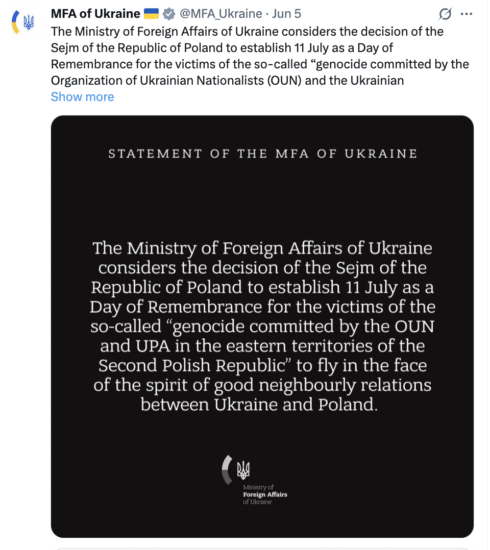
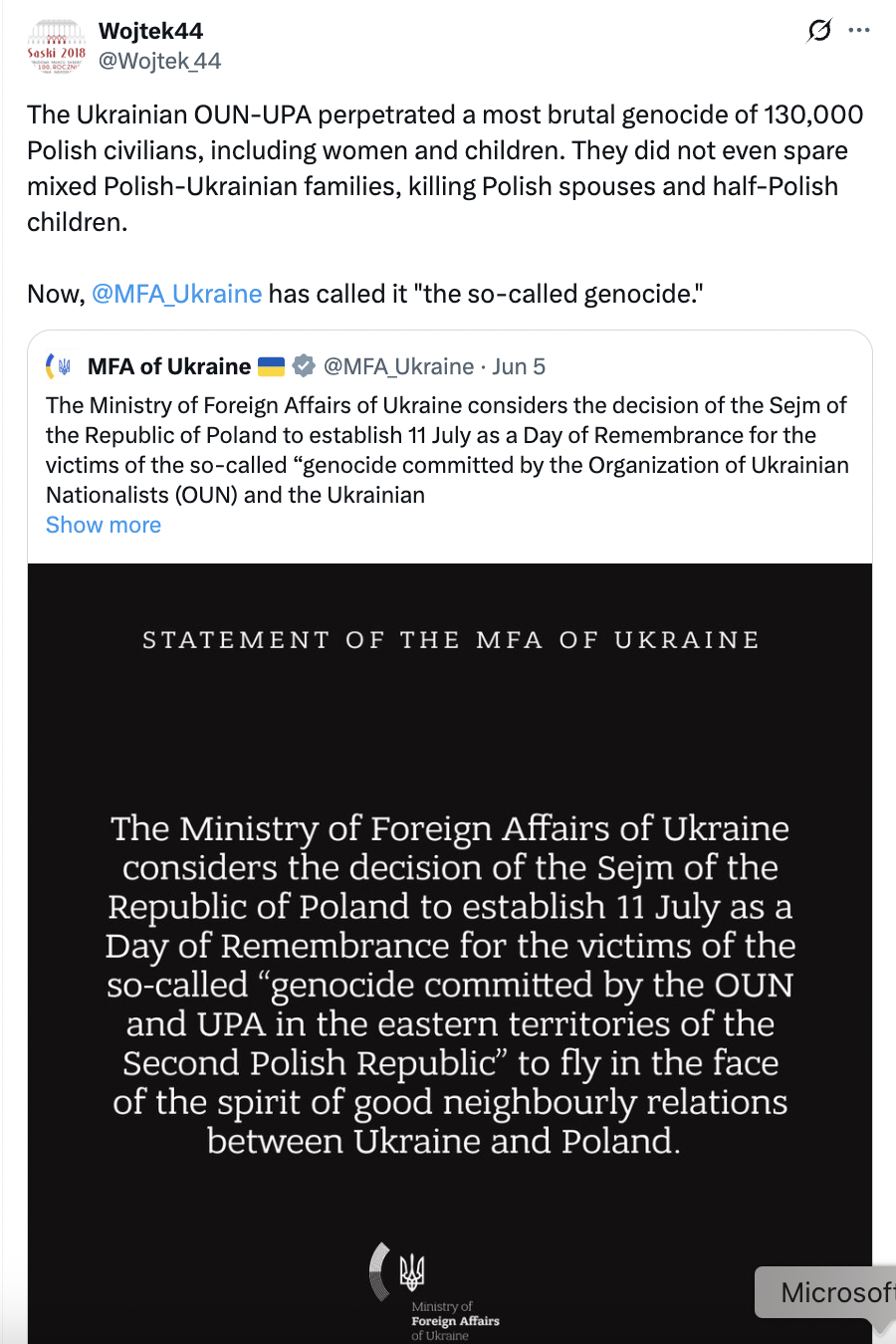
Ukraine’s Ministry of Foreign Affairs has sharply criticised a new law passed by the Polish Sejm establishing 11 July as a National Day of Remembrance for Poles – Victims of Genocide Committed by the OUN-UPA in the Eastern Borderlands of the former Second Polish Republic. In a statement released on Thursday, the ministry claimed the legislation runs counter to the “spirit of good neighbourly relations” between the two countries.
“The Ministry of Foreign Affairs of Ukraine views the decision of the Sejm of the Republic of Poland to designate 11 July as a Day of Remembrance for the victims of the so-called ‘genocide committed by the OUN and UPA in the eastern territories of the Second Republic of Poland’ as one that contradicts the spirit of neighbourly relations between Ukraine and Poland,” the statement said.
Kyiv has expressed concern that such unilateral steps undermine the ongoing efforts at reconciliation and mutual understanding, particularly those pursued within the framework of the Joint Ukrainian-Polish Historical Dialogue Group, which operates with the involvement of the two countries’ ministries of culture and national remembrance institutes.
“Ukraine consistently advocates for an objective, scholarly exploration of the painful chapters of our shared history,” the ministry added. “We believe that genuine reconciliation can only be achieved through dialogue, mutual respect, and collaboration among historians, not through unilateral political judgements.”
In a pointed appeal, Ukraine urged the Polish authorities to refrain from actions that could inflame tensions and jeopardise the progress achieved through years of constructive dialogue and cooperation.
“Despite the prejudiced political backdrop of the Polish Sejm’s resolution, we remain committed to the ongoing exhumation and search operations being carried out on both Ukrainian and Polish soil. These efforts have already yielded tangible results that must continue,” the statement affirmed.
Kyiv concluded with a sobering reminder: “Poles must not look for enemies among Ukrainians, nor should Ukrainians look for enemies among Poles. We face a common adversary – Russia. For our mutual strength, freedom, and security, we must address our challenges together, not escalate them.”
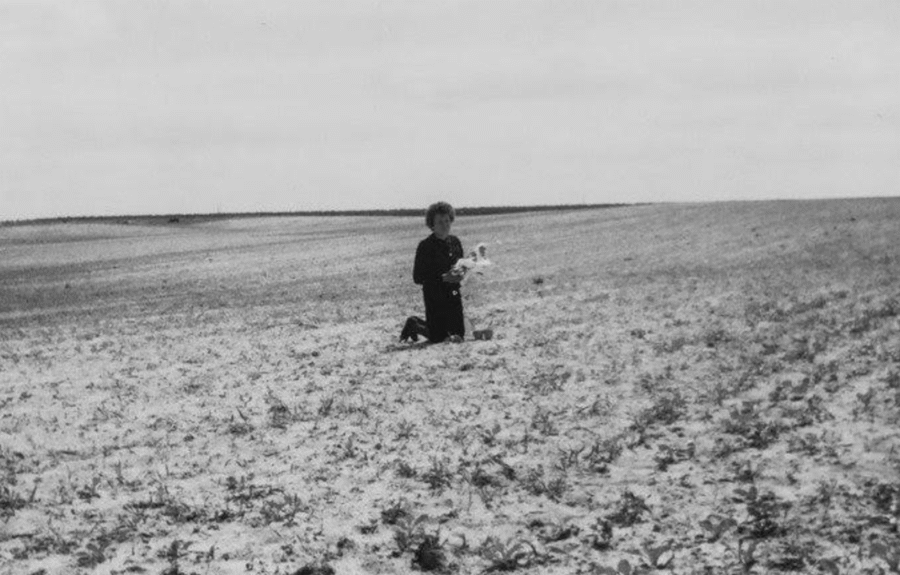
The Polish parliament passed the law formally recognising 11 July as a day of commemoration for Poles killed during the massacres carried out by the Ukrainian Insurgent Army (UPA) and the Organisation of Ukrainian Nationalists (OUN) during World War II – atrocities most notably associated with the Volhynia massacre of 1943.
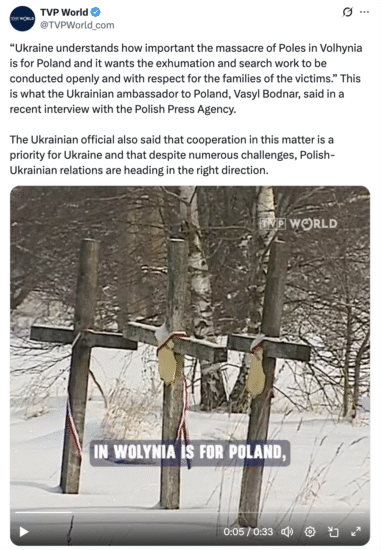
Reacting to the Ukrainian criticism, Polish Deputy Prime Minister Władysław Kosiniak-Kamysz defended the law, insisting that only the truth can be the foundation of bilateral relations.
“11 July will be a National Day of Remembrance for Poles – victims of the genocide committed by OUN-UPA in the Eastern Borderlands of the Second Republic,” Kosiniak-Kamysz wrote on X.
“This legislation, initiated by PSL, has been adopted by the Sejm. We honour memory and strengthen identity, for it is only upon historical truth that we can build mutual understanding.”
The new legislation adopted by the Polish Sejm provides a stark historical account of the atrocities committed between 1939 and 1946. The law recalls what it explicitly terms an act of genocide perpetrated against Polish civilians by members of the Organisation of Ukrainian Nationalists (OUN), the Ukrainian Insurgent Army (UPA) and other affiliated formations.
The act cites a grim toll: over 100,000 Polish victims, primarily rural inhabitants, were murdered during a wave of coordinated attacks across the Eastern Borderlands of the pre-war Second Polish Republic – territories that include the former Wołyń, Tarnopol, Stanisławów, Lwów, and Polesie voivodeships, as well as areas in today’s Lublin and Subcarpathian regions.
„The attackers destroyed Polish property and forced hundreds of thousands of Poles to flee from the Eastern Borderlands of the Second Republic,” the law states. “The massacre reached its peak in July 1943, with 11 July – the so-called ‘Bloody Sunday’, when Poles were slaughtered in around 100 localities – now recognised as the symbolic date of this national tragedy.”
Source: PAP
Photo:@Avanti_1989
Tomasz Modrzejewski