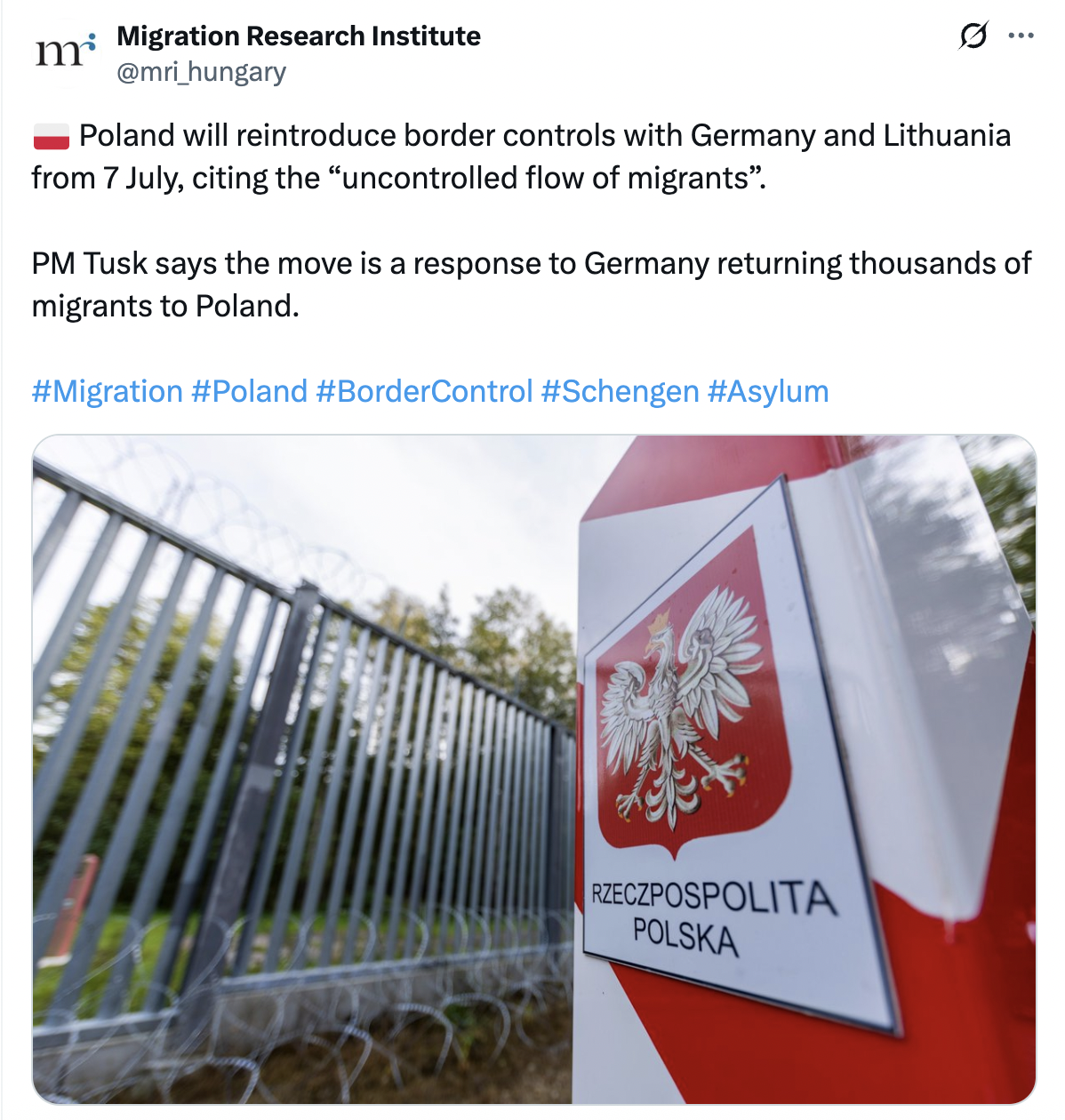
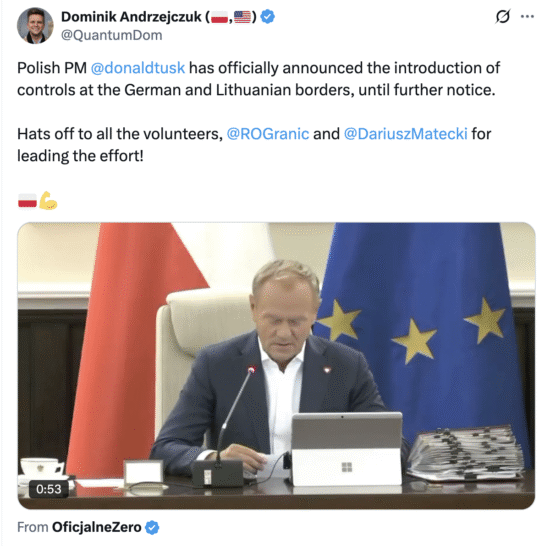
Prime Minister Donald Tusk has announced that Poland will reintroduce temporary border controls with Germany and Lithuania from 7 July. The move, according to Tusk, aims to curb uncontrolled migration and respond to recent developments in the region’s cross-border policies.
Speaking at a press briefing ahead of a cabinet meeting, Tusk explained that the decision had been taken earlier in the day and that Polish border authorities, led by the Border Guard, had already been instructed to prepare for the operation’s rollout.
The Interior Ministry is currently drafting the necessary legislation to facilitate the reintroduction of checks.
Tusk attributed the shift in Poland’s border policy to a change in approach from Germany, which has reportedly begun refusing entry to migrants attempting to claim asylum—something Tusk said had not been the case for the past decade. This change, he noted, has led to operational tensions and an “understandable sense of asymmetry” in how border protocols are enforced.
The Prime Minister stressed that the lack of control on the Polish side has made it difficult for Polish authorities to determine whether individuals being returned from Germany should be sent back. He assured that Poland remains committed to international law and the principles underpinning the Schengen Agreement, but warned that these commitments must be mutual.
“We’ve always defended Schengen and we continue to support a Europe without internal borders,” Tusk said. “But that freedom must be shared by all parties involved. The decision to reintroduce controls is therefore necessary to minimise irregular migration flows.”
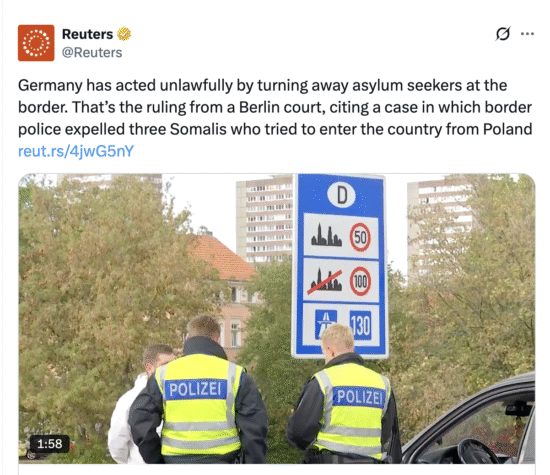
Germany reinstated checks on its border with Poland in October 2023 in response to growing migration pressures. Those controls were expected to expire in September this year, but Tusk suggested Berlin now plans to extend them, raising legal concerns under EU and Schengen law.
“We will respond symmetrically,” Tusk stated. “The time has ended when Poland remained passive in the face of unilateral actions.”
He also indicated that Poland would push diplomatically for changes that would allow these temporary measures to be lifted as soon as possible.
Controls on the Lithuanian border will also be reinstated, with efforts focused not only on official crossings but also on forest paths and secondary roads where checkpoints are planned. The Territorial Defence Forces and other military units will support the Border Guard in securing these areas.
Tusk made it clear that anyone caught crossing the border illegally from Lithuania would be detained and sent back by legal procedures. He confirmed that Lithuanian authorities had already been informed, and that the European institutions would be notified shortly.
“This is about effective state action,” Tusk said. “We’re talking about protecting the integrity of our border and our country.”
He acknowledged that the decision might also affect Latvia and Estonia, but expressed hope that all regional partners would work more closely to prevent what he described as large-scale smuggling operations orchestrated by the regimes of Vladimir Putin and Alexander Lukashenko.
“No one will need to close Schengen borders if Europe shows greater resolve—through tougher sanctions and restrictions, including on airlines involved in human smuggling, and above all, by confronting Belarus head-on,” he added.
Tusk warned that if the current pattern of illegal migration continues, Poland is prepared to take “unpleasant and decisive steps” against those enabling it.
The Prime Minister informed about details of the “Operation Bridge,” launched by Polish authorities in April to tackle illegal migration along the western border. As part of this operation, Border Guard and Police units have checked 4,500 foreign nationals and detained 250 for illegal stay. In total, this year, over 2,000 migrants and smugglers have been arrested by security forces.
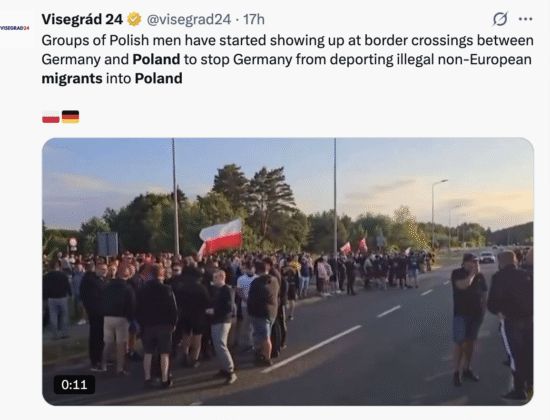
Tusk’s decision comes amid increasing pressure from opposition leaders to take stronger action against illegal migration. Jarosław Kaczyński, head of the Law and Justice party, claimed that the state had “abdicated its duties” and left border officials “without the tools they need.”
The information from various MPs of PiS and Konfederacja parties showed that the Polish police and Border Guards worked based on exaggerated trust while facing German officials who claimed the migrants had turned to Poland as the country was the original region in which they crossed into the EU.
According to reports, some of the documents issued to migrants indicated the same date of birth for entire groups (f.e. 31 Decemeber or 1 January of the same year) and were based only on the declarations of the returned migrants.
“We demand immediate action: a ban on entry to Poland for people from the Middle East and North Africa, and the reintroduction of spot checks on the German border,” Kaczyński wrote in an X post.
“Poland’s security is not up for negotiation. Enough inaction. It’s time to act.” Kaczyński added.
Source: PAP
Photo: X/@volkova_ma57183
Tomasz Modrzejewski