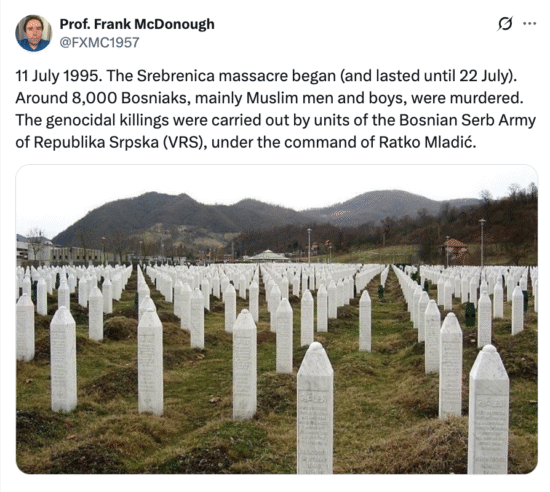
For three years, the former Polish Prime Minister Tadeusz Mazowiecki (first ) served as the United Nations’ special envoy for preserving human rights in the Balkans, chronicling the brutal ethnic cleansing campaigns that ravaged the region. His tenure came to an abrupt end in 1995, following the Srebrenica massacre, in which around 8,000 Bosniak muslim men and boys were systematically executed by Bosnian Serb forces. In a defiant act of protest against the international community’s inaction, Mazowiecki tendered his resignation.
„Integrity must take precedence over the contortions of diplomacy, where the rhetoric of human rights has lost all meaning,” he declared at the time.
Throughout his mandate, Mazowiecki produced 18 detailed reports for the UN, meticulously documenting the humanitarian catastrophe unfolding across the Balkans. His final report contained harrowing eyewitness accounts from survivors of the Srebrenica atrocity, which occurred in July 1995 under the watch of a UN-declared „safe zone.” The accounts laid bare the full horror of events and exposed the paralysing impotence of the international response.
In his resignation letter to the UN Secretary-General, Mazowiecki wrote: “It is now imperative to grasp both the nature of these crimes and the responsibility borne by Europe and the international community for their helplessness.”
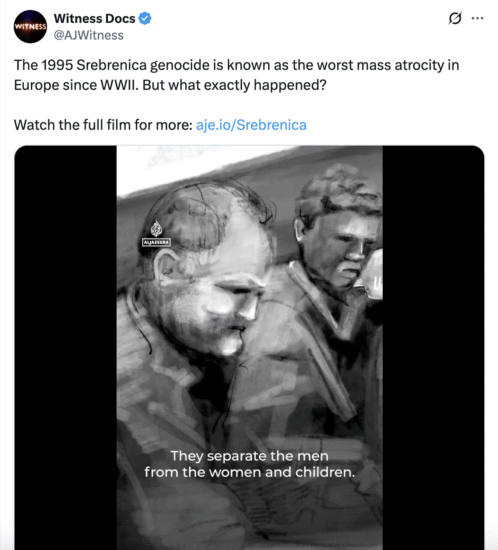
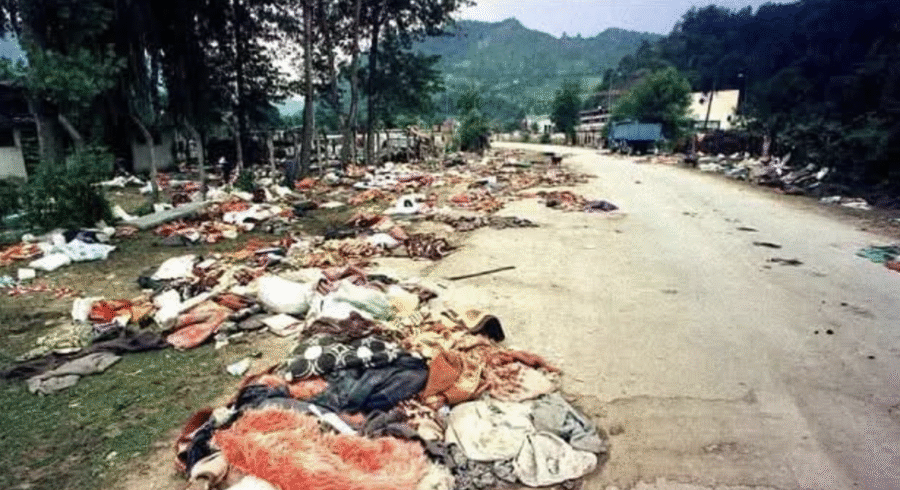
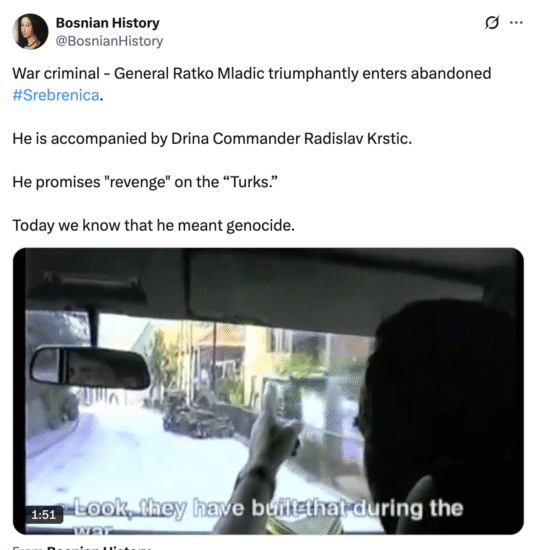
The fall of Srebrenica became, for Mazowiecki, the ultimate emblem of that helplessness. As Bosnian Serb troops under General Radislav Krstić swept into the enclave, Dutch UN peacekeepers stood by. In plain sight of the international contingent, men and boys as young as 14 were separated from women and led away to be executed.
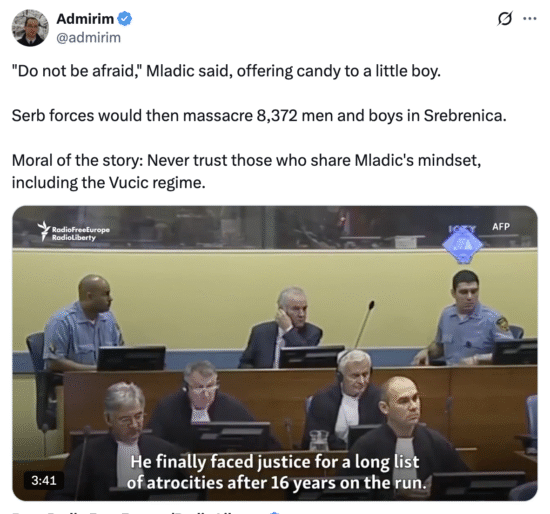
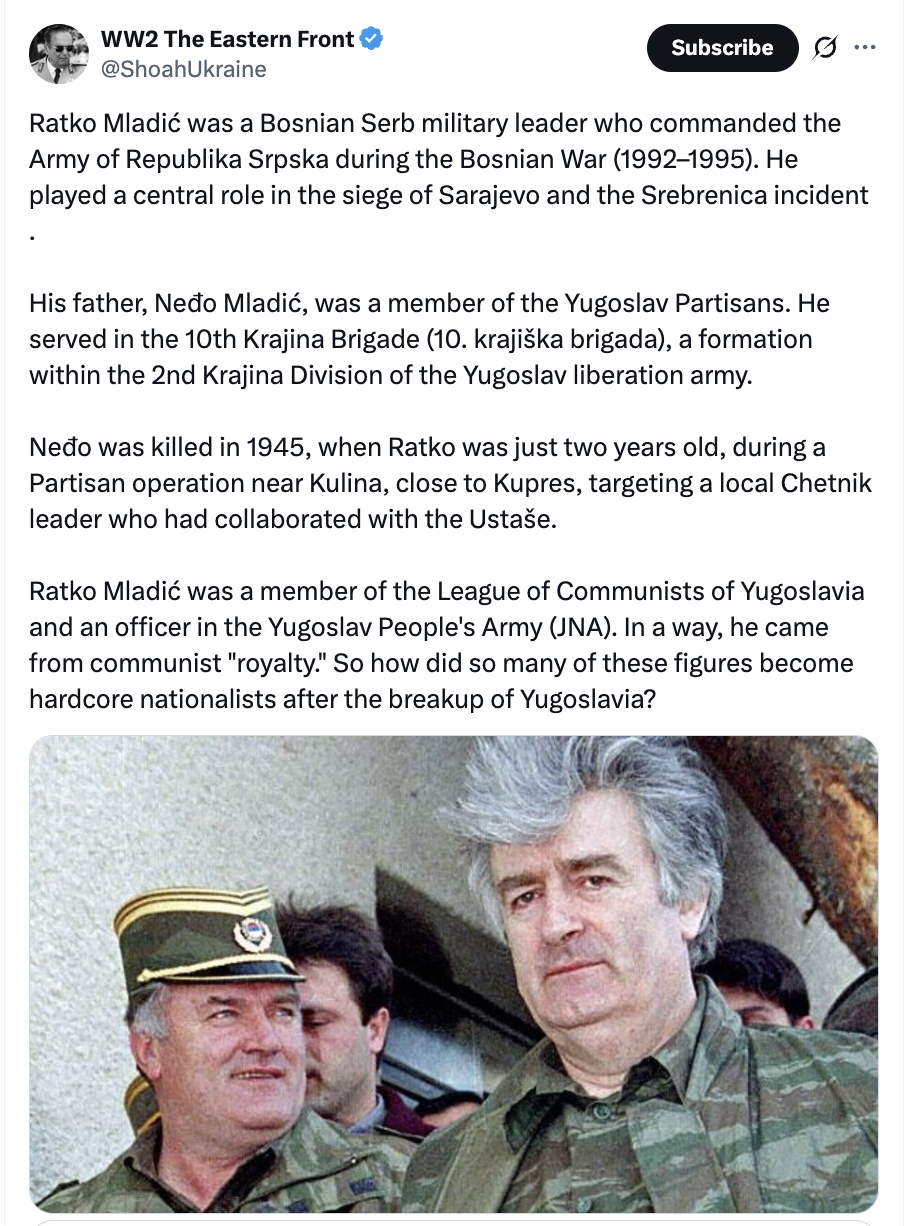
Acting on the orders of General Ratko Mladić, the Bosnian Serb military slaughtered thousands—locals and refugees alike—who had sought safety within the UN-protected zone.
Mazowiecki’s resignation was more than a protest. It was also an indictment of an international community that, in the face of genocide, looked away.
Ethnic cleansing had already left a trail of devastation across the Balkans, but the calculated brutality of Srebrenica marked a new, chilling low.
„The sheer scale of the crime, committed in cold blood, was overwhelming,” recalled Tadeusz Mazowiecki, the former Polish Prime Minister and United Nations special rapporteur on human rights during the Yugoslav wars.
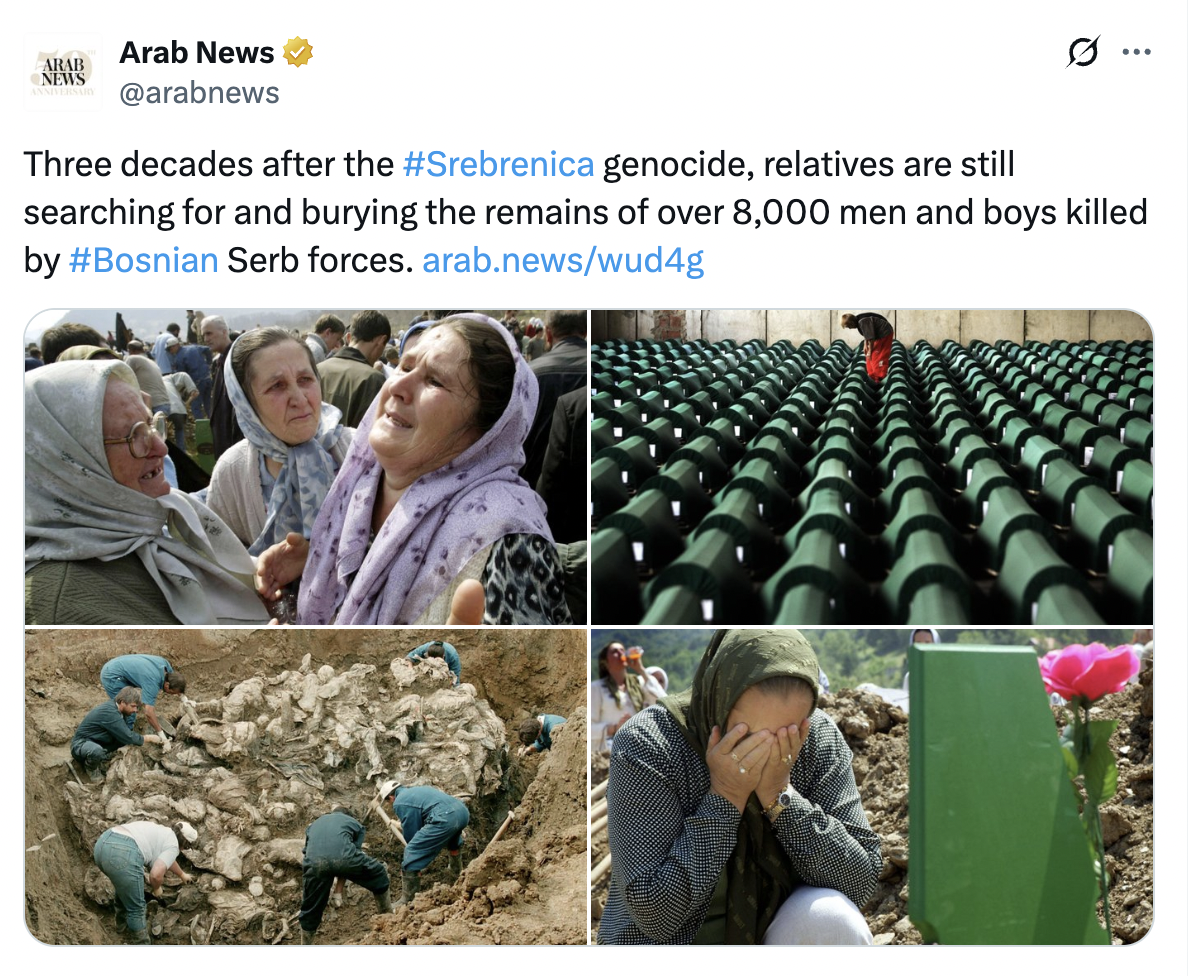
Barred from entering Srebrenica in the immediate aftermath of the massacre, Mazowiecki learned of the atrocities from the wounded and traumatised survivors, including women, children, and a handful of men, who had fled through the forests and gathered at Tuzla airport.
Speaking with them, he later said, solidified his decision to resign: “After delivering over a dozen comprehensive reports to UN authorities, I came to believe that the only way I could truly help these people was by resigning — loudly and publicly.”
Despite warnings from UN colleagues and Swedish peacekeepers who feared for his safety, Mazowiecki insisted on meeting the survivors in Tuzla. According to journalist Konstanty Gebert, who accompanied him, the presence of a UN envoy was seen as a provocation by the enraged and grieving.
“When we arrived, UN military police surrounded our jeep, anticipating trouble. People emerged from tents, eyes burning with hatred, whistling and jeering,” Gebert recalled. “Then someone recognised him and shouted, ‘Ovo nije UN! Ovo je Mazowiecki!’ – ‘This is not the UN, this is Mazowiecki!’ – and suddenly the crowd’s mood shifted. The Swedes stepped back, and Mazowiecki found himself surrounded by survivors eager to testify.”
The testimonies he gathered later became instrumental in the pursuit of justice. Thanks in part to his meticulous documentation, key perpetrators of the massacre were eventually arrested.
On 10 July 2005, a decade after the genocide, Mazowiecki visited Bosnia to receive the Srebrenica 1995 medal from the mothers and widows of the victims.
With emotion, he recalled that in the face of such horror, silence was not an option. “After Srebrenica, documenting crimes was no longer enough,” he told the gathered crowd.
“Some in international politics believed my resignation was rash. But I knew it was the only way to uphold the truth — that integrity must stand above the twisted logic of diplomacy, where the defence of human rights becomes an empty phrase.”
He added, “I acted as a man, and as a Christian. It was not a grand gesture. It was simply what conscience demanded. I wanted to be your voice when no one would listen.”
Appointed in August 1992, Mazowiecki became the first UN envoy on human rights in the former Yugoslavia, a role created in recognition of his leadership during Poland’s transition from communism. His mandate was to report on conditions across the conflict-stricken regions of former Yugoslavia.
His first report, published just weeks later, detailed the ethnic cleansing of Muslims and Croats, as well as the forced exodus of Serbs from Croatia. Subsequent reports drew particular attention to systematic rape and the destruction of places of worship and other calculated attempts to erase the cultural identity of expelled communities. In a February 1993 report, he described in grim detail the mass executions of women and children.
Working closely with journalists, Mazowiecki ensured that his findings reached beyond diplomatic circles. From mid-1992, both global media coverage of the war and the horror of women and children intensified.
“I never believed my reports should be confined to state officials or diplomats. They had to be made public,” he explained.
His reports also formed the basis for investigations by the International Criminal Tribunal for the former Yugoslavia (ICTY) in The Hague, helping prosecutors identify and prioritise cases for trial.
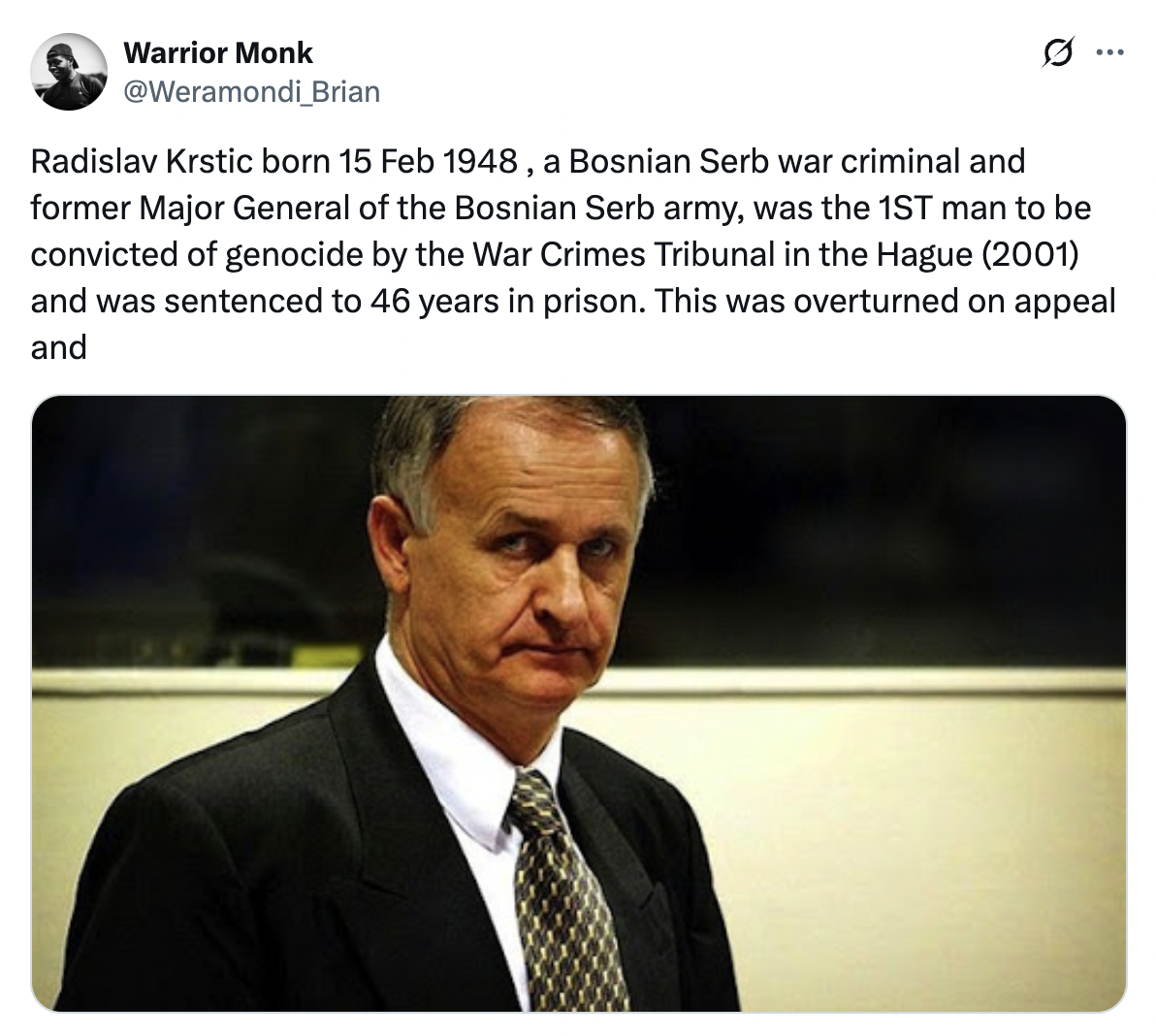
One such case involved General Radislav Krstić, who in 2001 became the first person convicted of genocide by the tribunal, receiving a 46-year sentence (later reduced to 35 on appeal). He is currently serving his sentence in Poland. In a chilling postscript to his crimes, Krstić narrowly survived an attack by Muslim inmates in a British prison, where his throat was slit in apparent retribution.
Meanwhile, two of the war’s most notorious figures from the Serb side, namely Radovan Karadžić and Ratko Mladić evaded justice for years. Their trials at The Hague only commenced much later, a reflection of the slow, grinding pursuit of accountability.
The political fallout from the Srebrenica massacre reverberated beyond the Balkans. A 2002 Dutch report on the failure of the UN peacekeeping force contributed to the collapse of the Dutch government. The Netherlands has continued to argue that its troops lacked air support and were abandoned by the UN command structure when they chose not to confront the Serb forces that committed the genocide.
The story of the Srebrenica Massacre was told in an amazing, Oscar-nominated (2021) movie Quo Vadis, Aïda? (2020) by Jasmila Žbanić. The movie was co-produced by Polish Extreme Emotions Studio led by Ewa Puszczyńska, and supported financially by the Polish Film Institute (PISF).
The film was honoured with the Golden Orange Award for Best Film at the Antalya International Film Festival. It was submitted for consideration by the American Academy of Motion Picture Arts and Sciences in the Best International Feature Film category and went on to receive a nomination. In 2022, the film won four Polish Film Awards, taking home prizes for Best Film, Best Director, Best Screenplay, and Best Editing.
The Yugoslav wars (1992–1995) left 100,000 people dead and displaced over two million. Thousands remain missing, with families of Serbs, Bosniaks, and Croats still searching for answers about the fate of their loved ones.
Tadeusz Mazowiecki, unwavering in his convictions, chose to speak out not because it was easy, but because silence would have made him complicit. His resignation was a moral act in an age of moral failure and remains one of the most powerful individual protests against the international community’s indifference to genocide.
Source: PAP
Photo: X @ramobunic
Tomasz Modrzejewski