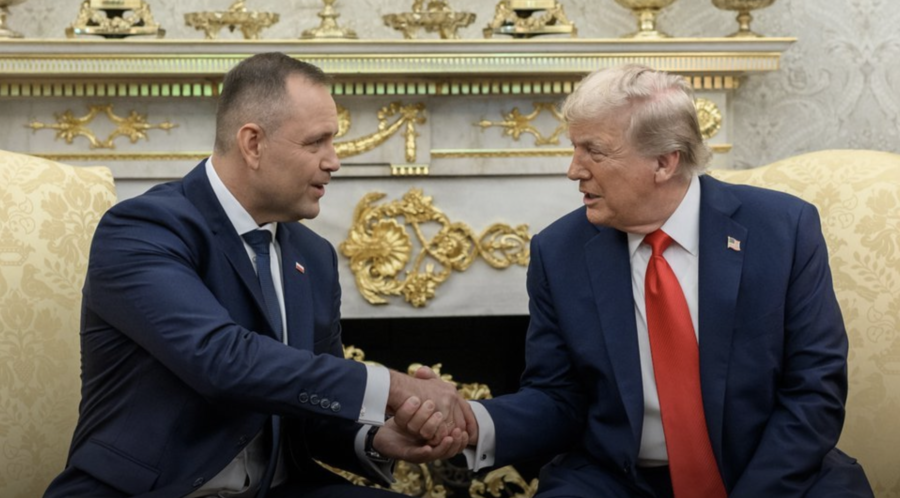
In his article “Britain doesn’t need to become great again, it already is”, diplomat and academic Prof. Piotr Wilczek argues that Britain’s loud narrative of decline bears little resemblance to reality.
What struck him most during his time as Poland’s ambassador was not British weakness, but British pessimism. As he notes, wherever he went, “dinner parties in Hampstead, conversations with taxi drivers”, he heard the same refrain: “This country is finished.”
From the perspective of an outsider, Wilczek finds this self-flagellation baffling. Britain remains the world’s sixth-largest economy, with a GDP of around £2.7 trillion. London still dominates global finance, handling “38 per cent of daily foreign-exchange trades worldwide”, while British universities continue to rank among the world’s elite. The country’s defence spending, creative industries, and technology sector all point not to collapse, but to resilience and continued relevance.

Brexit, Wilczek concedes, was painful, but it was also a democratic decision, made by a functioning parliament and electorate. To dismiss it as an aberration, he argues, is to misunderstand a core British tradition: the belief that “matters concerning Britain should be decided in Britain”. Far from marking the end of British democracy, this instinct for sovereignty helped shape Westminster as the “mother of parliaments” in the first place.
Comparisons with Poland are inevitable, and often flattering to Poles. Poland’s economy has grown rapidly since joining the EU, its cities have flourished, and its middle class has expanded. Yet Wilczek cautions against mistaking momentum for supremacy.
Britain, though perhaps “a little tired”, remains a heavyweight, sustained by unmatched institutional depth, global networks, and cultural soft power. English law, the English language, and the City of London together form an ecosystem no other European country has successfully replicated.
Crucially, British greatness has never rested solely on economics. Wilczek highlights the monarchy as a stabilising symbol of continuity, the common-law tradition as a shared global inheritance, and institutions such as the BBC, which, despite criticism, remain among the most trusted broadcasters in the world. Britain’s cultural reach, from theatre and museums to television and music, continues to attract global audiences on a scale few nations can rival.
If there is a problem, Wilczek suggests, it lies in Britain’s exceptional talent for self-criticism. Trains may run late, the NHS may groan, and politicians may appear frayed, but the system works. Healthcare remains free at the point of need, governments still change “through ballots, not barricades”, and millions of people quietly keep the country running without complaint or drama.
History offers reassurance. Britain has repeatedly reinvented itself after the loss of empire, after the crises of the 1970s, and again in the 1990s, when London became a global cultural capital. The British story, Wilczek writes, is not one of uninterrupted ascent, but of “unbroken renewal”.
What Britain needs now is not radical reform, but renewed confidence. The national habit of understatement, once charming, risks turning into paralysis. Remembering the virtue of “muddling through” modest, stoic, and quietly defiant may be more useful than indulging in narratives of national collapse.
Writing from Warsaw, Wilczek concludes with gentle affection rather than scolding. Britain, he insists, is not dying. It does not need to be “great again”. It needs to recognise that it already is and perhaps to take “a strong cup of tea, a brisk walk in the rain, and a little less self-pity”.
Source: The Spectator
Photo: British Poles
Tomasz Modrzejewski