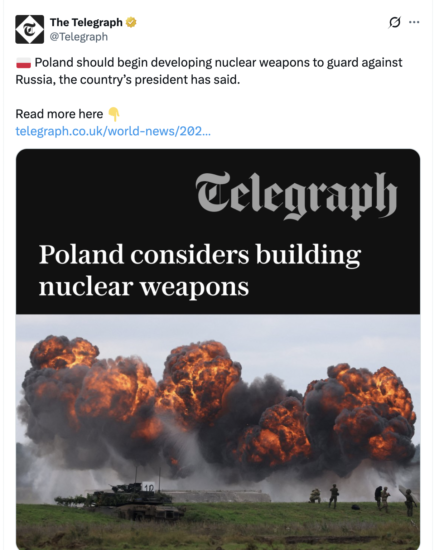
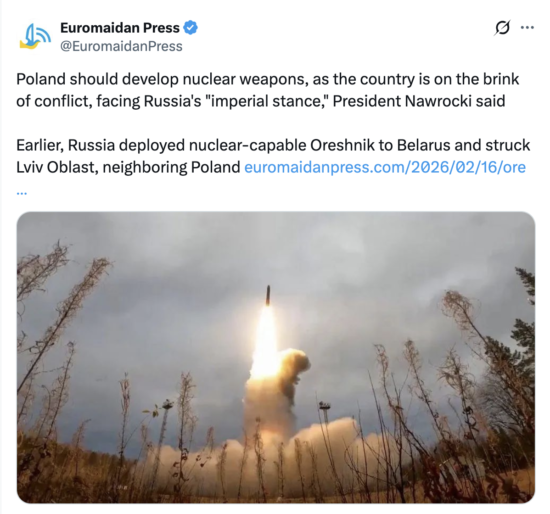
In an article published on 16 February 2026, The Telegraph revealed that Poland is considering the development of nuclear weapons in response to growing security concerns about Russia. The article, written by Kieran Kelly, details remarks by Poland’s president suggesting that Warsaw may need to rethink its long-standing non-nuclear stance.
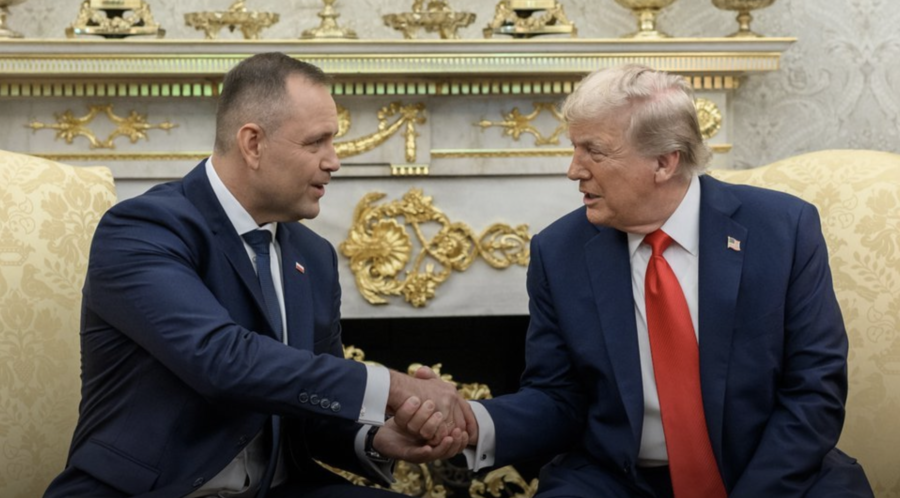
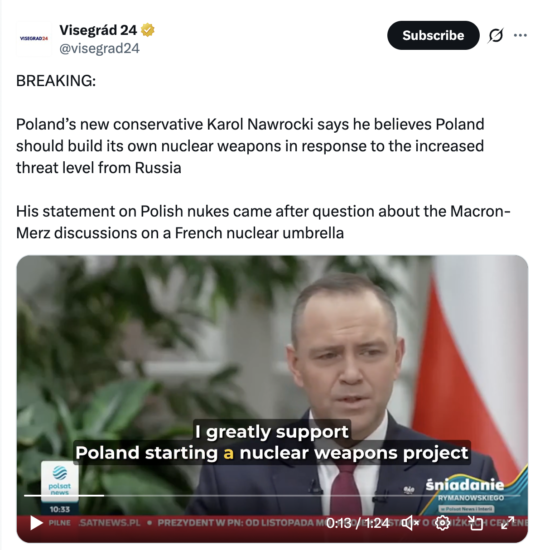
Kelly reports that President Karol Nawrocki, elected last year, said Poland should begin working towards acquiring nuclear capabilities to “guard against Russia.” Speaking to Polsat television, Nawrocki described himself as “a great supporter of Poland joining the nuclear project,” arguing that such a move could underpin the country’s security strategy. He added: “This path, with respect for all international regulations, is the path we should take.”
According to the article, the Polish president justified his position by pointing to what he described as Russia’s “aggressive, imperial attitude” towards Poland.
As quoted by Kelly, Nawrocki warned: “We are a country right on the border of an armed conflict. The aggressive, imperial attitude of Russia towards Poland is well known.”
The Telegraph report situates Poland’s debate within a broader European reassessment of nuclear deterrence. Kelly notes that European nations have been reconsidering their security arrangements amid deteriorating transatlantic relations and heightened fears of Russian aggression.
Germany and France have begun discussions about strengthening a European nuclear deterrent, while Latvia’s prime minister has suggested that “nuclear deterrence can give us new opportunities.”
However, the article also presents sceptical voices. Nikolai Sokov, a former Soviet and Russian arms-control negotiator, told The Telegraph that Poland is unlikely to become a fully fledged nuclear power.
“We certainly won’t be seeing Poland building nuclear weapons,” he said, arguing that Warsaw lacks both the materials and the political latitude to develop its own arsenal.
Instead, Kelly writes, Poland is more likely to seek participation in NATO’s nuclear sharing programme or rely on French or British nuclear protection.
The report further explains that Poland has previously criticised the Treaty on the Prohibition of Nuclear Weapons and has voted against UN resolutions welcoming the treaty.
It also references recent withdrawals by several Eastern European states from the Ottawa Treaty restricting landmines, signalling a broader shift in regional defence thinking.
Kelly concludes by highlighting the wider geopolitical context: strained relations between Europe and the United States, warnings about Russian missile deployments near EU borders, and renewed debate over the credibility of Western security guarantees.
Source: Telegraph
Photo: X/@EuromaidanPress
Tomasz Modrzejewski