Europe’s security architecture is undergoing a profound transformation, and at its centre lies a rapidly intensifying partnership between Poland and France. What began as closer bilateral cooperation has evolved into something far more ambitious: a potential reconfiguration of deterrence, military planning, and strategic autonomy across the continent.
At the heart of this shift is an idea once considered politically sensitive, extending France’s nuclear deterrent to European allies. Today, it is no longer theoretical.
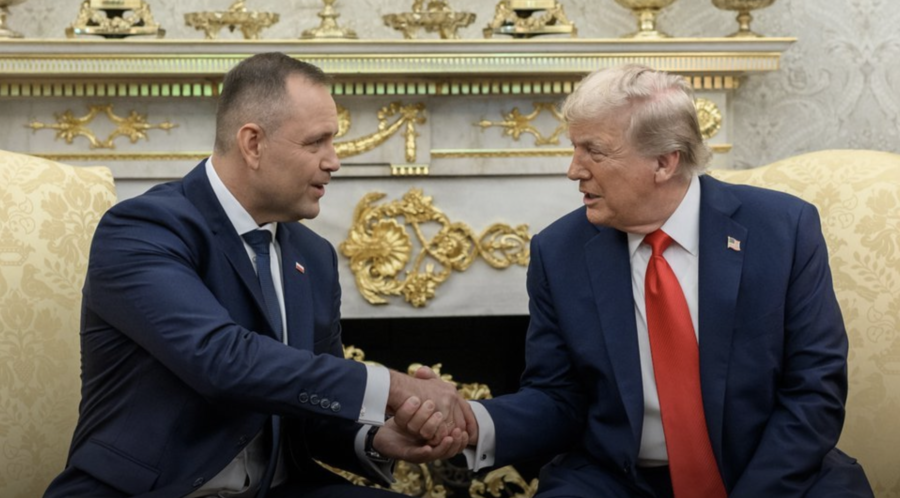
Recent high-level talks between Warsaw and Paris have moved beyond symbolic declarations. Both governments are actively exploring joint military exercises that would simulate elements of nuclear deterrence, integrating conventional and strategic capabilities in a coordinated framework.
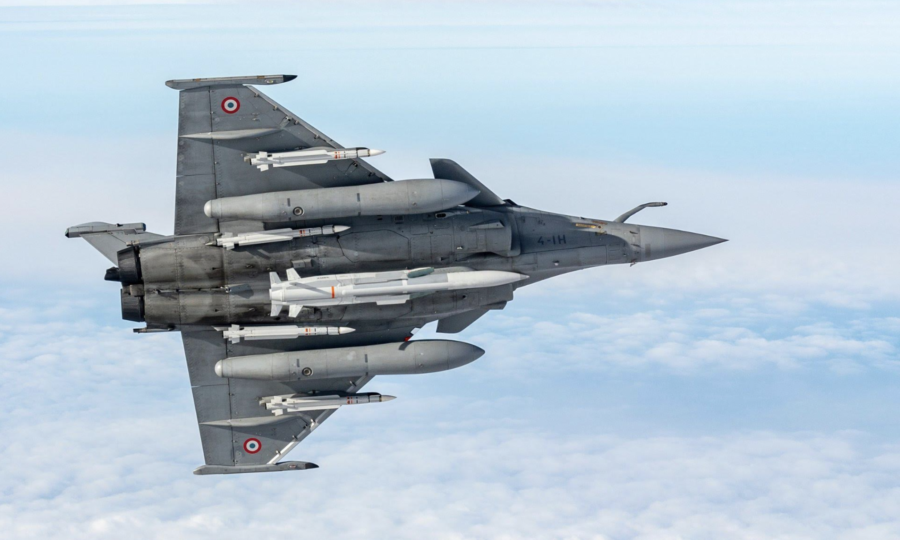
These exercises are expected to take place on NATO’s eastern flank, particularly over the Baltic region and northern Poland. In such scenarios, Polish aircraft would identify and track targets, while French forces equipped with nuclear-capable systems would simulate strike operations.
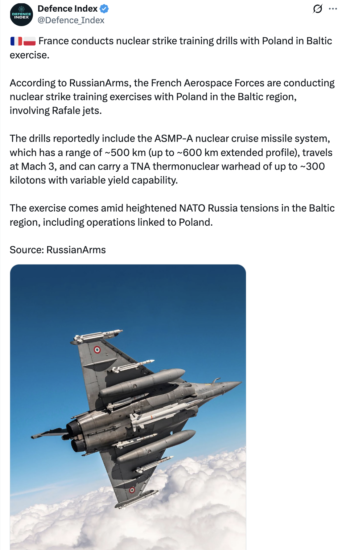
Although no nuclear weapons are set to be permanently stationed in Poland, the cooperation signals something more subtle yet significant: the extension of what is known as a “nuclear umbrella”, whereby a nuclear-armed state provides deterrence protection to its allies.
The timing of this initiative is no coincidence. Across Europe, concerns have been growing about long-term reliance on the United States as the primary guarantor of security. In response, France, currently the European Union’s only nuclear power, has begun promoting a more autonomous defence model.
President Emmanuel Macron has outlined a doctrine of “advanced deterrence”, aimed at involving European partners more directly in France’s nuclear strategy. This includes joint exercises, doctrinal coordination, and potentially the temporary deployment of nuclear-capable aircraft to allied territories.
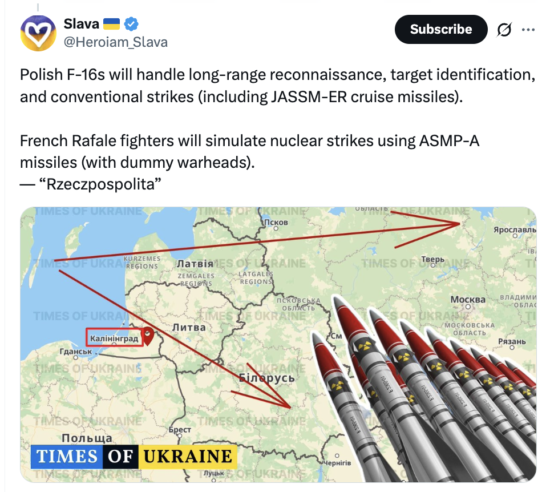
Poland, situated on NATO’s eastern frontier and acutely aware of Russian military pressure, has emerged as one of the most committed participants in this initiative. Its engagement reflects not only geopolitical necessity but also a broader shift in European thinking: deterrence is no longer viewed as exclusively transatlantic.
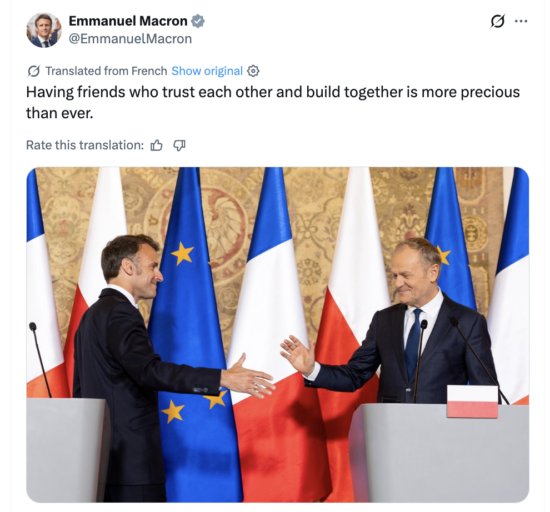
Importantly, the Polish–French partnership extends well beyond nuclear policy. The two countries are deepening collaboration across multiple defence domains, including satellite communications, intelligence sharing, and long-range strike capabilities.
This multi-layered cooperation suggests the emergence of a new strategic axis within Europe, one that combines conventional military strength with advanced technological infrastructure and nuclear deterrence.
Despite its ambitions, the initiative remains carefully calibrated. French officials have repeatedly emphasised that ultimate control over nuclear weapons will remain in Paris, ensuring compliance with international non-proliferation commitments.
At the same time, the growing involvement of multiple European states from Germany to Sweden indicates that the project could evolve into a broader continental framework.
Yet this evolution raises complex questions. Will a European-led nuclear deterrent complement NATO or compete with it? Can strategic autonomy be achieved without undermining transatlantic unity?
What is clear is that the Polish–French partnership marks a decisive moment. By linking Eastern Europe’s frontline perspective with Western Europe’s nuclear capabilities, the two countries are helping to redefine how security is organised on the continent.
Photo: X/@Defence_Index
Tomasz Modrzejewski