Poland’s Ministry of Foreign Affairs has expressed strong disapproval following Ukraine’s decision to grant one of its military units the honorary title “Heroes of the UPA”, a move that has reignited longstanding historical tensions between the two neighbouring countries.
The controversy emerged after Ukrainian President Volodymyr Zelenskyy signed a decree awarding the title to a unit of the Armed Forces of Ukraine. According to the Ukrainian president, the designation was intended to restore the historical traditions of the national military and recognise the exemplary service of the unit in defending Ukraine’s territorial integrity and independence during the ongoing war.
However, the announcement has been met with a distinctly negative reaction in Poland, where the legacy of the Ukrainian Insurgent Army (UPA) remains deeply controversial. For many Poles, the organisation is associated with the mass killings of Polish civilians during the Second World War, particularly in the regions of Volhynia and Eastern Galicia.
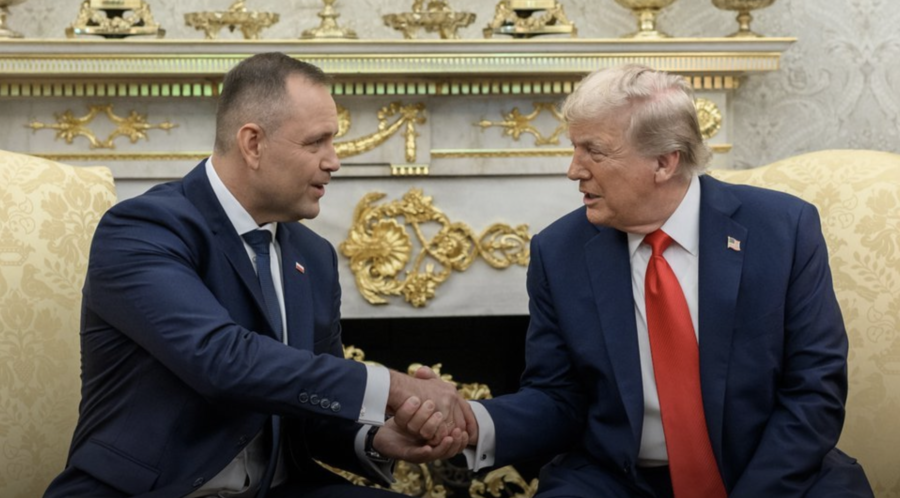
httptus/2059715650340147699/photo/1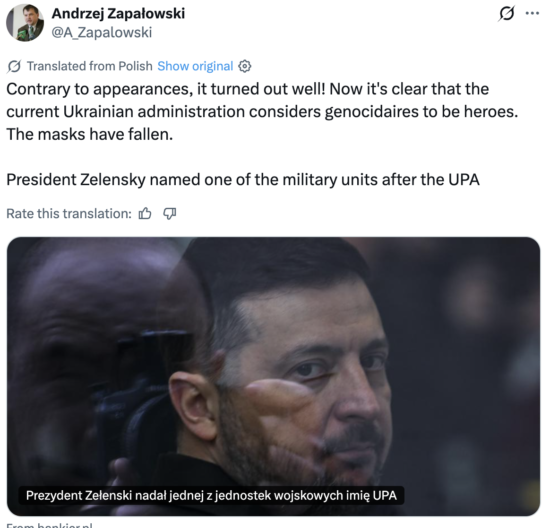
Polish Foreign Ministry spokesperson Maciej Wewiór stated that Warsaw viewed the decision in unequivocally negative terms. He argued that honouring the UPA in this manner risks reopening historical wounds and undermining efforts to foster mutual understanding between Poland and Ukraine.
According to Wewiór, the decision is particularly painful for the families and descendants of those who were killed by the UPA during the wartime massacres. He stressed that commemorating the organisation in an official military context damages the delicate process of historical dialogue that both countries have attempted to pursue over recent years.
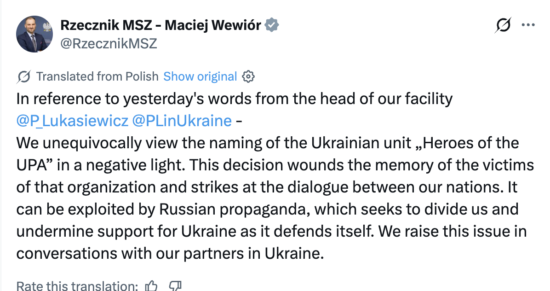
The spokesperson also warned that such actions could have broader geopolitical consequences. In his view, the issue may be exploited by Russian propaganda, which has consistently sought to create divisions between Poland and Ukraine and weaken international support for Kyiv’s defence against Russian aggression.
“Decisions of this nature affect the memory of the victims and complicate the dialogue between our nations,” Wewiór emphasised, adding that Poland continues to raise these concerns during discussions with Ukrainian officials.
The matter was also addressed through diplomatic channels. Deputy Foreign Minister Marcin Bosacki reportedly met with Ukraine’s ambassador to Poland, Vasyl Bodnar, to communicate Warsaw’s disappointment regarding the presidential decree.
During the meeting, the Polish side expressed concern that the naming of a military formation after the UPA could hinder progress in addressing difficult historical issues that have long complicated Polish-Ukrainian relations. Polish officials argued that gestures perceived as glorifying organisations linked to wartime atrocities make reconciliation more difficult rather than easier.
While Poland remains one of Ukraine’s strongest political and military supporters in the face of Russia’s invasion, the dispute highlights the continuing sensitivity of historical memory in bilateral relations.
The reaction was not limited to the Foreign Ministry. Poland’s Institute of National Remembrance (IPN), a state institution responsible for researching and commemorating twentieth-century history, also issued a strongly worded response.
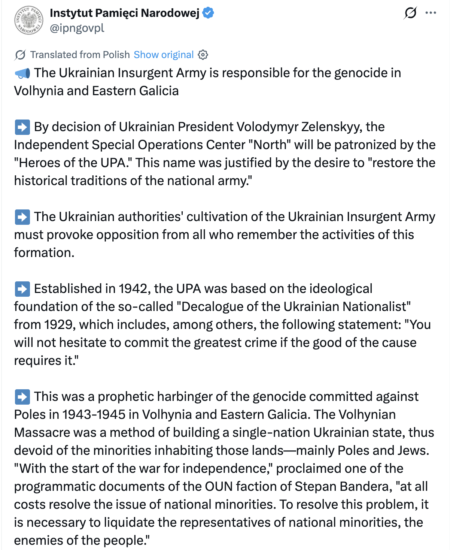
The Institute stated that any effort by Ukrainian authorities to cultivate what it described as a “cult” of the Ukrainian Insurgent Army must be opposed by those who remember the actions carried out by the organisation during the war.
The IPN reiterated its position that the UPA was responsible for acts of genocide against the Polish population in Volhynia and Eastern Galicia. The organisation maintains that the mass killings constituted a deliberate campaign aimed at removing the Polish population from territories claimed by Ukrainian nationalists.
The roots of the controversy lie in one of the most painful chapters of Polish-Ukrainian history.
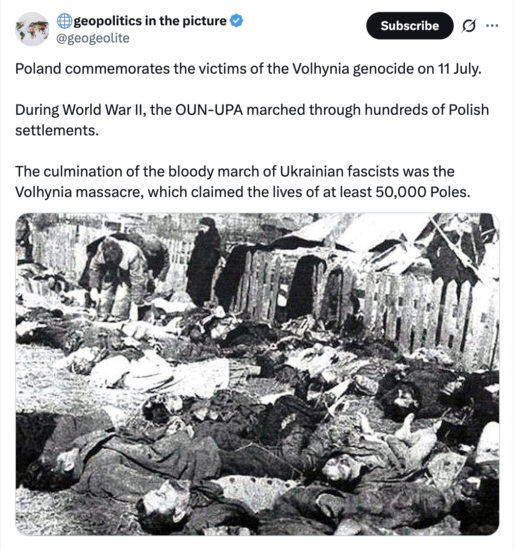
According to numerous historians, the peak of the violence occurred in July 1943, when coordinated attacks were launched against approximately 150 Polish-inhabited settlements in Volhynia, a region that today forms part of western Ukraine. Entire villages were destroyed, and thousands of civilians, including women, children and the elderly, were killed.
The massacres are commonly referred to in Poland as the Volhynia Massacre or the Volhynia Slaughter. Responsibility for the attacks is generally attributed to members of the Organisation of Ukrainian Nationalists, particularly the Bandera faction known as OUN-B, and the Ukrainian Insurgent Army, which operated under its influence.
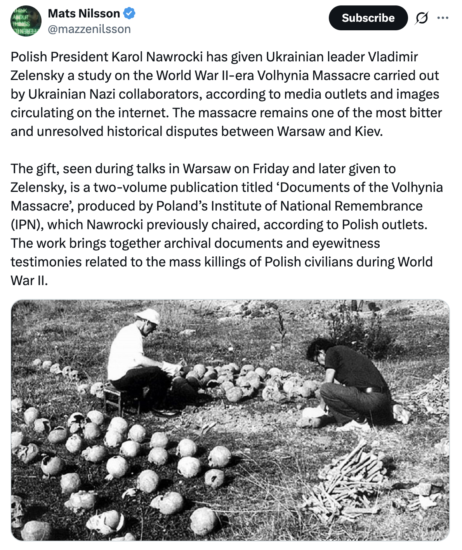
Polish historical institutions estimate that tens of thousands of Polish civilians lost their lives during the campaign. In Poland, these events are widely recognised as genocide, a designation that has been endorsed by the Polish parliament and supported by many historians.
Despite years of dialogue, Poland and Ukraine continue to differ fundamentally in their interpretation of the events of the 1940s.
The Polish narrative emphasises the organised and systematic nature of the killings, portraying them as an ethnic cleansing campaign directed against Polish civilians. Consequently, organisations such as the OUN and UPA are often viewed primarily through the lens of these atrocities.
In contrast, many Ukrainians regard the same organisations as symbols of resistance against Soviet domination. The UPA continued armed resistance against Soviet authorities after the Second World War, and this anti-Soviet struggle occupies a central place in contemporary Ukrainian national memory.
As a result, figures and organisations celebrated by some Ukrainians as fighters for national independence are often regarded in Poland as perpetrators of grave crimes against civilians.
The dispute comes at a time when Poland and Ukraine maintain exceptionally close strategic relations. Since Russia’s full-scale invasion of Ukraine in 2022, Poland has become one of Kyiv’s most important allies, providing military assistance, humanitarian aid and political support.
Nevertheless, the latest controversy demonstrates that historical issues continue to cast a shadow over bilateral relations. While both governments have repeatedly emphasised the importance of cooperation in the face of common security challenges, disagreements over the interpretation of wartime history remain unresolved.
For Poland, commemorating the UPA touches upon the memory of thousands of victims and their descendants. For many Ukrainians, however, references to the organisation are connected to the broader struggle for national independence and resistance against foreign domination.
Photo: X/ @geogeolite
Tomasz Modrzejewski