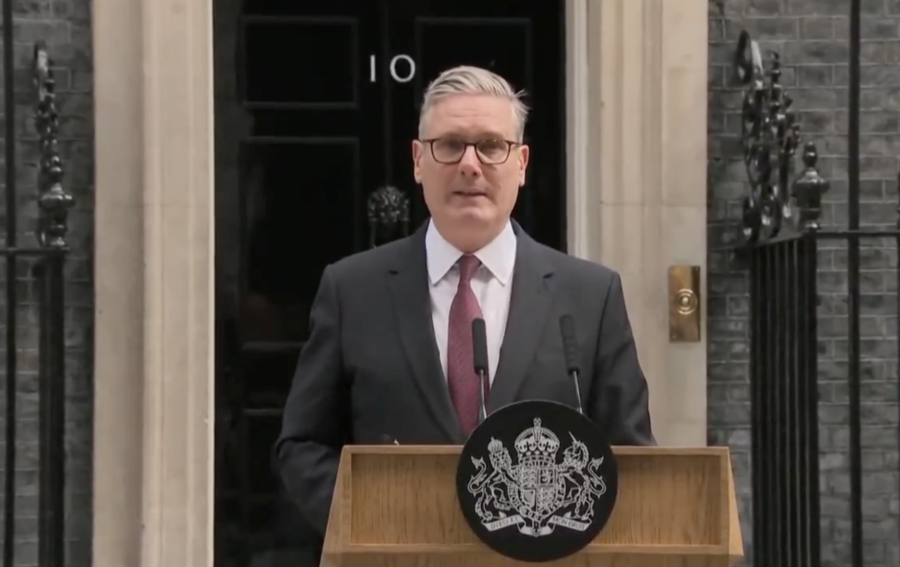
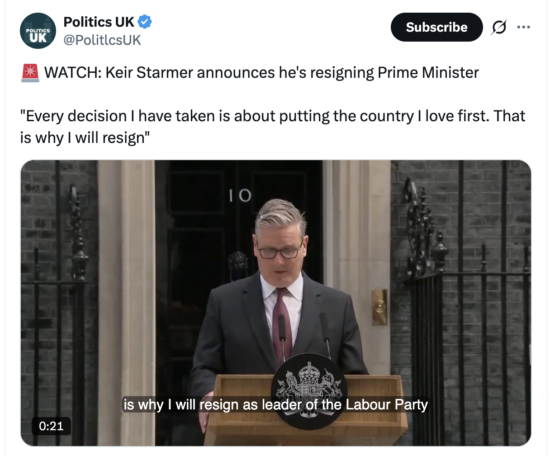
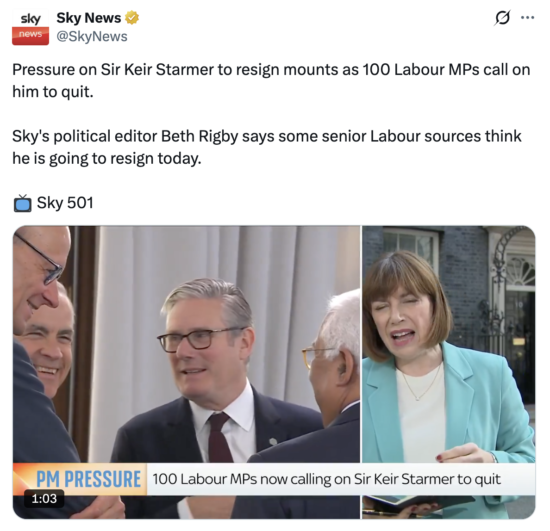
Sir Keir Starmer has announced that he will step down as Prime Minister of the United Kingdom, bringing an abrupt end to a premiership that began with Labour’s landslide election victory in 2024. The decision follows months of growing unrest within the Labour Party, declining public support and a series of political setbacks that weakened his authority.
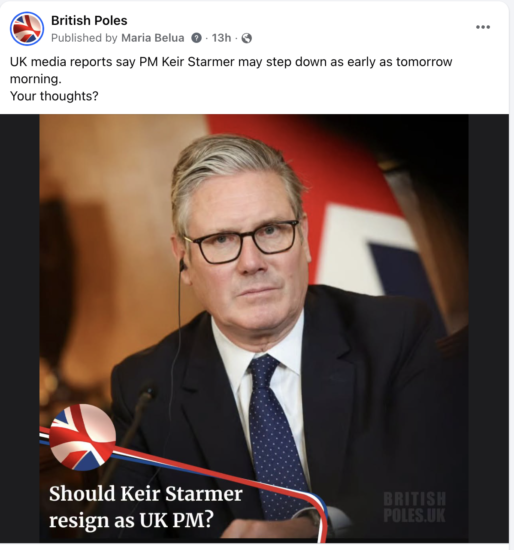
In a statement delivered from Downing Street, Starmer confirmed that he would remain in office temporarily while the Labour Party selects a new leader. His departure marks yet another chapter in a period of political instability that has seen several British prime ministers leave office before completing a full parliamentary term.
The resignation comes after a difficult year for the government. Labour suffered significant losses in local elections, while internal criticism intensified over the party’s policy direction and its handling of economic challenges. Several senior figures questioned whether the government had delivered sufficiently on promises to improve living standards, strengthen public services and stimulate economic growth.
Pressure on Starmer increased further after a number of ministers and parliamentary aides left their positions, openly expressing concerns about the party’s future under his leadership. Calls for a change at the top grew louder as Labour MPs became increasingly anxious about the party’s electoral prospects.
One of the most significant developments in recent weeks was the return of Andy Burnham to Westminster politics. The former Mayor of Greater Manchester has emerged as a leading contender to succeed Starmer and is widely viewed by many Labour members as a figure capable of reconnecting the party with voters who have drifted away in recent elections.
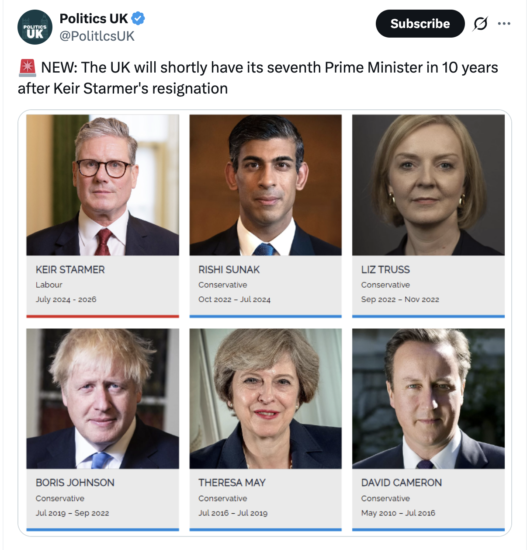
Despite the domestic difficulties that ultimately undermined his position, Starmer’s supporters point to several achievements during his time in office. Internationally, he earned recognition for his diplomatic efforts, particularly in relation to European cooperation and support for Ukraine. However, analysts argue that these successes were overshadowed by mounting dissatisfaction at home.

The Labour Party is now expected to begin the process of choosing a new leader. Whether the contest becomes a prolonged battle between rival factions or results in a swift transition remains uncertain. What is clear, however, is that Starmer’s resignation represents a pivotal moment for both Labour and British politics.
Photo: X/@PoliticsUK
Tomasz Modrzejewski