Ukraine’s struggle against Russian aggression has understandably intensified the country’s search for historical symbols of resistance to Moscow. Yet that process is increasingly producing a deeply uncomfortable result: figures associated with the radical, exclusionary tradition of twentieth-century Ukrainian nationalism are not merely being remembered or studied, but ceremonially elevated as national heroes.
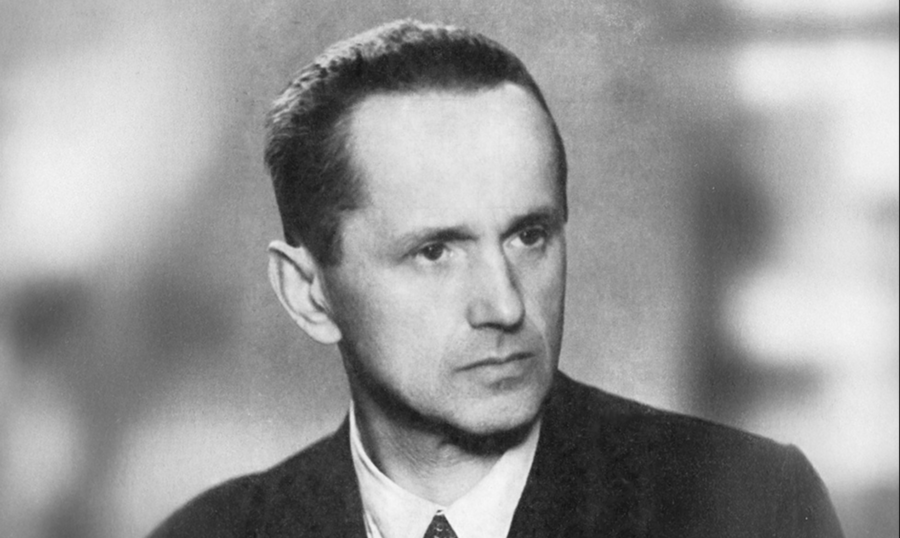
The latest example is Yevhen Konovalets, the first leader of the Organisation of Ukrainian Nationalists (OUN).
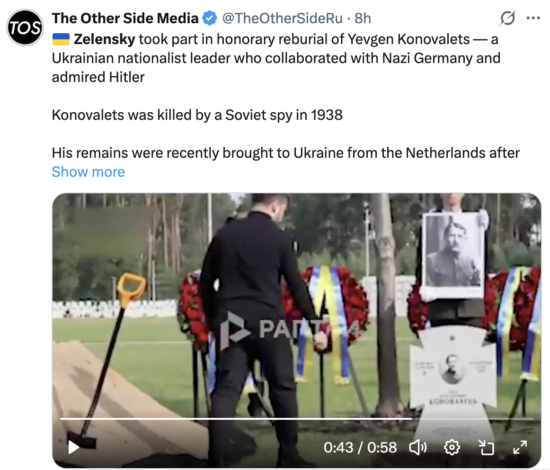
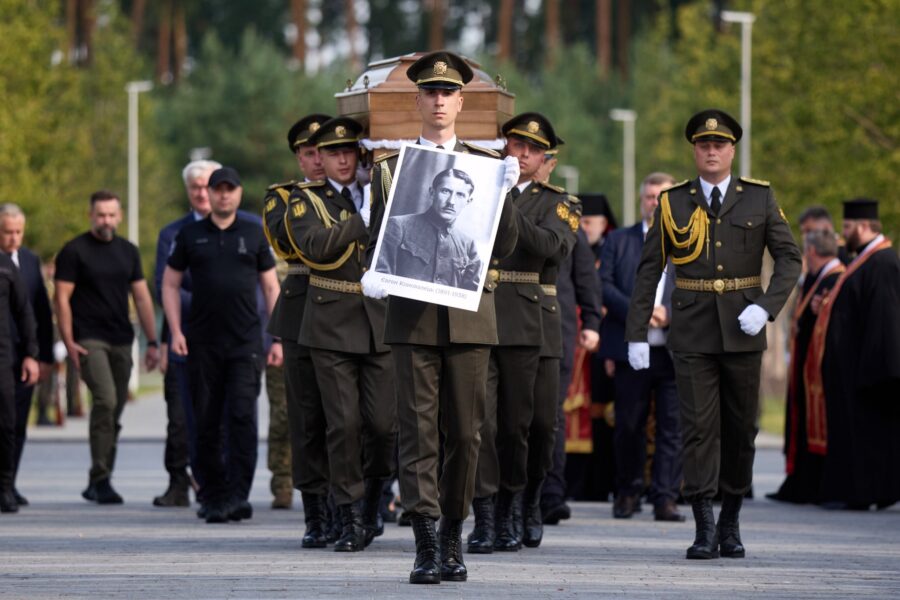
Konovalets’s remains were exhumed in Rotterdam, where he had been buried since his assassination by a Soviet intelligence agent in 1938, and returned to Ukraine on 13 August 2026. A ceremony honouring him was subsequently held at the Patriarchal Cathedral of the Resurrection of Christ of the Ukrainian Greek Catholic Church in Kyiv. His remains are ultimately to be reburied at Ukraine’s National Military Memorial Cemetery.
The Ukrainian Greek Catholic Church had itself announced that the farewell ceremony would take place in its Patriarchal Cathedral, describing the repatriation as part of a broader initiative to bring home the remains of leading figures of the Ukrainian “liberation movement”.
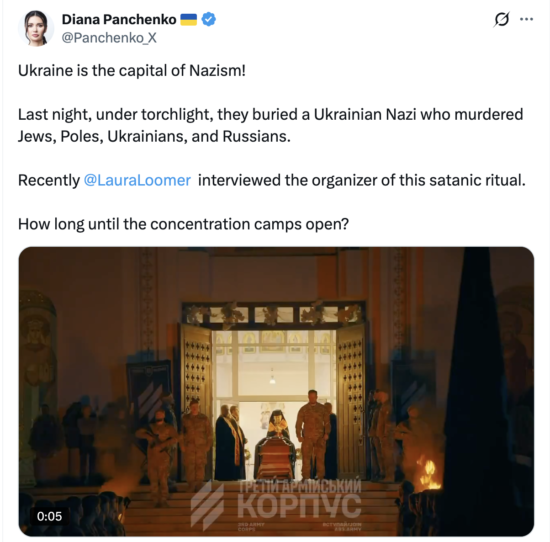
This is therefore more than the private reburial of a historical figure. It forms part of an official programme of commemoration supported by the Ukrainian state.
President Volodymyr Zelenskyy’s office announced the exhumation on 11 August, while the president had already declared in May that Ukraine had a “moral duty” to bring home figures including Konovalets and OUN leader Andriy Melnyk as part of what he called the restoration of the country’s “true memory”.
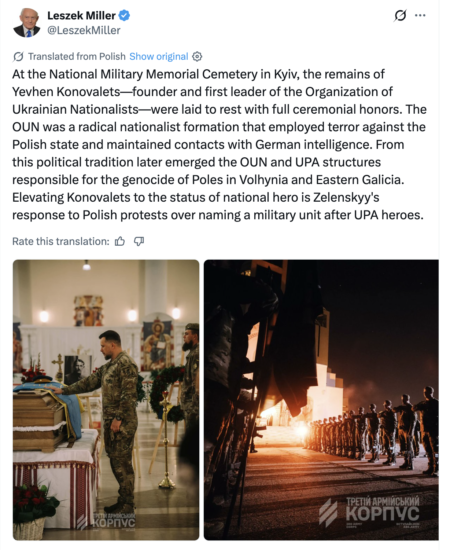
Konovalets was undoubtedly an important figure in the history of the Ukrainian independence movement. He had served in the Ukrainian military during the revolutionary period after the First World War and later became a founder of the Ukrainian Military Organisation and the first leader of the OUN.
But the OUN was not simply a conventional national-liberation organisation.
It belonged to the radical nationalist currents that emerged across inter-war Europe, rejected liberal democracy and increasingly embraced an authoritarian, ethnically defined vision of nationhood. Its political culture glorified sacrifice, revolutionary violence and the subordination of individual interests to the nation.
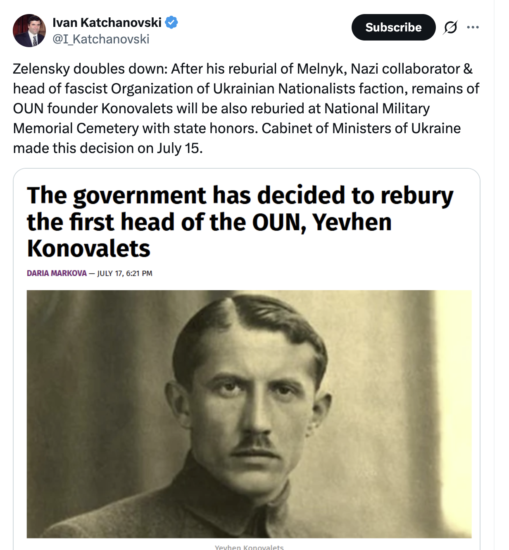
The organisation’s attitudes towards ethnic minorities also became increasingly hostile during the 1930s. Historical research into OUN publications has documented antisemitic themes and proposals for the social, economic and political separation of Jews from Ukrainians.
Historical precision is important here. Konovalets was assassinated in 1938, before the OUN split into the rival factions associated with Andriy Melnyk and Stepan Bandera and before the most notorious crimes subsequently connected with Ukrainian radical nationalism during the Second World War. It would therefore be misleading simply to attribute every later act of the OUN-B or Ukrainian Insurgent Army directly to Konovalets.
Yet it is equally misleading to detach the later radicalisation entirely from the political movement he built and led.
After Konovalets’s death, the OUN split in 1940. The Bandera faction subsequently became associated with extreme antisemitic rhetoric and with violence against Jews, while the Ukrainian nationalist underground was also implicated in the mass killing of Polish civilians in Volhynia and Eastern Galicia. The historical dispute concerns the extent of responsibility of particular structures and individuals, not whether ethnic violence became part of this nationalist milieu.
That makes today’s unqualified heroisation particularly problematic.
The Konovalets ceremony is not an isolated episode.
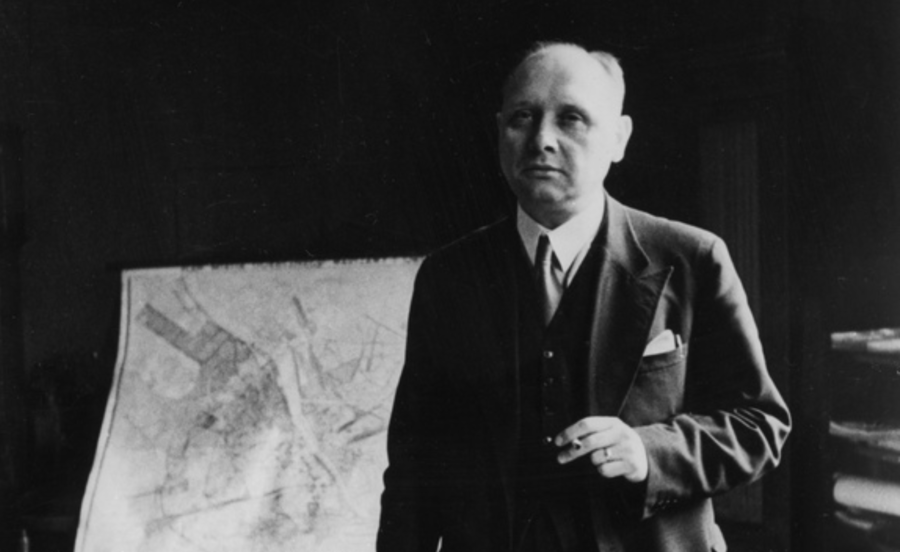
Only months earlier, in May 2026, Ukraine repatriated and ceremonially reburied Andriy Melnyk, who became leader of one of the two principal OUN factions after the 1940 split. President Zelenskyy personally participated in the reburial at the National Military Memorial Cemetery.
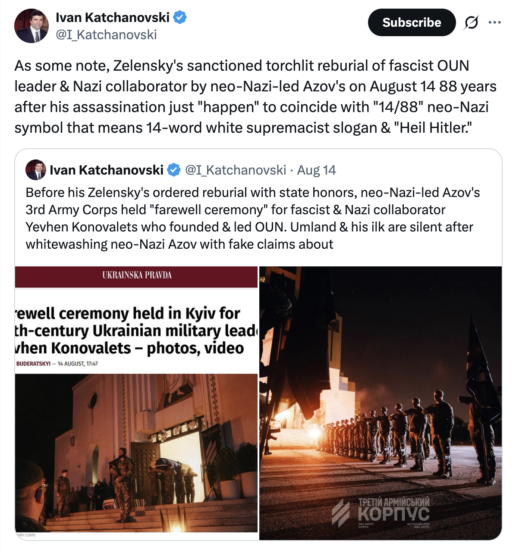
Melnyk’s historical record is considerably more difficult to sanitise. His faction sought cooperation with Nazi Germany in the hope that German victory over the Soviet Union would create an opportunity for Ukrainian statehood. The ceremony consequently provoked criticism abroad, including in Israel. France’s Le Monde reported that both Israel’s foreign ministry and Yad Vashem objected to the honouring of a leader of a movement associated with collaboration with Nazi Germany and persecution of Jews.
Russia has predictably exploited such controversies for its own propaganda purposes, using them to reinforce the Kremlin’s claim that contemporary Ukraine is a “Nazi” state. Moscow protested Melnyk’s reburial in particularly aggressive terms.
But Russian propaganda does not make the underlying historical questions disappear.
Ukraine today is a pluralistic country whose president is Jewish, whose armed forces include people of many ethnic and religious backgrounds, and whose population is fighting a war of national survival against Russian aggression. None of that requires denying that some historical movements fighting Moscow also espoused authoritarian nationalism, antisemitism or ethnic exclusion.
Indeed, Ukraine’s strongest answer to Russian historical manipulation would be precisely the opposite: rigorous acknowledgement of its own difficult past.
A democratic European state can commemorate the struggle for Ukrainian independence without presenting every participant in that struggle as morally exemplary. It can recognise Konovalets’s opposition to Soviet domination while simultaneously acknowledging the radical ideology of the organisation he created. It can honour Ukrainians who fought for statehood without whitewashing organisations whose later members participated in persecution and ethnic violence.
What is troubling about the ceremonies for Konovalets and Melnyk is therefore not the recovery of historical remains itself. Nations routinely return prominent exiles for burial at home.
The problem is the language of reverence and institutional honour surrounding these acts.
When political leaders speak of restoring “true memory”, when nationalist leaders are buried alongside contemporary soldiers at a national military cemetery, and when their coffins are received in major religious ceremonies, the distinction between historical remembrance and state-sponsored canonisation becomes increasingly difficult to maintain.
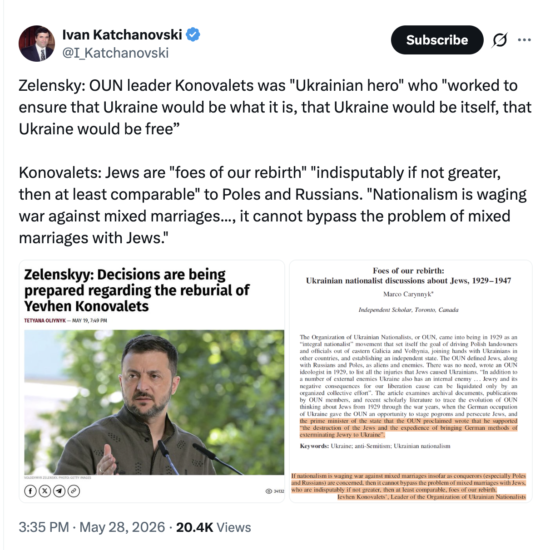
For Poland, Israel and other countries whose historical memory includes victims of radical Ukrainian nationalism, these developments are especially sensitive. And they should also concern Ukraine’s European partners.
Photo: X @I_Katchanovski
Tomasz Modrzejewski