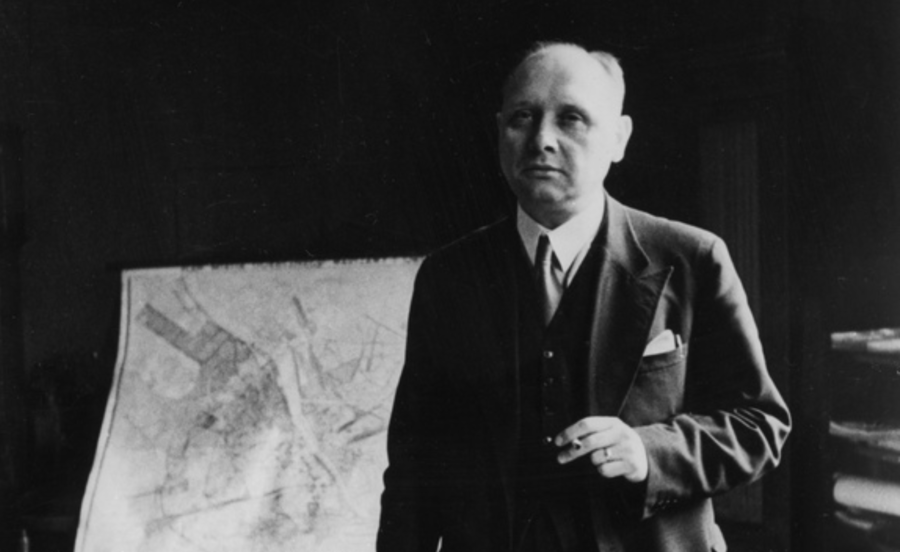
A Polish court has ruled in favour of the Kulski Foundation in a high-profile press correction case concerning allegations made about Julian Spitosław Kulski, the wartime mayor of Warsaw. The final judgment requires the history portal Dzieje.pl to publish a correction rejecting a series of statements made about Kulski in an interview with historian Grzegorz Rossoliński-Liebe.
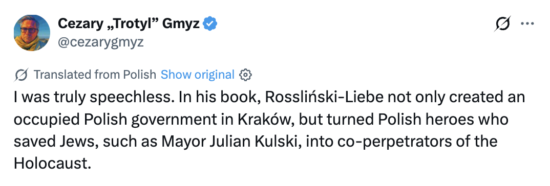
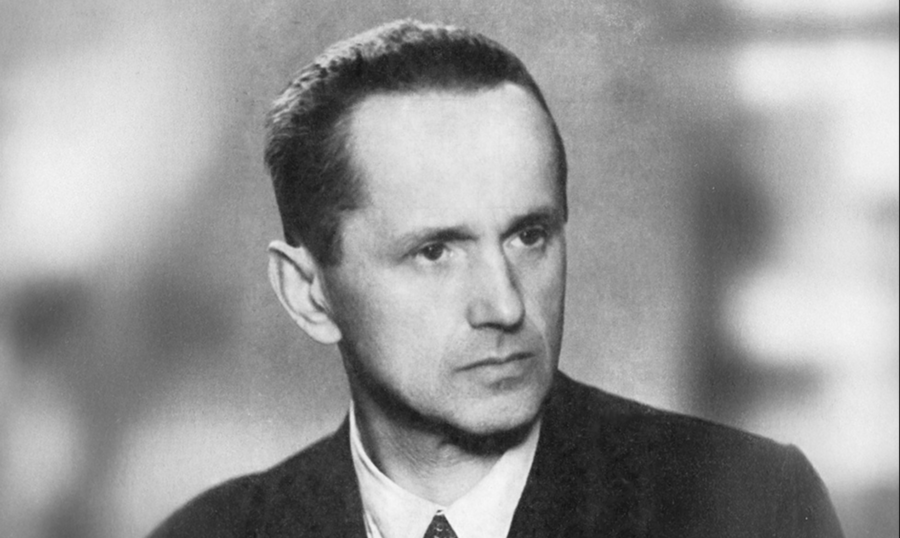
The dispute stemmed from an interview published on 28 January 2026 in which Rossoliński-Liebe discussed his research on Polish municipal officials during the Second World War. According to the Kulski Foundation, the interview contained numerous false and defamatory claims concerning Julian Spitosław Kulski, who served as Warsaw’s pre-war deputy mayor and later headed the city’s administration under German occupation with the approval of the Polish Underground State.
On 10 June 2026, the District Court in Warsaw issued a final judgment ordering Dzieje.pl to publish an official correction. The court-mandated statement rejects allegations that Kulski persecuted Jews, profited from anti-Jewish measures, confiscated Jewish property, participated in creating or administering the Warsaw Ghetto, contributed to the Holocaust, or belonged to the Camp of National Unity (OZN). The correction also states that claims linking him to the forced relocation, registration or exploitation of Jewish residents are untrue.
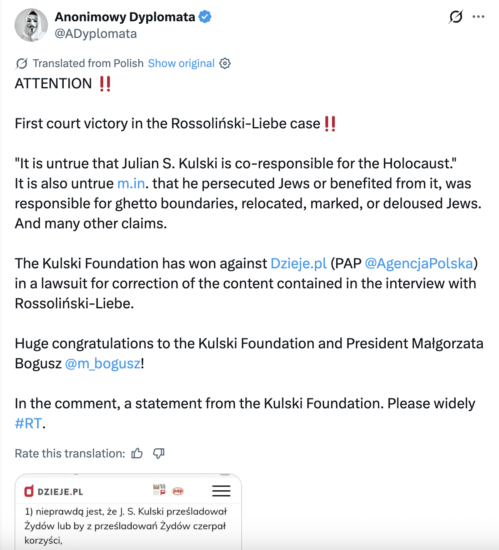
In its statement, the Kulski Foundation welcomed the ruling as an important defence of the historical record and of Julian Spitosław Kulski’s reputation. The Foundation argued that the judgment confirms that the contested allegations lacked factual basis and announced that it would continue taking legal action whenever necessary to protect his legacy.
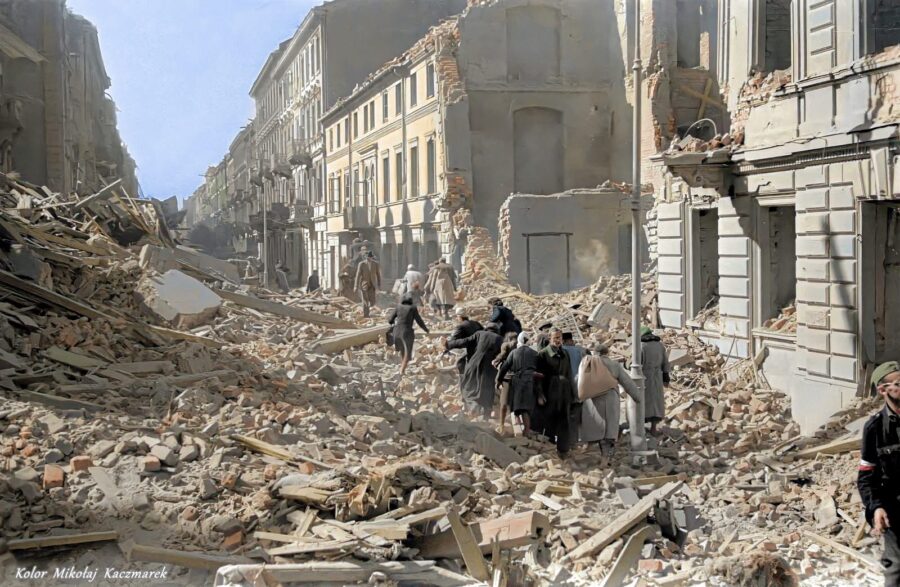
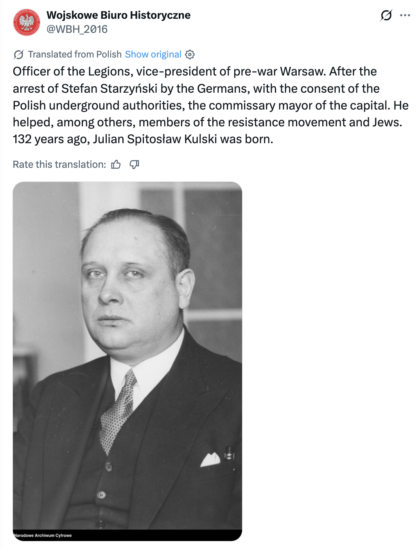
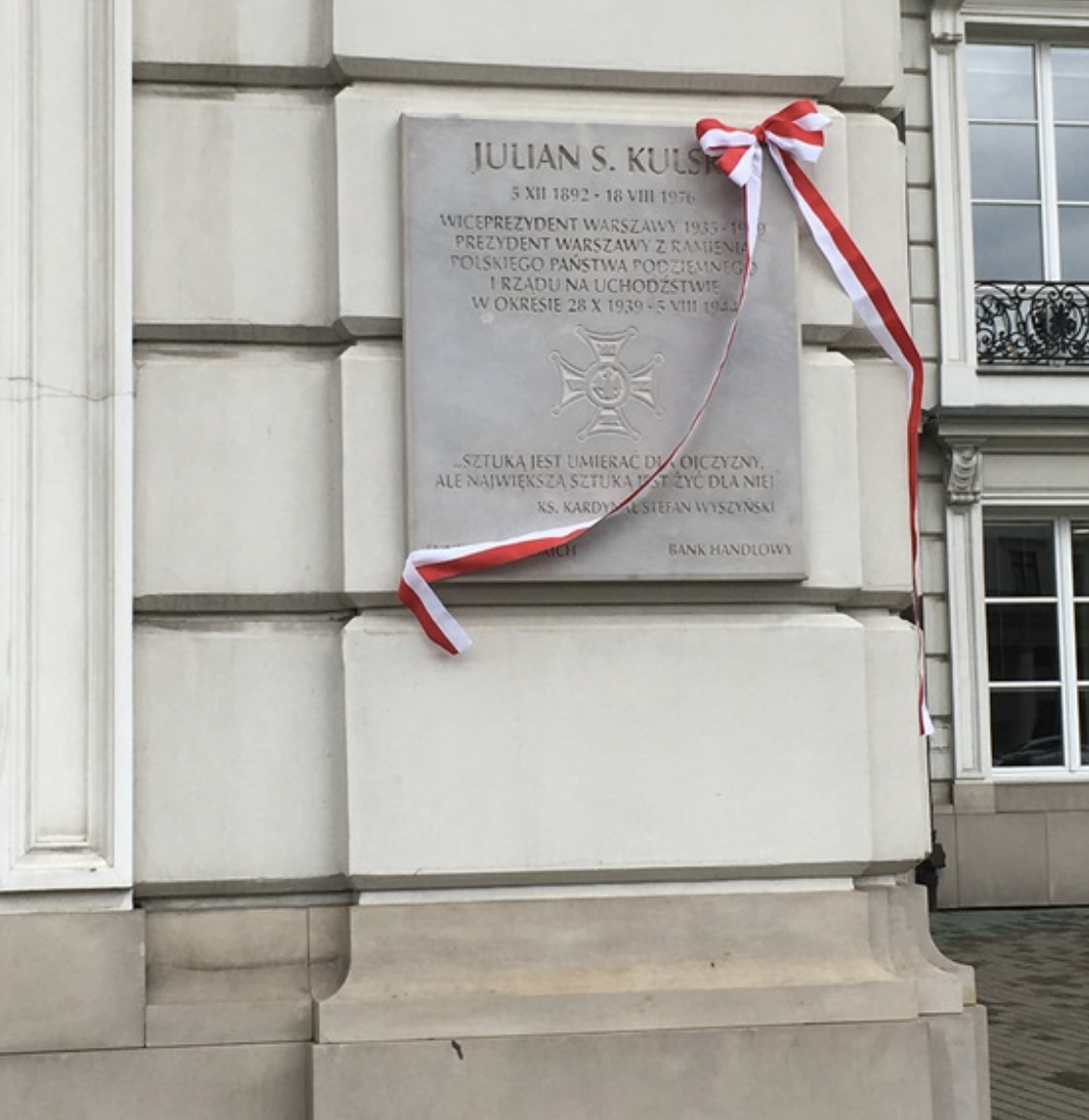
The Foundation also highlighted Kulski’s wartime record, describing him as a senior municipal official who worked in cooperation with the Polish Underground State after the arrest of Warsaw’s mayor Stefan Starzyński in 1939.
It maintains that Kulski used his position to assist members of the resistance, provide false identity documents and employment certificates, and help Jews and other people persecuted by the German occupation authorities. His wartime service and later recognition, including numerous state decorations and a posthumous award for aiding Jews during the Holocaust, are cited as evidence of his contribution.
The ruling is likely to attract wider attention in Poland’s ongoing debates over the interpretation of wartime history and the responsibilities of historians and media organisations. While the judgment concerns the publication of a press correction rather than a broader assessment of historical scholarship, it underscores the legal obligation of publishers to ensure factual accuracy when making serious allegations about identifiable historical figures.
You can read the full statement of the Kulski Foundation here: https://fundacjakulskich.org.pl/en/statement-concerning-the-rectification-on-the-dzieje-pl-portal/
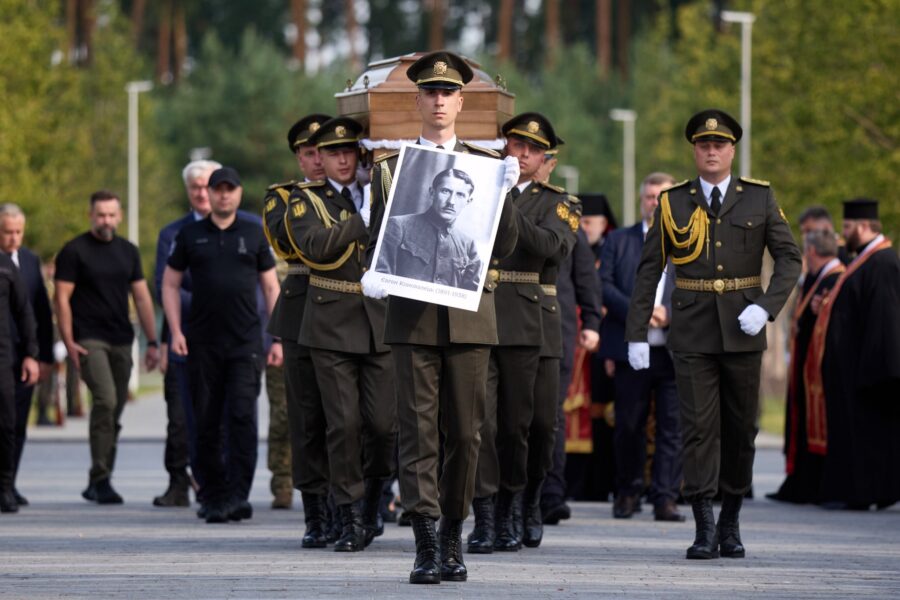
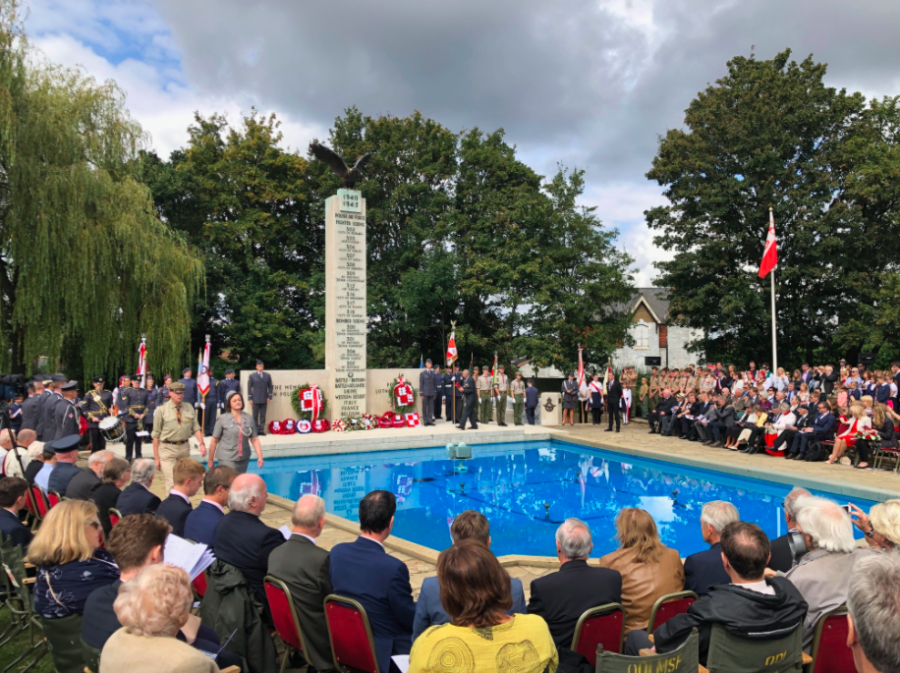
On 19 August 2018, Kulski was posthumously awarded the „Edward Mosberg Medal” by the From the Depths Foundation in recognition of his efforts to save Jews during the German occupation.
Source: Fundacja Kulskich
Photo: X/Pilecki Instytut
Tomasz Modrzejewski