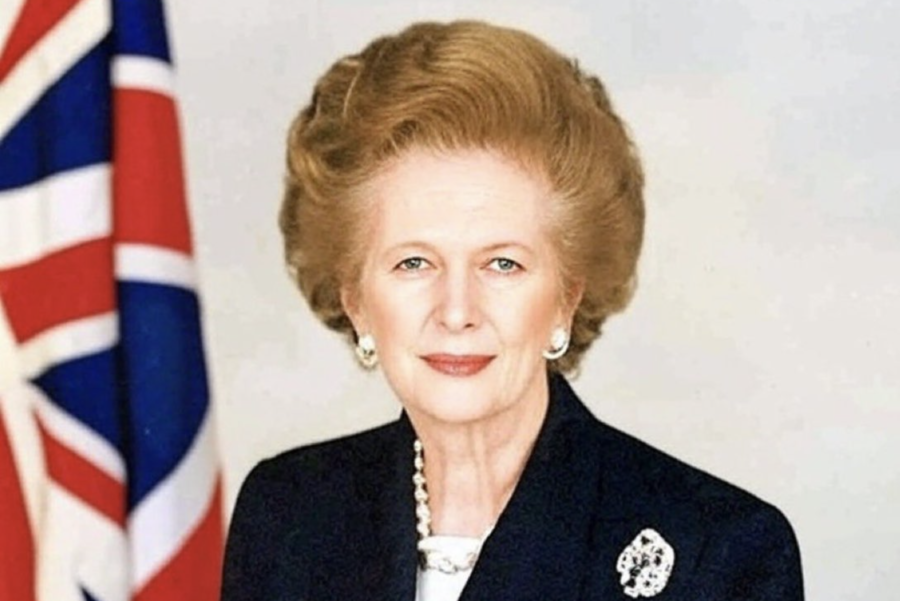
Margaret Thatcher occupies an unusual place in Polish historical memory. To most Britons, she remains one of the most consequential and controversial prime ministers of the twentieth century: the politician who transformed the British economy, confronted the trade unions, fought the Falklands War and helped define the final decade of the Cold War.
For Poles, however, there is another Thatcher.
She was a Western leader who spoke unusually openly about Poland’s wartime sacrifices, the injustice of its post-war fate and the legitimacy of the struggle against communist rule. At a moment when Solidarity had been driven underground, and Poland remained formally locked within the Soviet bloc, Thatcher treated the Polish opposition not as a marginal dissident movement but as an expression of the political aspirations of an entire nation.
Her relationship with Poland therefore deserves to be remembered not merely as a footnote to her alliance with Ronald Reagan, but as an important chapter in both Polish-British relations and the history of the Polish diaspora in Britain.
Thatcher belonged to the British generation whose understanding of Poland had been shaped by the Second World War.
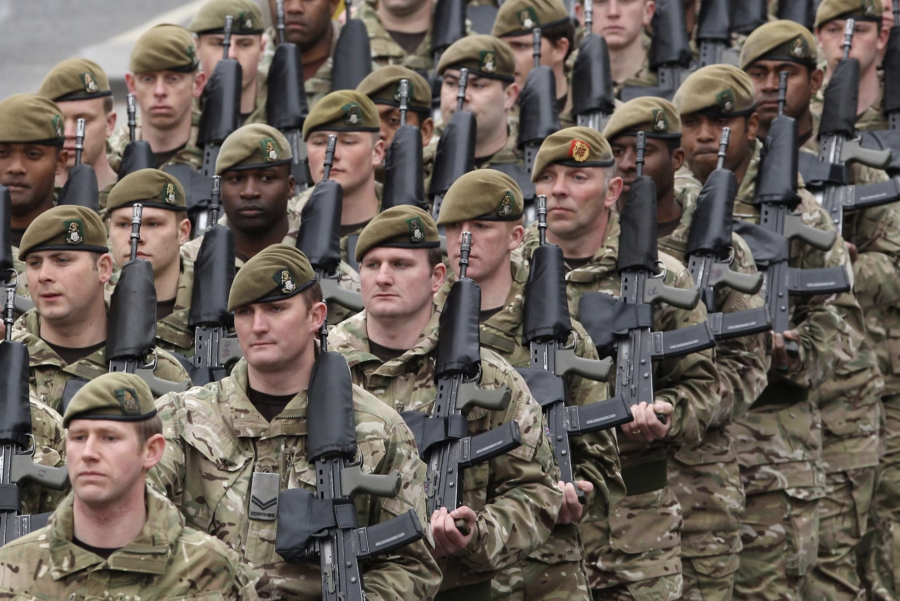
When Germany invaded Poland in September 1939, Britain went to war. Polish servicemen subsequently fought alongside the British across Europe and beyond: Polish pilots played an extraordinary role in the Battle of Britain; Polish troops fought at Monte Cassino and Arnhem; Polish sailors served alongside the Royal Navy; and the Polish Government-in-Exile established itself in London.
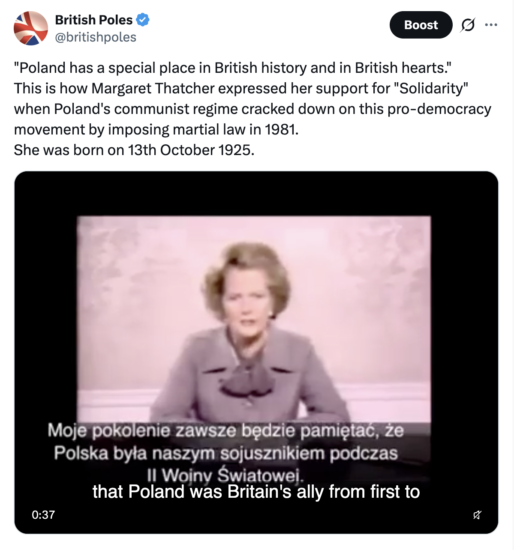
These memories continually appeared in Thatcher’s speeches.
In January 1982, only weeks after General Wojciech Jaruzelski had imposed martial law and attempted to crush Solidarity, Thatcher recorded a message for the international Let Poland Be Poland campaign.
“Poland has a special place in British history and in British hearts,” she declared.
She reminded her audience that Polish squadrons had fought in the Battle of Britain, Polish soldiers had fought at Monte Cassino, and Polish sailors had helped defend the Atlantic lifeline. She then deliberately connected that wartime generation with the Solidarity movement.
The Polish struggle for liberty, she argued, had once again reminded the West of the value of freedom itself.
This was not simply Cold War rhetoric. Thatcher repeatedly returned to the uncomfortable fact that Britain had entered the Second World War in defence of Poland, only for Poland to emerge from the conflict under Soviet domination.
When she addressed the Polish Senate in 1991, after the fall of communism, she went considerably further.
She spoke openly about Yalta and declared that many in Britain, herself included, would never forget how Poland’s fate had been left in Stalin’s hands. In a striking formulation, she suggested that the victory for which Britain and Poland had fought between 1939 and 1945 had, in a sense, only finally been achieved in 1989.
For the post-war Polish community in Britain, these words carried particular significance.
Thousands of Polish soldiers and civilians who remained in Britain after 1945 did so precisely because they could not, or would not, return to a communist-controlled homeland. For decades they maintained institutions, churches, associations, schools, archives and political organisations built around the conviction that the Polish question had not been settled honourably at the end of the war.
Thatcher understood that historical sensibility exceptionally well.
The emergence of Solidarity in 1980 transformed Poland into one of the central battlegrounds of the late Cold War.
Thatcher regarded events there as something much larger than a dispute between workers and a communist government. Solidarity demonstrated that the Soviet political model had lost legitimacy among precisely the people in whose name communist governments claimed to rule.
Even before martial law, her government watched events in Poland closely. Thatcher publicly warned against Soviet intervention and argued that Poles must be allowed to determine their own future. Britain also provided economic and humanitarian assistance during Poland’s severe crisis.
After martial law was imposed on 13 December 1981, the struggle acquired enormous symbolic importance in Britain. Polish émigré organisations, churches and charities supported opposition networks and sent assistance to Poland. Solidarity became one of the rare causes capable of connecting the older wartime Polish emigration with a new generation of political refugees arriving from communist Poland.
Thatcher’s government belonged firmly to the Western camp, applying political and economic pressure on the communist authorities.
Yet her approach eventually became more sophisticated than simple isolation.
By the second half of the 1980s, British policy increasingly sought contact with governments in Eastern Europe while simultaneously encouraging those forces capable of peacefully weakening communist rule. According to Thatcher’s foreign-policy adviser Charles Powell, Poland became one of the principal targets of this strategy.
Its most dramatic expression came in 1988. Margaret Thatcher arrived in Poland on 2 November.
It was the first visit to Poland by a serving British prime minister, and it took place at a highly sensitive moment. The communist system was visibly weakening. Another wave of strikes had swept the country earlier that year, negotiations between the authorities and opposition were being contemplated, and Solidarity, though still formally illegal, could no longer simply be wished away.
Thatcher insisted that during her visit she should be allowed to meet Lech Wałęsa. That condition mattered.
Wałęsa was not a government minister or an officially recognised political leader. By meeting him, the British prime minister effectively demonstrated that there were two sources of political authority in Poland: the communist state and the opposition representing a substantial portion of Polish society.
Thatcher met General Jaruzelski and other communist leaders in Warsaw, but her itinerary also carried unmistakable symbolism.
She visited the grave of Father Jerzy Popiełuszko, the Solidarity chaplain murdered by communist security officers in 1984. She travelled to Gdańsk. She visited Westerplatte. She went to St Bridget’s Church, closely associated with Solidarity, and met Wałęsa and opposition activists. The communist authorities could hardly have missed the message.
The Institute of National Remembrance has noted that Thatcher’s visit disappointed those within the regime who had hoped that the prestige of receiving a major Western leader would strengthen their position. Instead, the visit visibly encouraged the opposition and demonstrated international recognition of Solidarity. Thatcher herself was overwhelmed by what she saw.
After visiting Gdańsk, she described “thousands and thousands and thousands” of people filling the streets and spoke with admiration about Wałęsa, whom she found quietly impressive, reasonable and articulate. The crowds were not merely greeting a famous foreign politician.
For many Poles, the British prime minister represented the political West from which Poland had been separated for more than four decades.
Thatcher understood the importance of historical symbolism particularly well.
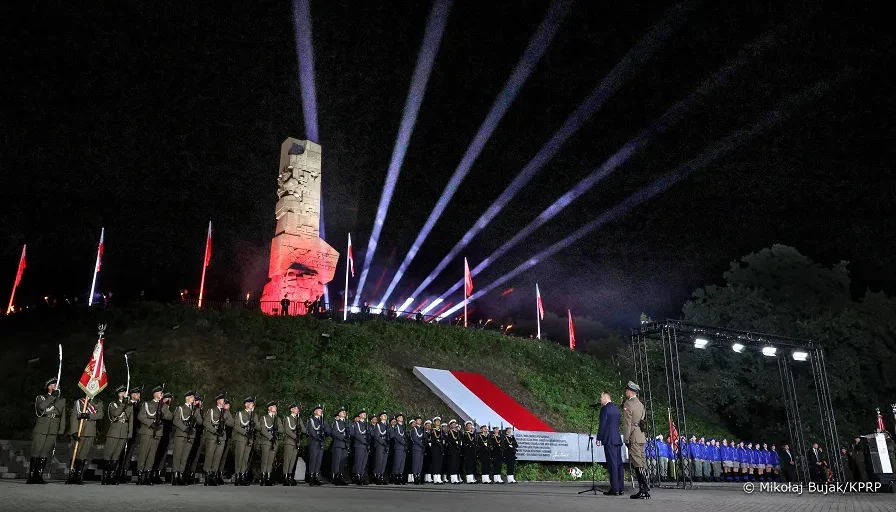
Speaking at Gdańsk Town Hall, she connected contemporary Polish aspirations with the wartime experience of both nations. She spoke of Britain and Poland as proud peoples prepared to defend their nationhood and referred to Westerplatte as a symbol of resistance to the destruction of Polish independence.
At an official dinner in Warsaw, she went much further.
She recalled Narvik, Tobruk, Monte Cassino and Arnhem. She reminded her hosts that the Polish government had continued the war from London and noted the immense contribution of Polish airmen to the Battle of Britain.
She also mentioned something deeply significant for the Polish diaspora: Polish Home Army veterans still marched beside their British comrades at the Cenotaph on Remembrance Sunday.
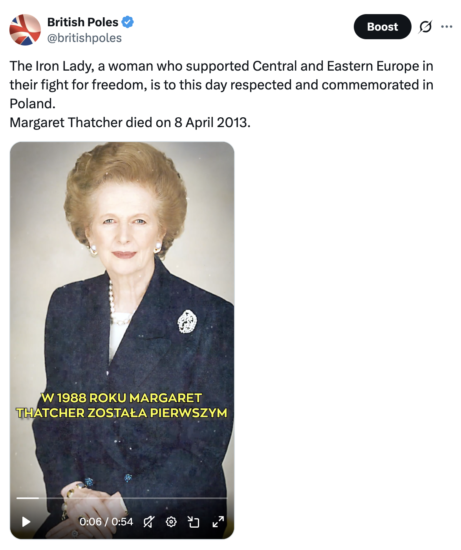
In Thatcher’s telling, the Polish community in Britain was therefore not an immigrant group detached from Britain’s national story. Poles belonged within that story.
Their presence in Britain had grown out of a shared war and a shared struggle against totalitarianism.
There was also a fascinating intellectual dimension to Thatcher’s engagement with Poland.
Among the documents preserved in the British archives relating to her 1988 visit is correspondence from Professor Zbigniew Pełczyński, the distinguished Oxford political philosopher and Polish émigré, who sent Downing Street material concerning post-war Polish history while preparations for the visit were underway.
Pełczyński belonged to precisely the world that connected Britain with Poland during the Cold War: a Polish wartime exile who became a major figure at Oxford while maintaining a profound interest in Poland’s political future.
His presence in the background of Thatcher’s Polish policy illustrates something often overlooked.
The Polish diaspora in Britain did more than preserve Polish culture abroad. It created an intellectual and political bridge between Britain and a Poland that Western politicians could otherwise encounter only through communist diplomatic channels.
Academics, journalists, veterans, priests, émigré politicians and activists kept an alternative Polish voice present in British public life throughout the Cold War.
Only months after Thatcher’s visit, Polish history accelerated dramatically.
Round Table negotiations began in February 1989. The partially free election of 4 June 1989 produced a devastating defeat for the communist establishment. In August, Tadeusz Mazowiecki became the first non-communist prime minister in the Soviet bloc for decades.
The Polish breakthrough then helped unleash the chain reaction that transformed Central Europe.
Hungary opened its border. East Germans fled westwards. The Berlin Wall fell. Communist governments collapsed across the region.
Thatcher never claimed that Western leaders had liberated Eastern Europe themselves. Indeed, she later emphasised that communism had collapsed largely because the peoples living under it had rejected it. Poles occupied a particularly important position in that story.
Looking back on her 1988 visit, she recalled telling Jaruzelski that Solidarity was not simply a trade union but “a movement of the whole people” and that ultimately those people would be free.
Thatcher’s relationship with Poland did not end with communism.
When Prime Minister Tadeusz Mazowiecki visited London in February 1990, she welcomed him as the head of the first non-communist government in Eastern Europe since the late 1940s.
Poland’s economic situation was desperate. Foreign debt represented an enormous obstacle to reconstruction, and the transition from a centrally planned economy promised severe short-term hardship.
Britain had already established a Know-How Fund to help Poland modernise its economy, and Thatcher promised that Britain would act constructively on Poland’s debt problem.
The reforms associated with Leszek Balcerowicz’s privatisation, monetary stabilisation, market pricing and the creation of a competitive private economy shared important philosophical assumptions with the economic transformation Thatcher had championed in Britain during the 1980s.
The circumstances were obviously very different. Poland was dismantling a communist command economy rather than reforming a Western welfare-state economy. Nevertheless, both transformations were based on restoring markets, private ownership and individual economic initiative.
There was another issue on which Thatcher’s position mattered greatly to Warsaw: German reunification.
Polish leaders feared that reunification might reopen questions concerning the Oder–Neisse border.
Thatcher herself had serious reservations about the speed of German reunification for broader geopolitical reasons, but she strongly supported the principle that Poland’s western border must be guaranteed.
During Mazowiecki’s visit to Britain in 1990, the Polish prime minister stressed the importance of a treaty guaranteeing the frontier, a position Thatcher also supported.
For Poland, still recovering its sovereignty while two German states prepared to unite next door, this was no minor concern.
There is a temptation to understand Thatcher’s Polish policy purely through the geopolitics of Washington, Moscow and Warsaw. That misses something essential.
Britain itself was part of the Polish story.
London had been the seat of the wartime Polish Government-in-Exile. Britain had become home to tens of thousands of Polish servicemen and civilians after 1945. Institutions such as Polish churches, schools, veterans’ associations, newspapers, cultural centres and the Polish Institute and Sikorski Museum preserved a historical continuity that communist Poland could never entirely erase.
Throughout the Cold War, two Polish political realities therefore existed simultaneously.
There was the Polish People’s Republic recognised diplomatically by Britain, and there was an émigré Poland particularly visible in London which preserved the symbols, traditions and political memory of the pre-communist Republic.
Thatcher’s rhetoric often spoke directly to the historical worldview of that second Poland.
She recognised the betrayal felt by many Poles after Yalta. She acknowledged the Polish contribution to Britain’s survival in 1940. She honoured Polish wartime soldiers. And she treated the struggle against communism as a continuation of Poland’s much older struggle for national freedom.
She even encountered one of the great symbolic disputes of émigré Poland: whether the remains of General Władysław Sikorski, buried in Britain, should be returned to Poland.
Asked about the issue during her 1988 visit, Thatcher acknowledged differing opinions within both Poland and the Polish community abroad and said the British government took the views of Sikorski’s relatives into account.
Perhaps Thatcher’s most complete statement about Poland came after she had left Downing Street.
On 3 October 1991, she addressed the newly democratic Polish Senate.
The title given to the speech captured her interpretation of Polish history: “For Your Freedom and Ours.”
She told senators that Poland and Britain had been bound together by struggles against both Nazism and communism.
And she offered one of the clearest acknowledgements ever made by a major British political figure of the moral ambiguity surrounding Poland’s fate after the Second World War.
A war Britain had entered in defence of Polish independence had ended without restoring that independence.
Only the revolutions of 1989 had completed the unfinished political story of 1939. For Poles who had spent decades in Britain waiting for a free Poland to re-emerge, those words carried particular weight.
Until today, Margaret Thatcher remains a divisive figure in Britain.
Her economic policies transformed the country but also generated social and regional conflicts whose consequences remain politically contested. Communities associated with heavy industry, mining and organised labour often remember her very differently from those who credit her with reversing Britain’s economic decline.
Those arguments should not be erased when discussing her legacy.
Yet her Polish record deserves to be judged on its own evidence.
Thatcher recognised earlier than many Western politicians that communist stability in Central Europe was superficial. She understood that Solidarity represented something much larger than organised labour. She publicly honoured Poland’s wartime contribution to Britain. She acknowledged the injustice inherent in Poland’s post-war settlement. And at a critical moment in 1988, she gave international visibility to Wałęsa and the democratic opposition.
Most importantly, she understood something generations of Polish émigrés in Britain had spent decades trying to explain:
Poland’s struggle after 1945 was not simply a conflict between rival economic systems. It was the continuation of a struggle for sovereignty.
When Thatcher travelled to Gdańsk in November 1988, communist rule in Poland still formally appeared secure. Less than a year later, Poland had a non-communist prime minister.
Within three years, Thatcher stood before a freely elected Polish Senate. Few political careers intersected so dramatically with the final chapter of communist Poland. That is why Margaret Thatcher belongs not only to British political history.
She also occupies a distinctive and important place in the modern history of Poland and of the Polish community in Britain.
Tomasz Modrzejewski
Photo: X @MrsMThatcher