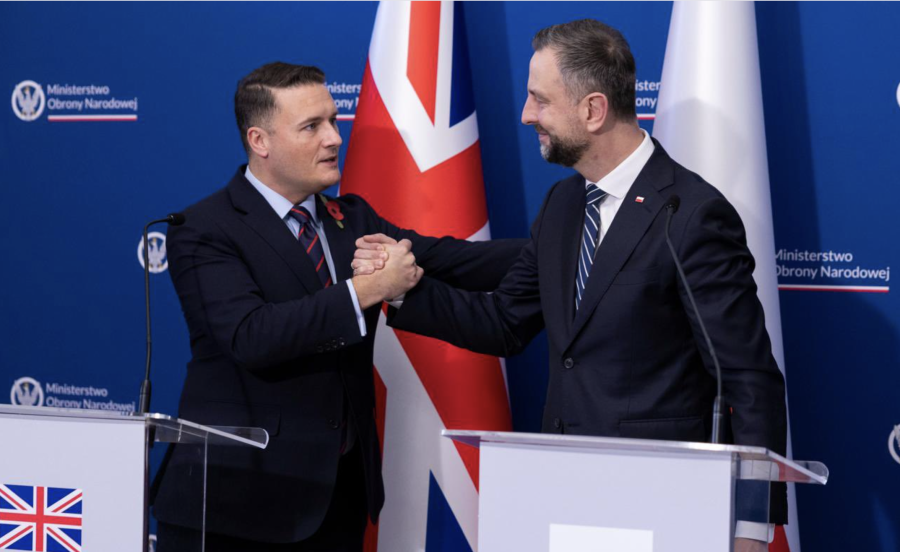
Britain and Poland have signed a new three-year defence cooperation plan aimed at strengthening NATO’s eastern flank, expanding military production and improving readiness against Russian aggression. Meeting in Warsaw, the two countries’ defence ministers pledged closer military coordination and continued support for Ukraine, describing their partnership as stronger than ever.
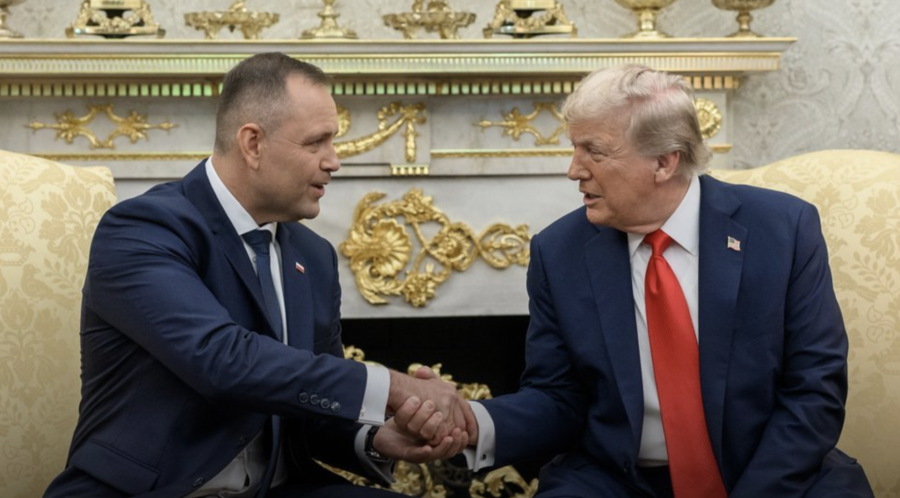
Britain and Poland have taken another significant step towards strengthening their strategic partnership, signing a three-year Defence Cooperation Plan in Warsaw on Tuesday, 27 October.
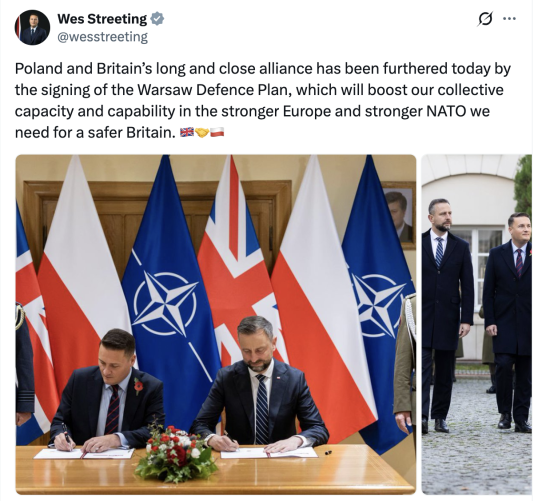
The agreement was signed by Poland’s Deputy Prime Minister and Defence Minister, Władysław Kosiniak-Kamysz, and Britain’s Defence Secretary, Wes Streeting, during bilateral talks focused on European security, Russia’s military threat and the future of transatlantic cooperation.
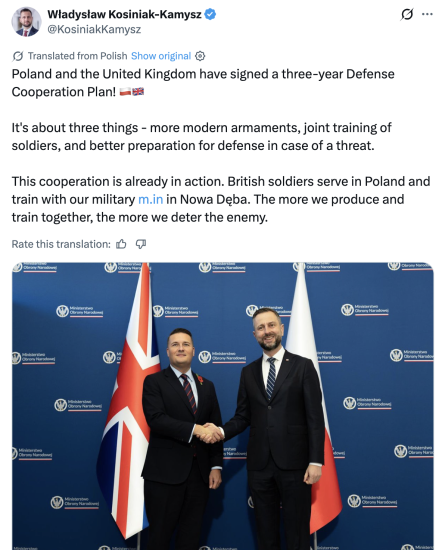
The new arrangement, also described by the British government as the Warsaw Defence Plan, builds on the bilateral defence treaty signed by the two countries’ prime ministers in May 2026. It establishes a framework for closer cooperation across land, sea, air, cyber capabilities and the defence industry.
Speaking after the meeting, Kosiniak-Kamysz said the Polish-British alliance had reached an unprecedented level of cooperation, describing the agreement as evidence of both countries’ commitment to strengthening their military capabilities.
The plan focuses on three principal objectives: obtaining more advanced military equipment, expanding joint training programmes and improving the readiness of both countries’ armed forces to respond to potential threats.
The British Ministry of Defence confirmed that the agreement was intended to reinforce deterrence along NATO’s eastern flank and strengthen European security.
The talks took place against a backdrop of heightened concern over Russia’s actions in Europe, including its continuing war against Ukraine, hostile activities directed at NATO countries and the growing threat posed by drones and other emerging military technologies.
Streeting warned that Russia was testing the determination of NATO members, particularly those situated along the Alliance’s eastern frontier.
Referring to hostile activities affecting Poland, the British Defence Secretary said he regarded some of the incidents commonly described as hybrid threats as acts of state-sponsored terrorism.
He emphasised that the United Kingdom stood alongside Poland in responding to such challenges and that NATO countries must be prepared for the possibility of a direct military confrontation with Russia, while making clear that the Alliance remained defensive in nature.
Streeting also praised Poland’s experience and strategic importance, arguing that Britain’s security was closely connected to the security of its allies in Central and Eastern Europe.
Both ministers stressed that the objective of their cooperation was deterrence rather than escalation, with greater military readiness intended to discourage potential aggression.
Ukraine remains at the centre of discussions
Support for Ukraine was among the first subjects discussed during the Warsaw meeting.
Both governments reaffirmed their commitment to assisting Kyiv in its defence against Russia’s invasion, highlighting the importance of sustained international support.
Kosiniak-Kamysz praised Britain’s role in supporting Ukraine, while Streeting reiterated London’s determination to continue helping the country resist Russian aggression.
The ministers also discussed preparations for military exercises involving the so-called Coalition of the Willing, a group of countries considering participation in a potential future international security mission in Ukraine.
Exercises involving members of the coalition, including Britain and France, are expected to take place in Poland in November.
The discussions reflected a wider effort to ensure that European countries can contribute to Ukraine’s long-term security, particularly in the event of a future ceasefire or peace settlement.
Modern weapons and closer defence industry cooperation
Beyond military exercises, the new plan places particular emphasis on technological development and industrial cooperation.
Poland and Britain already work together on several major defence programmes, providing a foundation for further joint projects.
Among the most important is Poland’s Miecznik frigate programme, which draws on the British Type 31 warship design. The two countries intend to share expertise in shipbuilding and increase cooperation on maritime security in the Baltic Sea.
Another major undertaking is Poland’s Narew air defence programme, incorporating the British-developed CAMM missile family. The system is intended to strengthen Poland’s ability to counter aircraft, missiles and other aerial threats.
The new agreement also provides for the joint development of drone and counter-drone technologies, expanded cybersecurity cooperation and closer coordination in defence procurement.
British defence company BAE Systems and Poland’s state-owned defence group PGZ are expected to expand cooperation on large-calibre ammunition production.
According to the British Ministry of Defence, the plan also covers joint naval activity in the Baltic, cooperation on electronic warfare and participation in major NATO exercises.
An important political dimension of the Warsaw meeting concerned Europe’s relationship with the United States.
With European governments increasingly discussing the need to develop stronger independent defence capabilities, Poland and Britain emphasised that greater European military strength should complement rather than undermine NATO’s transatlantic foundations.
Kosiniak-Kamysz argued that Europe needed to become less dependent on countries that might threaten its security, rather than distancing itself from Washington.
The Polish minister rejected the idea that European defence cooperation should become an alternative to the NATO alliance.
He also announced that Poland would support efforts to give Britain access to European Union defence financing initiatives, including the Security Action for Europe (SAFE) programme.
Such arrangements could create additional opportunities for European countries to purchase British defence equipment and cooperate with UK manufacturers, despite Britain’s departure from the European Union.
Warsaw also intends to encourage closer relations between London and Brussels, particularly in security and defence.
The position underlines Poland’s ambition to act as a bridge between the European Union, Britain and the United States, maintaining strong transatlantic links while supporting Europe’s growing defence capabilities.
The ministers also highlighted the longstanding historical connections between Poland and the United Kingdom.
Polish servicemen played a significant role in Britain’s defence during the Second World War, most famously through the contribution of Polish pilots during the Battle of Britain.
Polish mathematicians and cryptologists also made pioneering breakthroughs in deciphering the German Enigma machine, laying essential foundations for later Allied intelligence successes.
These historical links continue to hold considerable significance in relations between the two countries.
However, the Warsaw talks demonstrated that the partnership is increasingly driven by contemporary security requirements rather than shared history alone.
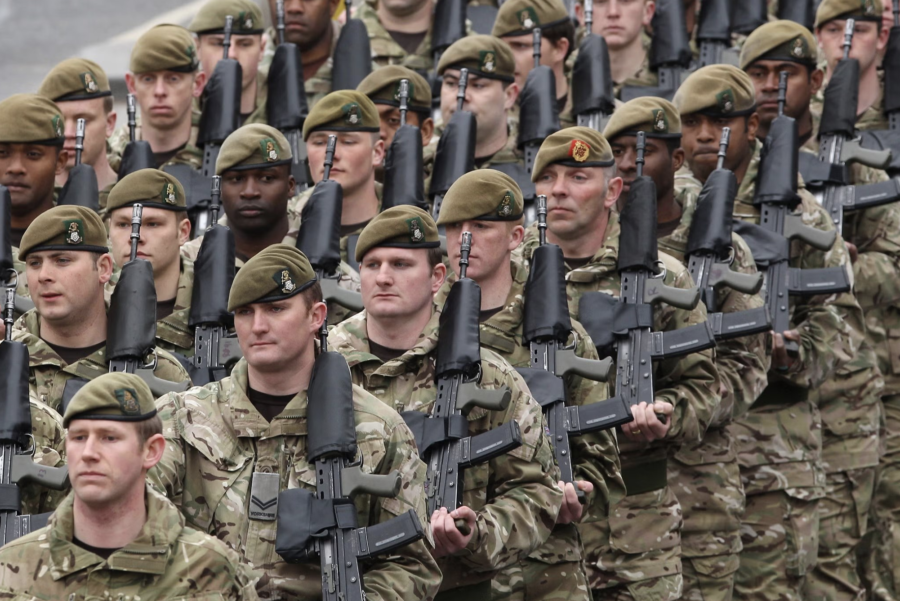
Britain’s military presence in Poland, including participation in joint exercises and NATO operations, has strengthened cooperation between their armed forces.
The new agreement is intended to make that relationship more systematic, ensuring that military training, defence procurement and technological development progress together.
The signing of the three-year plan sends a political and military message at a time when NATO countries are reassessing their ability to deter potential aggression.
The success of the arrangement will ultimately depend on whether its ambitions translate into operational improvements, industrial projects and more effective military cooperation.
Nevertheless, the Warsaw agreement marks an important development in British-Polish relations, bringing together two countries that share concerns about Russia’s military ambitions and the future security of Europe.
As both governments seek to increase their defence capabilities, the message from Warsaw was clear: Britain and Poland intend to strengthen their military partnership, maintain NATO unity and remain closely engaged in Europe’s security.
Source: PAP
Photo: X @wesstreeting
Adam Domaniewski