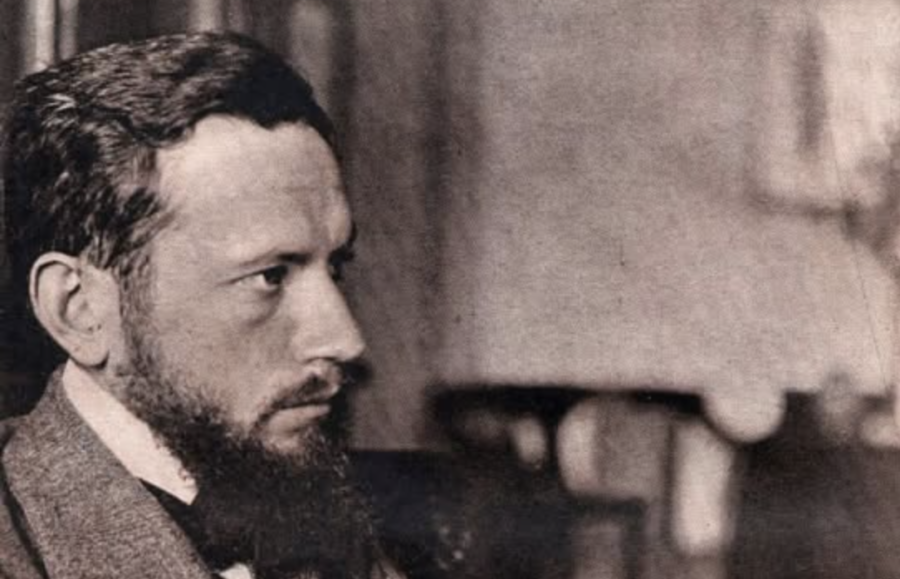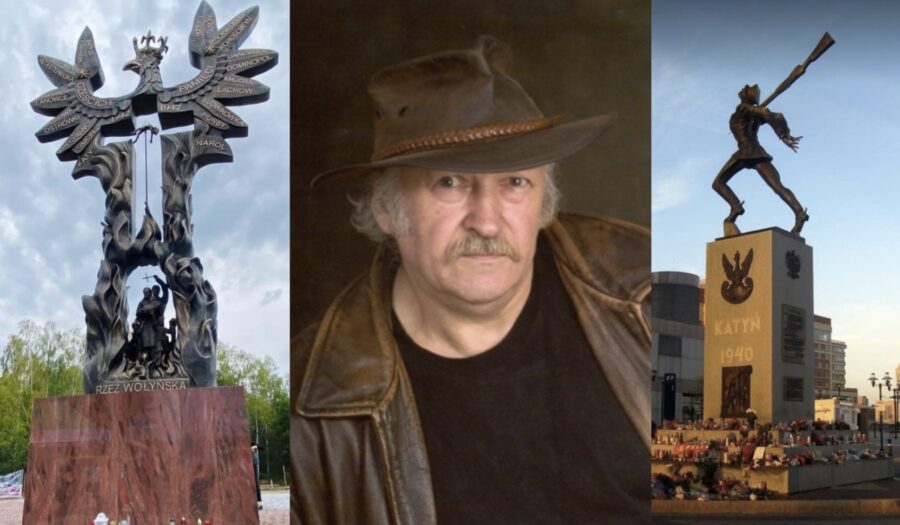
Andrzej Pityński was born in Ulanów in what is now the Podkarpackie Voivodeship. His parents were active in the anti-communist partisans. He was a graduate of the Academy of Fine Arts in Kraków. In 1974, he moved to the United States, where he worked and studied artistic sculpture. His best-known work is the monument standing on the Jersey City waterfront commemorating the crime at Katyn, depicting a soldier with a bayonet thrust into his back.
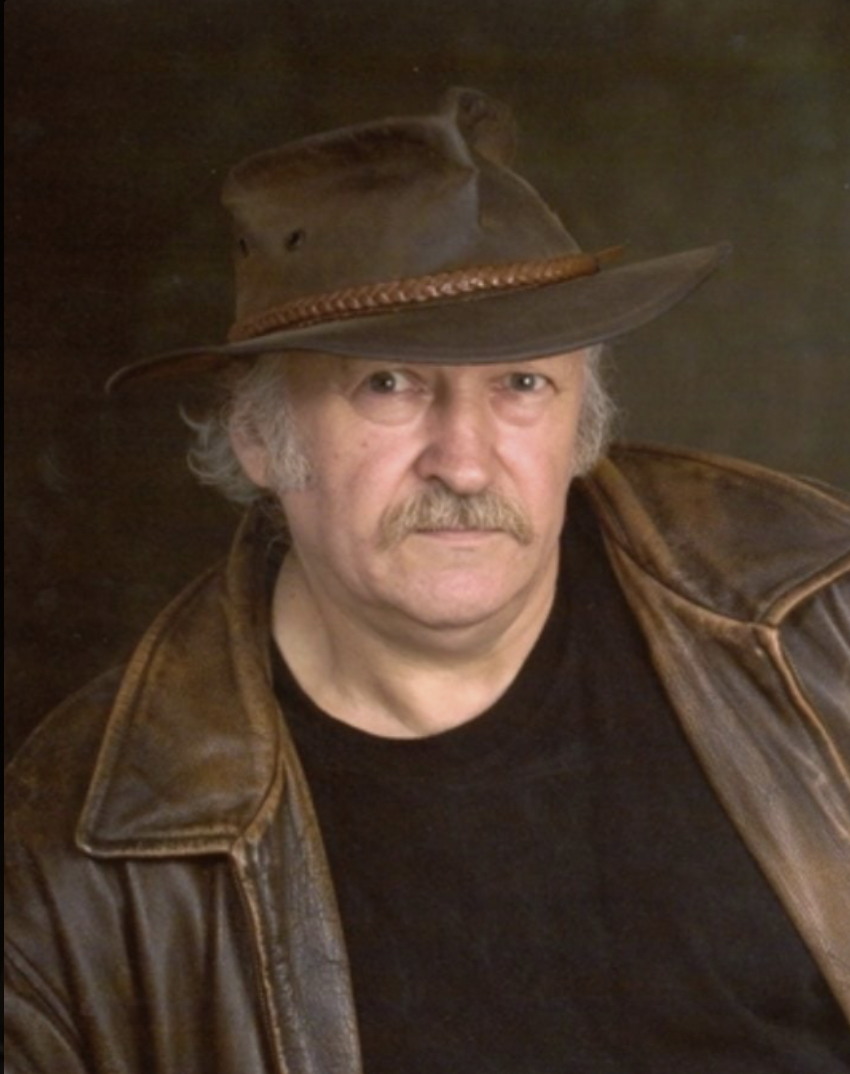
In 1967, Andrzej Pityński moved to Kraków, where he began his studies at the Academy of Fine Arts. His first sculpture was a bust of Ignacy Paderewski, standing in front of the Collegium Paderevianum in Kraków.
In 1974, he settled in the United States and studied at the Arts Students League in New York. Later, as a professor of sculpture at the Johnson Atelier Technical Institute of Sculpture in Mercerville, he trained young sculpture students from all over the world.
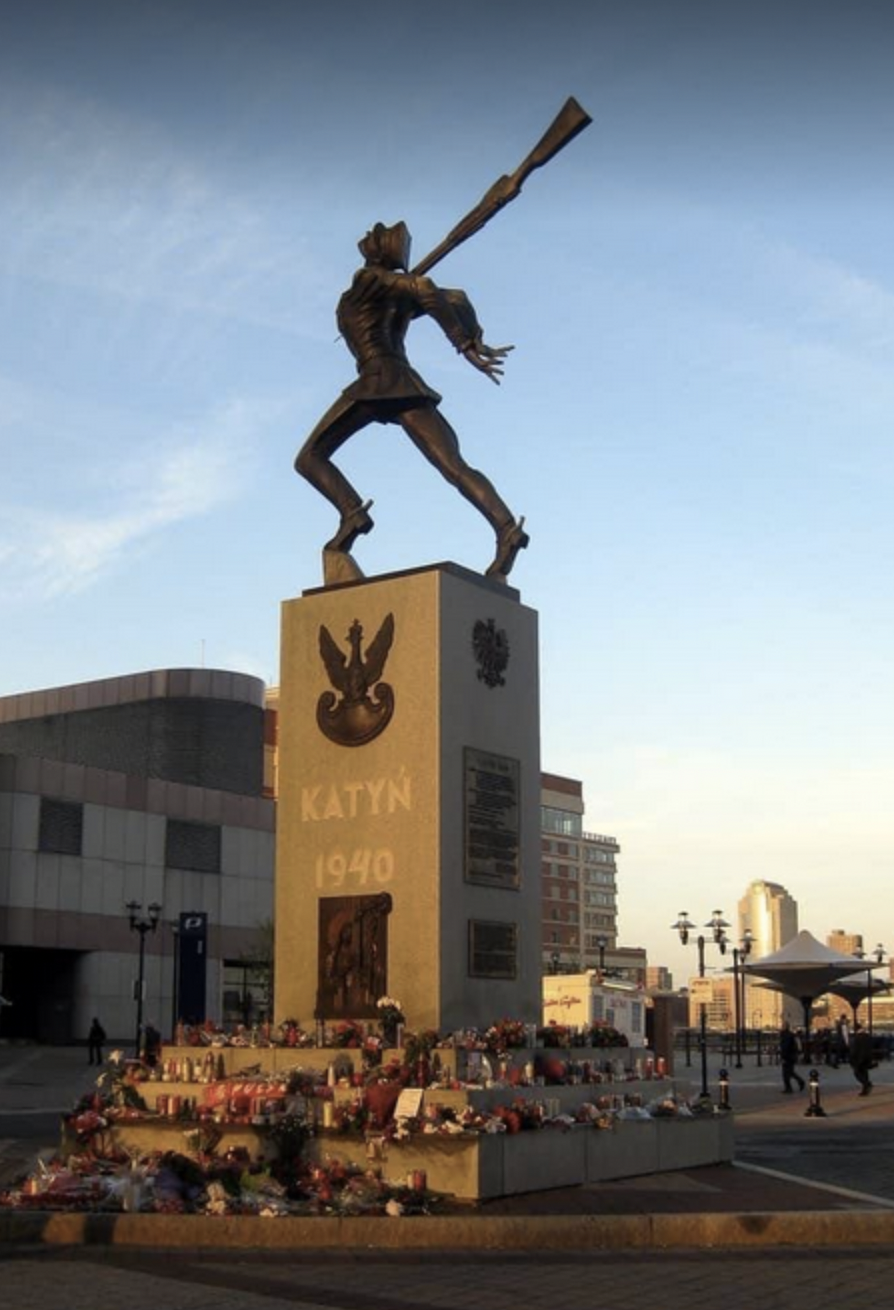
The profile of Andrzej Pityński is associated not only with outstanding artistic achievements but also with the controversy surrounding his works. By far, the best-known of these was the Katyn Memorial in Jersey City.
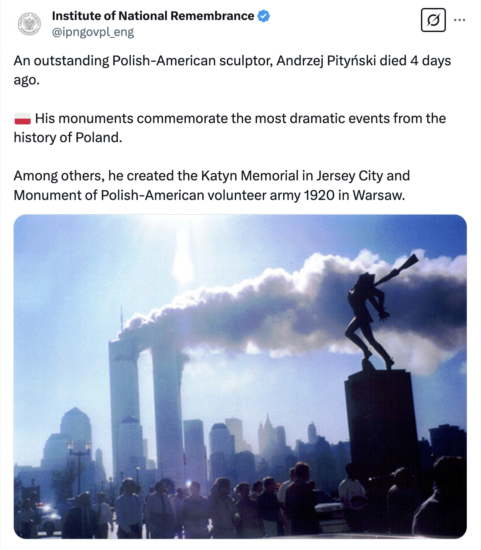
The sculptor also created the monumental sculptures as the Avenger, also known as the Hussar, in the “American Częstochowa”, or Doylestown, Pennsylvania (1988), as well as: the Boston Partisan Monument and the National Katyn Monument in Baltimore, which is the largest bronze monument in the United States.
His other works include the Monument to the Armed Deeds of the Polish American Community (Pomnik Hallerczyków) in Warsaw’s Żoliborz district, as well as the monument to the victims of the Volhynia Massacre in Domostawa and the bust of General Władysław Anders located in London.
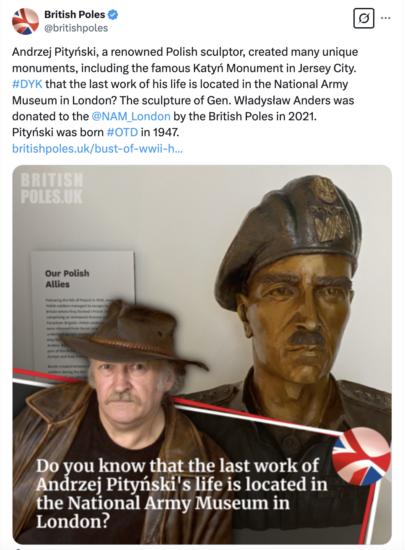
The bust of General Władysław Anders was unveiled by the General’s daughter and the Ambassador of the Republic of Poland to Italy, Anna Maria Anders.
The sculpture of the Polish World War 2 commander General Władysław Anders was donated by British Poles for permanent display in the National Army Museum in London. Now, every visitor can admire the bronze bust of General Władysław Anders.
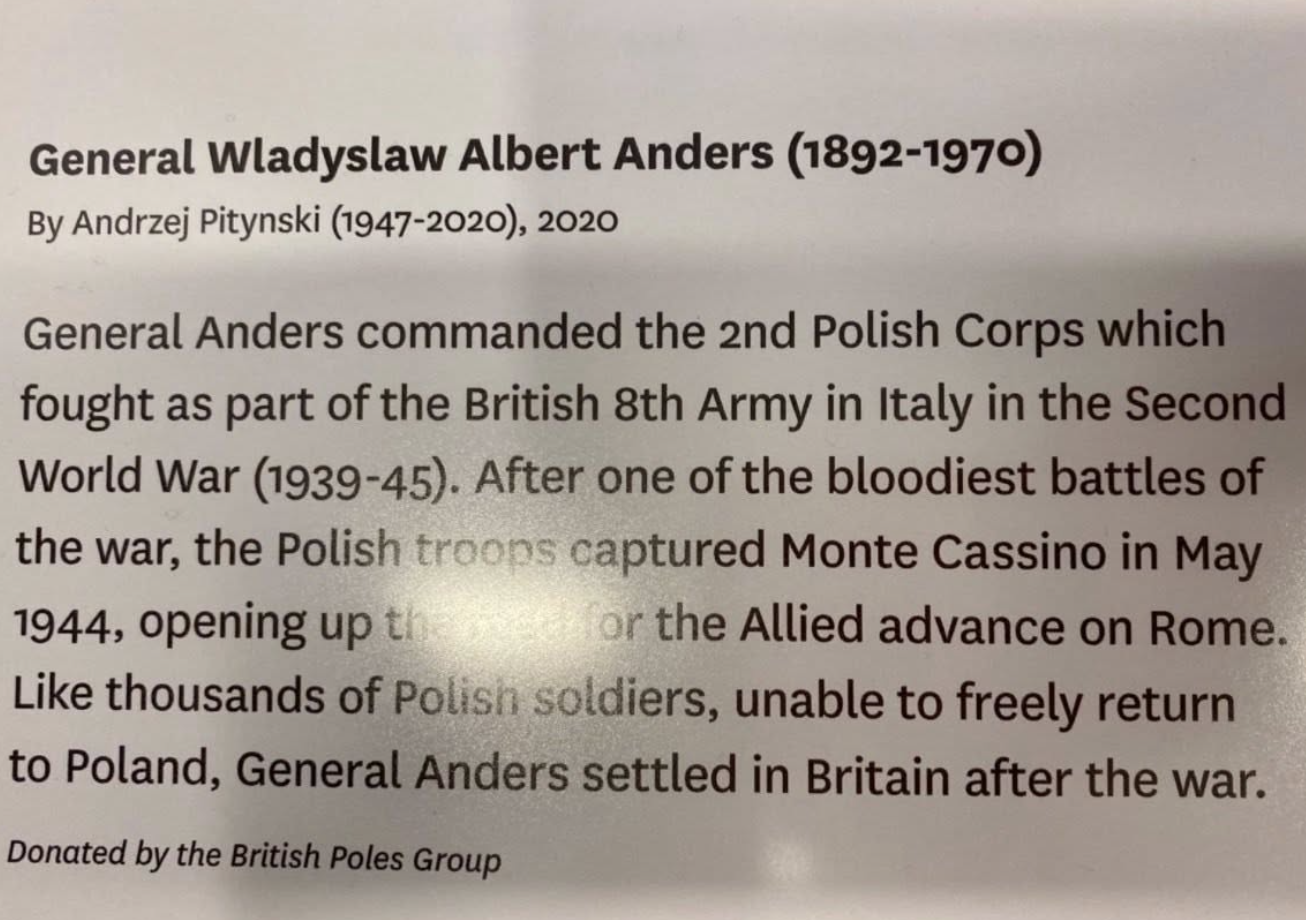
The project was coordinated in the Polish community campaigning in the UK and worldwide, an initiative coordinated by the British Poles. You can read about in our article Bust of WWII Hero General Anders unveiled in historic event at the National Army Museum in London.
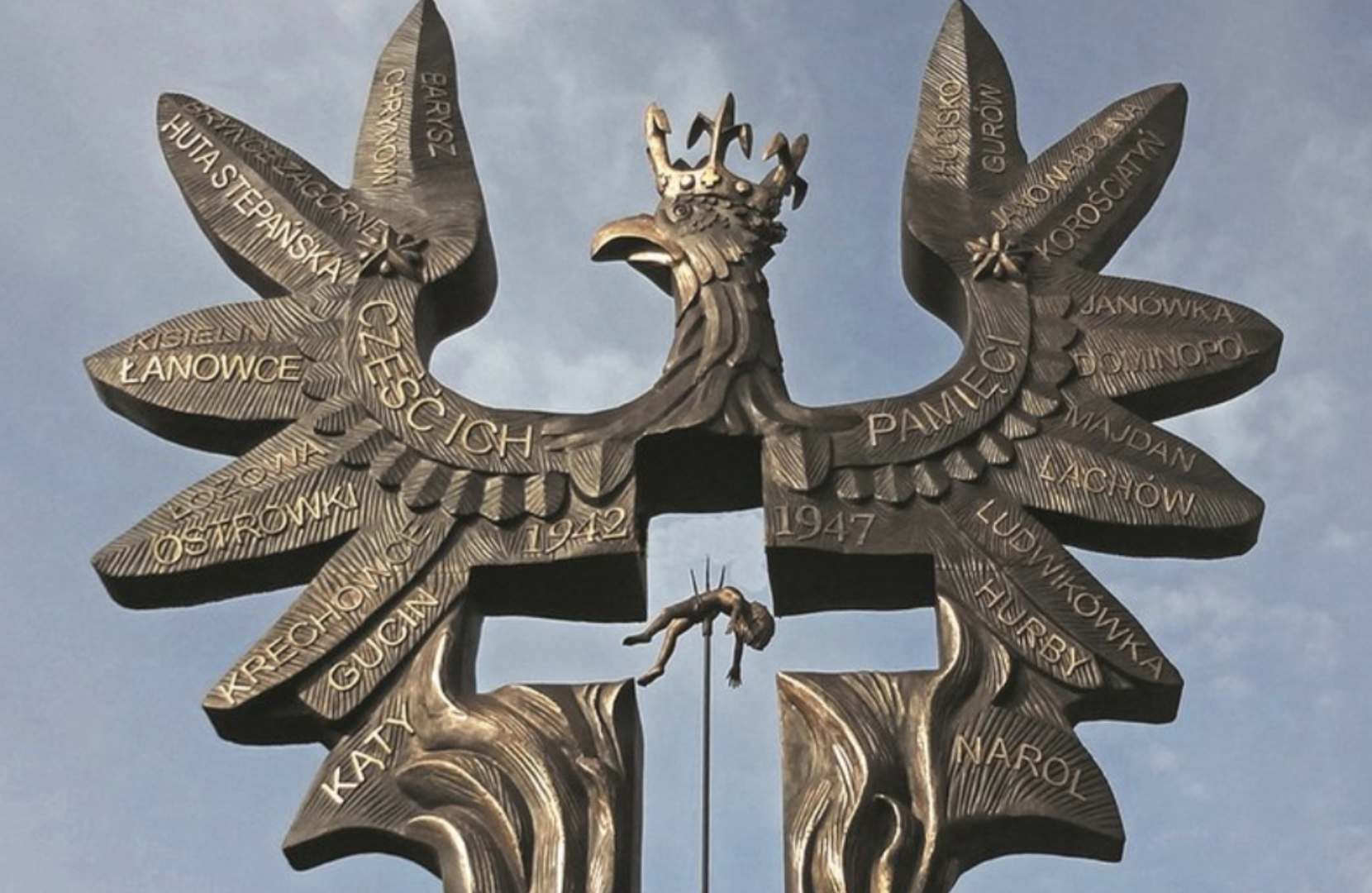
In recent times, the most popular work of Andrzej Pityński was indeed the Volhynia Massacre monument in Domostawa. Cast in bronze, the sculpture depicts an eagle with its body in flames and its wings bearing the names of villages whose inhabitants were murdered by the Ukrainian Insurgent Army.
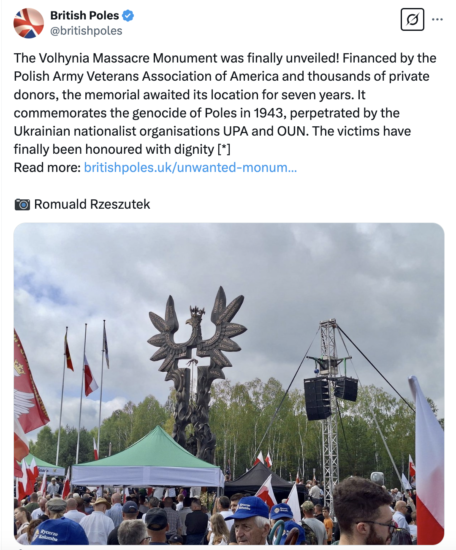
A member of the committee for the construction of the monument, Witold Zych, quoted the words of Master Pityński, saying that “a good monument is one that, once you see it, you remember for a lifetime”.
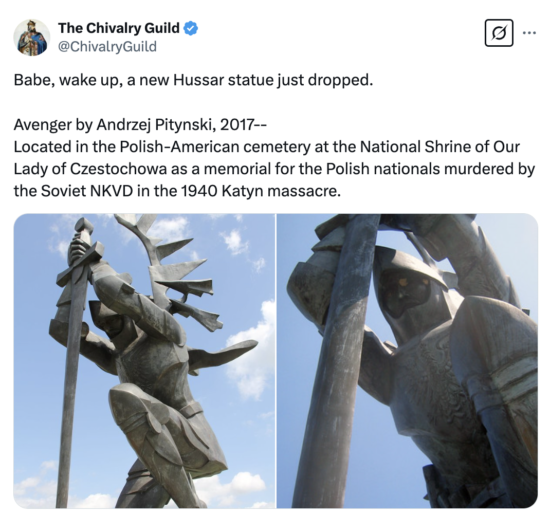
Andrzej Pityński was awarded the Order of the White Eagle, which he received from the hands of Polish President Andrzej Duda on 11 November 2017. In 2020, he was honoured with the “Custodian of National Remembrance” Award.
Andrzej Pityński died on 18 September 2020 at the age of 73.
Source: IPN, Dzieje.pl
Photo: Twitter @Wojciech W. Ruda, British Poles, Twitter @Historia Fotografią Pisana, Sławomir Platta
Tomasz Modrzejewski