Ben Aitken’s excerpt from his book „A Chip Shop in Poznan: My Unlikely Year in Poland „.
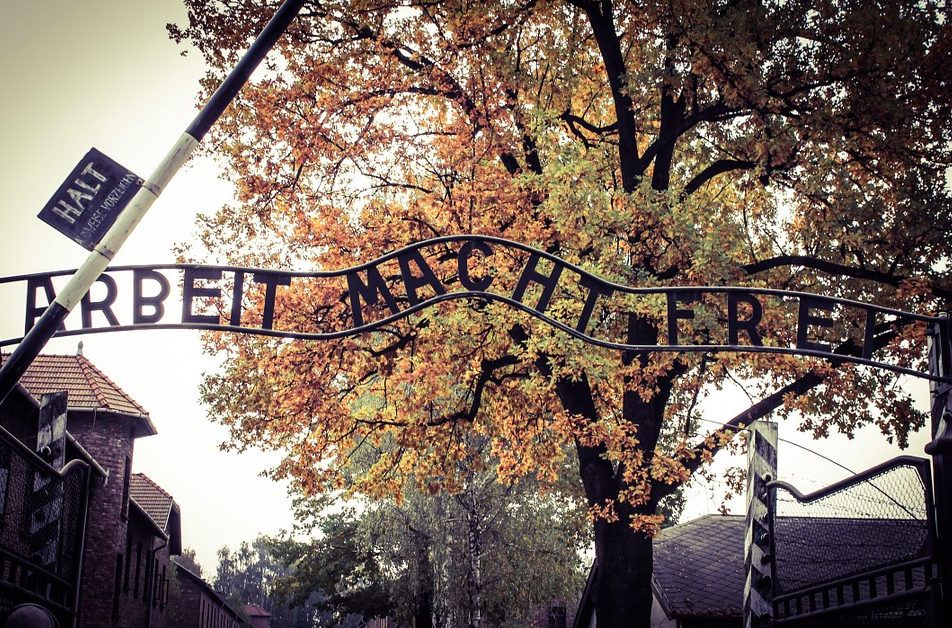
„I miss the bus to Auschwitz. I’m told not to worry because I can get the next one. It’s the worst thing I’ve waited for. The town itself seems to carry some of the atmosphere and historical burden of the camp. Fancy living in such a town; just working in a shop or at the petrol station, or running the kiosk next to the museum carpark, where I buy a roll and a coffee, and before which I have a disrespectful cigarette. Everything one does here feels disrespectful, every gesture inappropriate. It feels arrogant and unfair to be alive.
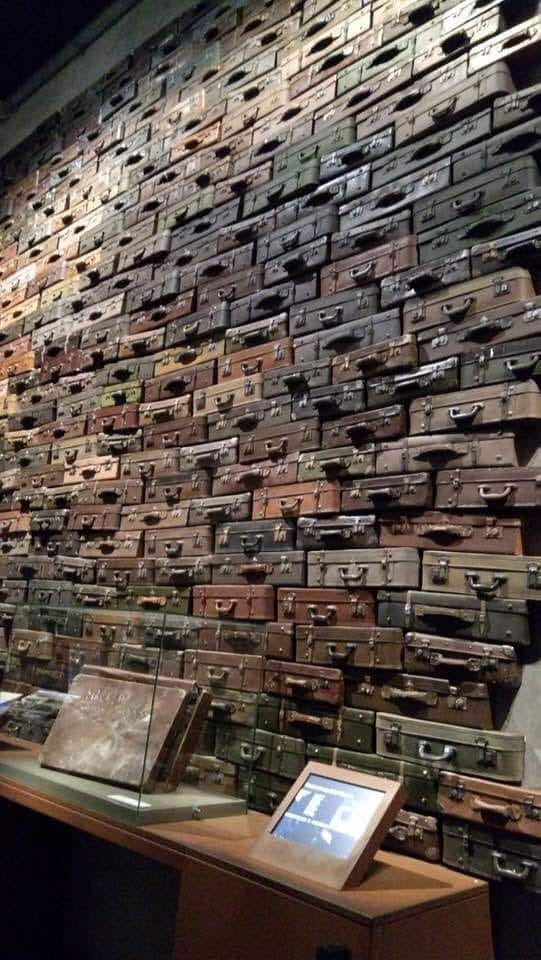
Tickets were sold to Auschwitz-Birkenau. Passengers were told to bring one suitcase weighing no more than twenty kilos – valuables only, efficiently commandeered. They emerged from the cattle carts breathing a sigh of relief. They drank the ditch water greedily, having not drunk a thing for days, and decided that nothing could be worse than that. Selection began immediately. Only those who could be usefully laboured to death were not led directly to the gas chambers, which were disguised as shower blocks to deter panic.
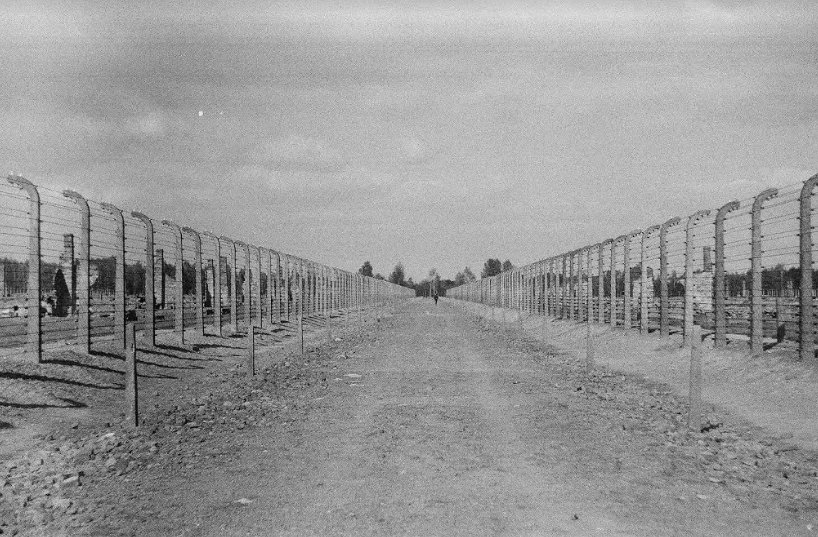
At Birkenau – the purpose-built extension to Auschwitz, which was originally a military barracks – a railway runs through the main gates and up to the crematoria. Israeli schoolchildren, draped in light fog and the Star of David, walk its sombre length, kicking stones and talking about lunch. A man – God I could have killed the guy – takes endless photos as we are led around the two camps, honouring some queer instinct to – to what? Some things, surely, aren’t meant to be taken. The shoes. A thousand pairs displayed in a glass case, the shoes of the final intake, a mere week’s worth. Next to the shoes, the suitcases, labelled carefully by their owners so they could be easily reclaimed when that time came.
The rollcalls at five in the morning that went pointlessly on for hours in winter, the barely standing prisoners all but naked, the temperature below freezing. Some died on their feet. Others ran for the electric perimeter, knowing they’d be shot. The shorn hair that was spun by those who’d lost it into profitable fabric, the sale and use of which aided the war effort against them.
Photographic portraits of the final 5,000 are displayed in one of the workhouses. Their faces. How can I look at one, and be open to its tragedy, and not look at the others? Our guide, a Polish lady in a red hat, whose parents had been arrested by the Nazis while at church (she didn’t elaborate), tells of a visitor who saw the face of their mother among the gallery. The medical experiments of Mengele. We are told about these in detail. Can eye colour be altered without the use of an anaesthetic? Everything bombards you, but odd things anger or confound.
The priest who pleaded with a Nazi guard to spare the life of a man about to be shot. It is his life or your life, was the guard’s reply. Then takemine said the priest. The guard did what he was told. Two-hundred calories a day if you were good. Ceaseless punishing labour, most of it pointless, all of it insane. The ugly ruins of one of the crematoria, untouched since its guilty detonation. The scale model of the gas chambers, mocked-up and put in a cabinet to give a clue of the density, hundreds of white plastic bodies, no larger than grains of rice, packed in to form a single gasping mass.
Poland lost 20 per cent of its population in the war – Polish Jews, yes, but also Polish homosexuals and teachers and dissidents and children and parents and siblings and clerks and cleaners. Polish gypsies as well, a million of them. And for what? And for what?
They should send every schoolchild to the Auschwitz museum, while their morals are responsive, while there’s room for new attitudes, while there’s time for new kindness. It is a compelling, horrible way to learn. I didn’t want to go to Auschwitz because I didn’t want to write about it. (I’m barely writing about it now; I’m merely putting down in useless words my fractured, awful experience.) I thought of the lines in Romeo and Juliet – ‘No words can that woe sound’ – and imagined using them as my excuse.
I cry outside the bookshop, for the sheer disgusting cruelty of it all. But what good is crying? What good is anything in the shadow of this place? I say nothing for a day after Auschwitz: a pathetic tribute”.
Text: Ben Aitken, author of the book „A Chip Shop in Poznan: My Unlikely Year in Poland ”
Pictures: Richard Morgan, Pixabay and British Poles
Film: Paul McGaulley