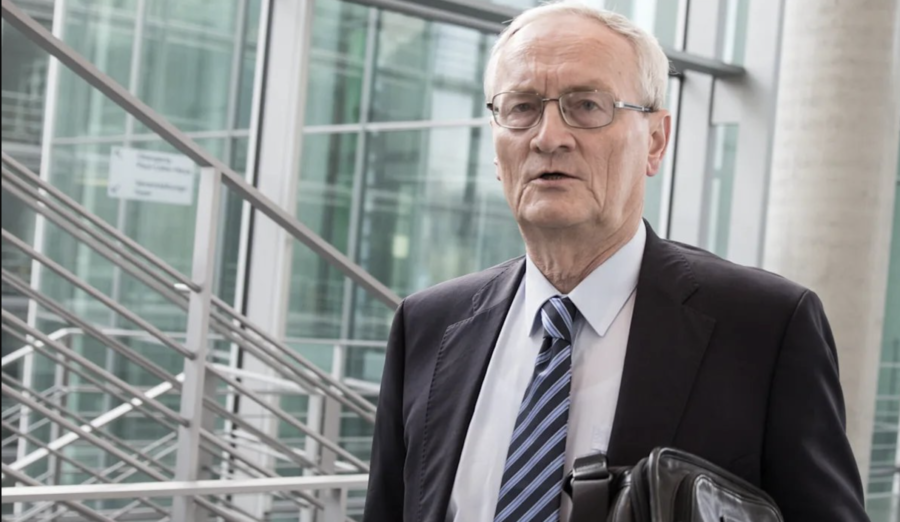
The British Poles had a chance to speak with Dr Przemysław Biskup, a researcher at the Polish Institute of International Affairs (PISM) and scholar at University of Warsaw. Our topic was the dynamics in relations between the EU, UK and Poland under Sir Key Sarmer’s cabinet.
British Poles: Do you think that the fact of establishing new governments in Poland and Britain plays a role in the current Polish-British relations?
Dr Przemysław Biskup: I would say that the change in the UK government is of higher significance in that matter. The Law and Justice government sought to maintain a close and good working relationship with the UK under the Conservative government. This idea was visible particularly in the field of security and defence, with particular importance after the start of the Russian aggression on Ukraine. One of the examples of such a stance was the increase of the UK’s military presence and the signing of several important arms contracts. This was continued after the 2023 parliamentary election by Donald Tusk’s government.
The main constraint on the relationship, both for the previous and also the current Polish government, was the issue of Brexit and related domestic events in the UK. During the Brexit negotiations, Poland tried to be an intermediary for other European countries and EU institutions, to avoid the worst-case scenarios, such as a no-deal, hard Brexit.
The main change from the Polish perspective is that the new British government generally wants closer and better cooperation with the European Union. What this means in practice – we shall see. The announcements are quite general, but promising. This is especially visible in the context of UK-EU defence and foreign policy cooperation. If progress is noted in the negotiation of these agreements, the fact that Poland will hold the EU Council presidency next year may have significance for the relationship.
BP: And how will this change affect bilateral relations between the countries?
PB: From a bilateral point of view, Polish-British relations, given the context of Brexit, have limited potential for development but in a positive way. These relations, to the extent of the capability presented by the situation of both countries, are very good.
To move further in this relation it would require a change on the British side regarding Brexit issues, but what action Prime Minister Starmer’s government will take in this regard remains to be seen.
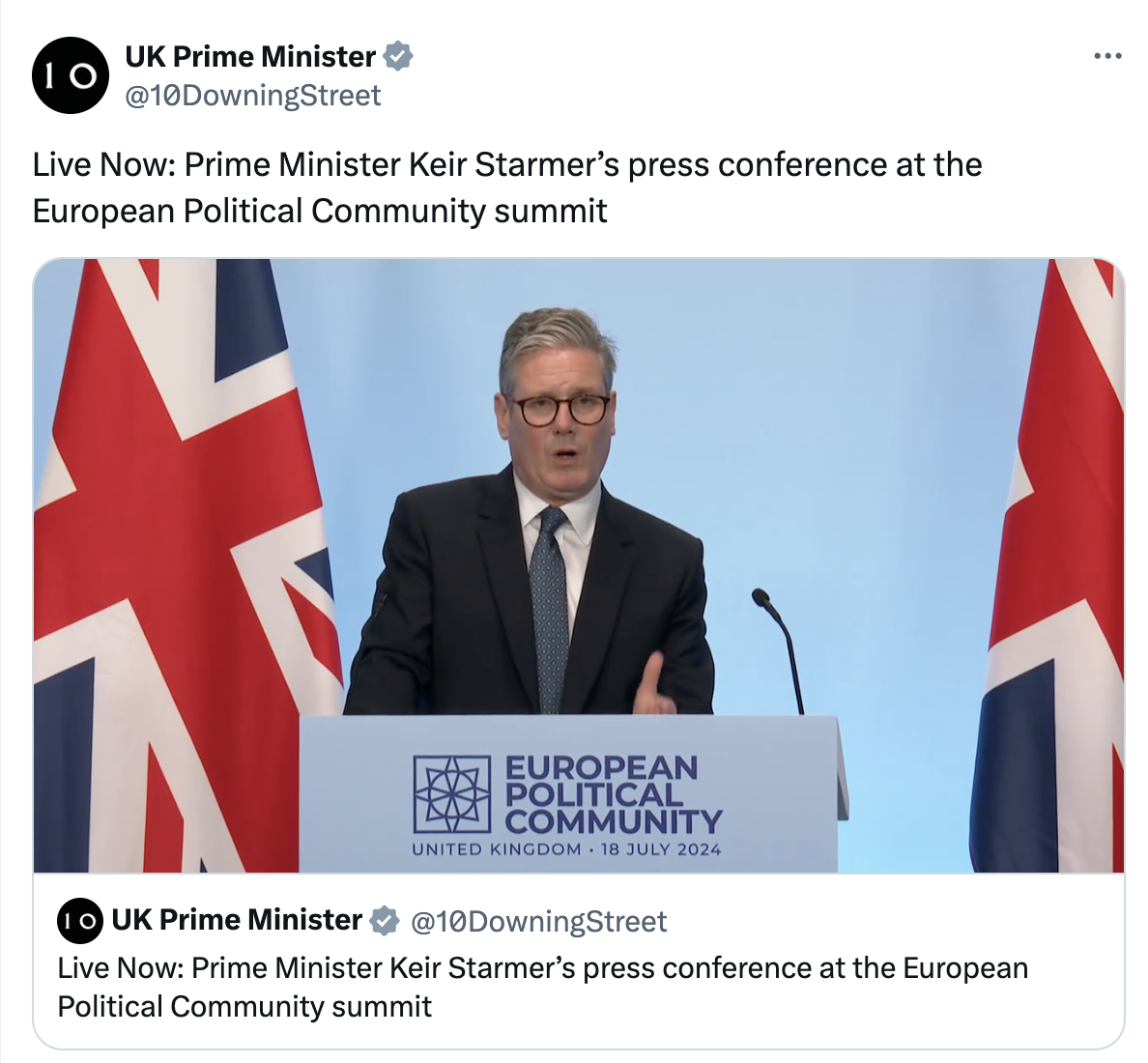
BP: Are there any expectations concerning today’s, first meeting of the prime ministers?
PB: As far as I am aware there are no specific expectations, this visit was preceded by an earlier meeting of Foreign Secretary Lammy and Minister Sikorski, just after the establishment of the new British government. The UK Defence Minister’s quick visit to Kyiv indicates a natural convergence of interests and optics. President Duda, Minister Sikorski and Minister Kosiniak Kamysz also participated with Starmer, Defence Secretary John Healey and Europe Minister Nick Thomas-Symonds at NATO’s Washington Summit last week.
It should be remembered that the formula for the EPC summit is general since this organisation remains undefined. It is mainly a forum for strategic discussion. It is certainly a good, positive opportunity in the first days of this government for talks and meetings between the Polish and British leaders. As I mentioned, there has already been a visit to Poland by Secretary Lammy, President Duda’s visit to Washington marked a meeting with the British delegation, and now the first meeting of the Prime Ministers. For the Polish Foreign Minister Radosław Sikorski, this is, therefore, the third opportunity to talk to representatives of the new British government. This is a familiarisation phase involving the exchange of ideas and expectations.
These contacts will probably intensify in the coming months, but rather only after the summer recess when the British government will be able to present more precise concepts of action. Expectations for the upcoming Polish presidency of the EU Council starting on 1 January 2025 will then be much more precise as well. The fact there are no clear expectations at the moment may be a good omen, as some commentators consider this as one of the advantages of the European Political Community Summit.
BP: Do you think that another term in office for Ursula von der Leyen as the head of the European Comission will bring something new to the EU-UK relations?
PB: Once the EC President’s agenda is set, the personal composition of the Comission will not be known until autumn. Her reelection seems positive for the relations as she is familiar with the Brexit issues. She is perfectly aware of where the 2020 agreements could be supplemented. But the initiative remains on the British side. The current relation framework has been defined by the red lines defined by the UK. One can certainly assume an improvement in the area of rhetoric and diplomacy but it is far too little to speak of a significant change in this relations.
BP: Thank you.
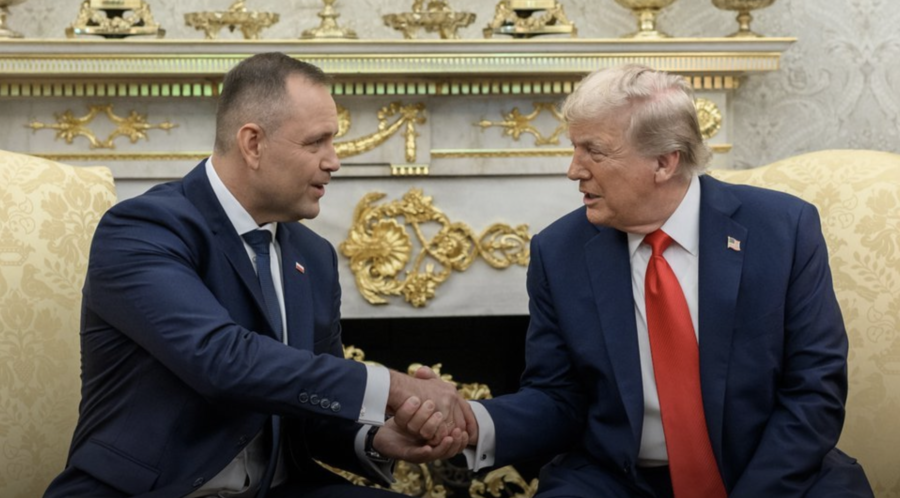
Photo: X/Keir_Starmer
Tomasz Modrzejewski
Dr Przemysław Biskup – Analyst in the European Union Programme. His area of research focuses on the foreign, EU and domestic politics of the UK and Ireland, including Brexit. Other interests: the Commonwealth of Nations, transatlantic relations, comparative Euroscepticism. He holds Ph.D. in Political Science (University of Warsaw, 2006) and M.A. in law (University of Warsaw, 2001). Marie Curie Research Fellow at the University of Sussex. Author of some 50 academic publications. He teaches at the Warsaw School of Economics (since 2018). Visiting Professor at the Sciences Po Lyon (2016, 2018). Speaks English and French.