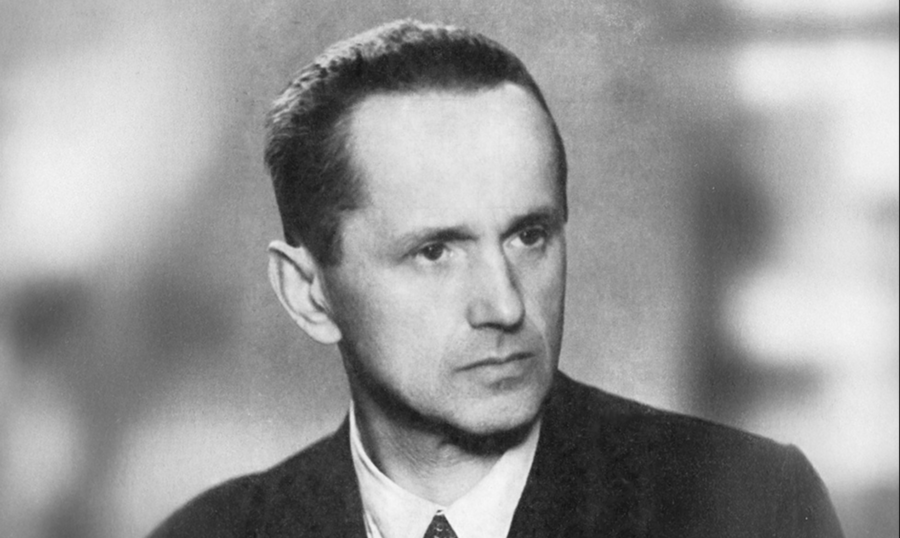
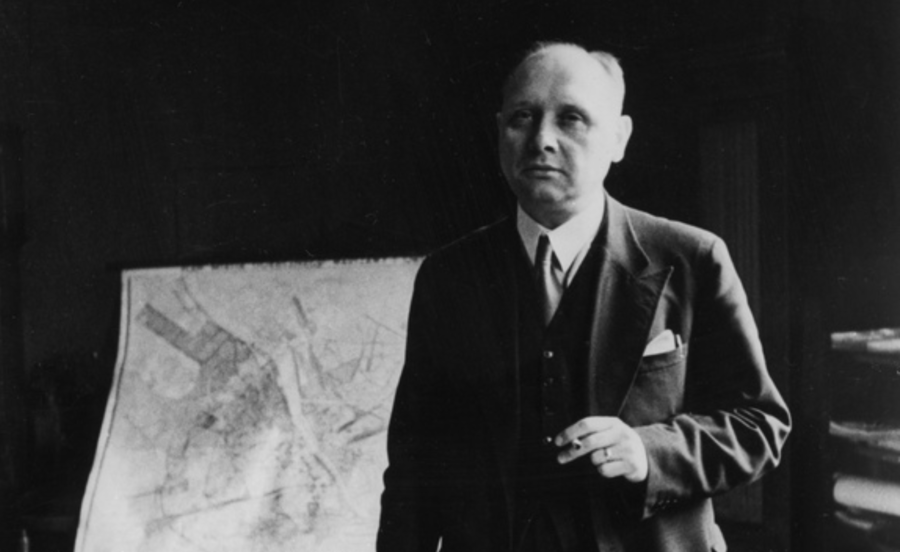
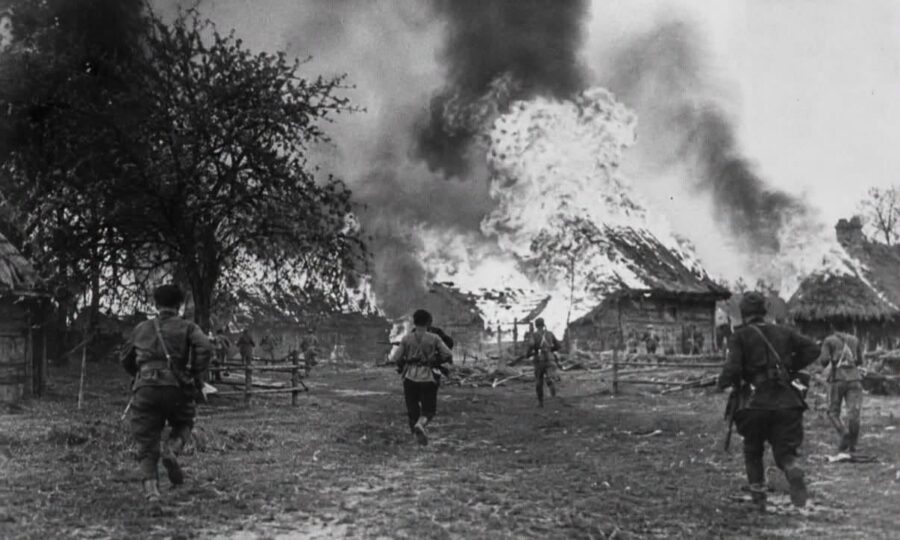
Władysław Anders was a fearless Polish general who rose from the ranks of the Russian Imperial Army to lead tens of thousands of soldiers and civilians to freedom from Soviet oppression. He became a hero of the Italian campaign in World War II, most famously at the Battle of Monte Cassino. His remarkable life of courage, exile, and unwavering devotion to Poland is a story that deserves to be remembered and shared.
Władysław Anders was born on 11 August 1892 in Błonie near Kutno, into a landowning family of Baltic German descent. His father, Albert, worked as an agronomist and estate manager, while his mother, Elżbieta, looked after the household and their five children. The family of Evangelical faith traced its roots to the historical region of Livonia.
Anders received his education at a secondary and grammar school in Warsaw. At the graduation, he was conscripted into the Russian Imperial Army and trained at the cavalry reserve officers’ school.
He later pursued studies at the Polytechnic Institute in Riga. During his student years, Władysław Anders became a member of the Polish academic corporation Arkonia, one of the oldest and most prestigious student fraternities established by Polish youth in the Russian Empire. Arkonia, founded in 1879, upheld ideals of patriotism, honour, and solidarity, nurturing future leaders and intellectuals committed to the cause of Polish independence. Anders’ involvement in the fraternity not only connected him with a vibrant network of like-minded Polish students but also helped shape his sense of national duty and civic responsibility—values that would guide him throughout his military and political career.
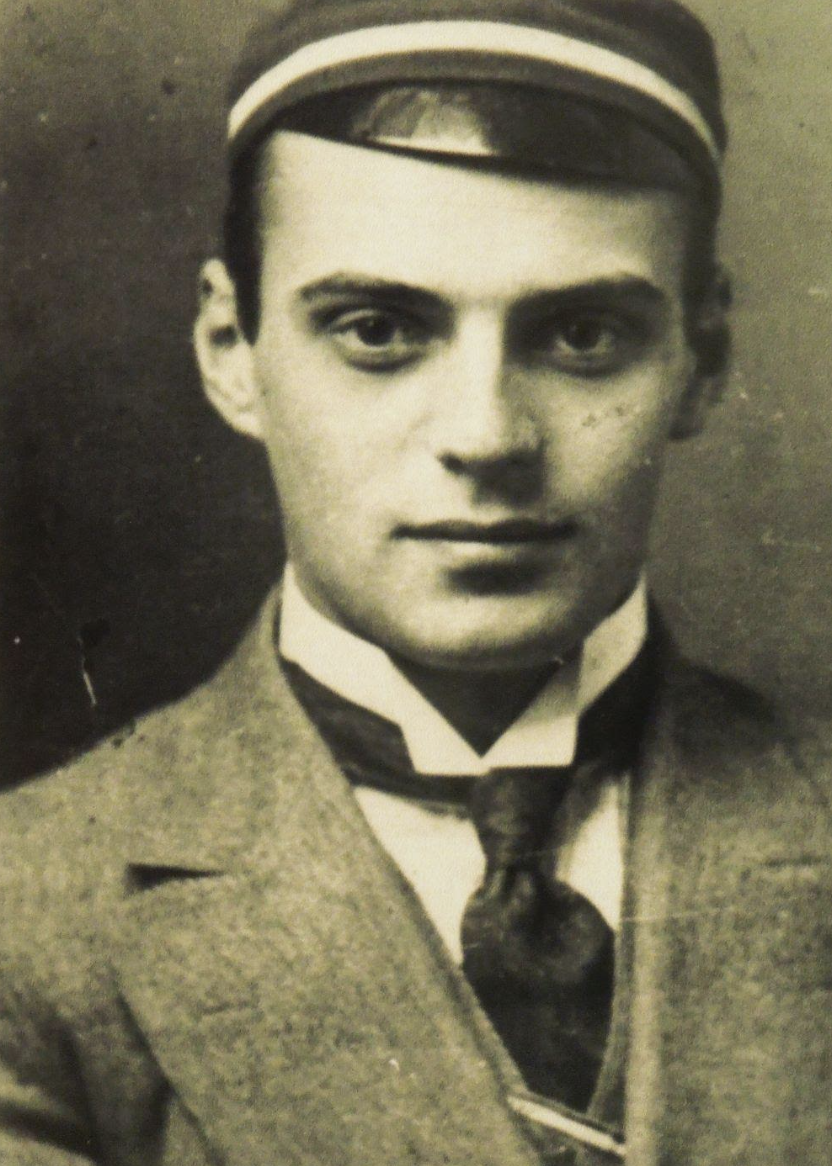
During the First World War, he commanded a cavalry squadron in the Russian Army, where he was wounded three times and decorated with the Cross of St. George – Russia’s highest military honour for bravery.
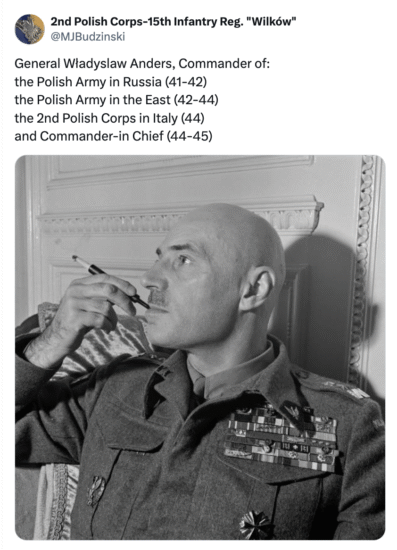
In 1917, following his completion of a General Staff course in Petrograd, he was appointed chief of staff to an infantry division. After the February Revolution, Anders joined the newly formed Polish I Corps in Russia under General Józef Dowbor-Muśnicki. He played a key role in organising the 1st Krechowce Uhlan Regiment, assuming command of a squadron, and later served as chief of staff of the 1st Rifle Division of the Polish I Corps. When the Corps was disarmed by the Germans in May 1918, Anders made his way to Poland and joined the nascent Polish Army.
Following the outbreak of the Greater Poland Uprising in December 1918, he became the chief of staff of the Greater Poland Army. Between April 1919 and September 1921, he commanded the 15th Poznań Uhlan Regiment, which he helped to establish. For his valour during the Polish–Soviet War, the Marshal of Poland Józef Piłsudski awarded him the Virtuti Militari, Poland’s highest military decoration.
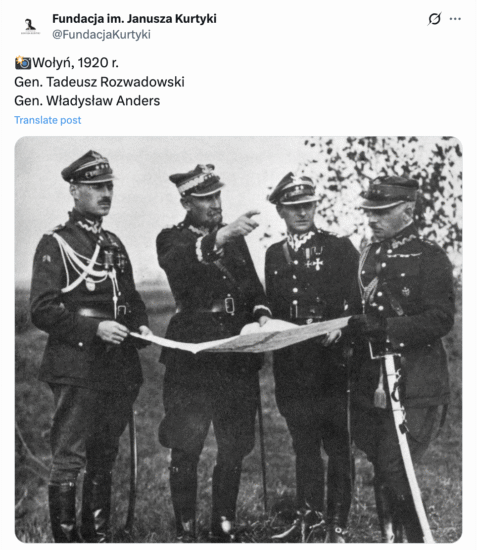
After the war, Anders travelled to Paris for a two-year course at the École Supérieure de Guerre, followed by frontline experience. Returning to Poland in 1924, he headed courses for senior officers before being appointed chief of staff at the General Inspectorate of Cavalry under General Tadeusz Rozwadowski.
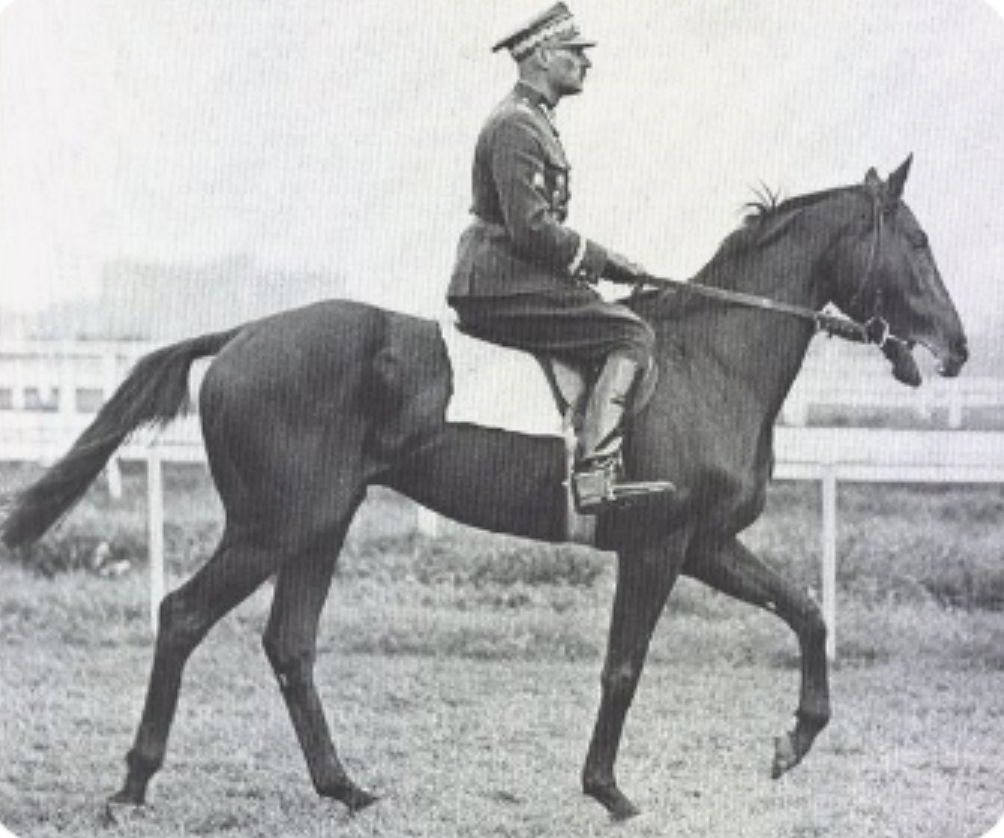
In November, he was nominated the commandant of the Warsaw Garrison and, during the May Coup of 1926, served as chief of staff to the government forces. He was responsible for the evacuation of President Stanisław Wojciechowski from the Belweder Palace to Wilanów after the capture of Warsaw by forces loyal to Marshal Piłsudski.
Despite the political upheaval, Anders remained in active service. That same year, during a strategic war game orchestrated by Marshal Piłsudski, then Colonel Anders distinguished himself, leading to his appointment as chief of staff of the General Inspectorate of Cavalry.
In 1928, he assumed command of the Independent Cavalry Brigade in Brody.
Around that time, General Gustaw Orlicz-Dreszer wrote of Anders: “He is an officer for whom the highest military posts should one day be open”. In 1934, Anders was promoted to the rank of general.
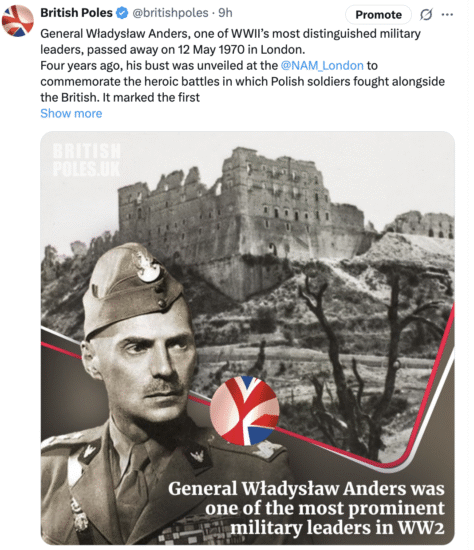
In 1937, he took command of the Nowogródek Cavalry Brigade, leading it into battle at the outset of the Second World War. During the 1939 campaign, his brigade, part of the Modlin Army, defended the border with East Prussia and engaged in combat around Płock and Warsaw. On 12 September, Anders took command of a Cavalry Operational Group, retreating southward with the remaining forces in an attempt to reach the Romanian border.
Following the Soviet invasion of Poland on 17 September 1939, Anders’s units engaged the attacking Red Army in a desperate effort to break through to the south. Twice wounded, General Anders was captured near Sambor, close to Lwów, on 29 September.
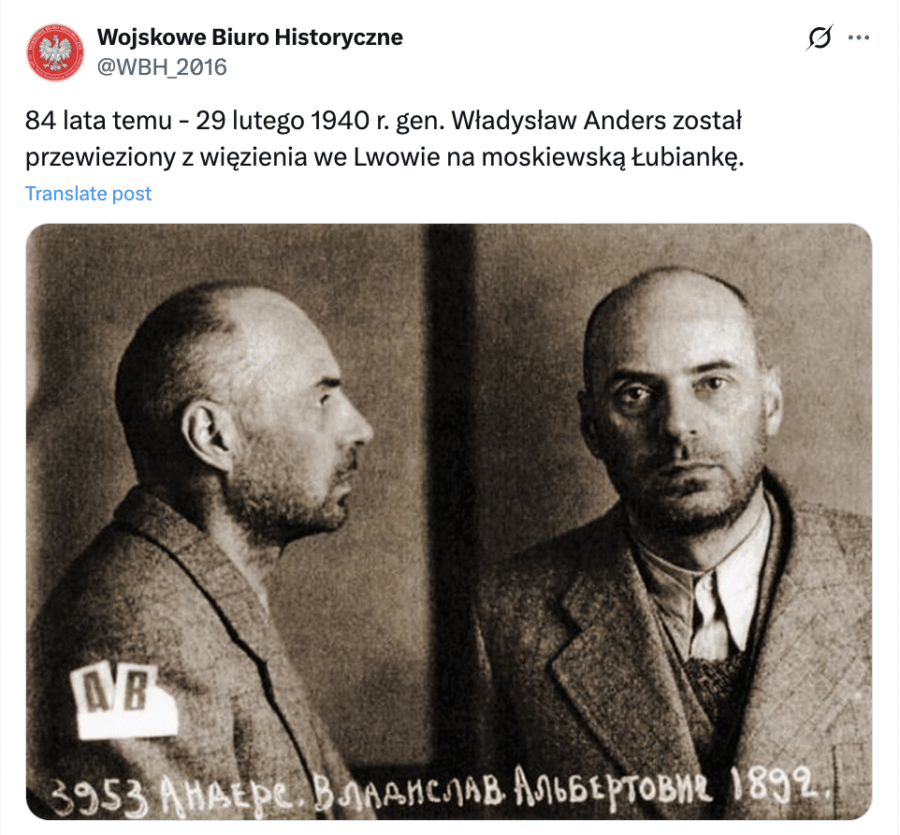
He was hospitalised and subsequently imprisoned in the notorious Brygidki prison in Lwów. In February 1940, he was transferred to Moscow, where he was held in the NKVD’s Lubyanka and Butyrka prisons. He endured repeated interrogations, torture, and pressure to join the Red Army during nearly two years of captivity.
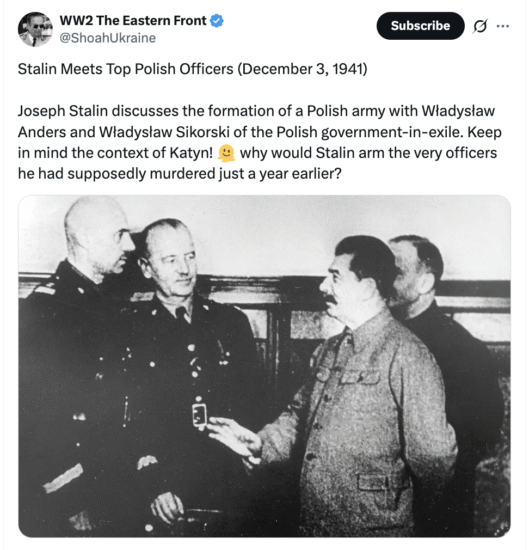
Following Nazi Germany’s invasion of the Soviet Union on 22 June 1941, the Sikorski–Mayski Agreement of 30 July 1941 restored diplomatic relations between Poland and the USSR, which had been severed after the Soviet invasion in 1939.
In the wake of the German invasion of the Soviet Union in June 1941, a dramatic shift in geopolitics reopened the door for a Polish military presence on Soviet soil. The agreement signed in Moscow on 14 August 1941 between the Polish government-in-exile and Soviet authorities laid the groundwork for the creation of a Polish army in the East. The accord promised the release of tens of thousands of Poles from Soviet prisons and labour camps, and the swift formation of a Polish fighting force.
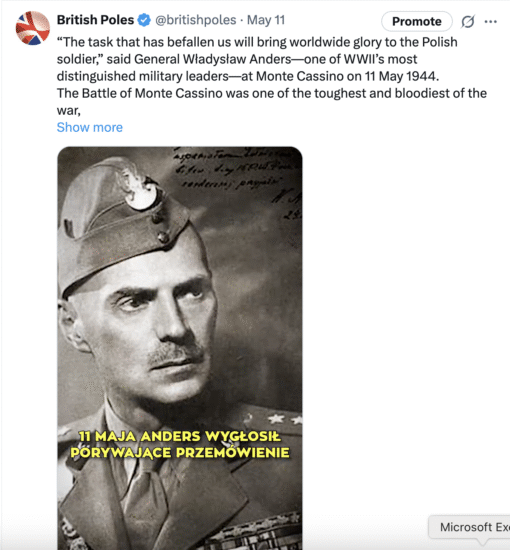
At the helm of this daunting enterprise stood General Władysław Anders—himself newly freed from nearly two years in NKVD captivity. Despite suffering physical weakness and the trauma of incarceration, Anders took on the immense responsibility of forging an army out of dispersed and broken people. Polish soldiers and civilians began streaming into enlistment points scattered across the Soviet Union, driven by hope and patriotism, many having survived the horrors of the Gulag.
By mid-October 1941, the ranks of what would become known as Anders’ Army had swelled to over 40,000 men. Yet with this rapid expansion came grave logistical challenges. Supplies were meagre; food was scarce, and Soviet cooperation proved increasingly unreliable.
Rather than increase rations in line with the growing numbers, the Soviets began to reduce provisions. Hunger took hold. Soldiers, many still weak from years in camps, faced brutal winter temperatures in threadbare clothing. In some areas, scraps of cloth were fashioned into makeshift shoes; men slept in tents beneath snow-laden skies as temperatures plunged below –40°C.
The conditions deteriorated to such an extent that the Polish command was forced to take a decisive step. With the approval of both Soviet and British authorities, a decision was reached: the army would be evacuated from Soviet territory and relocated to the Middle East, where it could regroup, train, and ultimately fight under British command.
On 24 March 1942, the long-awaited evacuation of the Polish Armed Forces from Soviet territory began. Over several months, more than 115,000 people were transported to Iran. Among them were around 78,500 soldiers and 37,000 civilians—nearly 18,000 of whom were children. It was an exodus not only of a military force, but of a displaced nation within a nation.
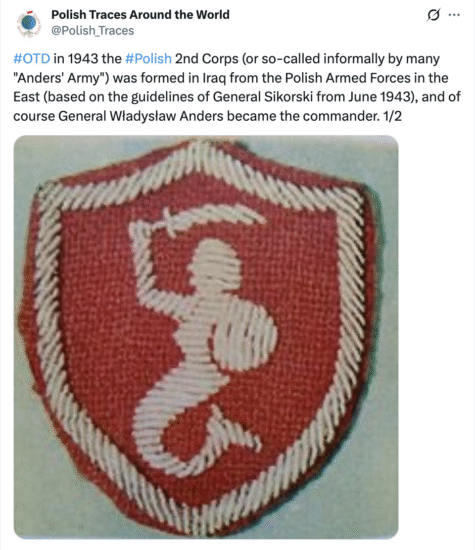
General Władysław Anders himself departed the Soviet Union in August 1942, joining his troops in the Persian Gulf. In Iran, he began the complex and critical task of building what would become the Polish II Corps. The troops, weary yet determined, were transferred to Iraq and then to Palestine, where they underwent intensive training under British command.
Among the ranks of Anders’ Army were several hundred Jewish officers and soldiers who, after the corps’ deployment to the Middle East, chose to remain in Palestine rather than continue to the Italian front. Many of them would go on to play pivotal roles in the formation of the State of Israel and the development of the Israel Defence Forces.
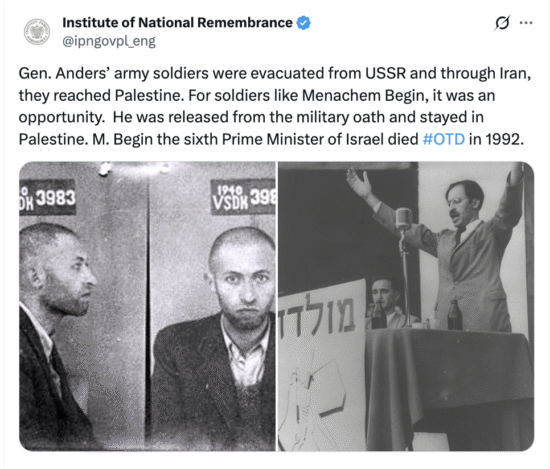
Notable among them was Menachem Begin, who later became Prime Minister of Israel and a Nobel Peace Prize laureate. Another key figure was Meir Zamir, who served in Israeli intelligence, and Elyahu Lankin, who took part in the Irgun and commanded the Altalena during a critical post-independence confrontation.
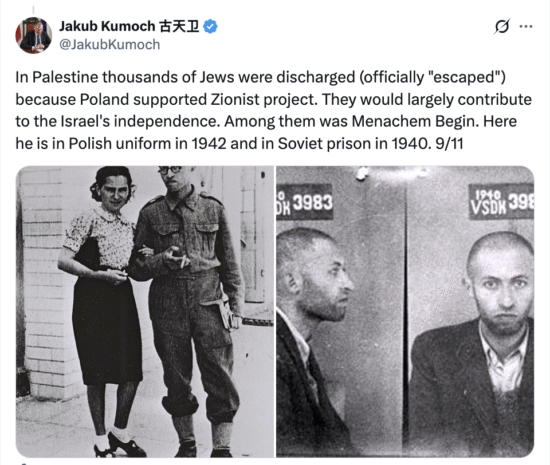
Their experience in the Polish military, leadership skills, and combat training gained under General Anders significantly contributed to the early military and political foundations of the new Jewish state.
By early 1944, the fully formed II Corps was deployed to the Italian front as part of the British Eighth Army. There, it faced one of the most challenging and symbolic battles of the entire campaign: Monte Cassino. The ancient Benedictine abbey, perched atop a strategic mountain, had become a linchpin in the German defensive line. On 11 May 1944, just before launching the final assault, General Anders addressed his men with words that would echo through history:
“The task that has fallen to us will carry the name of the Polish soldier to the farthest corners of the world.”
A week later, as the smoke cleared over the shattered monastery, the plaintive notes of the Hejnał Mariacki (the famous Kraków bulge call), played by Corporal Emil Czech, rang out at noon—heralding a hard-won Polish victory.
After the victory at Monte Cassino in May 1944, the Polish II Corps continued its advance through Italy, playing a key role in the liberation of several towns and cities, including Ancona.
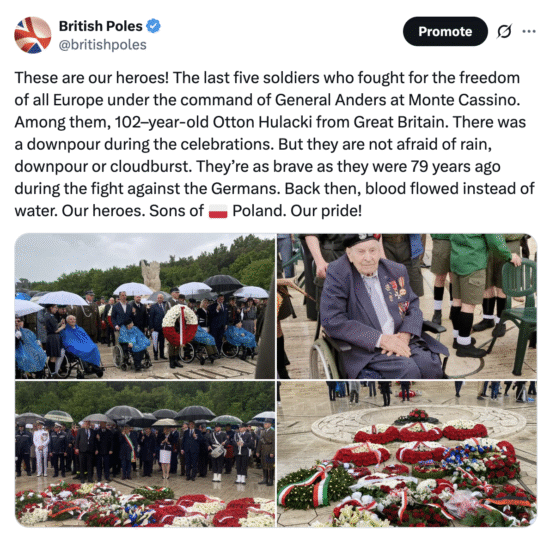
The capture of Ancona in July 1944 was particularly significant as it secured a vital Adriatic port for Allied supply lines. Demonstrating determination and tactical skill, the Polish soldiers fought in difficult terrain and under heavy enemy resistance, contributing notably to the broader Allied campaign in Italy and cementing their reputation as a formidable force in the liberation of Europe.
Despite the immense contribution of Polish forces in the campaign against Nazi Germany, geopolitics proved unforgiving. At the Yalta Conference in 1945, the Allies conceded Eastern Europe to Soviet influence. Poland, for whose freedom Anders and his soldiers had sacrificed so much, was left behind the Iron Curtain. In protest, the general sought in vain to withdraw Polish troops from the front.
Following the capture of General Tadeusz “Bór” Komorowski by the Germans, Anders was appointed Acting Commander-in-Chief of the Polish Armed Forces.
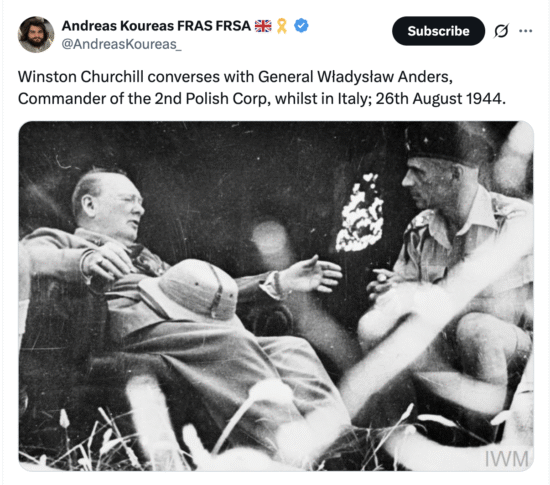
When the guns finally fell silent in 1945, Anders found himself without a country to return to.
Choosing exile over submission, he remained in the United Kingdom. In 1946, the communist regime in Warsaw stripped him and many of his fellow officers of Polish citizenship.
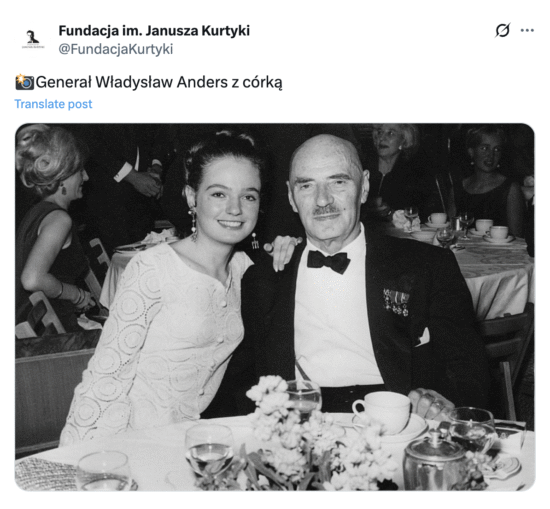
From London, Anders turned his energies to the welfare of his soldiers and compatriots stranded in the West. He worked tirelessly to secure housing, employment, and education for the Polish diaspora.
In 1949, he published his wartime memoir An Army in Exile, a detailed and poignant account of the years 1939–1946. He also penned the introduction to The Katyn Massacre in the Light of Documents by Józef Mackiewicz, a searing indictment of Soviet atrocities.
Politically active, Anders chaired the National Treasury Committee from 1949 and joined the Council of Three in 1954, a symbolic leadership body of the Polish government-in-exile.
General Władysław Anders passed away on 12 May 1970.
Fittingly, he was laid to rest alongside his soldiers at the Polish War Cemetery beneath Monte Cassino—the site of their greatest triumph.
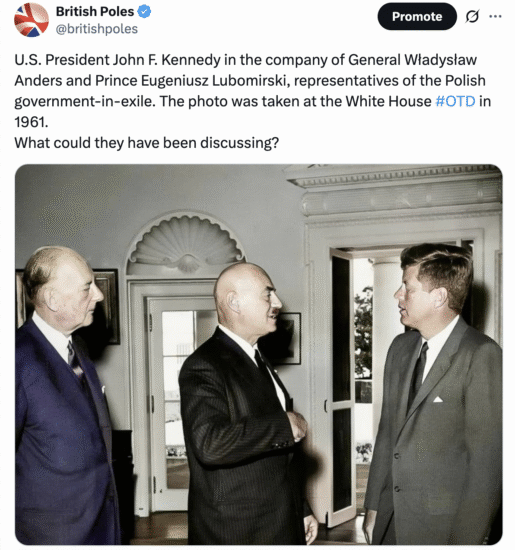
A year after his death, the communist authorities in Warsaw quietly reversed the 1946 decree that had stripped him of his citizenship, though the decision was never published in the official legal register.
With the fall of communism in 1989, Poland at last reclaimed General Anders as one of its own. Streets, schools, and military units across the country now proudly bear his name—an enduring tribute to a man who led with honour, fought with courage, and never gave up on the dream of a free Poland.
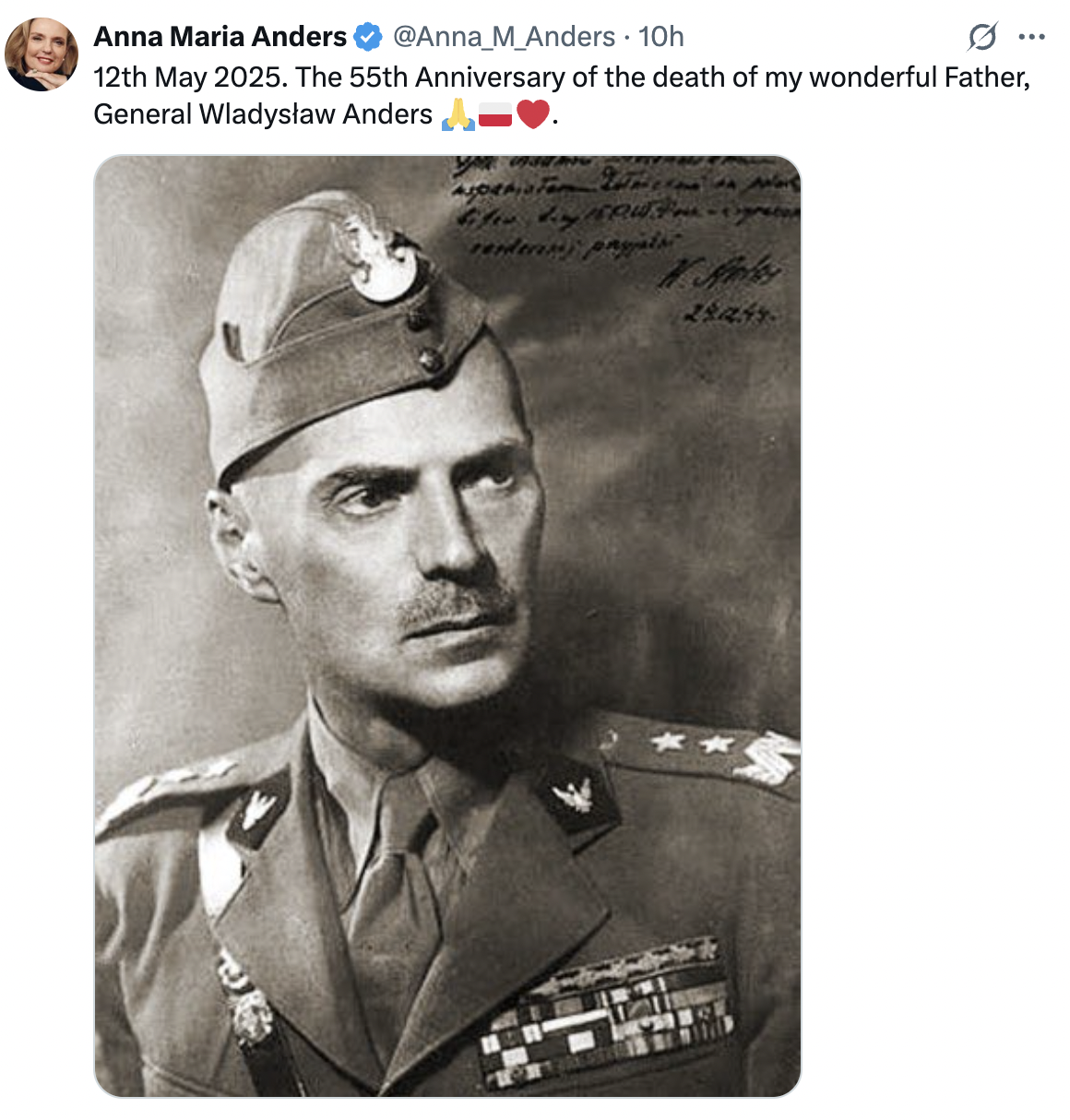
General’s daughter Anna Maria Anders remains committed to preserving his heritage and honouring the sites of the most important battles of the 2nd Polish Corps.
Four years ago, for the first time in history, a sculpture of a Polish commander was placed in a British museum. The bust of the legendary General Władysław Anders, created by Andrzej Pityński and donated to the National Army Museum in London by British Poles, was unveiled by Ambassador Anna Maria Anders. You can read more in our article Bust of WWII Hero General Anders unveiled in historic event at the National Army Museum in London.
Source: Dzieje.pl
Photo:@instytutandersa
Tomasz Modrzejewski