
Several kilometres from Westerplatte, the place of the start of the 2nd World War, the German Consulate in Gdańsk organised an event that praised the memory of the officers who planned a plot against Adolf Hitler while the III Reich was falling into oblivion under Allied campaigns in 1944. Some of these people, like Claus von Stauffenberg presented antisemitic and racist views towards Poles, participated in the 1939 aggression war against Poland and bore responsibility for the genocidal acts of Wehrmacht and SS units alike during the occupation of Poland.
In a letter to his wife during the invasion of Poland in 1939, Claus von Stauffenberg, for some considered almost a “hero of German democracy”, wrote about the Polish people:
“The local population is an unbelievable mob, very much Jews and those of mixed race. A nation that, to feel good, apparently needs a whip. Thousands of captives will certainly contribute to our agriculture. The Germans can reap the benefits, for they are diligent, industrious and undemanding”.
During the ceremony, the keynote address was delivered by the former President of the German Bundestag and current President of the Konrad Adenauer Foundation, Professor Norbert Lammert. Referring to the plot in 1944, he said,
„The uprising of 20 July 1944 is today a symbol of decency and civil courage. (…) The conspirators were not crystalline democrats. They were people of their time, bound to the realities of their social origins. (…) However, in what state would Germany’s image have been after the World War if at least such unsuccessful attempts to rise against the authorities had not occurred?”
In his public statement concerning the commemoration of another member of the plot, Heinrich von Lehndorff, an IPN historian Bogdan Musiał called such interpretations untrue, as the conspirators most often included officers from East Prussia, who at that time saw the imminent defeat of the German army. They feared that the Soviet army in a rapid counter-attack must first enter their homeland, East Prussia. The logical solution was to eliminate Hitler, make a deal with the enemy and save their country and private estates.
“This was the real reason for the conspiracy against Adolf Hitler,” Musiał said in an interview.

The German consul in Gdańsk, Cornelia Pieper, referred to the 1944 conspirators and cited the life story of one of them, Heinrich von Lehndorff, and “highlighted the potential of his former estate in Sztynort in Masuria as a site for European dialogue”:
“The palace in Sztynort is where the history of our part of the world pulses. Our great dream is to restore this building and give it back to the people, to create a place for international European dialogue, a place that brings young people from different countries together and is oriented towards the future.”
Heinrich Lehndorff took part in the attack on Poland in 1939 and later fought in the German-Soviet war. During the war, part of his estate in Mazury was used by the Reich Foreign Ministry. Lehndorff became involved in the anti-Hitler conspiracy. After his arrest, he was executed in 1944.
The German consul also said that she hopes for a better future for all nations, especially for Ukraine and hopes for a world in which “any further ‘Valkyrie’ operations will no longer be needed.”
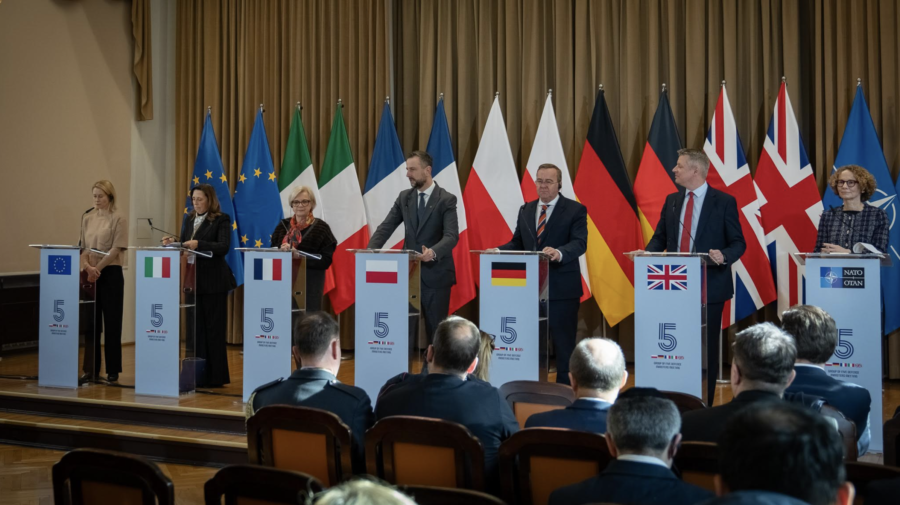
The event was organised in the famous Artus Court in the historic centre of Gdańsk.
“The history of the Hitler assassination attempt of 20 July 1944 requires a new approach. It involves an honest account of the crimes committed by the key conspirators, but also a sober dissection of the mentality, behaviour and plans of the German opposition. The perpetrator of the assassination attempt on Hitler and his close associates had abhorrent acts on their conscience, ones that would certainly bring their cases before the Nuremberg tribunal,” wrote Maciej Olex-Szczytowski, Polish historian in an article for Polish newspaper Plus Minus.
Tomasz Modrzejewski
Photo: German Consulate in Gdańsku/IPN