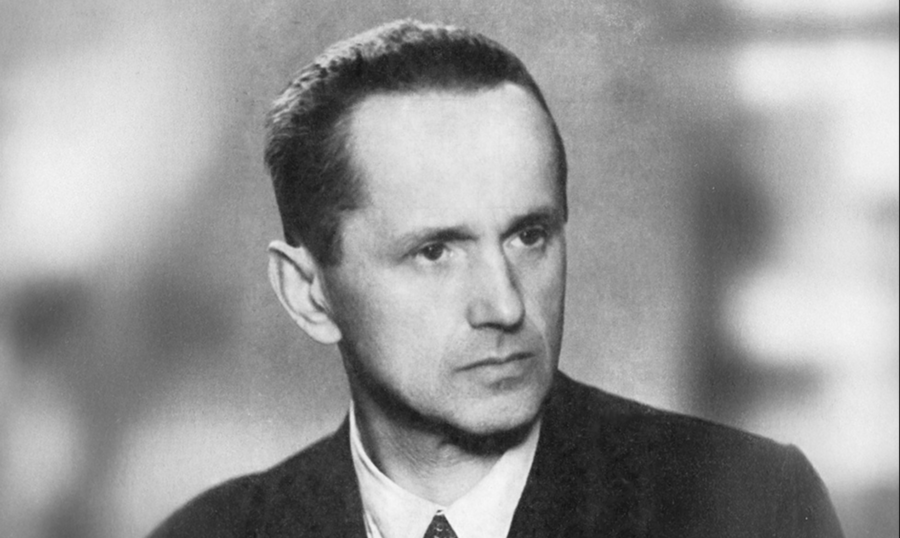
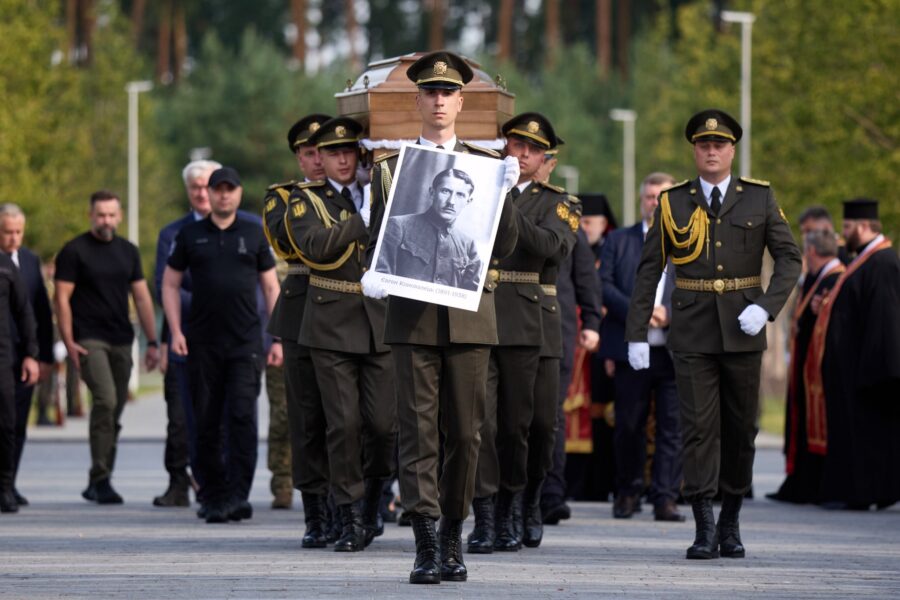
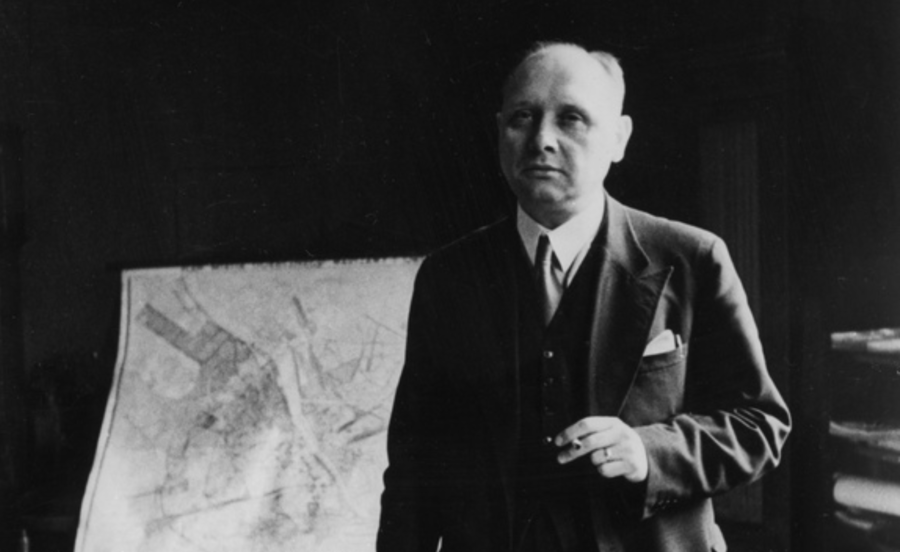
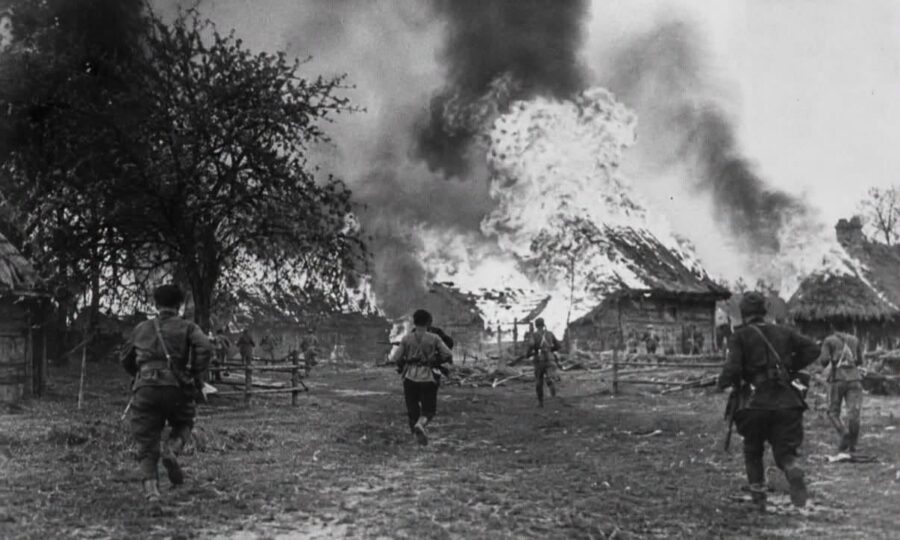
Hieronim Dekutowski “Zapora” was a legendary leader of the Polish Home Army Underground. Trained as one of the silent unseen, he was parachuted to occupied Poland and became a struggle against the Germans. Unfortunately, his bravery met with repression from the communist authorities of post-war Poland. For his fight for independence, he was executed in 1949.
Hieronim Dekutowski was born on 24 September 1918 in Dzików near Tarnobrzeg. His father was a craftsman and a member of the Polish Socialist Party (PPS). From childhood, he was brought up in an atmosphere of patriotism. One of his older brothers fought in the Polish-Soviet War.
Between 1930 and 1938, he studied at the State Gymnasium and Secondary School in Tarnobrzeg.
After the beginning of the 2nd World War, Hieronim Dekutowski crossed the Polish border into Hungary on 17 September 1939, where he was arrested.
After he escaped from a Hungarian camp, he travelled through Yugoslavia and Italy and finally made his way to France in November 1939, where he was assigned to the Polish 2nd Infantry Rifle Division.
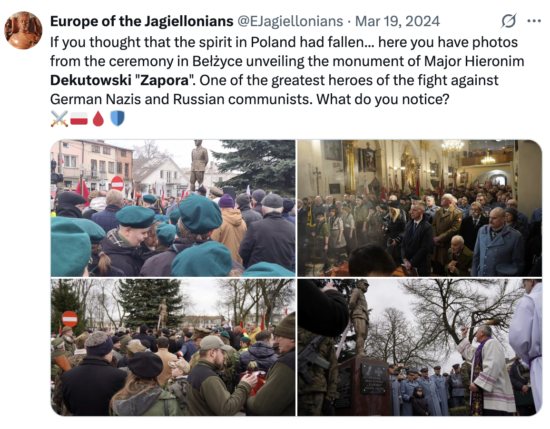
With this division, he fought in the Clos du Doubs hills defence. After the fighting, the division withdrew to neutral Switzerland, but Dekutowski managed to avoid detention and made his way to the UK by late June 1940.
He stayed in Britain for more than three years. He was assigned to the 3rd Battalion of the 1st Rifle Brigade, graduated from the Infantry Cadet School in Dundee, and then was assigned to a tank platoon in the 3rd Battalion of the 1st Rifle Brigade.
On 24 April 1942, Dekutowski was assigned for diversionary training to work in the occupied Poland. After completing specialist courses, he was sworn in and took the codenames “Zapora” and “Odra” and the passport alias Henryk Zagon.
On the night of 16-17 September 1943, Dekutowski was parachuted into Poland in the XXXI team of jumpers crypt. “Neon I”. He underwent a period of accommodation training in Warsaw for several weeks before being assigned to the Kedyw AK Lublin District in late autumn. Since then, he carried out dozens of diversion actions.
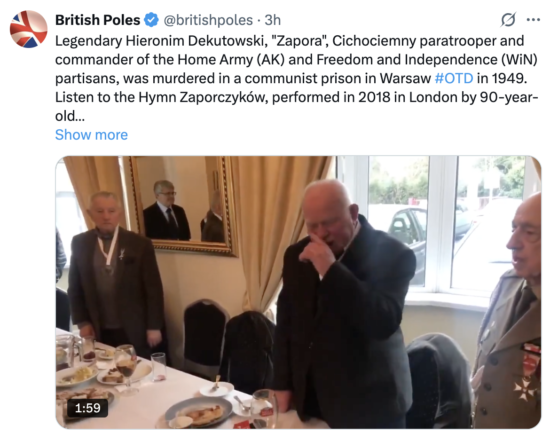
Initially, he was a member of Tadeusz Kuncewicz’s ‘Podkowa’ unit, operating in the Zamojszczyzna region. Later, he became commander of a unit under the District Inspectorate of the Home Army in Zamość.
He took part in actions aimed at defending the civilian population of the Zamojszczyzna region that faced cruel deportations from the Germans.
In January 1944, he was appointed head of Kedyw in the Lublin-Pulawy District Inspectorate of the Home Army. At the same time, he stood at the head of the Kedyw disposition unit.
In January 1945, “Zapora” established contacts with the Home Army Lublin District Headquarters and became the leader of a diversionary group carrying out reprisal actions against the Polish and USSR communist repression organs of NKVD, UB and MO.
At the beginning of February 1945, while escaping from a manhunt organised by the NKVD and UB in the village of Wały near Kraśnik, he was seriously wounded in the leg. Together with his unit, he successfully retreated.
In June 1947, he stopped his armed actions and exposed himself to the authorities as a non-combatant.
Threatened with arrest, together with a group of his subordinates and the Inspector of the Lublin WiN Inspectorate Władysław Sila-Nowicki, he made an attempt to escape to Western Europe. The organised trip and smuggling abroad were most probably a provocation by the Security Service.
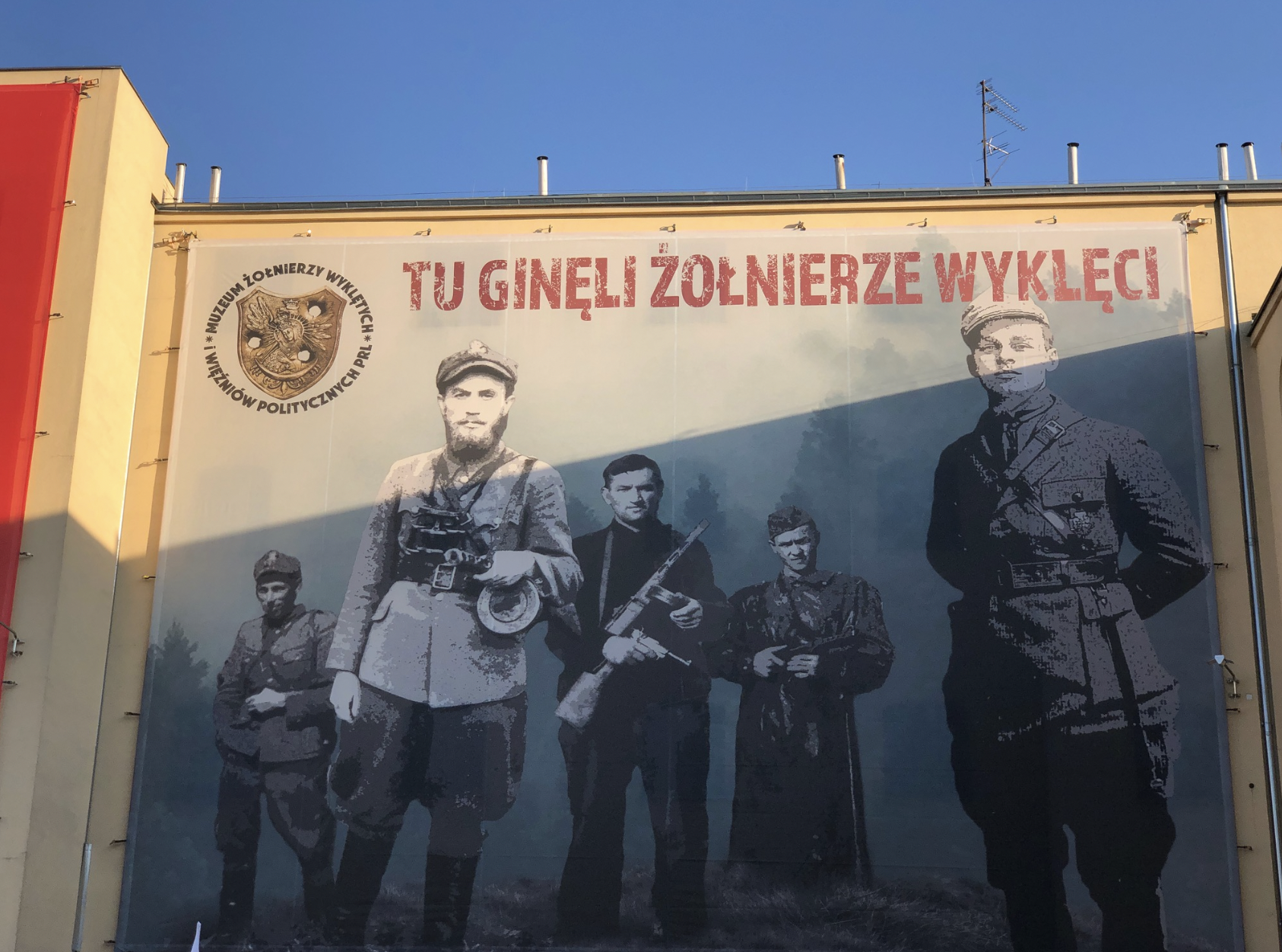
The group was arrested between 15 and 17 September 1947 near Nysa.
After being detained in the MBP prison in Warsaw’s Mokotów district, Major Dekutowski was subjected to a brutal investigation that lasted from September 1947 to June 1948.
On 15 November 1948, the sentences were given. Zapora was convicted to a seven-count death sentence. The remaining defendants were also sentenced to death.
Major Dekutowski was beaten (his limbs were broken and all his teeth knocked out) and then imprisoned in a discipline cell, where he remained until his execution.
On 7 March 1949, in the MBP prison in Warsaw’s Mokotów district, the communist authorities executed him.
Source: IPN, Dzieje.pl
Photo: @Jan34733995, British Poles
Tomasz Modrzejewski