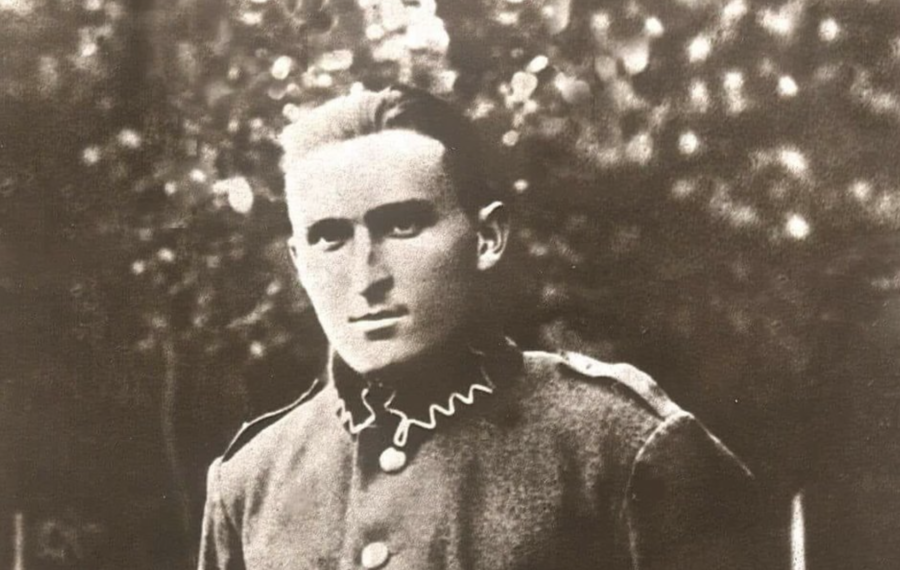
Janusz Kusociński was born on 15 January 1907 in Warsaw. He grew up in Ołtarzew near Warsaw, where the family had moved from the capital. Kusociński was known for his hard training that took him to the heights of sports excellence and won the 1932 Gold Medal at the Los Angeles Olympics in a 10,000m run.
At the beginning of his sports career, Kusocinski was involved in football. But his professional athletic career was decided by luck.
A competitor was missing during an athletics competition in which he was supporting his friend. Kusociński was asked to replace him. The 800-metre set the direction for his future career as he proved to be better than his colleague and many other contestants.

Kusociński decided to become a runner. His success was determined by his systematic and very intensive training. An Estonian, Aleksander Klumberg, became the young runner’s first coach. He planned Kusociński’s signature training method, the so-called interval training (covering stretches of very high intensity alternating with rest periods).
Kusociński was an extremely ambitious and hard-working competitor and was called a “giant of training work”. One did not have to wait long for its results. Already in 1928, he began to break national records and won the Polish championship.
His greatest success came on 31 July 1932 when Janusz Kusociński won the gold medal in the 10,000m run at the Los Angeles Olympic Games. He covered the distance in 30 min 11.4 sec, thus setting a new Olympic record and a new Polish record.
As sports correspondents recalled after the run his shoes were “full of blood” but he was able to overcome the pain and defeat the team from Finland.
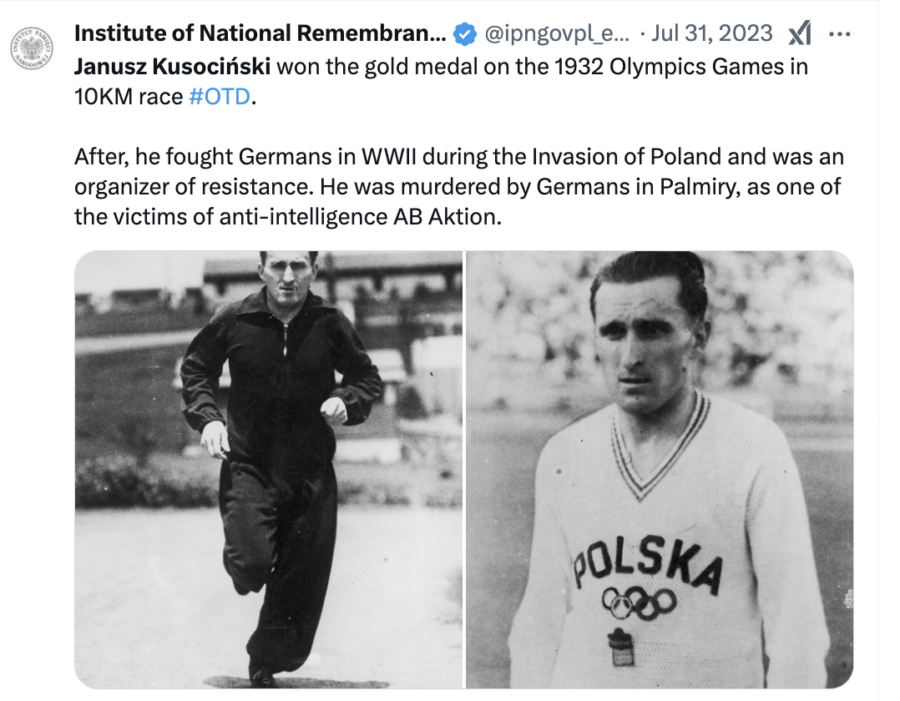
In Los Angeles, the Polish runner also set two world records in the 3,000 m (19 June 1932, time: 8.18.8) and 4 miles (30 June 1932, time: 19.02.6).
A serious knee injury stopped Kusociński from participating in the 11th Berlin Olympics (1936). He returned to professional sports in 1938. The athlete made good use of histamine for recovery. Despite regular treatments, trips and visits to sanatoriums, he managed to pass his A-level exams and graduate from the Central Institute of Physical Education.
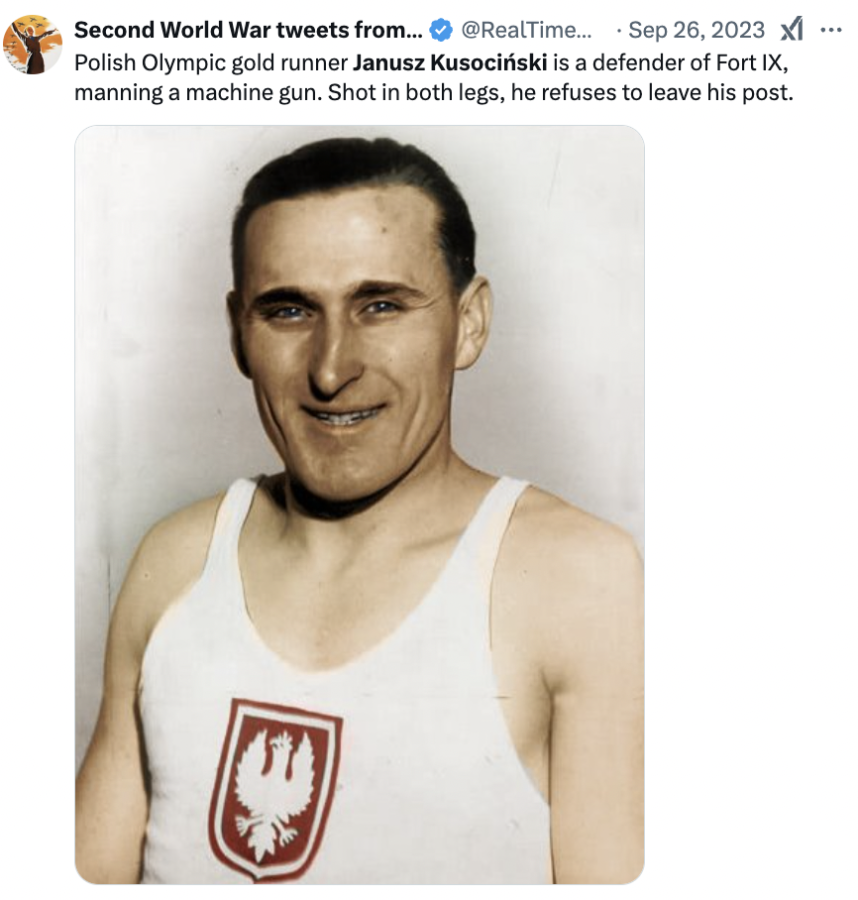
Kusociński, who was a reserve corporal in the Polish Army, volunteered to defend Warsaw. He became commander of a Machine Gun Company of the 2nd Battalion of the 360th Infantry Regiment. During the fighting in the defence of the capital, he was wounded twice. For his heroic attitude, he was awarded the Cross of Valour (28 September 1939).
After the capture of Warsaw by the Germans in 1939, Kusociński worked as a waiter at one of Warsaw’s restaurants.
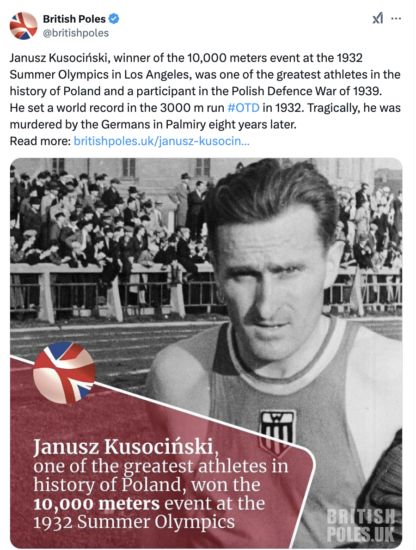
Kusociński joined the underground military organisation “Wilki” (Woolves) and became a member of the Union for Armed Struggle (Związek Walki Zbrojnej) after the fall of the Polish armed forces. In the spring of 1940, he was arrested by the Gestapo. He was detained in a prison at Rakowiecka Street in Warsaw, where he suffered horrendous torture.
On 20 and 21 June, 1940, along with other prisoners, he was taken from Warsaw to the area of the Kampinos Forest, near Palmiry.
He was killed during one of the mass executions of representatives of the Polish intelligentsia carried out as part of Operation AB, i.e. Of the Emergency Pacification Action (Außerordentliche Befriedungsaktion – AB).
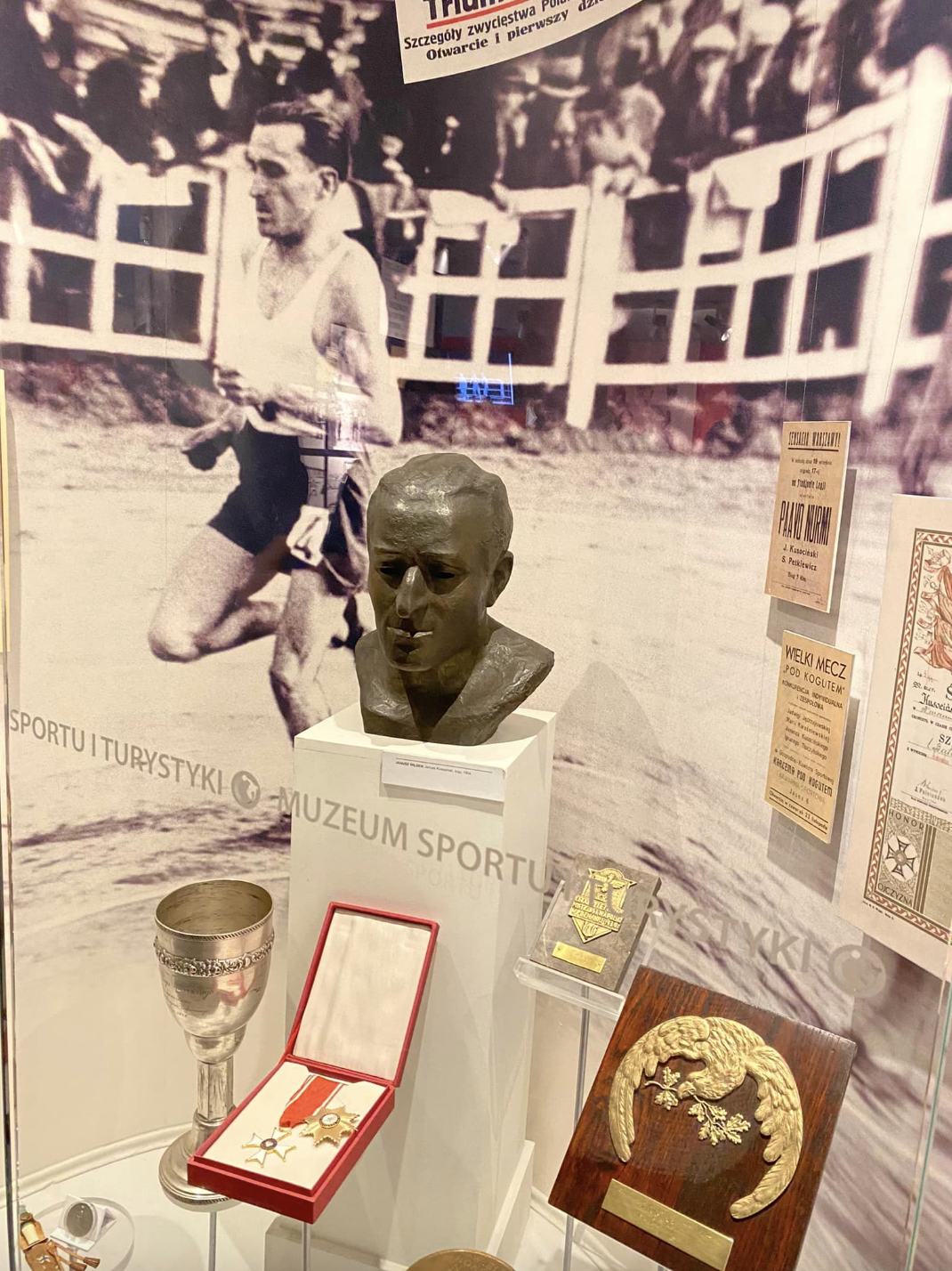
Since 1954, an international athletics competition called the Janusz Kusociński Memorial has been held annually to honour the Polish athlete.
Source: Dzieje, Polski Komitet Olimpijski, Polskie Radio
Photo: IPN, British Poles
Tomasz Modrzejewski