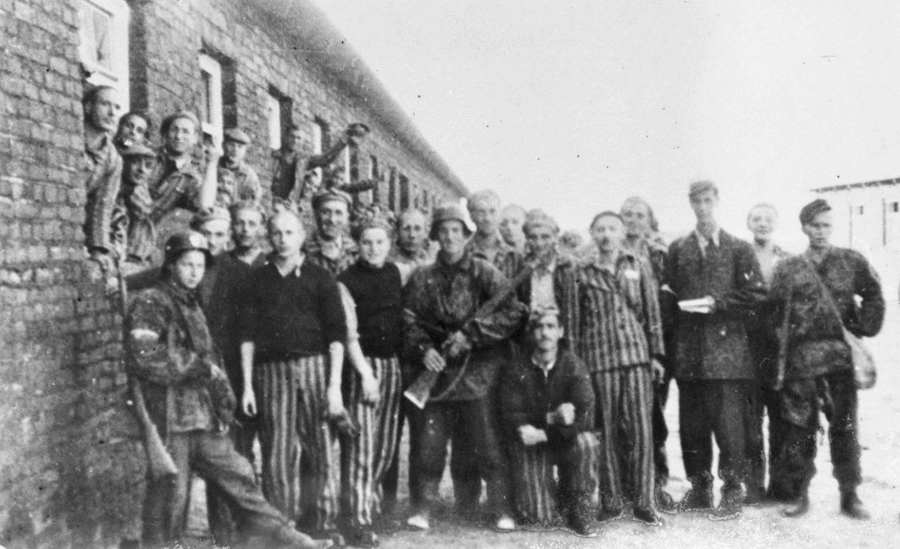
The prison on Gęsia Street (now Anielewicza Street), commonly referred to as “Gęsiówka,” became a site of both torment and triumph. On the fifth day of the Warsaw Uprising, fighters from the “Zośka” Battalion of the Home Army stormed the camp, liberating hundreds of Jewish inmates. Many of the freed prisoners took up arms and joined the insurgents in their desperate fight for the city, marking the capture of Gęsiówka as one of the most remarkable tactical victories of the Uprising.
The extermination of European Jews under Nazi German occupation of Poland intensified in 1942. From the Warsaw Ghetto alone, the majority of its 400,000 residents were transported to the Treblinka death camp. In early 1943, resistance began to emerge among the survivors.
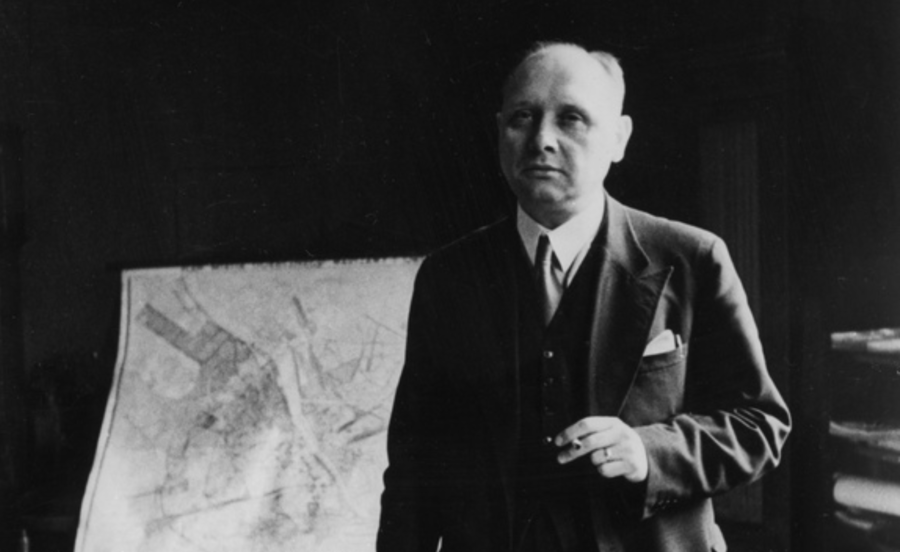
Heinrich Himmler, head of the SS, saw an opportunity to establish a concentration camp in the ruins of the ghetto, but his plans were interrupted by the Jewish revolt. In the final report from the destruction of the Ghetto authored by SS General Jürgen Stroop, who led the brutal suppression of the uprising, he concluded that a new camp should be founded in Warsaw.
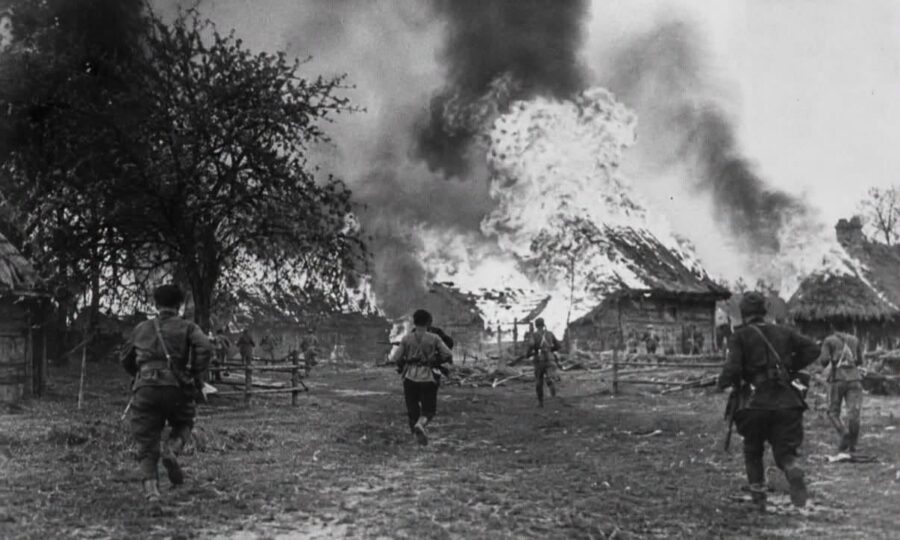
During the German occupation of Warsaw, German forces carried out mass executions in the streets of the city, killing an estimated ten thousand Polish civilians in an attempt to instil terror among the population.
Yet even in the face of such brutality, the occupiers were eager to conceal their crimes. Fearing both moral outrage and the outbreak of disease caused by decomposing bodies, they ordered the corpses to be collected and transported to the grounds of the Gęsiówka concentration camp.
This task was assigned to Jewish prisoners confined in KL Warschau, organised into so-called „death squads”. Bodies were brought not only from public executions but also from the nearby Pawiak prison, where Poles were regularly murdered and sent to Gęsiówka for disposal.
Post-war testimonies given to Polish prosecutors include accounts of a gas van operating at the camp, described as resembling those used in the extermination camp at Chełmno (Kulmhof), where SS officer Paul Blobel pioneered the mass incineration of corpses on open-air pyres.
KL Warschau was unique: a concentration camp situated not on the outskirts of civilisation, but in the very heart of a major European city. Though surrounded by high walls and isolated from the outside world, its horrors played out in plain sight.
The camp primarily held foreign Jews, mostly from Greece and Hungary. It was designed by the same German engineers responsible for Auschwitz, under the direction of Hans Kammler, the architect of Auschwitz’s gas chambers and crematoria.
Today, few traces remain of the former KL Warschau. Yet the monument at Anielewicza Street stands as a powerful reminder: of forgotten crimes, of silent ruins, and of one extraordinary act of defiance that restored human dignity, if only briefly, to those the world had abandoned.
The scorched ruins of the Gęsiówka prison, left charred after the Warsaw Uprising, were finally demolished in 1965. Today, the once-notorious site is home to a quiet residential neighbourhood and a small public square, its violent past largely unmarked by the modern landscape.
In 2018, a new monument was unveiled in Warsaw’s Wola district, at the crossroads of Anielewicza and Okopowa streets, directly opposite the historic Warsaw Jewish cemetery. Comprised of three stark concrete blocks bearing an identical inscription in Polish, Hebrew, and English, and adorned with the symbols of the Fighting Poland emblem, the Star of David, and the scouting fleur-de-lis, the memorial marks a forgotten but heroic moment of the Warsaw Uprising.
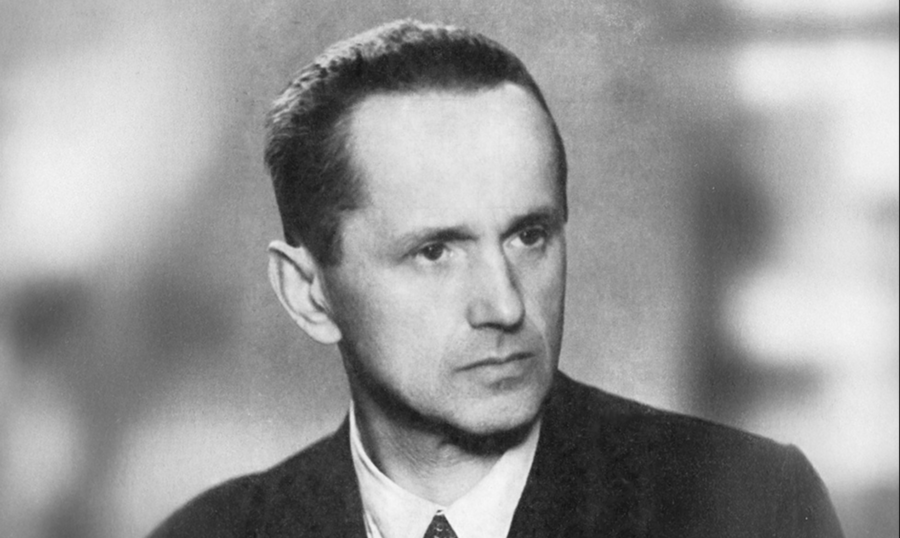
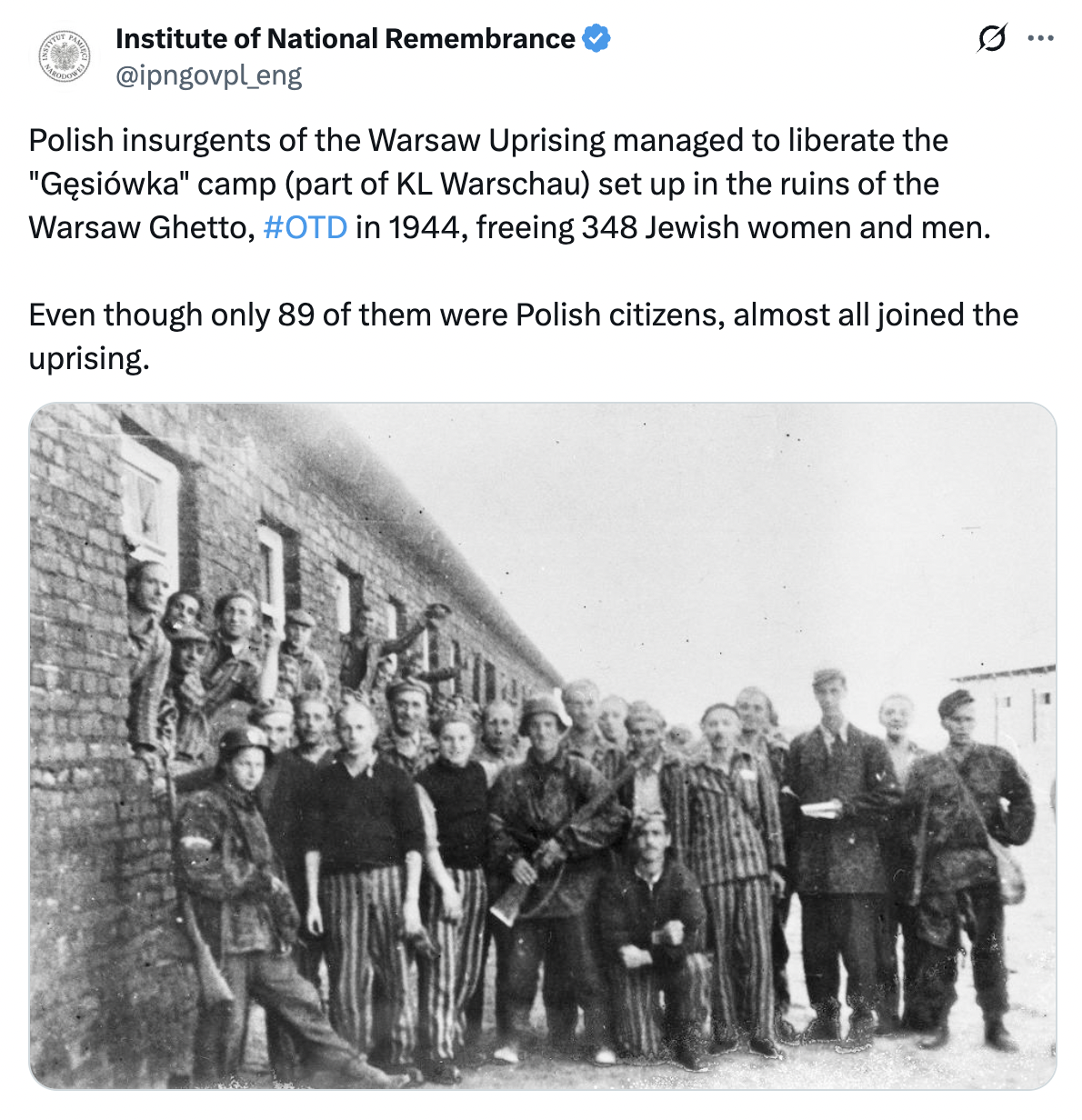
It commemorates the daring assault on the “Gęsiówka,” led by Colonel Ryszard Białous, nom de guerre “Jerzy,” commander of the “Zośka” battalion, part of the Home Army’s “Radosław” Group. On 5 August 1944, the battalion stormed the camp. It liberated 348 Jewish prisoners, men and women from across Europe, many of whom joined the Polish resistance and fought in the Uprising, some giving the ultimate sacrifice.
The Warsaw Uprising, launched on 1 August 1944, was the largest armed resistance operation in Nazi German-occupied Europe. An estimated 40,000 to 50,000 Polish underground fighters rose against the German occupiers, expecting a short campaign; instead, they fought for over two harrowing months. Around 18,000 insurgents were killed and another 25,000 wounded, but the heaviest toll fell on civilians—some 180,000 perished. The remaining half a million residents were forcibly expelled from the capital, which was systematically burned and razed to the ground in the aftermath.
Source: IPN
Photo: @ipngovpl_eng
Tomasz Modrzejewski