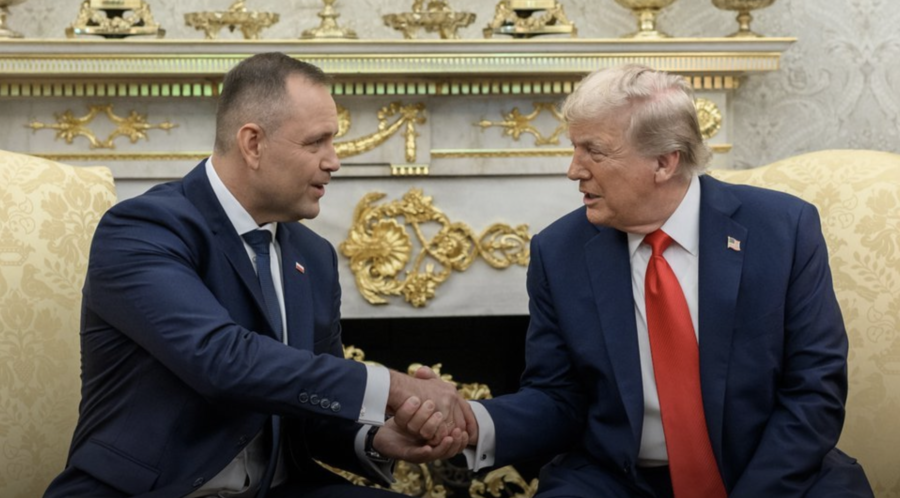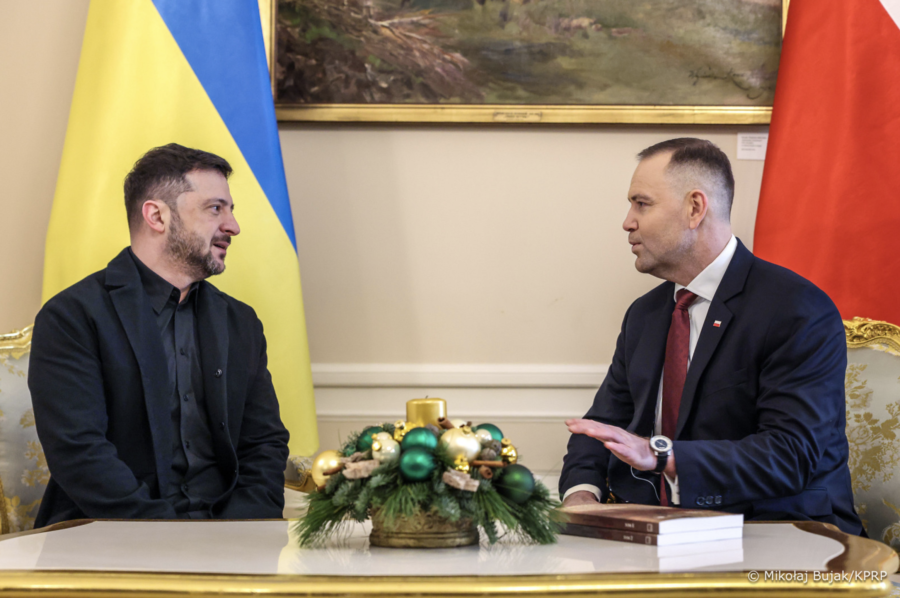
A long-frozen chapter of Polish–Ukrainian historical dialogue may be beginning to thaw. During talks in Warsaw, President Volodymyr Zelensky indicated that Ukraine is prepared to accelerate the exhumation of Polish victims of the Volhynia massacres which was an issue that has strained relations between the two countries for decades.

The declaration follows preliminary fieldwork carried out this week in Uhly, in the Volhynia region, where Polish and Ukrainian specialists conducted reconnaissance ahead of planned searches. According to experts involved, full exhumation work is expected to begin in the spring, marking another step towards addressing one of the most sensitive legacies of the Second World War in Eastern Europe.

Speaking alongside Polish President Karol Nawrocki, Zelensky emphasised that technical and administrative procedures are already under way. Poland has submitted 26 formal applications through its Institute of National Remembrance, and Ukrainian authorities now signal that the remaining bureaucratic obstacles can be resolved.

Beyond logistics, both leaders framed the issue in moral and symbolic terms. Zelensky spoke of mutual respect for national memory, while stressing that commemoration should not divide but rather strengthen bilateral relations. Nawrocki, for his part, expressed cautious optimism that longstanding procedural barriers would finally be removed.
The renewed momentum follows the lifting, in late 2024, of a Ukrainian ban on Polish-led exhumations, a restriction imposed in 2017 amid tensions over historical monuments. Since then, cooperation has resumed, including successful exhumation and burial work in Puźniki, where dozens of Polish civilians murdered in 1945 were laid to rest earlier this year.
Plans for the coming years are ambitious. Further work is scheduled at multiple sites in Ukraine, including Uhly, Huta Pieniacka and Ostrówki, as well as at locations in Poland linked to Ukrainian victims. Officials on both sides underline that the process is being carried out by joint expert teams, with an emphasis on dignity, forensic accuracy and legal transparency.

The stakes, however, extend far beyond archaeology. The Volhynia massacres, carried out by Ukrainian nationalist formations against Polish civilians during the war, remain a deeply painful subject in Poland, while in Ukraine the legacy of wartime resistance movements is often viewed through a different historical lens. Navigating these competing narratives has long tested political goodwill.
Yet the current tone suggests a cautious willingness to confront the past together. Whether this cooperation will translate into lasting reconciliation remains uncertain. What is clear, however, is that the exhumations represent more than a technical exercise: they are a test of whether Poland and Ukraine can build a shared future without burying, or denying, the truth of their shared and tragic history.
Speaking at a press conference after talks with President Zelensky, Nawrocki stressed that since 2022, 4.91 per cent of Poland’s GDP has “gone towards supporting our neighbour, Ukraine, both in humanitarian terms and in military and defence-related areas”.
The Polish president reported that he and Zelensky had also discussed “a certain general atmosphere” which, as he put it, is reflected in opinion polls.

“Poles have the impression that our effort, or the multi-dimensional assistance provided to Ukraine since the start of the full-scale invasion, has not been met with adequate appreciation or understanding,” Nawrocki said. “I conveyed this in a firm, honest, but very cordial and gentlemanly conversation with President Zelensky,” he added.
“We are aware that the authorities in Kyiv today have the instruments at their disposal to stop this sentiment, to halt this trend and reverse it,” the President of the Republic of Poland emphasised.
Photos: Mikołaj Bujak/KPRP
Tomasz Modrzejewski