For about a year now, the Polish government has been pressuring its German counterpart to obtain war reparations for the damages caused by the Third Reich on Poland during WWII.
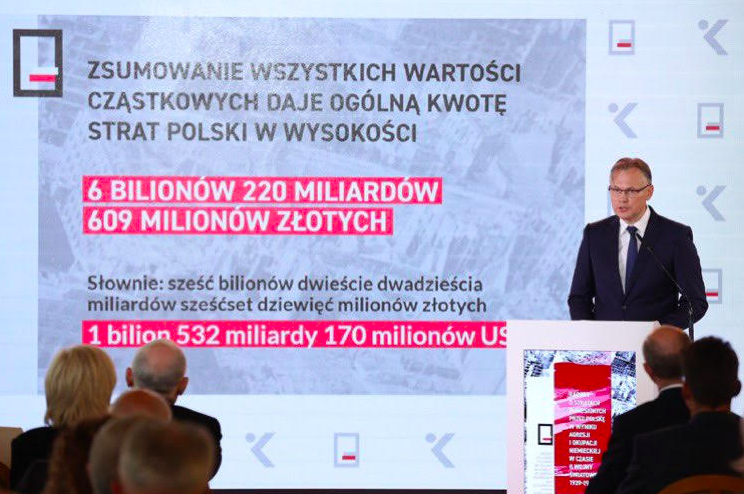
In September 2022, Poland’s official report on losses during the war was published. The Parliamentary Team prepared the latter for Estimating the Amount of Compensation Due to Poland from Germany for Damages Caused During World War II, led by the Law and Justice MP Arkadiusz Mularczyk. A group of 30 scientists, including historians, economists, property appraisers, and reviewers, contributed to the large document.
https://twitter.com/nexta_tv/status/1570268571187482625?s=20
The report provides detailed information on the scale of German crimes and destruction perpetrated on Polish soil between 1939 and 1945. It aimed to serve as a starting point to engage in talks about war reparations based on the evidence it contains. However, Berlin repeatedly refused to discuss the matter, claiming that the topic was settled long ago. German officials acknowledge and strongly condemn German brutality during WWII. But when it comes to paying the bill, they claim that “the topic is closed”.
Berlin considers that the reparations issue was settled 70 years ago, in August 1953, when the government of the People’s Republic of Poland declared its willingness to resign from war reparations from Germany. On the other hand, many on the Polish side emphasise that in the 1950s Poland wasn’t sovereign and that such a decision had been taken by Moscow without the consultation of Poles.
Insane violence
In the aftermath of the Treaty of Versailles, certain territories which had been forcibly integrated into the German state as a result of the Partitions returned within the Polish borders, namely almost the whole region of Greater Poland, part of Eastern Pomerania and a piece of Upper Silesia. This geographical shift was perceived by most Germans as a humiliation, which nourished their hate toward Poles during the interwar period. In 1939, Germany’s ultra-popular leader Adolf Hitler offered his people the possibility of revenge by launching WWII.
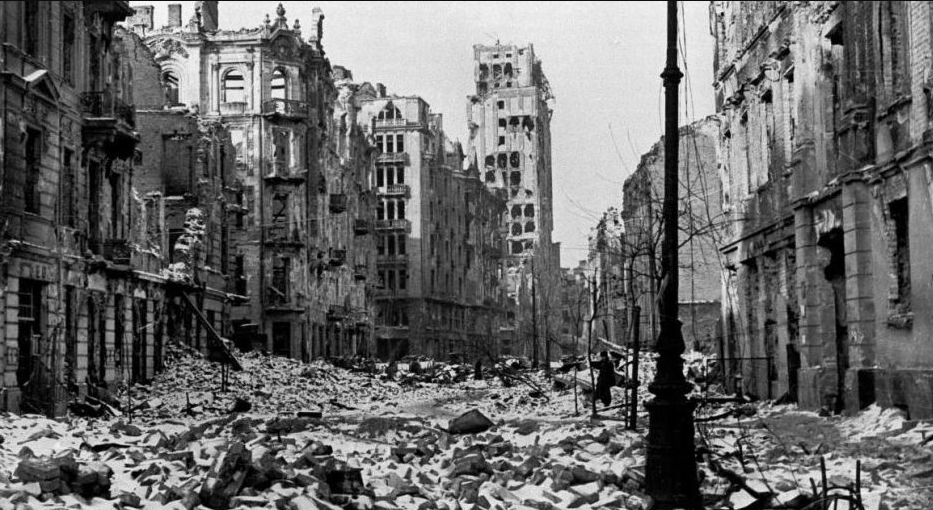
In Poland alone, six million people were killed, and thousands more were deported to hard labour, where they were treated worse than animals. 200,000 Polish children were deported to the Reich to be Germanised by force. Nearly a quarter of the country’s priests were assassinated, as well as all the rabbis. Hundreds of cities and thousands of villages were destroyed and looted, as well as countless monuments (churches, palaces, libraries, etc.) were burned.

In the capital, Warsaw, 90% of the industrial plant was destroyed as well as almost 100% of the old town. The civilian population was humiliated, terrorised, sometimes tortured, and often deported to the notorious German concentration and extermination camps. Countless works of art were also stolen without ever being returned. The material losses inflicted on Poland between 1939 and 1945 are estimated at nearly 1.3 trillion euros.
No reparations until this day
It is important to emphasise that only a tiny fraction of the German criminals of this dark era faced the consequences of their acts after the war. Not only were heavy sentences rare, but they were also rarely carried through. It was common for individuals with the blood of thousands of people on their hands to be released from prison after just a few years, allegedly for health reasons.
Following the Potsdam Conference, more than 3 million Germans had to leave the territories that had come under Polish jurisdiction (Silesia, Pomerania, Masuria, etc.) between 1945 and the end of 1950. The German-Polish border was moved to the West on the Oder-Neisse line. However, West Germany did not recognise Poland’s western border until December 1970. What’s more, the ratification of the border agreement between Poland and Germany only took place around half a century after the end of the war, in December 1991. The decision of the German parliament became final and effective one month later, on 16 January 1992. That was just over three decades ago.
Warsaw in search of partners.
A Social Changes poll conducted in early June revealed that more than one in two Poles (54%) are in favour of further efforts aimed at obtaining war reparations from Germany. Such support for this issue makes it all the more political given Poland’s upcoming parliamentary elections. For the above-mentioned Deputy Foreign Minister Arkadiusz Mularczyk, Berlin “is doing whatever it takes to close the topic of war reparations”. In the German capital, it’s believed that the Law and Justice party is using the reparations issue as a slogan for the ongoing political campaign.
In the last months, Mularczyk has been meeting with several officials from other countries to gain support from foreign partners in his quest. He held talks, among others, with politicians from Israel, who successfully settled this issue long ago, as well as the US, as a potentially powerful leverage maker, and other countries that also request war reparations from Germany such as Greece and Namibia. Back in 2021, Germany agreed to pay Namibia €1.1bn (£940m) as it officially recognised the Herero-Nama genocide, which took place in the early 20th century.
Will Poland be able to negotiate its due? That remains far from sure, given Berlin’s hard stance that the whole subject is outdated. The German government informed that it would rather discuss the matter after Poland’s autumn elections. Doing otherwise would mean – from the German point of view – helping Law and Justice to win yet another election.
https://twitter.com/PLreparations/status/1674662731163500546?s=20
For the ruling party and its Polish supporters, such an attitude is rather an attempt by Germans to buy time once again in the hope that a potential new government would let go of that uncomfortable topic. Yet given the polls, it seems as if we are heading for additional years of complicated dialogue around the issue of war reparations between both capitals.
Image: Twitter (@arekmularczyk), Wikipedia bild.de, IPN
Author: Sébastien Meuwissen